1 / 1
In the race to feed fashion lovers’ rapacious need for newness, has the industry lost its soul? Jolene Khor speaks to fashion insiders who say it’s time—long overdue, in fact—to think about who’s really paying the price behind that next piece of clothing you buy, whether it’s from a luxury label or high-street brand.
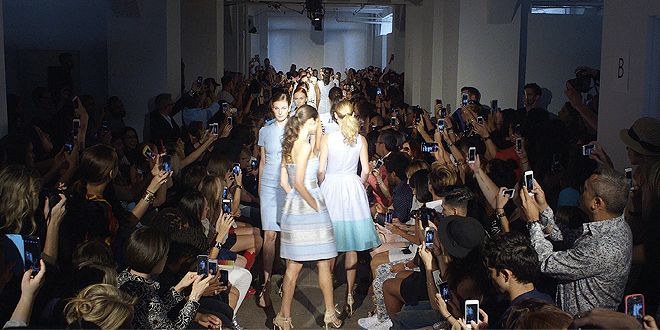
Fashion seasons used to change twice a year,four times at most for the more illustrious brands with inter-season collections. But now, like the world’s climate, there’s less predictability to the cycles, and if not capsule collections, there are collaborative releases, event/destination/anniversary launches, limited editions…
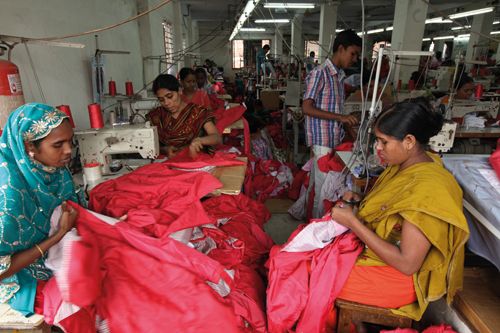
It’s all fantastic, fun and fabulous. But not for the victims of the Rana Plaza collapse in Dhaka, Bangladesh. When the eight-storey garment factory collapsed, killing more than 1,100 workers and injuring hundreds of others in April 2013, the bricks also fell from the glistening facade of the fashion industry, exposing its ugly side.
Graphic photos and shocking headlines aside, it put widely-known and much-loved international fashion brands’ names and logos on everyone’s e-mail inboxes, social media feeds and front page of newspapers, this time for all the wrong reasons. Or are they?

1 / 1
What is Slow Fashion?
Slow Fashion is the counteract movement to fast fashion, like how slow food advocates good, clean and fair food consumption in an age of fast food.
Not just about buying organic or sustainable labels, slow fashion encourages an appreciation for a really beautifully made piece of clothing that doesn’t have a lifespan determined by wanton trends.
Slow fashion also includes an attitude of awareness of every step of a piece of clothing’s life cycle, from farming methods and production, to retail, how it’s used and what happens to it afterwards. This involves both the sustainable practices by the clothier and, on the part of the consumer, mindful consumption.
To designers like Stella McCartney and Swedish designer Marielle Kerber, the term slow fashion means choosing quality over quantity. “Slow fashion means taking time to care, creating timeless pieces that go beyond seasonal trends,” says Kerber. “It’s a life philosophy, not a business plan.”
What is Fast Fashion and what’s wrong with it?
Fast fashion is a relatively new phenomenon. Up until the late 1990s, the majority of clothing in the US and around the world used to be under a predictable three-month production cycle. Today, it could take just four weeks between the designing of an item of clothing to its hanging on the racks of a store.
This means that if you saw a designer collection debut on a runway a month ago in Paris, chances are that you will find garments inspired by those looks in some of the popular chain store this weekend in Orchard Road. What’s more, it’ll be at a fraction of the designer item’s price.
Trendy, affordably priced clothes—it’s a democratisation of fashion, and that’s nothing to complain about, right? Well, wrong.
Aside from the perennial criticism about how knock-offs infringe designers’ intellectual property rights, the fallout of mass produced cheap clothes is that somewhere along the line, someone and something is paying the price.
That’s usually the farmers growing raw materials whose prices are vulnerable to artificial depression from commodities markets; garment workers in a Third World country not earning a living wage; animals, reared in appalling conditions and brutally killed or depilated to make cheap leather bags; the environment, as shortcuts are taken and natural resources wantonly depleted.
By suppressing production costs, fast fashion companies rake in healthy margins despite fierce rivalry to offer new iterations of trends at irresistibly low prices.
Possibly the most insidious consequence of a constant barrage of cheap but trendy clothing is the mindset of disposable fashion that it cultivates. “The stitching is loose and the fabric looks like it’ll fray after three washes, but this top is $20 so it’s ok to buy, wear and throw away!”
Did you know that the cost of this T-shirt could feed a family in Bangladesh for half a year
According to Asia Floor Wage Alliance, an international alliance of trade unions and labour rights activists in the key garment producing countries in the region, only 0.5 to 3 per cent of the retail price of an average item of clothing goes to the worker who made it.
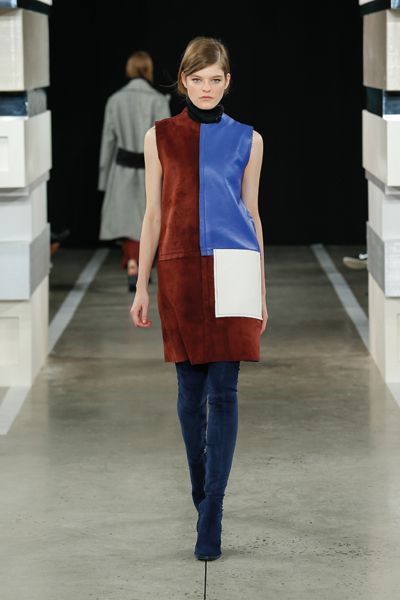
Take this T-shirt from The Row. Its US$280 pricetag is equivalent to six months’ salary of the average Bangladeshi garment worker. Most minimum wages in Third World countries, where almost all fast fashion clothes are made, are far below the living wage needed for a decent living condition.
Slow fashion factories have taken on the responsibility of paying factory workers a fair wage. Marielle Kerber’s garment workers in Vietnam, where the minimum wage is US$145, are paid a monthly salary of US$255. Says Kerber, “They have permanent employment and full-time contracts. Their contracts also include paid sick leave. They also have health insurance that also covers their immediate family.”
I shop a lot, but I also donate my clothes to charity. Does that count?
1 / 1
Yes and no. Statistics show that less than three out of 10 donated items are recycled and sold in thrift stores. Everything else—about 11 billion kilograms of textile waste per year, and that is only from the US—is dumped in landfills in Third World countries, where cheap synthetic fabrics will accumulate in all their non-biodegradable glory for generations to come.
What’s so bad about cotton?
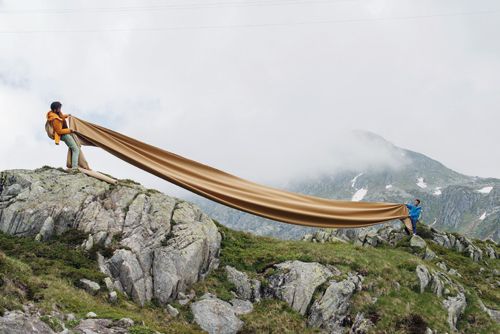
The fabric of F-abric, Freitag’s workwear line, undergoes a 24-hour durability test in Poland
As a biodegradable natural fibre, cotton itself doesn’t harm the earth. However, growing cotton in arid lands requires unimaginable amounts of irrigation water. To increase production of cotton to feed the fast fashion industry, there are more pesticides used on conventionally grown cotton than any other single crop. As seen in The True Cost, this has resulted in many undocumented birth defects, cancers, mental illness and respiratory diseases.
The cotton problem doesn’t end with health risks. Processing and dyeing cotton, too, causes the pollution. As the volatile and unpredictable world market has caused the cost of pesticides, fertilisers and seeds to increase and cotton price to fall due to a surplus of growth, debt-ridden cotton farmers have been driven to take out loans they cannot afford pay off, resulting in their farmlands being possessed by creditors. This loss of hope has driven suicides across India. According to CNN, government records counted over 11,000 farmer suicides in 2013.
On the other side of the fence is the organic cotton used by supporters of slow fashion. Organic farming focuses on pest management to replace the need for excessive pesticides. Stimulation of a balanced agro-ecosystem is done through crop rotation, mixed cultivation and the use of natural pesticides made from plant and insect extracts. Brands like Freitag choose to eliminate cotton altogether, instead using sturdier bast fibres from plants that require low water consumption such as flax, linen and hemp.
Trendy, sustainable clothing—is there such a thing?
1 / 1
In addition to keeping Stella McCartney animal-cruelty free (you won’t find leather, exotic skins, furs or gelatin in her products), the designer stopped using PVC in 2010. While wool is a big part of her line, her suppliers do not resort to inhumane mulesing practices.
Edun, founded by Ali Hewson and husband Bono, carries out 95 per cent of their production and trade in small African communities, compared to the 37 per cent in 2011. “We’re pioneers and we want to show that this model works, that it can become self-sustaining. We’re not making money yet, but we’ve survived a recession. We’re still in the game—it’s a long-term commitment,” says Hewson.
H&M has also been upping its efforts in sustainability. The brand aims to expand the Conscious Collection line and to double the use of sustainable cotton by 2020. “It’s not all or nothing. Designers owe it to themselves and the industry to do more,” says McCartney.
Why should I know who makes my clothes?
1 / 1
The freedom of association and right to collective bargaining in Third World countries are human rights that are often undermined or ignored. Intimidation, harassment, violence, imprisonment and firing of trade union leaders are not uncommon either. When asked if boycott is a viable solution to stop the mistreatment, Ilana Winterstein, the director of communications at Labour Behind the Label, an organisation of global trade unions, tells Singapore Tatler, “We are against boycotting, as brands will often respond by pulling out of the factories or even production in a country and this will result in widespread loss of jobs for those who need them desperately.” The point is to not take away jobs if fast fashion were to slow down. She adds, “I don’t ask that no one shops in H&M or Topshop. What we do ask is for consumers to think before they buy and stop consumption for the sake of it.”
Andrew Morgan, director of The True Cost concurs: “Outsourcing production is not inherently bad. Exploiting workers because they do not have another option is. All it takes is for brands to stay but start paying them a living wage.”
I paid $3,000 for my new designer dress. Does that mean I’m supporting slow fashion?
1 / 1
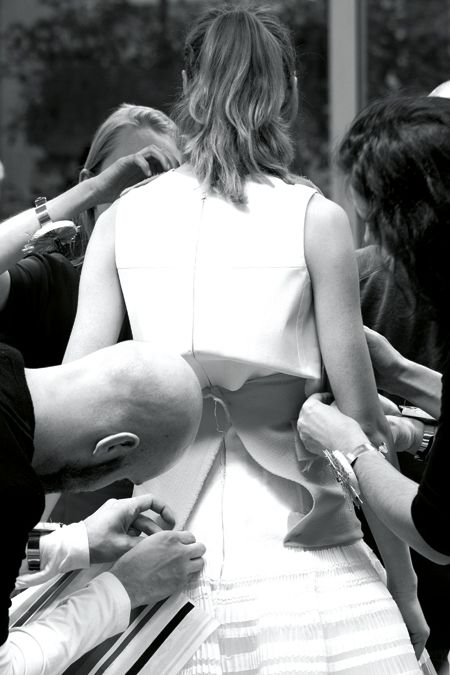
Maybe, maybe not. As reports have revealed and many of us now continually suspect, not every exorbitantly priced luxury garment is backed by the best practices.
As Dana Thomas revealed in her book Deluxe: How Luxury Lost its Lustre: “Most luxury companies have raised their brands’ prices exponentially, and many justify the move by falsely claiming that their goods are made in Western Europe, where labour is expensive. Some use inferior materials, and many have quietly outsourced production to developing nations.”
She adds that luxury companies further rake in substantial profits from cheaply made, lower-priced accessories.
It is easy to point fingers at cheap labels and blame them for all fashion crimes against humanity. But the truth is, when the root of the problem is capitalist greed—the need to maximise profits at all costs—no echelons of the fashion industry are immune.
Are fashion companies the only culprits, then?
As slow fashion is such a wide term, encompassing environmental impact, human rights and animal-friendly practices, the responsibility lies not only with brands for transparency, but also requires fashion lovers’ curiosity to find out where their shoes, bags and clothes come from, no matter how much or how little money they spend on them.
Caveat emptor. But first, the consumer has to care.
Flippancy can pervade our attitudes towards anything and everything in our wardrobes, even to high-end designer wear and goods. When “that’s so last season” gets increasingly replaced with “I never wear the same thing twice”, we’ve become part of the problem.
Andrew Morgan asserts, “The idea is to slow down both the process of making clothes and the consumption of clothes.” While it is equally important to be mindful of what we buy, “we need to move back to a place where we buy things that we love, that we would wear and hold on to for a long time”.
We are customers, not consumers. A consumer “stands at the end of a giant assembly line and just takes in stuff”, says Morgan. “When you operate in that story, all you do is accumulate more things and throw old things out.” A customer, on the other hand, values what he or she buys, and looks for quality in every sense of the word—from the design artistry to the care and pride that went into making the piece.
Reviving this appreciation of a well-made item is paramount, whether it is a couture piece or one from a masstige brand that focuses on making good quality clothes retailed at a reasonable price that wasn’t made at the expense of someone else. While the $20 top does serve a segment of people who may not be able to afford couture or the more expensively slow-made fashion, it is the practices employed by the fast fashion industry that need looking into. Every change begins with awareness, then comes action. Keep calm and shop mindfully? It can start today.
Curated for you
The stories, profiles, and cultural moments featured on our Instagram feed