

Cover Siew Meng Tan (Photo: Affa Chan/Tatler Hong Kong)
Siew Meng Tan (Photo: Affa Chan/Tatler Hong Kong)
1 / 1
Tatler+ HSBC Global Private Banking
Siew Meng Tan, regional head of HSBC Global Private Banking, Asia Pacific, on the growing prominence and impact of women in business
Women are a growing force in Asia’s business scene as they start their own enterprises, run their family businesses, or manage their wealth.
One in three businesses globally are owned by women, and there are around 405 million female entrepreneurs, as well as women running established businesses, according to the WealthiHer 2021-22 report on women’s wealth.
Siew Meng Tan, regional head of HSBC Global Private Banking, Asia Pacific, says “We see a growing number of women in the region who are reshaping the business landscape, as they rise to the top by forging their own entrepreneurial path, break biases, and support and inspire those around them.”
Female wealth is also increasing rapidly in Asia, with the region—excluding Japan—set to become the fastest-growing hub of wealth creation for women in the world, according to a 2020 report by consultancy group BCG: “Managing the Next Decade of Women’s Wealth”. If the current annual growth rate of 10.4 per cent continues, Asian women will add more than US$1 trillion per year to their total wealth over the next four years.
“These findings underscore the increasingly prominent role women have in driving sustainable growth, and their influence is likely to continue to increase given the number of younger women who see significant opportunities to generate wealth,” Tan says.
A different approach
Not only are women a rising force in Asia’s business scene, but there is also growing recognition of the value of diverse perspectives and different approaches ‑ and how they contribute to a sustainable future. McKinsey & Company’s Diversity Wins report shows that companies with diversity consistently outperform their industry peers on profitability.
“In this dynamic environment, it is very important for businesses to embrace new approaches, new ideas and new perspectives. Diversity and inclusion aren’t just nice to have, [they can really translate to] a commercial advantage,” Tan says.
She is quick to point out that while the two concepts are usually put together, they are in fact distinct. Tan explains that while diversity is about having people from different backgrounds and with different perspectives, inclusion is about creating a culture in which these people feel valued and empowered to share their ideas and opinions.
“When diversity and inclusion come together, it can be really powerful. If you have representation from a wide field and provide an environment where people feel comfortable speaking up, this is where you can really gain an additional commercial advantage,” Tan says.
While the positive impact women have on businesses is clear, they still encounter hurdles on the path to success.
Tan explains: “Psychology plays a role in the success of women, with women rating themselves as less confident than men until their mid-40s, [when they’re likely already] at a later stage of their careers.”
Helping women build their confidence and self-esteem in order to empower them to succeed is a key focus area for HSBC Global Private Banking, which provides a number of platforms for women and entrepreneurs from all walks of life to connect and share their insights and experiences of driving change.
HSBC Global Private Banking also has brand partnerships with WealthiHer in Asia to empower women to grow and protect their wealth. “Female entrepreneurs are a growing breed and success builds success,” Tan says.

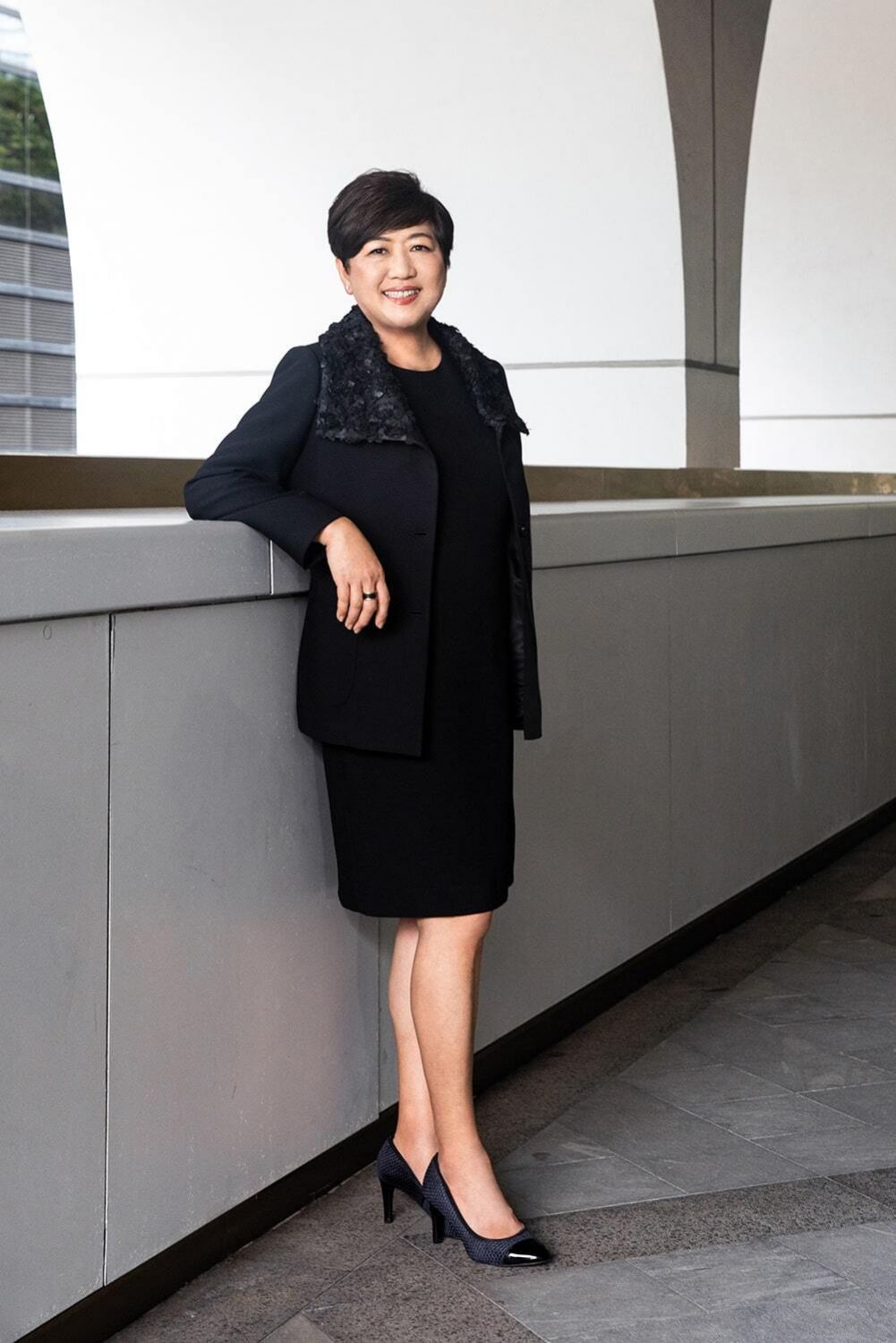
Above Siew Meng Tan (Photo: Affa Chan/Tatler Hong Kong)
Siew Meng Tan (Photo: Affa Chan/Tatler Hong Kong)
1 / 1
Empowering women to drive change
As more women rank among today’s change makers, there is a shift in how they define success. Women may also see wealth differently. While they may strongly value a successful career, women – particularly those in Hong Kong—often consider their ability to make a difference in the community to be a true indicator of success.
Tan explains that, with women controlling around one-third of global wealth, their interest in this area is impacting the culture of philanthropy. “They are transforming the way they give, choosing to bring their skills and networks to support organisations, rather than simply writing a cheque. Female philanthropists focus on forging relationships with their grantees and working with them to develop solutions.”
Tan adds that women also demand accountability from the organisations they support and have no qualms in applying their funding to create policy change. At the same time, female leaders are taking insights gained from their philanthropic endeavours and applying them to their family businesses and investments to advance sustainable long-term growth.
“They are incubating new initiatives and ideas through their businesses to enhance access to economic opportunity, improve our environment, and raise the overall quality of life of our community,” Tan says.
HSBC Global Private Banking supports its female clients to drive change through their businesses, investment and philanthropy. “We have the credibility and subject matter experts to help them, whether it is working with NGOs, or creating a platform where we can get like-minded people together. Our aim is to inspire and support female entrepreneurs and business leaders by connecting them to new insights and new networks to make a positive change in the community,” Tan says.
She gives the example of HSBC Global Private Banking’s Mind Matters hackathon for social impact, through which it connects clients with NGOs that are aligned with their philanthropy goals, using a format similar to investment pitching by start-ups.
HSBC Global Private Banking’s wealth planning and advisory team can also provide strategic planning and support services, such as working with clients to craft their foundation’s charter, establish governance and decision-making frameworks, as well as sourcing and conducting due diligence on organisations that they are interested in supporting
“Everyone has limited resources, but through the power of pulling people together, they can work to address something they are passionate about. It is an example of how, as a private bank, we can really make a positive impact on society,” Tan says.
Learn more about HSBC Global Private Banking's support of women in business here
Disclaimer: The information contained in this article has not been reviewed in the light of your individual circumstances and is for information purposes only. It does not purport to provide legal, taxation or other advice and should not be taken as such. No client or other reader should act or refrain from acting on the basis of the content of this article without seeking specific professional advice. Issued by The Hong Kong and Shanghai Banking Corporation Limited.
Credits
Hair: Gloomy Kwok at makeupbees
Make-Up: Gloomy Kwok at makeupbees
Photography: Affa Chan





