

Cover A depressed child who suffered from abuse (Photo: Getty Images)
A depressed child who suffered from abuse (Photo: Getty Images)
1 / 1
To better understand human trafficking, organisations aiming for social change hold a charity talk at Manila House
When thinking of children and their development years, we all wish for them to experience a healthy and safe environment. But for three-year-old Daniel sold for US$ 60 on Facebook, and a two-year-old girl sold and abused by her father, an idyllic environment to grow up in seemed like a far-fetched dream—one that Voice of the Free Foundation aims to pursue.
Advocate Gemith Gemparo organised a charity talk last March 14 against human trafficking with Ford Models and Freedom for All Foundation's founder Katie Ford, Voice of the Free Foundation's founder Cecilia Oebanda and executive director Sherryl Loseño, at Manila House, Bonifacio Global City.
There, they discussed the status of human trafficking in the Philippines before and after the Covid-19 pandemic and the steps the Voice of the Free Foundation has been taking to alleviate it.
In case you missed it: Grateful hearts bring hope: The CPN Dinner


Above Katie Ford (Photo: Gemith Gemparo)
Katie Ford (Photo: Gemith Gemparo)
1 / 1
Human Trafficking in the Philippines
The Philippines remains the global epicentre of online sex and labour trafficking, based on a study by the United Nations International Children’s Education Fund (UNICEF) in 2016.
Although the government did not report any number of anti-trafficking operations and investigations of illegal recruitment as it did in prior years, it did, however, reported 168 law enforcement-led anti-trafficking investigations.
According to the 2022 Trafficking in Persons Report: Philippines from the US Department of State, the government initiated the prosecution of 298 alleged traffickers (377 in the previous reporting period). These included 62 labour trafficking defendants, 224 sex trafficking defendants, and 12 defendants for unspecified exploitation.
This is a staggering number compared to other countries, with the Federal Bureau of Investigation (FBI) confirming that the market for online child abuse is the Philippines—according to Gemparo.

Above Sherryl Loseño (Photo: Gemith Gemparo)
Sherryl Loseño (Photo: Gemith Gemparo)
1 / 1
Voice of the Free Foundation
The rise in the number of human trafficking cases manifested in the number of referrals the foundation’s shelter received. Most of the cases involve children. Families are forced to commodify their kids, according to Loseño in one of her talks.
Three-year-old Daniel, one of their survivors, was sold on Facebook for US$ 60 or PHP 3000. His guardian abused him and live-streamed him while doing so. Daniel is just one of the many kids in their shelter.
During the pandemic, the shelter cannot accommodate too many because of limitations in the facility; thus, they prioritised the construction of quarantine isolation areas. This is to respond to the increasing referral demands, especially considering the limited number of shelters catering to human trafficking victims in the country. The foundation also invested in food sustainability projects.

Above Cecilia Oebanda (Photo: Gemith Gemparo)
Cecilia Oebanda (Photo: Gemith Gemparo)
1 / 1
“We have psycho-social interventions based on the coping mechanisms of each victim. Our team is trained for that,” says Oebanda. The shelter also provides education, legal assistance, and social enterprise development. They are also proud to share that 100 per cent of the survivors were successfully reintegrated into education, with most of them already in senior high school and college.
Aside from giving a home to the survivors, they also help raise awareness. IFight Movement, a platform of school chapters created “for young leaders to connect, exchange knowledge and report potential abuse through direct and social media engagement," is one of their current campaigns. This motivates the youth to join the fight against human trafficking.
They also train at-risk women on basic life skills and financial literacy, empowering them to be self-sustainable.
Currently, the shelter is housing 35 survivors, lower than the maximum capacity of 50, sometimes even exceeding that number. The others were already sent back to their families, some reintegrated into society, and a few put up for adoption.

Above Question and Answer portion (Photo: Gemith Gemparo)
Question and Answer portion (Photo: Gemith Gemparo)
1 / 1
How to help?
“[The] root of the problem is poverty and lack of opportunity. And drugs. People on drugs who are willing to do anything including selling their children,” Ford says.
This was amplified by Oebanda, who also cited another root cause. “Another root of the problem is culture. Practices like these are just accepted. That kids are sources for income of parents or guardians.”
Although these causes are difficult to stop, organisations like Voice of the Free do their best to help in alleviating them. Lend a helping hand to human trafficking survivors by visiting the shelter’s official website voiceofthefree.org.ph.
NOW READ
U-GO, CPN, FTW, and ICanServe on recognising women's strengths
How this entrepreneur’s company is fighting against migrant labour exploitation
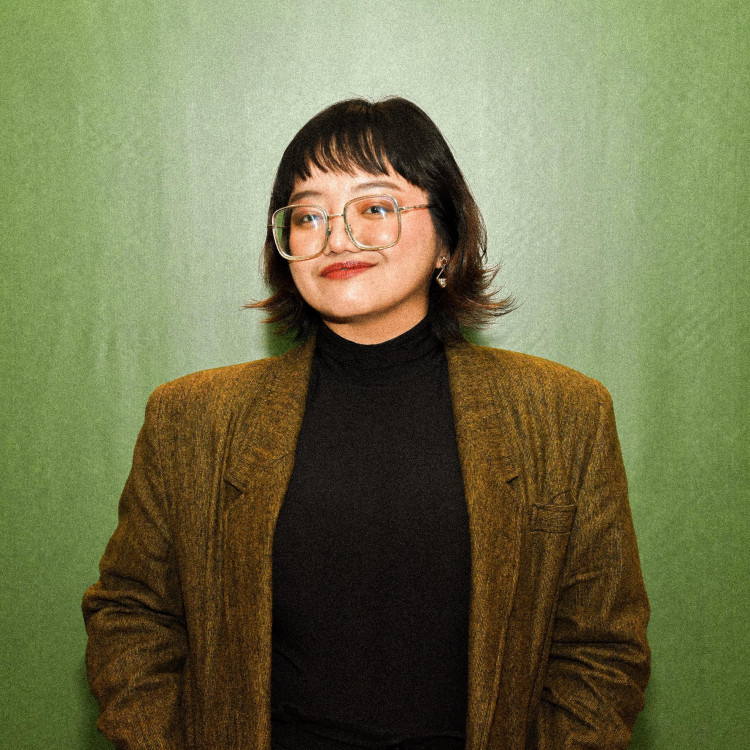
Angela Nicole Regis Guiral is a digital editor at Tatler Philippines. She studied journalism and has since written features that look closely at how culture, lifestyle and social impact converge, while occasionally wandering into the worlds of style and travel.





