
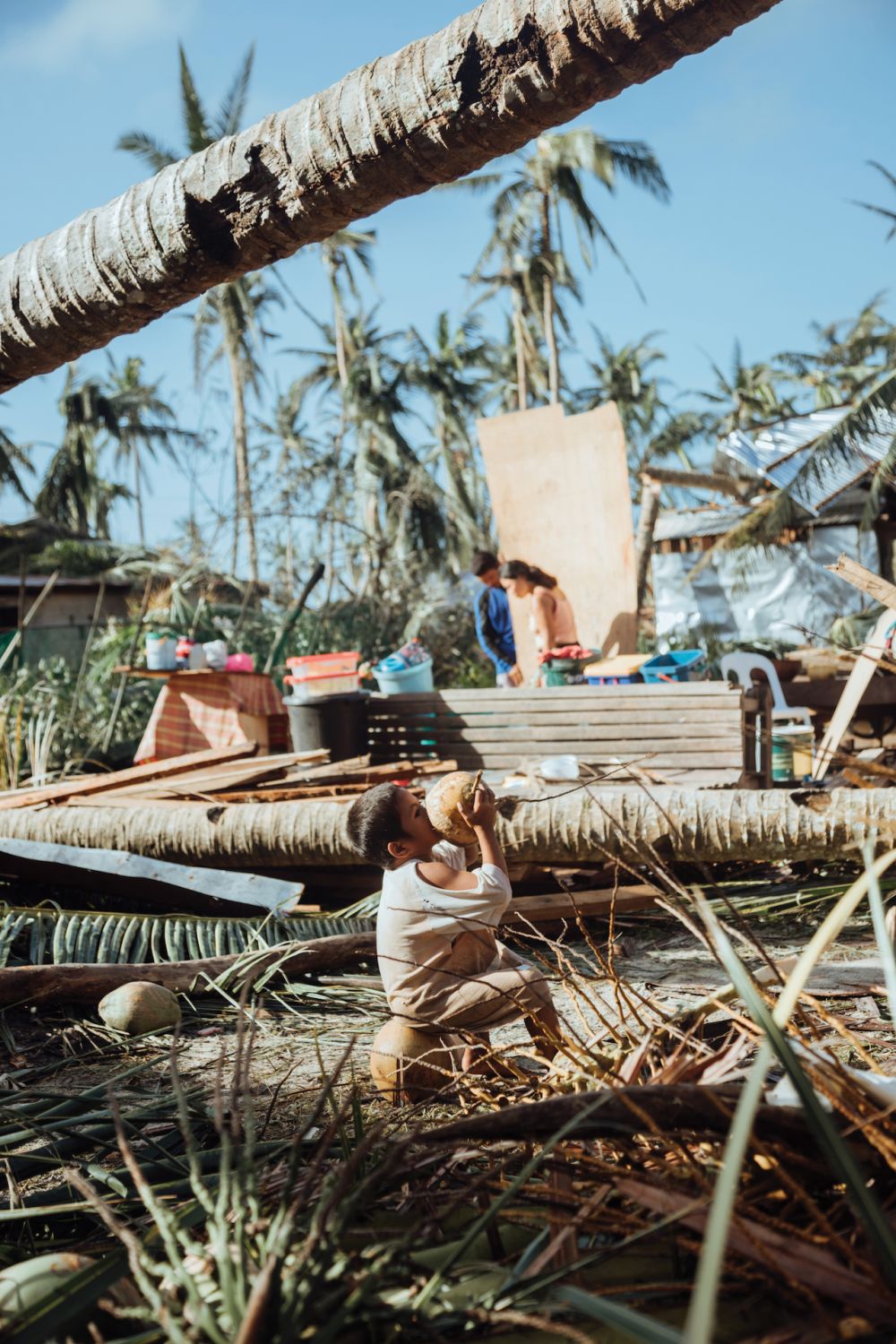
Cover For days after the typhoon, people in Siargao had no choice but to drink coconut juice due to lack of drinkable water. Photo: Camille Robiou du Pont
For days after the typhoon, people in Siargao had no choice but to drink coconut juice due to lack of drinkable water. Photo: Camille Robiou du Pont
1 / 1
For the Nay Palad Hideaway general manager, his priority was the safety of their guests, his team, and his family
Seeing the unadulterated charm of Siargao the first time in 2001 had kept Vince Lampert going back and forth to the untouched paradise. He was then based in Cebu, managing the manufacturing of the furniture label, Dedon. Three years ago, he settled in Siargao with fiancée Janice Areja and their son Hūgo Enzo, as the general manager of Nay Palad Hideaway, the only five-star resort in the island. Like many others, he was captivated by the feeling of ease and hominess the island offers.
With the superstorm warning, Lampert and the Nay Palad Hideaway team ensured the safety of the guests before themselves. “I personally wrote a mail to all arriving guests and asked them not to come,” he shares. By December 14, all of their guests had flown out of Siargao; it was time for the next part of the plan: to secure the resort, the team and their families. “We covered up what we could to preserve our assets and our resort,” Lampert adds, relishing how the resort looked so sad and empty after they finished doing the preemptive measures.
Thereafter, Lampert, his family and his team evacuated to the highlands to avoid the threat of a storm surge. On December 16, they started to feel the winds, stronger than expected, for what seemed to be the longest five hours of their lives. “I decided to secure my son in the bathroom as I saw this area being the safest. Suddenly I heard a loud sound out of the bathroom. I ran there and noticed that the ceiling was about to drop down. [Luckily] I was able to protect my son in the very last second,” says the father was getting worried as the storm intensified. A few minutes later, the windows of the house blew off. Then, the entire roof.
Read also: Lend a Helping Hand to Victims of Odette PH: Here's a Rundown of Donation Drives
Siargao was awarded as the best island in the world not long ago. We jump from the highest to the lowest but with the mindset and determination of people, we can make Siargao become number one again
When the wind subsided, Lampert used the chance to bring his family, and later on his team, to their jeepney that was parked outside. The jeepney seemed rather stable despite the gusty gale. “All 20 employees [were] in the bathroom. [With] 20 people in such a small area, being totally scared, they could easily run out of air,” he says, recalling the terrifying moment. “We all thought that we’d not make it [out] alive.”
They drove back for three hours to Nay Palad Hideaway the next day. “Despite all the cries, fears and scares they all came back and worked together as one. After such a tragedy, I see only Filipinos able to get back on their feet and get things started right away. The attitude and resilience of the people here is just amazing! We lost our homes, our boats, our sources of income but we still manage to move on,” he says in awe.

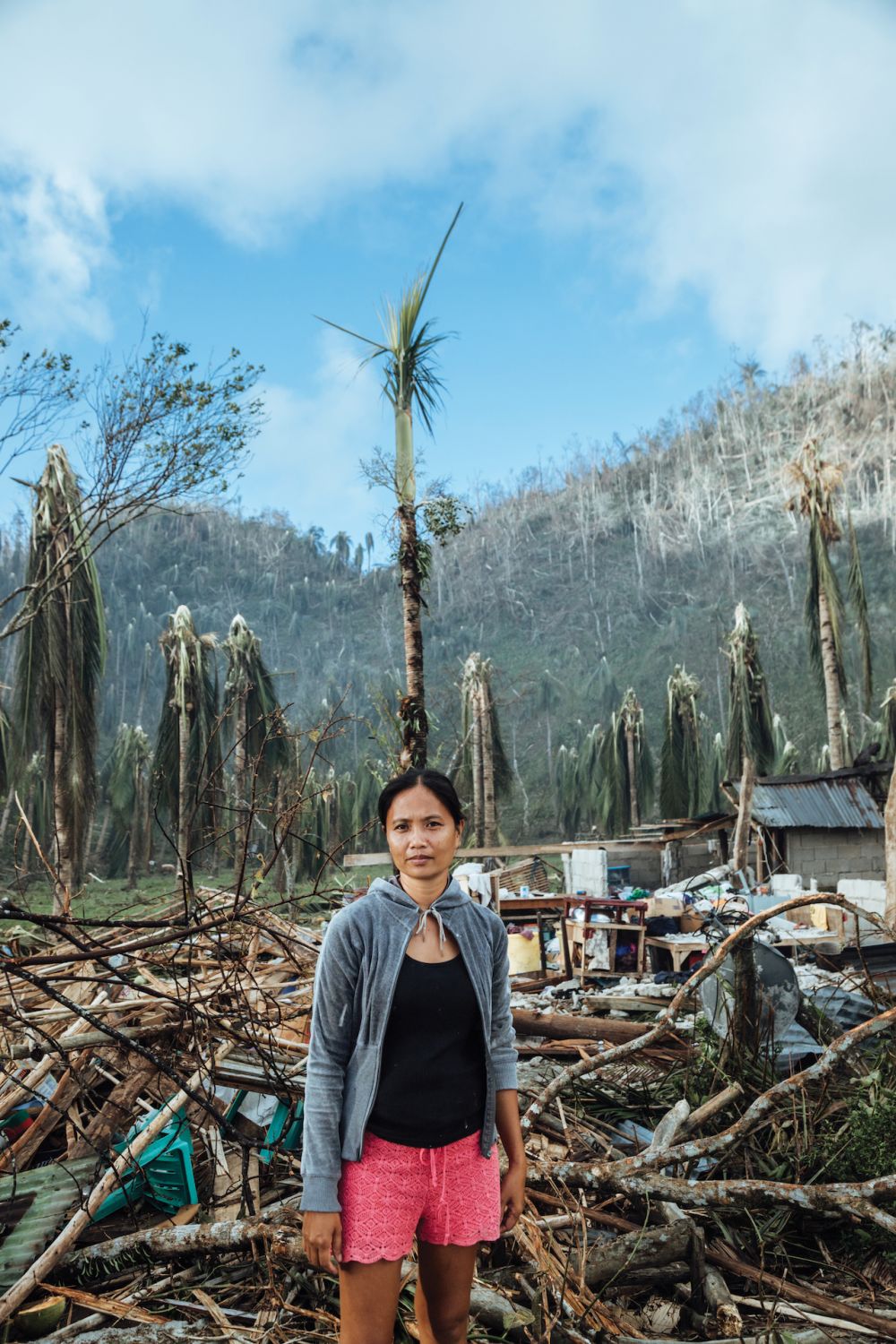
Above Amidst all the chaos, the locals remain optimistic that Siargao will rise again. Photo: Camille Robiou du Pont
Amidst all the chaos, the locals remain optimistic that Siargao will rise again. Photo: Camille Robiou du Pont
1 / 1
As the captain of the ship, Lampert and his family left the resort last, after ensuring that everyone left and arrived safely to their homes in Cebu and Manila and that those living in Siargao had a roof and enough food and water for the next weeks. However, a day before their intended departure, Hūgo got sick. “On our way to the airport, we stopped by some clinic and pharmacies to get some medication, but they were all out of stock. We stopped by Dapa Hospital and got a drip,” the father says, agitated over the desperate situation they were in. They stayed at the airport for hours, Hūgo still hooked to a drip, until they learnt hours later that their flight was cancelled.
By a miracle, they chanced upon President Rodrigo Duterte who came to check the status of Siargao himself. “He offered to send us a helicopter to bring Hūgo to a hospital in Davao the soonest,” Lampert recounts. A Black Hawk helicopter soon arrived to pick them up and brought them to Davao where his son was immediately given medical care. The diagnosis showed Hūgo may have ingested unclean water post-storm in Siargao. This urged Lampert to find a way to stop others from getting sick, sending medications from Davao to Siargao with the help of his Dubai-based friend from Médecins Sans Frontières.
A month after the storm, power and communication have not been fully restored in Siargao. The prices of commodities skyrocketed, making it harder for the locals to bounce back. Despite the challenges, Lampert and his group are rebuilding 50 houses and helping the fisherfolks. “Our philosophy is to bring back the fishermen to fishing and farmers to farm the soonest,” he says, his heart filled with hope. When asked what lessons he learnt from the ordeal, Lampert replies, “I think it’s about the people and their resilience ... Siargao was awarded as the best island in the world not long ago. We jump from the highest to the lowest but with the mindset and determination of people, we can make Siargao become number one again”.
As the American author Richelle E Goodrich once wrote, “When thunderstorms roll in, you make a choice to either succumb with tears to the gloomy downpour or smile and look for rainbows.” For the survivors of Super Typhoon Odette, it seems like they chose the latter.
NOW READ
After the Storm: Survivors of Super Typhoon Odette Tell Their Gripping Stories from Ground Zero
After the Storm: Melo Esguerra On Losing His Siargao Home to Typhoon Odette





