

Cover Sharala Axryd
Sharala Axryd
1 / 1
The founder and CEO of the Center for Applied Data Science talks about the role of women in digital economy
Growing up in a small town in Penang, Sharala Axryd felt the pressure from a young age to excel in her studies. "Will I have a career in five years to come?" she repeatedly wondered as she furthered her academic pursuits in engineering, the first female in her family to do so.
Axryd did go on to have a successful career. She established The Center of Applied Data Science (CADS) in 2013 with the aim to expand workforce data literacy by making enterprises more data-driven. Axryd is also the recipient of numerous international accolades, among them the first Malaysian and only Southeast Asian to win the Strong Women in IT 2021—Global Edition.
Related: She Loves Tech's Leanne Robers on Why the World Should Invest in Women

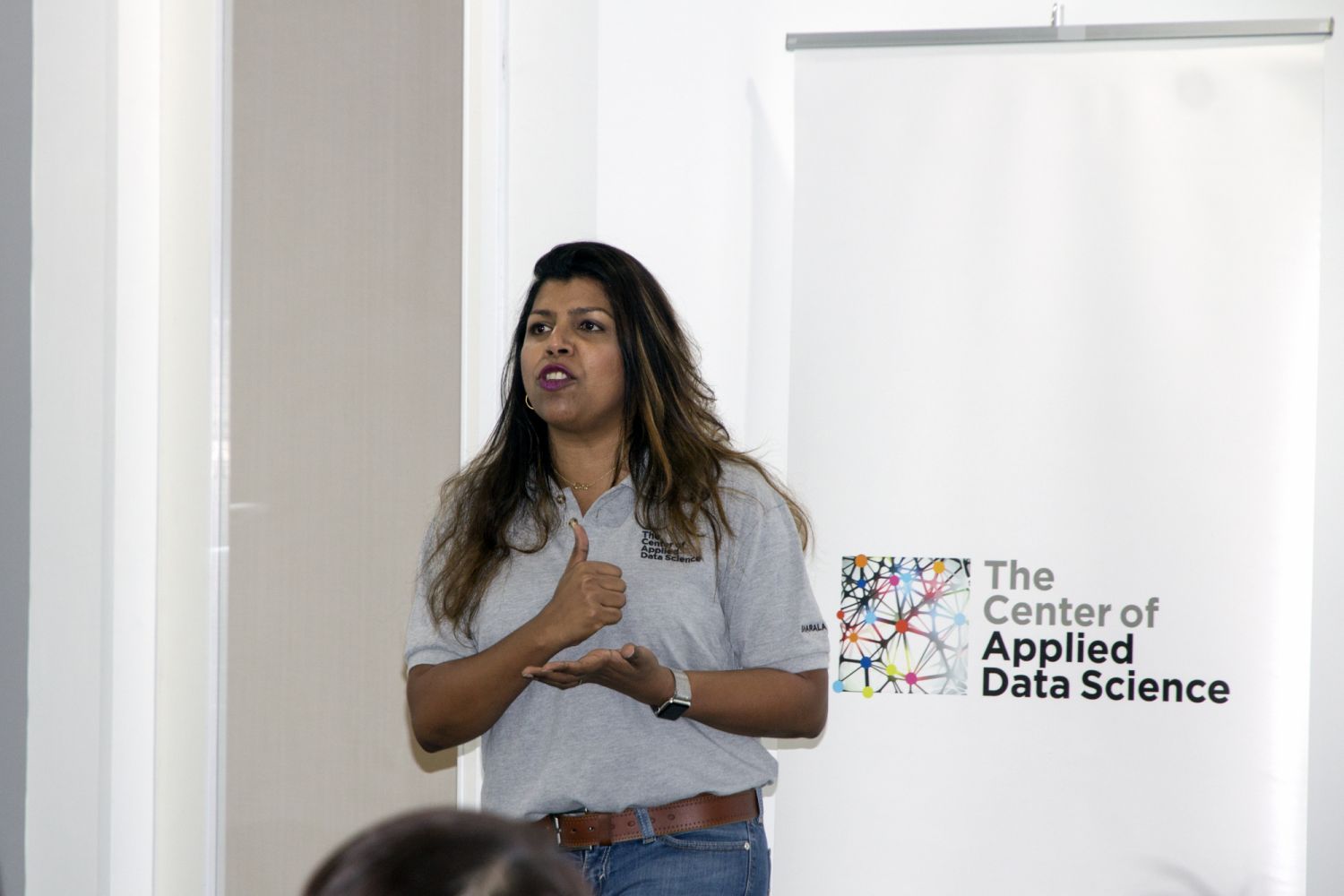
Above Axryd speaking at an event held by CADS (Photo: CADS)
Axryd speaking at an event held by CADS (Photo: CADS)
1 / 1
In the male-dominated tech industry, there's no denying that women are severely under-represented. A recent study has shown that globally, women currently hold only 25 percent of coding jobs, with the percentage of women in computer science dropping significantly each year.
Axryd claims that the lack of women in technology is "absolutely noticeable" to her. "It has bothered me for many years," she says. "There’s a cultural expectation for women to stay home if they can afford to do so, and I think this is a huge factor. I remember telling my husband I should stay home, feeling this deep guilt that I wasn’t doing right by my child."
But Axryd quickly realised the importance of staying in the workforce and continuing her passion. "Successful children come from successful parents and I think it’s really important for my daughter to see me working and doing what I love."
Related: Lessons from Mumpreneur Claudia Li-Gjojonegoro on Raising a Baby and Building a Brand
It’s just not enough having men, we need everyone. We are only catering to perhaps 30 percent of what is needed, so we need to increase data literacy among women to improve these statistics.
Axryd firmly believes that the biggest issue obstructing countries in the ASEAN region from boosting their economies is the lack of people in the digital workforce.
"We have to be clear about the digital economy, this Industry 4.0," she expresses. Industry 4.0 is also known as the Fourth Industrial Revolution, which conceptualises rapid changes in various industries due to the rise of smart automation.
"If you take the ASEAN as a whole, we are one of the youngest populations in the world. If we embrace the digital economy, we have the potential to grow our GDP exponentially."
The numbers speak for themselves. According to the Malaysian Investment Development Authority, in 2020, the digital economy contributed 22.6 percent of Malaysia's GDP, with the Covid-19 pandemic playing a key role in accelerating its growth.
"We need more talents. It’s just not enough having men, we need everyone." she reiterates. "We are only catering to perhaps 30 percent of what is needed, so we need to increase data literacy among women to improve these statistics."
Related: Speaking Up and Embracing Challenges: 3 Female CEOs Who Walk the Talk
Axryd has observed that the sheer competitiveness of the tech industry is a significant problem. "In the STEM field, there may be 10 positions available but nine of those will be pretty much reserved for men, so you’re left competing with other women for that one last spot. It’s never about the other nine positions that are technically available."
Axryd labels this systematic discrimination as 'infused biases'. Still, by empowering more women to enter the STEM workforce, there will be more female mentors to provide specific guidance to young women starting out in the industry, which Axryd believes will lead to the creation of a stronger support system for women.
"Women in top tech companies should not feel embarrassed to support other women," she muses.
It was this belief that motivated Axryd to set up Data For Her, a programme focused on addressing the shortage of diversity in the data field and encouraging women who want to take up a career in data science. About her plans for Data For Her, Axryd shares: "The future plan is simple—it is simply furthering its reach and continuing to make it widely accessible. As long as you have a phone and access to the internet, CADS will provide you with free programmes, and you will be able to learn something new."
NOW READ
Jason Wee on Spearheading Diversity Education in Malaysia
Why These Taylor's University Students Believe Sustainability is the Future of Fashion
Remembering the Life of Datin Paduka Tunku Khadijah Tunku Abdul Rahman





