
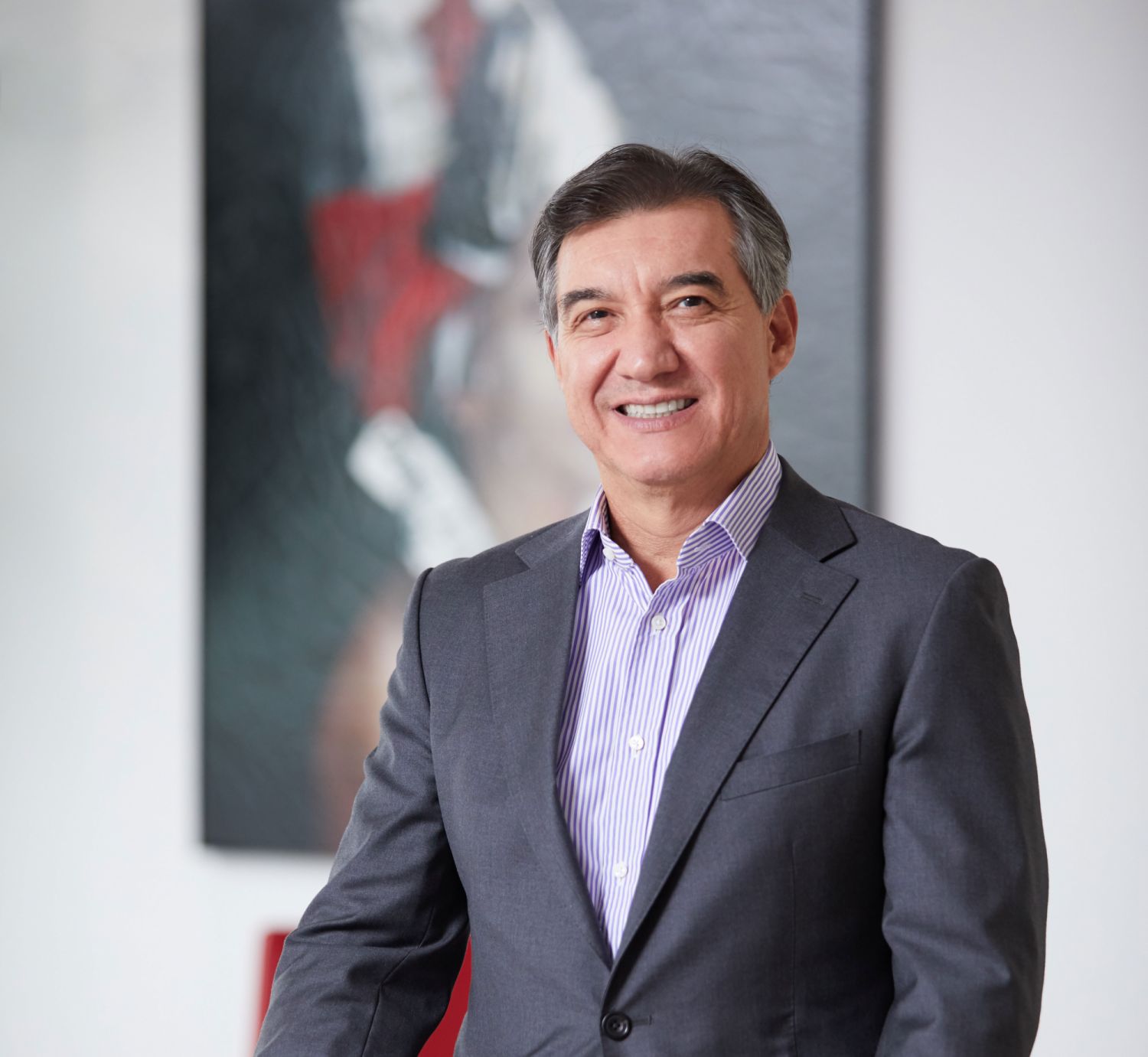
Cover Sebastian Paredes (Photo: Supplied)
Sebastian Paredes (Photo: Supplied)
1 / 1
DBS Hong Kong’s CEO explains why the bank’s success during Covid-19 came down to a positive mindset and forward planning
Envision is a series designed to bring hope to Hongkongers amid the uncertainty and isolation of the pandemic. Each week, Tatler publishes letters of encouragement and messages of positivity from the city’s most influential leaders in the realms of art, culture, business and sport. These deeply personal first-person accounts from the community can be read as love letters to Hong Kong. With restrictions easing, the series inspires and serves as a reminder that we’re all in this together, and that we will bounce back stronger than ever.
Sebastian Paredes’s energy is infectious. When Tatler spoke to him last week over Zoom, the passion he felt for his work and for his employees emanated from the screen. During a 20-minute phone call, it was evident that Paredes’ mindset is what keeps him ahead of the curve. “I remember gathering my team together, and we envisioned what the world would be like post pandemic. We thought that Covid-19 would last only six months to be very truthful. We created a plan to position us differently, and we ran several task forces,” he says.
Read all about how DBS cracked the pandemic code by being digitally savvy, and why the wellbeing of staff always came first.
May 31, 2022
It’s testing times. During the first part of the year, the [city’s] environment had turned quite pessimistic. But DBS navigated this period well because we had a very strong focus on the wellbeing of our people. We put a substantial amount of effort into understanding their personal and professional challenges—this helped us a lot over the past five months.
Almost 18 per cent of our employees had Covid-19 and almost 30 per cent were a first-contact. There was a lot of anxiety but, interestingly enough, the anxiety was not really about getting Covid-19. The anxiety was about whether they they would be sent to one of those isolation centres, where they would be separated from their families. The isolation and uncertainty was what created more anxiety.
We at DBS spent a lot of time guiding our families and our employees by giving them the support they needed; not only physically, through medical equipment and food, but psychological support too, so that they felt confident to get through the pandemic. I remained very optimistic. Lucky, [the company] didn't have any serious cases. We understood that the vaccines were effective, and that took away a lot of the anxiety about the disease in general.
[DBS went digital] many years ago. Therefore, when Covid-19 hit, it was not difficult for us to adapt to working from home. Having said that, we did have to go through a substantial amount of introspection with regards to what type of access we could give staff from home due to security and data protection.
But thankfully, we already had all the monitoring, security systems and access rights ready, so it was easier to migrate those to remote-working. We were lucky because we were ahead. We did not allow employees to work remotely in non-home settings because we didn’t feel that was right. We thought that their homes could provide the security and data protection that the customers and the industry demanded. Through our digitisation capabilities, we connected very easily to customers. The feedback that I got was really positive; customers felt that they could operate with a bank remotely from day one and, for the last two years, they themselves migrated more and more towards digital connectivity. Now, about 80 per cent of our connectivity with customers is digital.
[The bank] did a lot, which was very contrary to the times in we are living in, and that came from visualising everything with optimism and trusting that the cycle of the pandemic was going to end soon.
_____________________________________________________________________________________
My siblings and kids are in Ecuador. It has been difficult to endure because I haven’t seen my kids for almost three years. It’s difficult to spend 21 days in quarantine, but now that the quarantine has dropped to seven days it’s easier.
I travelled recently—my first time in two years—to Singapore and I’m planning to go on holiday this summer to see my Ecuadorian family. Thank God for WhatsApp and Zoom. My family and I spend a lot of time on small screens having reunions. Now that quarantine is reduced, it’ll facilitate reconnection with the family.
I took up boating during the pandemic, and I’ve been enjoying the outdoors. I have been blessed with the opportunity to escape on the weekends and get to know Hong Kong from the water. This has opened my eyes to what Hong Kong truly is: it has been an incredible escape from our lives in lockdown.
______________________________________________________________________________________
The resilience, entrepreneurial spirit and energy of Hong Kong shows you how strong [this place] is. As someone who has lived in nine different countries, I can tell you that Hong Kong has an energy that is not comparable to many other cities around the world. I don’t have any doubts that Hong Kong will bounce back. Hong Kong is a window to mainland China, and China is third largest international financial centre. Yes, we’ve seen a lot of emigration, but I think that once the borders open, people will come back.
I’m very excited for Hong Kong’s reopening. In fact, I’ve told everyone I know that we should start meeting physically. That energy that comes from seeing each other, talking and hugging has instilled a tremendous amount of energy and happiness within me. Going out and having dinner in a restaurant with other people has made me feel enriched already, and it has only been two weeks since restrictions were lifted. —Sebastian Paredes
NOW READ:
“Often, Tragedy is the Final Act Before Triumph”—Bryant Lu on Hong Kong’s Imminent Rebound
Breathing Underwater: Former Olympic Swimmer Yvette Kong Opens Up About Mental Health In Hong Kong


As Content Director at Tatler Hong Kong, Tara shapes the brand's editorial vision across social, digital and print. She also drives the planning and execution of Tatler's flagship IPs. In her dual role as Head of VIP, she reports on Asia's most influential figures — from CEOs and leaders across business, style and the arts — curates star-studded events, and builds the relationships and communities that define the brand. Born and raised in the Middle East, she honed her craft in Dubai, crafting communication strategies for luxury brands across the Gulf. Follow her on Instagram @tarasobti.





