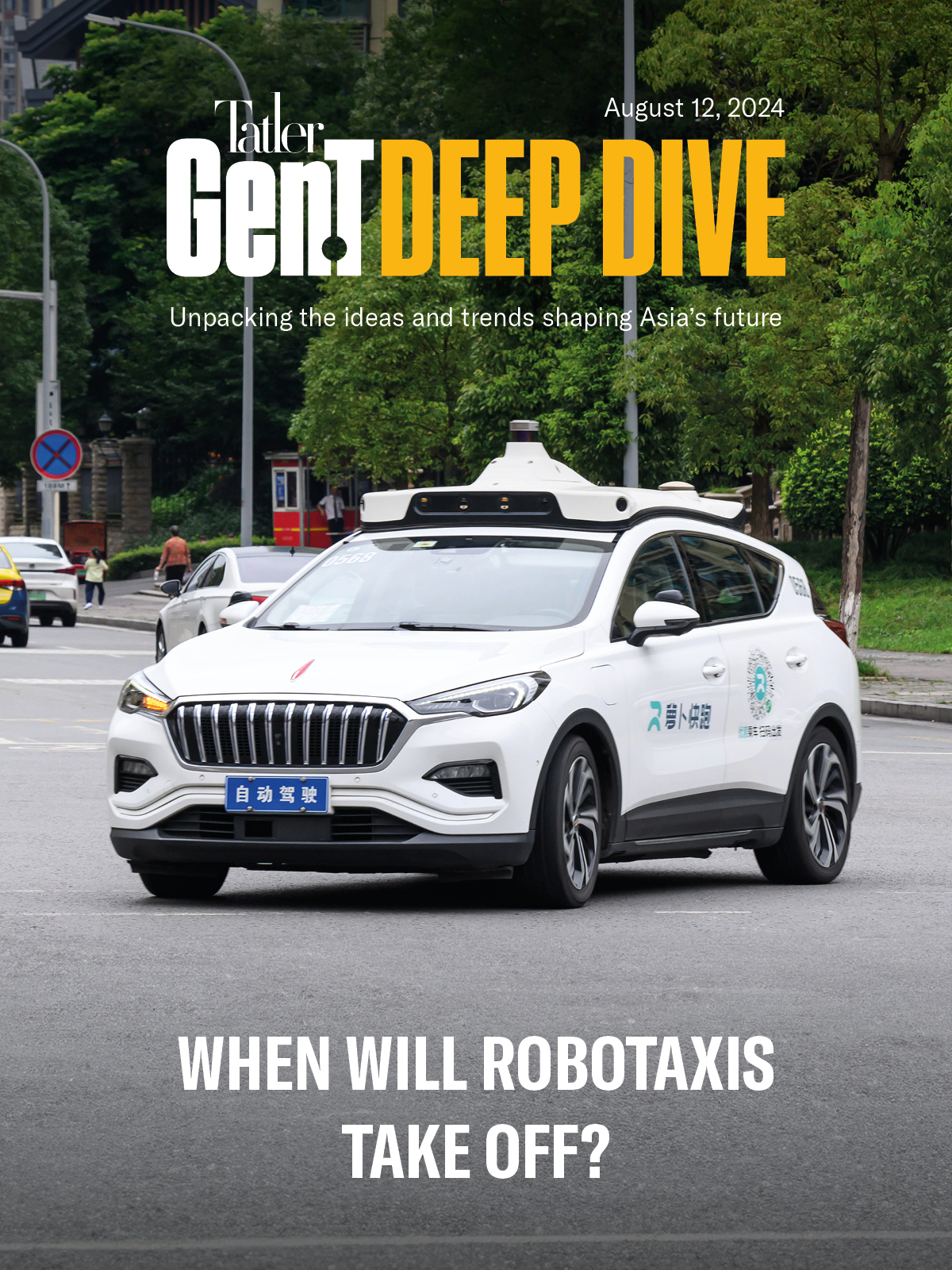
Is the future of autonomous driving stuck in neutral?
We were definitely promised a fleet of sleek robotaxis by now, but reality’s got a few potholes. So where are they? Let’s take a Deep Dive.
🚗 Robotaxis, autonomous vehicles operated by ridesharing companies, could potentially have a positive impact on road safety, congestion and the price of transportation.
⛐ But there are downsides. They could result in job losses as they come with cybersecurity vulnerabilities, and instead of reducing traffic congestion, they could actually increase it.
👾 While the runaway promise of the industry’s early years hasn’t quite come to pass yet, robotaxi services are offered by quite a few companies in China, the US, Russia and Israel.
QUOTABLE
“Next year, for sure, we will have over a million robotaxis on the road.”
— Elon Musk, CEO of Tesla, in 2019
He has repeatedly made the same prediction since; an event to launch a Tesla robotaxi on August 8, 2024 was delayed until October.
BY THE NUMBERS

QUIZ
In which city did MIT-spinoff NuTonomy conduct the first robotaxi trial in 2016?
A. San Francisco
B. Beijing
C. Singapore
Scroll to the bottom for the answer.
TATLER GEN.T x RETHINK
DID YOU KNOW?

The Society of Automotive Engineers provides the most common self-driving car classification system. Robotaxis need to qualify for levels 4 or 5, the two highest rungs.
THE EDIT
📉 Hype curve in action. There was a lot of distinctly utopian coverage in the early days of the robotaxi industry, but things have soured a little as time has gone on.
💰 Clicking into gear. With the robotaxi industry moving out of its exploratory phase, it will need to start delivering financial results soon.
🚫 Roadblocks ahead. There are still plenty of reasons why robotaxis face tough driving conditions up ahead.
😵 Who drives the self-drivers? One of the biggest concerns about robotaxis is their potential impact on employment.
WATCH
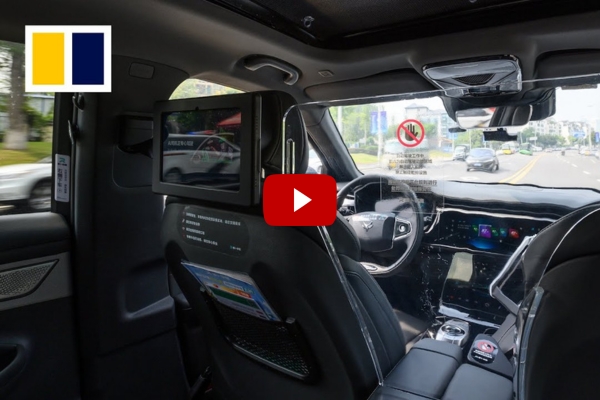
This is what the experience of hailing and riding in a robotaxi in China is like. It is mainly cheap but slow.
THE FULL PICTURE
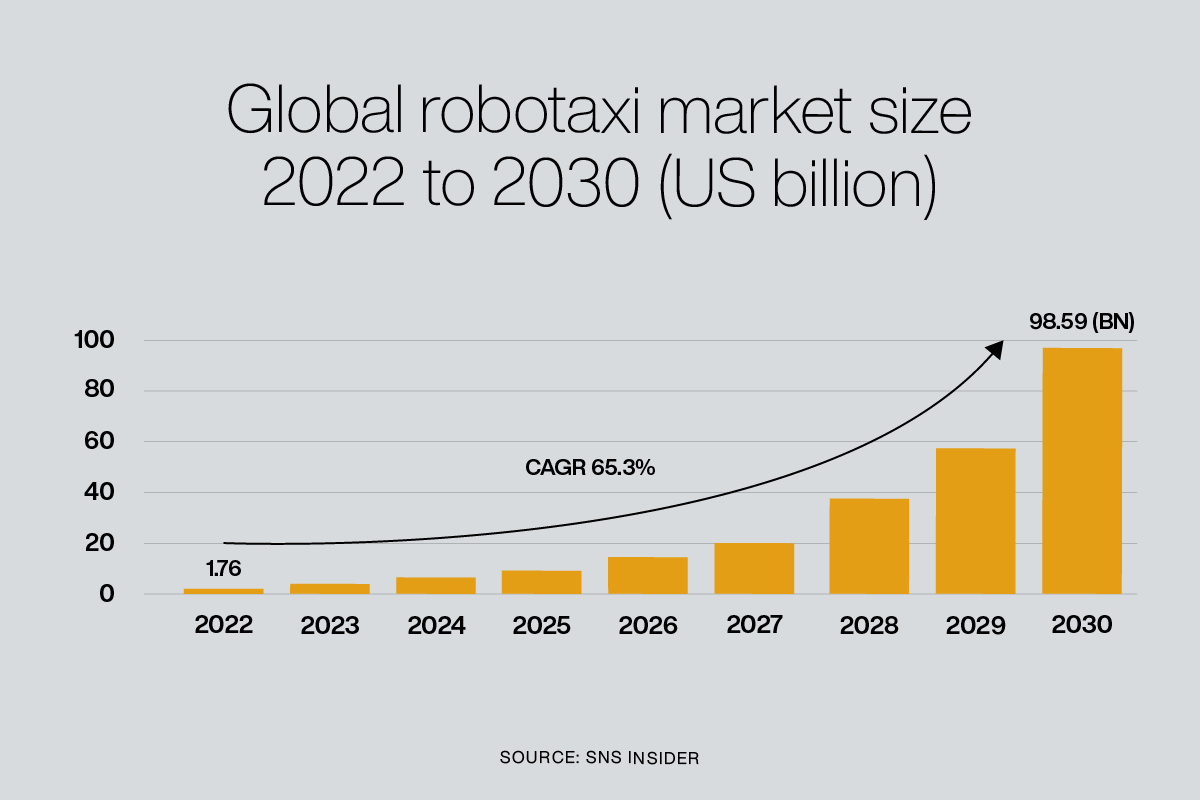
The size of the global robotaxi market is only heading in one direction and is expected to hit $98.59 billion by 2030.
KEY PLAYERS
Robin Li
The founder, CEO and chairman of Baidu, Robin Li launched Baidu Apollo in 2018. Three years later, it became the world’s largest robotaxi operator. Li wants to grow the company’s presence to 100 cities by 2030.

Tekedra Mawakana and Dmitri Dolgov
The largest robotaxi operator outside China, Waymo, is run by co-CEOs Tekedra Mawakana and Dmitri Dolgov. Now available in four US cities, Waymo is a subsidiary of deep-pocketed Alphabet, Google’s parent company.

HONOUREE TO KNOW
Jianxiong Xiao
The founder and CEO of AutoX, Xiao Jianxiong has built a company to power the autonomous car revolution. Its business model involves selling its technology to existing players and is the only company that operates fully driverless taxis in China. It also has a robotaxi licence in California.

ONE FINAL THING
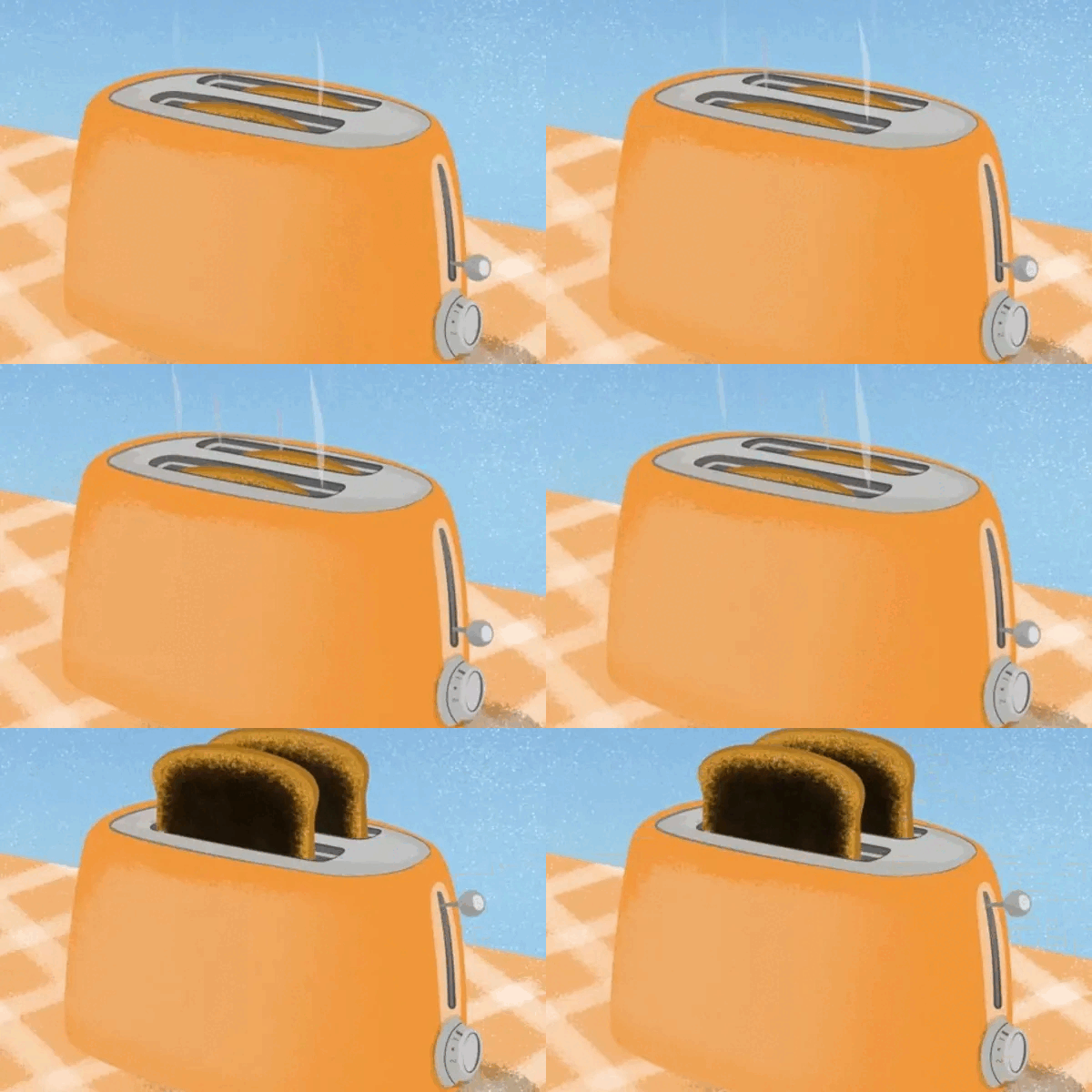
Most robotaxis try to look something like normal cars. Those from Amazon-owned Zoox, on the other hand, look like, well, toasters. Although, in a contrarian move, they’re inspired by horse-drawn carriages from the 19th century.