
Show me the money
Ever wondered why your colleague earns more than you for doing the same job? Let’s Deep Dive into the surprisingly complex science of how salaries are determined.
💰 Your salary isn’t just a number plucked from thin air. It’s the result of a system involving market data, scope of work, internal budgets and strategic corporate positioning.
📊 From job evaluation frameworks to unconscious bias, multiple factors influence what lands in your bank account each month—and many of them have nothing to do with your actual performance.
🌏 In Asia, the salary landscape is particularly complicated, with extreme variations between countries and a fierce war for digital talent driving unprecedented pay premiums.
QUOTABLE
“Equal pay for equal work. It’s common sense. It’s also overdue. Let’s close the gap and let’s do it now.”
— Joe Biden, former president of the United States

BY THE NUMBERS

8 The average salaried employee in Singapore is paid eight times more than in Jakarta, Manila or Ho Chi Minh, creating powerful “wage gravity” that pulls talent towards higher-paying hubs.
12 A star performer earning US$80,000 with 5 per cent annual raises will take almost 12 years to catch up to an average performer who negotiated a US$100,000 starting salary with 3 per cent raises annually. The lesson? Your starting salary is your most important pay negotiation.
US$0.77 The global gender pay gap sees women earning just US$0.77 for every dollar men earn, with South Asia reporting one of the highest disparities.
QUIZ
According to research by consulting firm Mercer, what are nearly 50 per cent of employees in Asia willing to accept a 10 per cent pay cut for?
A. Less work
B. Equity stake in the company
C. More well-being benefits
Scroll to the bottom for the answer.
DID YOU KNOW?

The way companies describe their compensation philosophy—whether they “lead”, “match”, or “lag’ the market—is more than just HR jargon. It’s a form of employer branding that actively shapes which candidates apply.
THE EDIT
🦘 Pay jump. Because organisations tend to offer higher pay to attract new talent, loyal employees may find their pay lagging behind that of their new peers.
🤩 Pay-for-performance. Research has shown that not all employees are entirely motivated by monetary rewards. Some prefer to be rewarded with pride, making the task of employee satisfaction that much more diverse.
👔 The classification trap. Traditional job evaluation systems define your worth based on a static job description, which can disincentivise flexibility and punish employees who take on responsibilities beyond their formal role—a major barrier to organisational agility.
WATCH

This video breaks down the factors that influence how companies determine salaries for employees.
THE FULL PICTURE
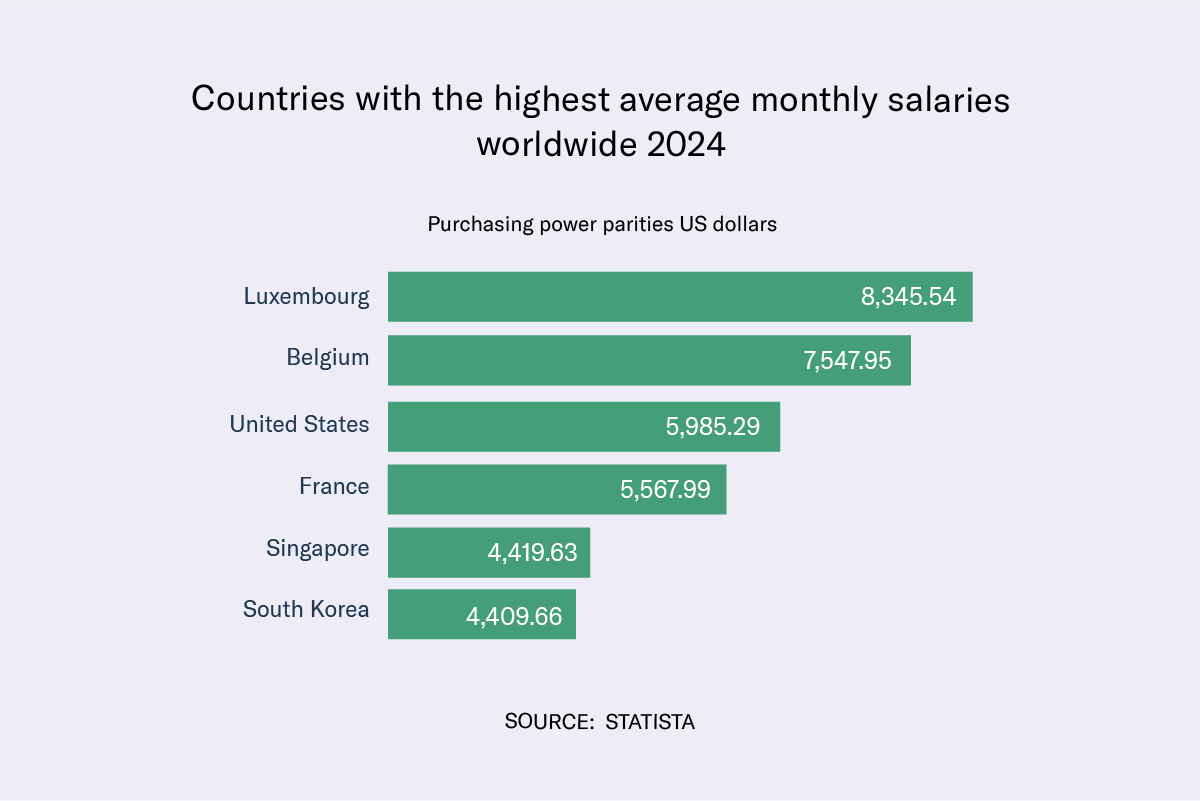
In 2024, Luxembourg led global salary rankings with an average of US$8,345, followed by Belgium at US$7,547. The US came in sixth at US$5,985, whilst both Singapore and South Korea both placed in the top 20 with average salaries of US$4,419 and US$4,409 respectively.
KEY PLAYER
Wesley Ng
Disappointed with the design of existing smartphone cases, Wesley Ng co-founded Casetify in 2011 with his school friend Ronald Yeung. The company now has more than 1,000 employees and has sold more than 25 million phone cases worldwide. In 2025, HR Asia recognised the company as one of the Best Companies to Work for in Asia, due to its workplace culture, and high levels of employee engagement.

HONOUREE TO KNOW
Sho Dewan
Sho Dewan, the founder and CEO of Workhap, has amassed a social media following in the millions by teaching professionals how to take ownership of their careers. Since founding the company in 2019, he has coached thousands of clients worldwide to land their dream jobs, and the company has also partnered with LinkedIn Learning to develop courses.

ONE FINAL THING

The residents of the Micronesian island of Yap take the term “big money” literally. Stone money larger than humans are still being used today for rights and customs, while the US dollar is used for day-to-day transactions.