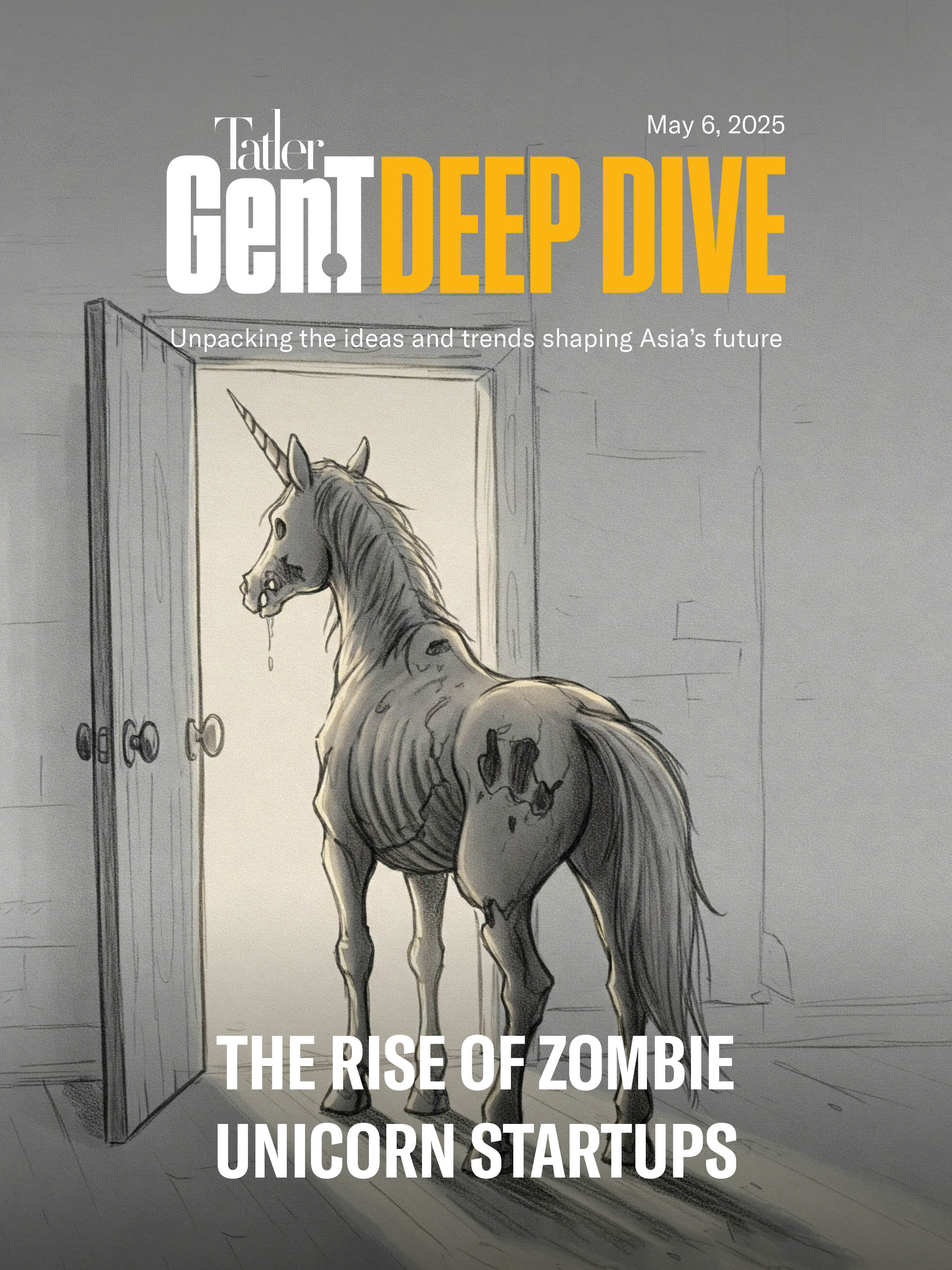
When billion-dollar dreams turn into nightmares
They were the darlings of the startup world: companies valued at over US$1 billion, promising to disrupt industries and change the world. But why are a growing number of these unicorns showing signs of “undeath”? Let’s take a Deep Dive.
🦄 Say hello to the “zombie unicorn”, also known as a “zombiecorn”, which is a privately held company valued at more than US$1 billion but burning through their cash at an unsustainable rate.
💰 The venture capital boom created a legion of zombiecorns who prioritise growth over profits—and are struggling to find a way out.
📉 Now, as funding dries up and economic realities bite, these zombie unicorns are facing the consequences, impacting investors, entrepreneurs and the future of innovation.
💡 The good news is, it’s not quite the end of the fairytale. Some may recover through strategic pivots and restructuring.
QUOTABLE
“There are two types of team members or founders: the ones that would deny that they’re in the zombie phase, and the ones who know that they’re in the zombie phase, but they just need some sort of guidance.”
— Zainab Al Sharif, partner at Plus Venture Capital

BY THE NUMBERS

110 According to CYZone’s Global Unicorn Companies Insight Report, 110 new startups reached the billion dollar valuation in 2024.
656 The US leads the pack with the most number of unicorn companies globally with 656 startups in 2024.
51% Silicon Valley unicorns are typically overvalued by about 51 per cent, according to Stanford Graduate School of Business Professor Ilya Strebulaev.
1,200 Business analytics platform CB Insights found that, as of December 2024, there are about 1,200 zombie unicorns globally waiting to go public.
QUIZ
What is a likely outcome for a zombie unicorn that is unable to secure further funding?
A. Replacing the management team
B. Acquisition at a significantly reduced valuation
C. Rapid expansion into new markets
Scroll to the bottom for the answer.
DID YOU KNOW?
Rising interest rates can significantly impact VC funding. Research suggests that for every 1 percentage point increase, VC investment can fall by approximately 25 per cent.
THE EDIT
❄️ Frozen no more. While the freeze on VC funding is one of the contributing factors to a startup’s decline, there are strategies to navigate this challenging season.
💥 Power law. VCs typically employ the Power Law model to generate the most returns—which also contributes to the rise of zombiecorns.
📉 WeWork, WeCrashed. The global provider of co-working spaces has been touted as “tech’s first zombie unicorn”. Current CEO John Santora is reviving the brand through a more traditional approach.
WATCH
Startups that once had easy access to venture capital are now facing a much tougher fundraising environment. This WSJ podcast episode covers the current startup funding scene and the pressures on founders.
THE FULL PICTURE
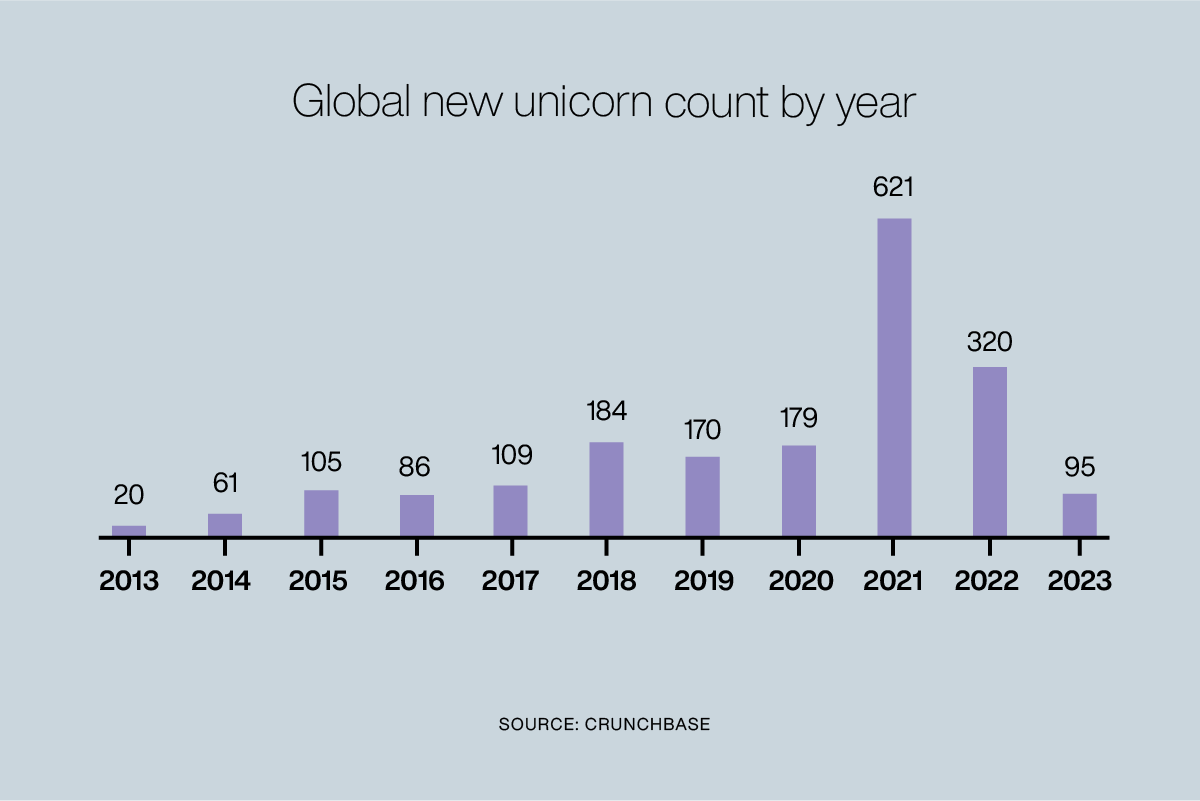
2021 was an incredible year for fundraising, with the number of unicorns hitting a peak of 621 globally. But that significantly dropped to only 95 in 2023, the lowest since 2016, because of a slowdown in venture capital funding and the sluggish IPO market among other factors.
KEY PLAYER
Mike Maples Jr
Venture capitalist Mike Maples Jr is credited with coining the term “zombiecorn” in 2016 as early signs of trouble began to surface among the first wave of unicorns.

ONE FINAL THING

Talk about entrepreneurship. Amid the shuttering of startups springs forth a new type of startup: one that specialises in helping companies wind down.