The art of being human through a screen
The rise of digital communication has created a new frontier where traditional social skills take on fresh importance and new competencies emerge. What does it mean to be socially intelligent in a mediated world? Let’s take a Deep Dive.
👨💻 The shift from face-to-face to screen-based interaction hasn’t eliminated the need for social skills. It has transformed them into a more deliberate, strategic art that requires conscious cultivation.
🏠 Working from home and away from socialising with colleagues can cause a decline in social skills, resulting in inappropriate workplace behaviours surfacing, undermining productivity and innovation.
💞 As a result, companies have started prioritising emotional intelligence (EI) over IQ in employees, recognising that decisions made with people’s feelings in mind create happier, more motivated work environments.
QUOTABLE
“You can’t learn non-verbal emotional cues from a screen in the way you can learn it from face-to-face communication.”
— Dr Yalda Uhls, founder and CEO, Centre for Scholars & Storytellers

BY THE NUMBERS

50% A study by Kruger et al in the Journal of Personality and Social Psychology cites that the tone of an email is misinterpreted 50 per cent of the time.
US$62.4 million Research involving 400 companies found that ineffective communication practices resulted in annual losses averaging US$62.4 million per organisation.
13% For every 10 per cent increase in negative experiences on social media, the University of Pittsburgh found that participants in their study reported a 13 per cent increase in feelings of loneliness. Positive interactions on the same platforms, however, do not make users feel more connected.

QUIZ
In a UCLA study, how long did it take for 11 and 12-year-olds at a device-free camp to show a substantial improvement in reading human emotions?
A. Two weeks
B. Ten days
C. Five days
D. Two days
Scroll to the bottom for the answer.
DID YOU KNOW?

A new and complex system of signals called “digital body language” has emerged to convey the subtext of our digital messages: the speed of a reply, the choice of punctuation you use and the communication medium are all powerful, unspoken cues.
THE EDIT
👀 Gen Z stare. The Gen Z stare that everyone is talking about isn’t apathy. Some experts posit that it signals a larger social disability.
😫 Empathy 2.0. Digital empathy requires explicitly naming emotions like “That sounds frustrating” and using well-chosen emojis to add emotional context that facial expressions would normally provide.
⛔ Pay no attention. A constant barrage of notifications fosters a state of perpetual partial attention, undermining our ability to listen actively and be present with others.
WATCH
In this Tedx Talk, social neuroscientist Dr Richard Lopez discusses the contradiction of the digital age and how we can leverage online platforms to reimagine closer human relationships.
THE FULL PICTURE
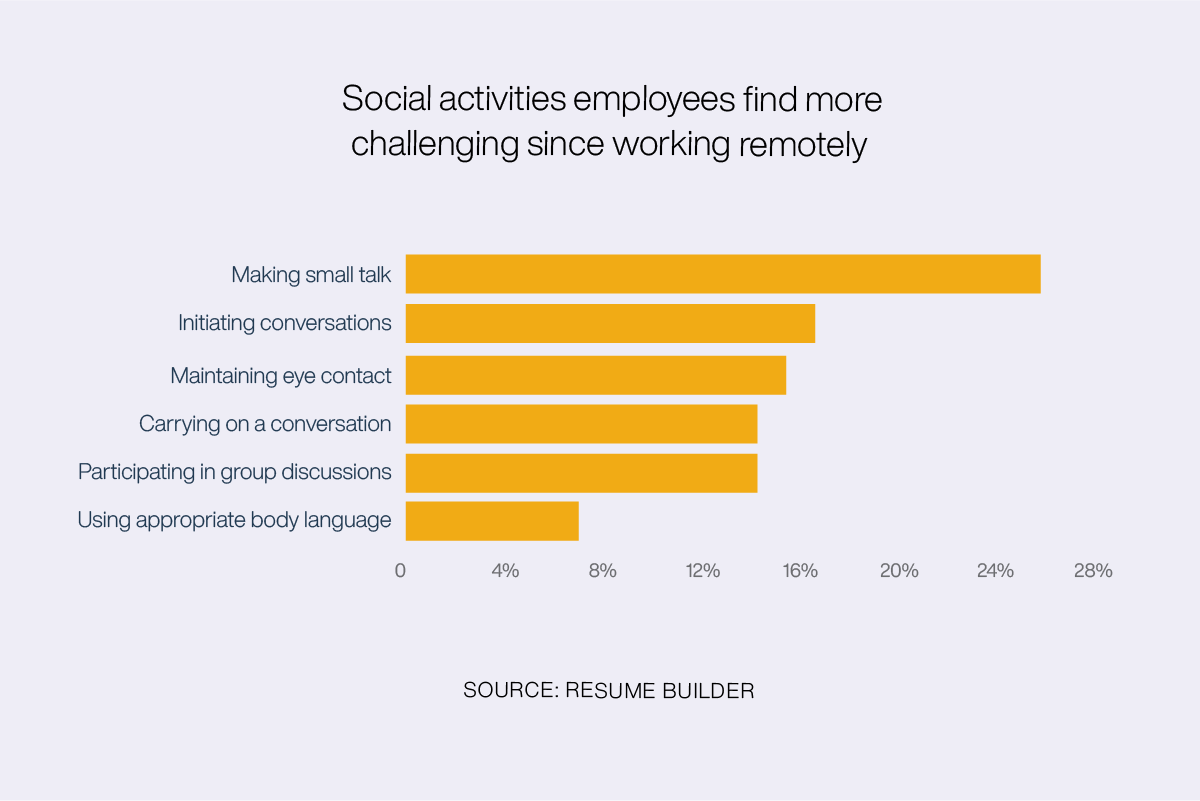
With remote work now a norm, online platform Resume Builder surveyed 1,000 remote employees and found that 27 per cent reported making small talk as the most challenging. Eighteen per cent and 16 per cent said initiating conversations and maintaining eye contact as things they struggle with, respectively.
KEY PLAYER
Dr Lim Sun Sun
Communications professor and former Nominated Member of the Parliament of Singapore, Dr Lim Sun Sun is providing critical insights on digital literacy through her research and books. Her book Transcendent Parenting: Raising Children in the Digital Age, discusses how families maintain genuine human connection in a technologically saturated world.

HONOUREE TO KNOW
Grace Ann Chua
Friendzone co-founder and CEO Grace Ann Chua reminds us that our neighbours can loan us tools, give us lifts and split that cake we can’t finish ourselves—as our college friends did. By developing workshops and peer support networks, and hosting meetups in diverse communities, her organisation is helping people form meaningful friendships.

ONE FINAL THING
Studies indicate a strong link between online disinhibition, which is the feeling of having fewer social restrictions online, and an increased likelihood of participating in cyberbullying activities.