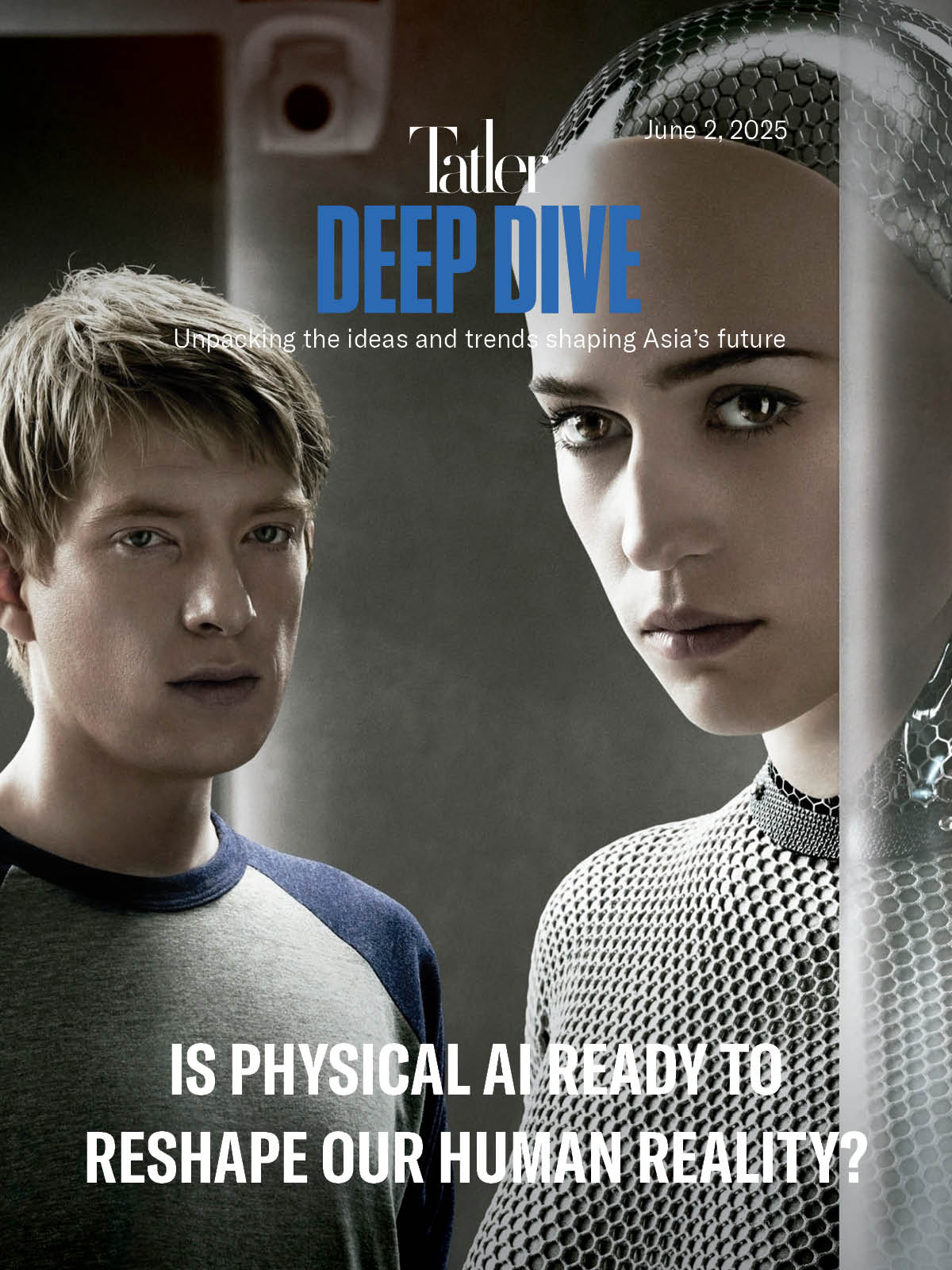
Beyond the screens and into the real-world
You’re already chatting with AI, letting it pick your next binge-watch, or getting directions from a disembodied voice. But what happens when that “brain” gets a “body”? Let’s take a Deep Dive.
🤖 Unlike traditional AI that lives in the digital realm, physical AI or embodied AI integrates intelligence with robotic bodies, autonomous vehicles and smart devices, creating systems that can perceive, reason and physically interact with their environment in real-time.
🦾 A key differentiator is the ability to learn and adapt over time. Cobots, or collaborative robots, can leverage real-time data and learning methods to physically interact with their surroundings.
🤔 While the promise of efficiency and innovation is huge, so are the questions about energy constraints, safety and ethics.
QUOTABLE
“We are entering an era where AI is no longer confined to screens and datasets but will actively contribute to discoveries in the physical world.”
— Sami Haddadin, Director of the Munich Institute of Robotics and Machine Intelligence

BY THE NUMBERS

97 million A 2024 World Economic Forum report projects that despite automation displacing jobs, as many as 97 million new positions will be created in AI, data analysis and tech fields.
50.2% Using automation, physical AI and data-driven process improvements, China’s smart factories have reduced defect rates by 50.2 per cent.
US$16,000 The humanoid robot Unitree G1 has a price tag of US$16,000, compared to other robots that cost US$25,000 and up.
QUIZ
What is a benefit of using physical AI?
A. Significantly increasing the cost of goods and services globally
B. Risk of over-reliance on technology
C. Automation of dangerous tasks
Scroll to the bottom for the answer.
TATLER FRONT & FEMALE AWARDS

DID YOU KNOW?

News presentation has come a long way. We’ve seen developments ranging from Japan’s humanoid Kodomoroid at the National Museum of Emerging Science and Innovation (Miraikan) in Tokyo and China’s AI news anchor who debuted at the fifth World Internet Conference, to India introducing its first AI presenter on air in 2023.
THE EDIT
The nurse is in. From Taiwan’s Nurabot to China’s eldercare humanoids providing companionship, physical AI is addressing Asia’s ageing society challenges.
Work. Work. Work. Companies like UBTech and AgiBot are deploying robots on production lines, and training them for tasks from folding clothes to making sandwiches.
Dark factories. Also known as lights-out factories, AI, robotics and digital twins are reshaping industrial automation.
Smart nation. Launched in 2016, Singapore’s Smart Nation Initiative has since implemented various automated solutions, including patrol robots and self-driving shuttles across the island state.
WATCH
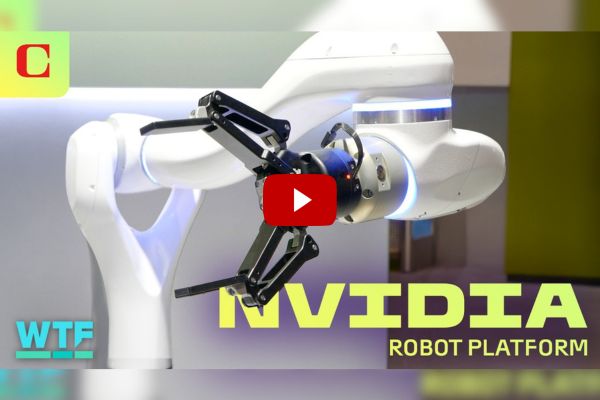
At Nvidia’s GPU Technology Conference 2025, CEO Jensen Huang announced it is offering a suite of technologies to help robots operate properly in the real world, such as the Isaac GR00T N1. This pre-trained AI model serves as a foundational base for human-like robots, allowing them to capably navigate real-world environments.
THE FULL PICTURE
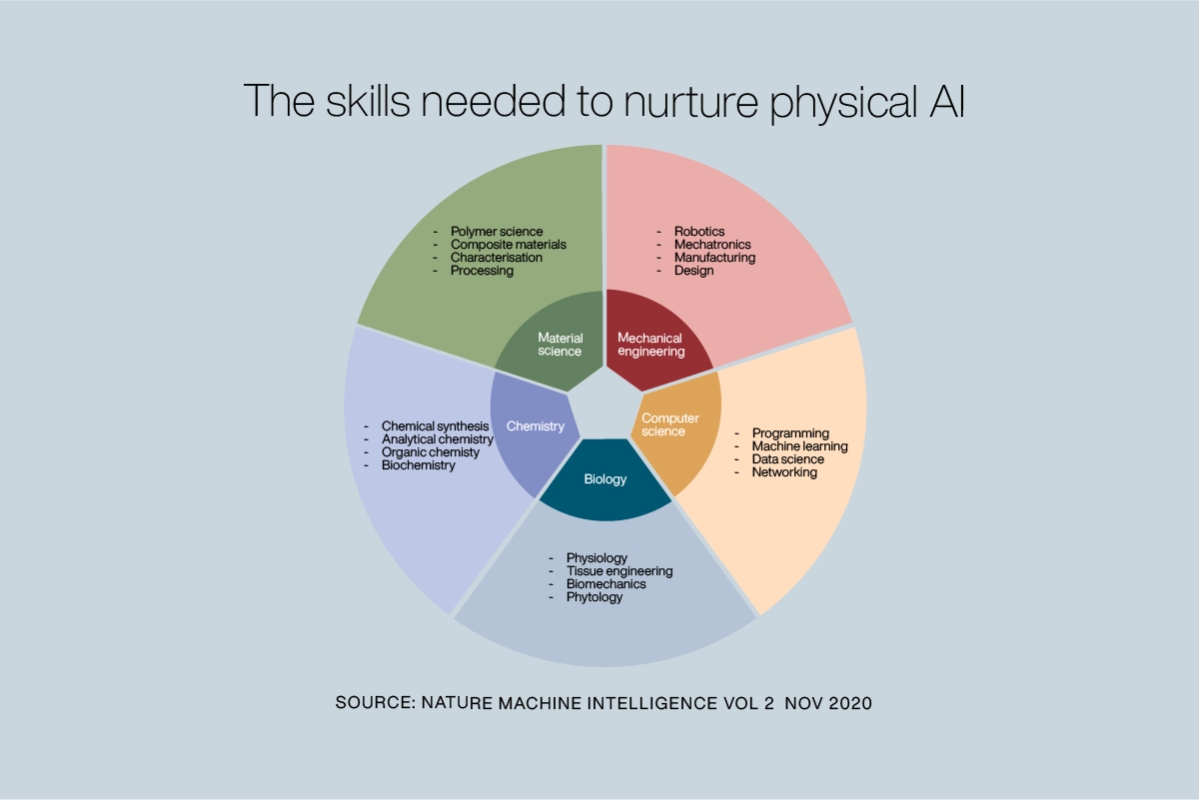
While AI “brains” have advanced rapidly, developing capable robot “bodies” have lagged decades behind. According to scientist Aslan Miriyev and Professor Mirko Kovač, physical AI requires five main disciplines—materials science, mechanical engineering, computer science, biology and chemistry—to thrive.
KEY PLAYER
Jeanne Lim
Co-created by Jeanne Lim in 2016, Hanson Robotics’ Sophia the Robot is described as a turning point for human-robot relations thanks to a combination of sophisticated AI-driven social interactions, lifelike appearance and expressive capabilities. She is also the first robot to be granted citizenship.

HONOUREE TO KNOW
Daryl Lim
Daryl Lim’s Augmentus Robotics, has created a code-free programme that can help manufacturers develop robotic systems. It uses intelligent 3D scanning and AI motion techniques to allow them to programme robots in minutes, helping them avoid the usual high costs and complicated coding languages.

ONE FINAL THING

Before real-time obstacle avoidance was advanced and robots had “eyes”, the cleaning vacuum that was supposed to keep your space spick and span would instead run over pets’ poop, creating what users called a “poopocalypse” or “pooptastrophe” in the house.