Focusing on what matters
Back to work and already feeling like you’re getting sucked back into the rat race? Your detoxed mind will want to know the insights in this week’s Deep Dive.
📚 Our lives are full of interruptions. So much so that researchers are studying how these disruptions are affecting our performance and ability to focus every day—and calling it interruption science.
🧠 We often celebrate the ability to multitask because, in theory, it sounds like it boosts productivity. But studies show that there are hidden “switching costs” and mental overload on complex tasks can end very badly.
🧐 The lack of focus can be caused by larger medical issues like anxiety, depression or attention-deficient hyperactive disorder (ADHD).
QUOTABLE
“The successful warrior is the average man, with laser-like focus.”
- Bruce Lee, martial artist and actor

BY THE NUMBERS
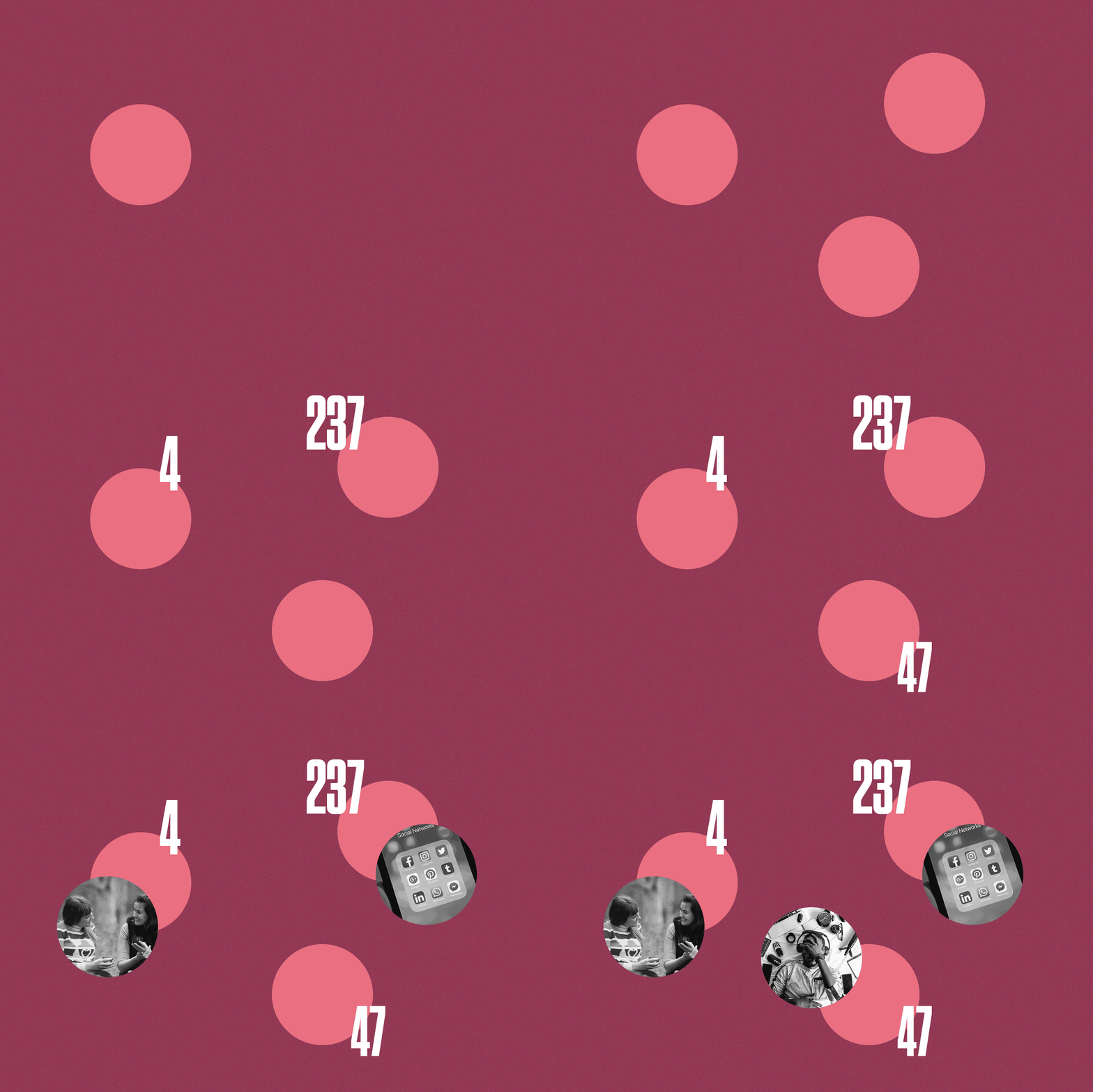
4 There are 4 different types of attention in psychology: selective, divided, sustained and executive.
237 In a typical day, a teen receives 237 or more notifications on their mobile phone.
47 The current attention span to one screen stands at an average of 47 seconds, down from 2.5 minutes in 2004.
QUIZ
According to a study by the University of California, Irvine, how much time do we need to regain our focus on a task at hand after being interrupted?
A. 30 minutes
B. 23 minutes
C. 11 minutes
Scroll to the bottom for the answer.
DID YOU KNOW?

Aside from the well-known frontal lobe, a surprising part of the brain has been uncovered to play a part in steering attention: the temporal lobe.
THE EDIT
🤖 The AIs have it. Companies are increasingly using AI to steal our attention and we are unaware.
🔋 Opposites do more than just attract. Engaging in hobbies or activities which are distinctly different from your work during the weekend can help you feel the most rejuvenated.
🎶 Old but gold. No one type of music can directly boost your focus, but familiar music can maximise concentration.
♠️ Yet, novelty is key. Dave Farrow, a two-time Guinness World Records holder for memorising the most decks of playing cards, says it is one strategy that helps boost his memory.
WATCH
Chris Bailey, author of the book Hyperfocus, shares how his attention span grew when he limited his screen time and the benefits of being bored.
THE FULL PICTURE
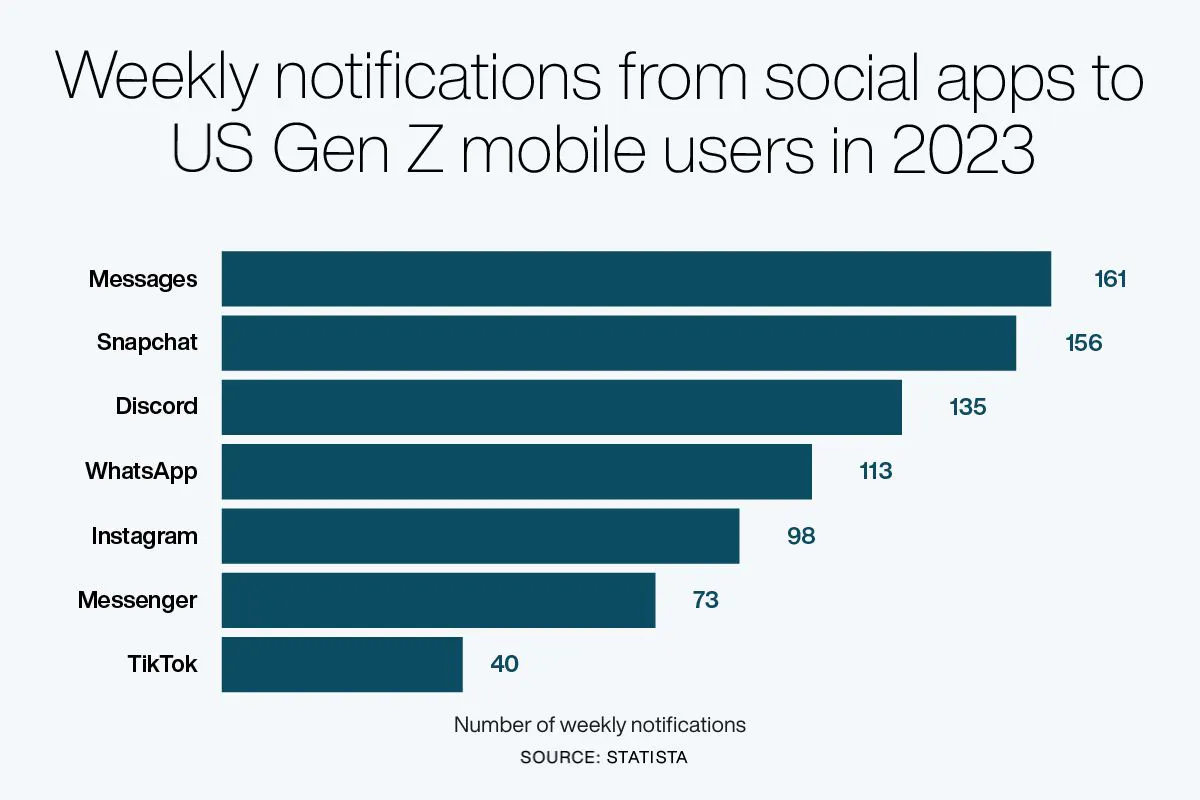
A study found that Gen Z mobile users in the US receive an average of 161 notifications a week on their Messages app, the highest number among selected social apps that also include Discord, TikTok and WhatsApp. They receive the least—about 16 notifications—on Facebook.
KEY PLAYER
Wilhelm Wundt
German physiologist, philosopher, and professor Wilhelm Wundt is considered one of the founders of modern psychology. He introduced and studied the concept of attention, distinguishing between broad and restricted fields of awareness.

HONOUREE TO KNOW
Poh Yun Ru
One agony of dementia is that patients lose basic life skills. But Poh Yun Ru’s Rewind, a cognitive stimulation therapy tool, is turning back the clock. Rewind uses visual aids, motion-tracking tools and sensory cues to spur memory for the users. It won the 2022 Grand Prix at Lexus Design Award and iF Design Award.

ONE FINAL THING

The Ovsiankina effect—studied by Russian psychologist Maria Ovsiankina—reveals that when individuals do not complete a task, they experience ongoing intrusive thoughts and have a more vivid recollection of tasks that were interrupted or left incomplete.