From ;-) :-D to 😉😊
They are the digital hieroglyphs of our time, shaping the nuance and identity of every text-based conversation. How did these colourful icons evolve from niche digital curiosities to a universal form of expression? Let’s take a Deep Dive.
💻 Before there was emoji, there was the emoticon. In 1982, computer scientist Scott Fahlman proposed using :-) on a university bulletin board to distinguish jokes from serious posts, kicking off a new era of digital expression.
🇯🇵 While the West was winking with ;-), Japan independently developed its own expressive, upright kaomoji (^_^).
📱 Emojis became mainstream once they were included in the Unicode Standard, an encoding system that ensures they appear the same across different devices and apps.
💀 Gen Z uses emojis playfully and ironically, resulting in a generational gap in meaning that can cause miscommunication with older users who tend to take them at face value.
QUOTABLE
“Emoji didn’t become so essential because they stand in for words—but because they finally made writing a lot more like talking.”
— Gretchen McCulloch, linguist and author of Because Internet

BY THE NUMBERS

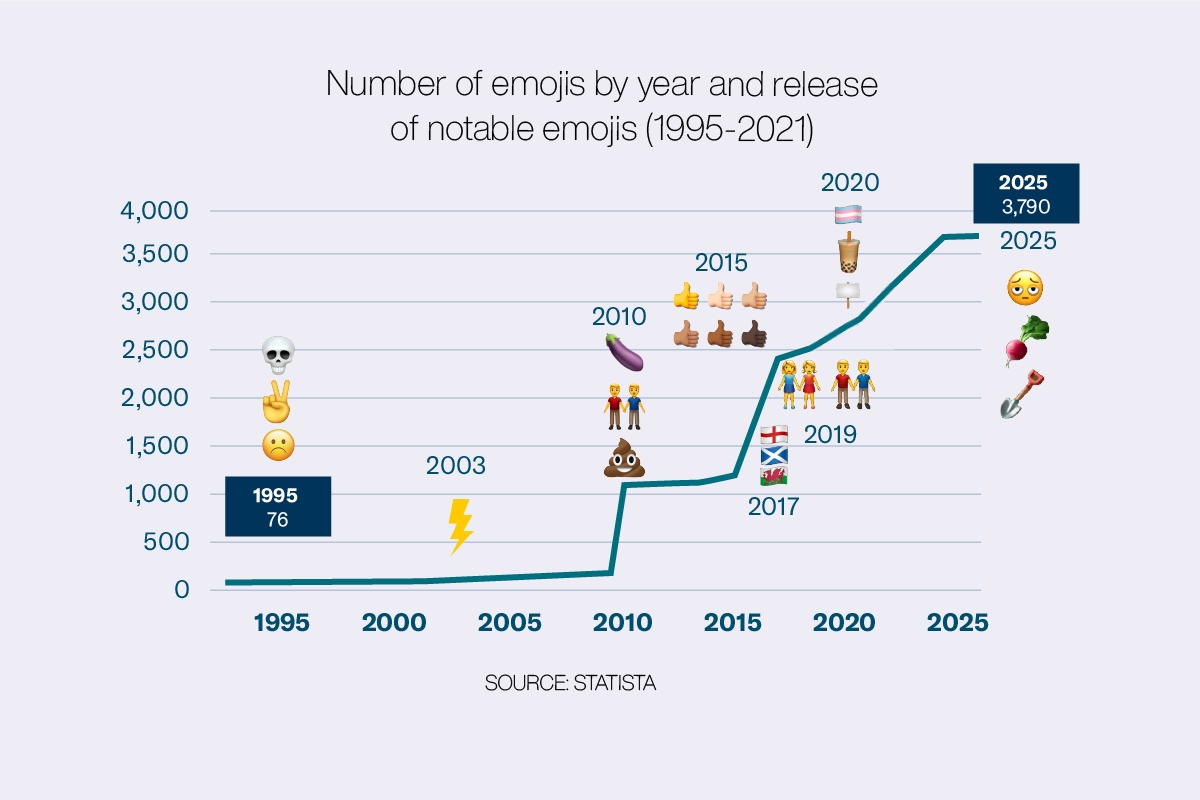
3,790 The release of Emoji 16.0 in September 2024 brought the total number of emojis to 3,790.
5 billion Five billion emojis are sent daily on Facebook and in Facebook Messenger alone.
92% Ninety-two per cent of global users use emojis to communicate across language barriers.
73% Seventy-three per cent of global users use emojis to express love, the most common emotion, followed by happiness.
QUIZ
Which Apple iOS version first made the emoji keyboard available to all users?
A. iOS 2.2
B. iOS 1.5
C. iOS 2.5
D. iOS 2.1
Scroll to the bottom for the answer.
DID YOU KNOW?
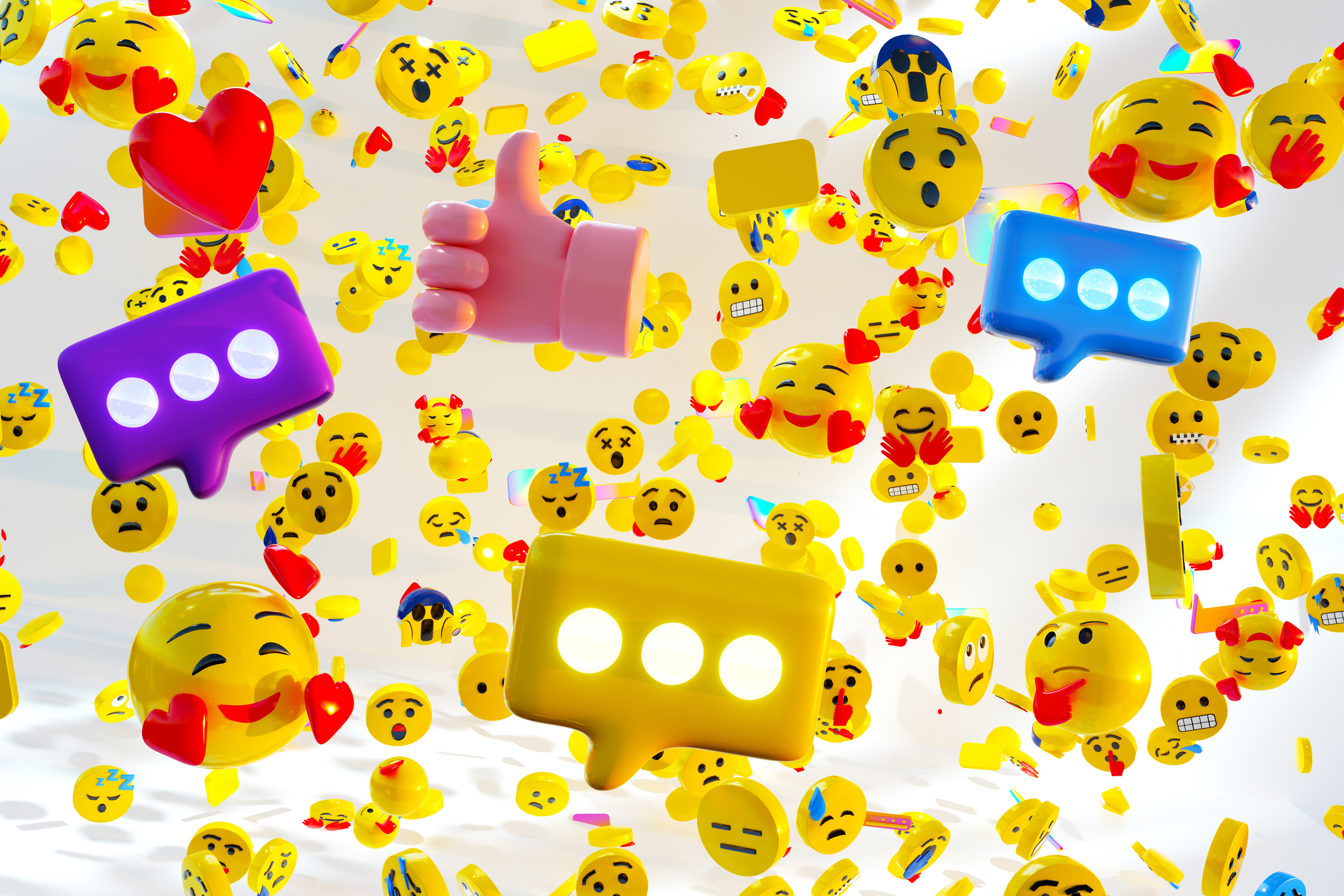
How you use emojis can signify your age. Different generations have their own distinct emoji languages—that 😂 you think means “laughing out loud” is considered cringe by Zoomers, who prefer to use the skull emoji 💀 to show they’re dying of laughter.
THE EDIT
👩🏻⚖️ Court drama. Emojis have entered courtrooms as evidence, challenging judges and juries to interpret digital intent.
🫂 Text hugs. Emojis add tone and warmth to text, making conversations feel more personal and less prone to misunderstanding.
✌🏼 Skin deep. More gender options, skin tones and disability representation have made emoji more diverse than ever.
WATCH
Vice News interviews Japanese designer Shigetake Kurita on how and why he created emoji characters, and when he realised they had gone global.
KEY PLAYER
Shigetaka Kurita
Japanese designer Shigetaka Kurita is widely recognised as the creator of the world’s first emoji set. The 176 simple, 12x12 pixel icons that he created while at telco NTT DoCoMo are now celebrated as the birth of the modern emoji.

HONOUREE TO KNOW
Ray Chan
Ray Chan co-founded and leads 9gag, an online meme community boasting more than 300 million users. He didn’t just build a website; he built one of the world’s most powerful engines for internet slang, proving that viral images can be a universal language for sharing culture and identity.

ONE FINAL THING
In 2015, the Oxford Dictionary Word of the Year was not a word at all. It was the 😂 “face of tears of joy”, making it the first pictograph to receive the title. It was chosen as it reflected the “ethos, mood and preoccupations of 2015”.