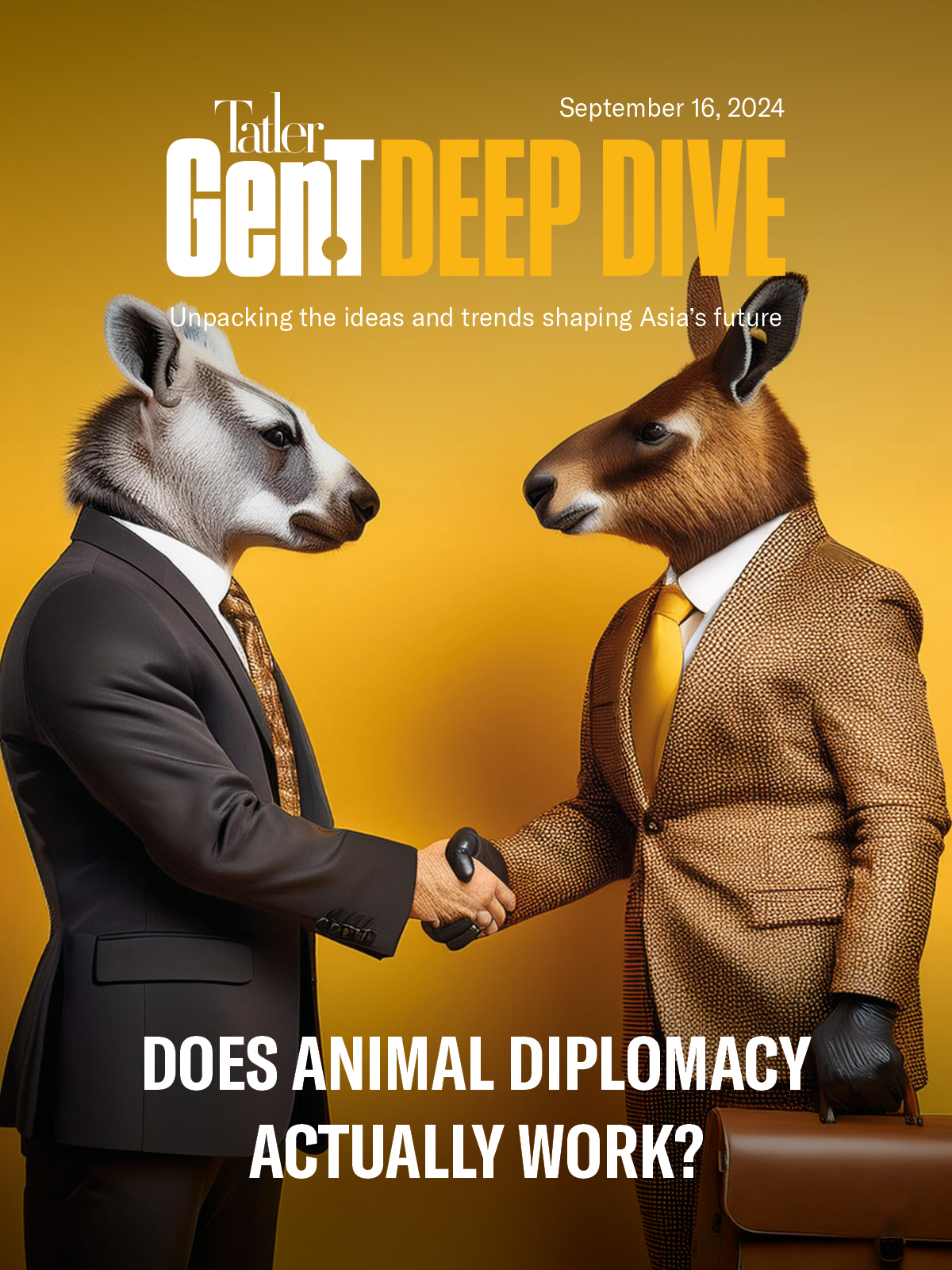
Exploring the soft power of animals in international affairs
From pandas to orangutans and koalas, animals have long played a role in symbolising goodwill and fostering international cooperation. But can animal diplomacy build truly meaningful, lasting ties between nations? Let’s take a Deep Dive.
🐘 Though animals have long been used in diplomatic relations, former Indian prime minister Jawaharlal Nehru’s practice of sending baby elephants to countries where children would correspond with him directly, added a personal touch to this tradition.
🐼 Panda diplomacy works for three reasons: they’re cute, they’re indigenous to China and the diplomacy programme doubles as a conservation project.
🌴 The EU’s ban on products linked to deforestation has spurred Malaysia to start its own orangutan diplomacy programme.
QUOTABLE
“It is obscene, repugnant and extraordinarily hypocritical to destroy rainforests where orangutans live, take them away and give them as gifts to curry favour with other nations. It totally goes against how we should be protecting them and our planet.”
— Stuart Pimm, ecologist and Doris Duke Chair of Conservation Ecology at Duke University

BY THE NUMBERS

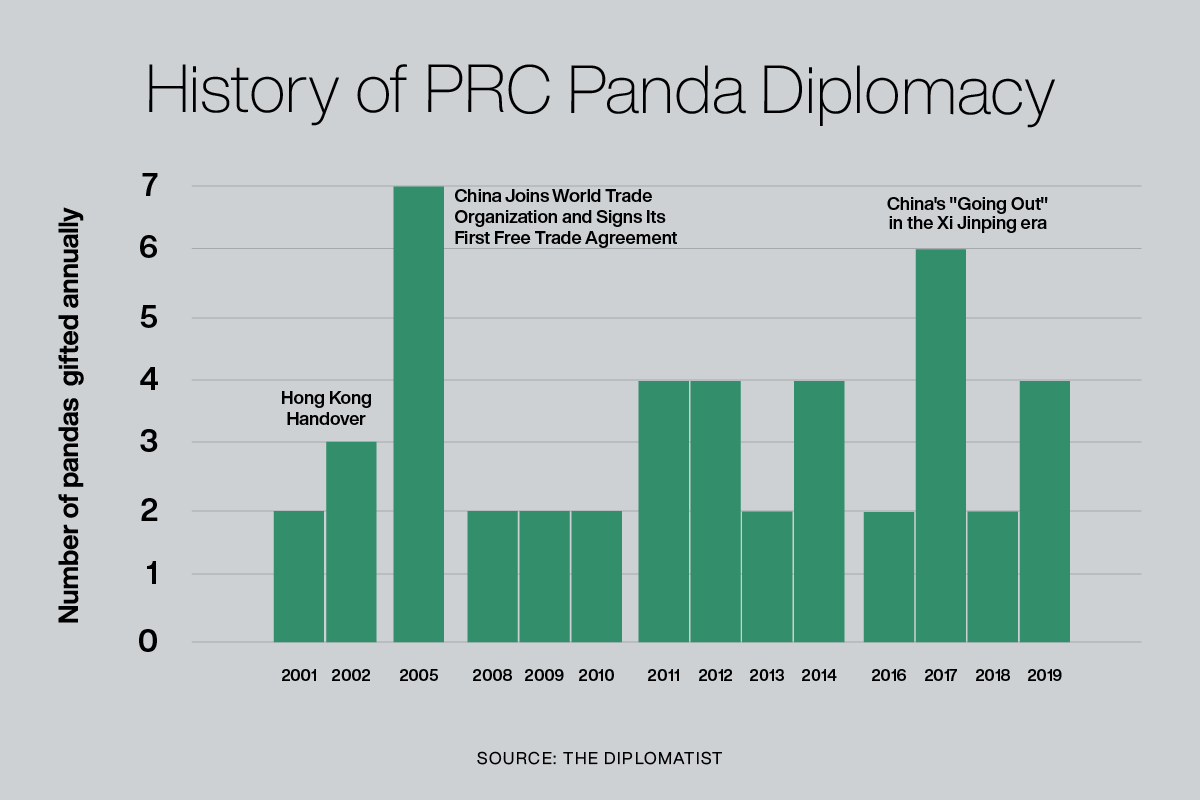
1972 In 1972, a new era of panda diplomacy began thanks to a comment by former US First Lady Pat Nixon.
US$1 million China leases each panda for US$1 million a year. Half of that amount goes into animal conservation efforts.
673 There are 673 pandas in zoos and breeding centres around the world, including two in Taiwan.
84,800 Only 84,800 orangutans are left in the wild, making them critically endangered.
QUIZ
Which country, outside of China, has the highest number of pandas?
A. Japan
B. Scotland
C. Australia
Scroll to the bottom for the answer.
DID YOU KNOW?
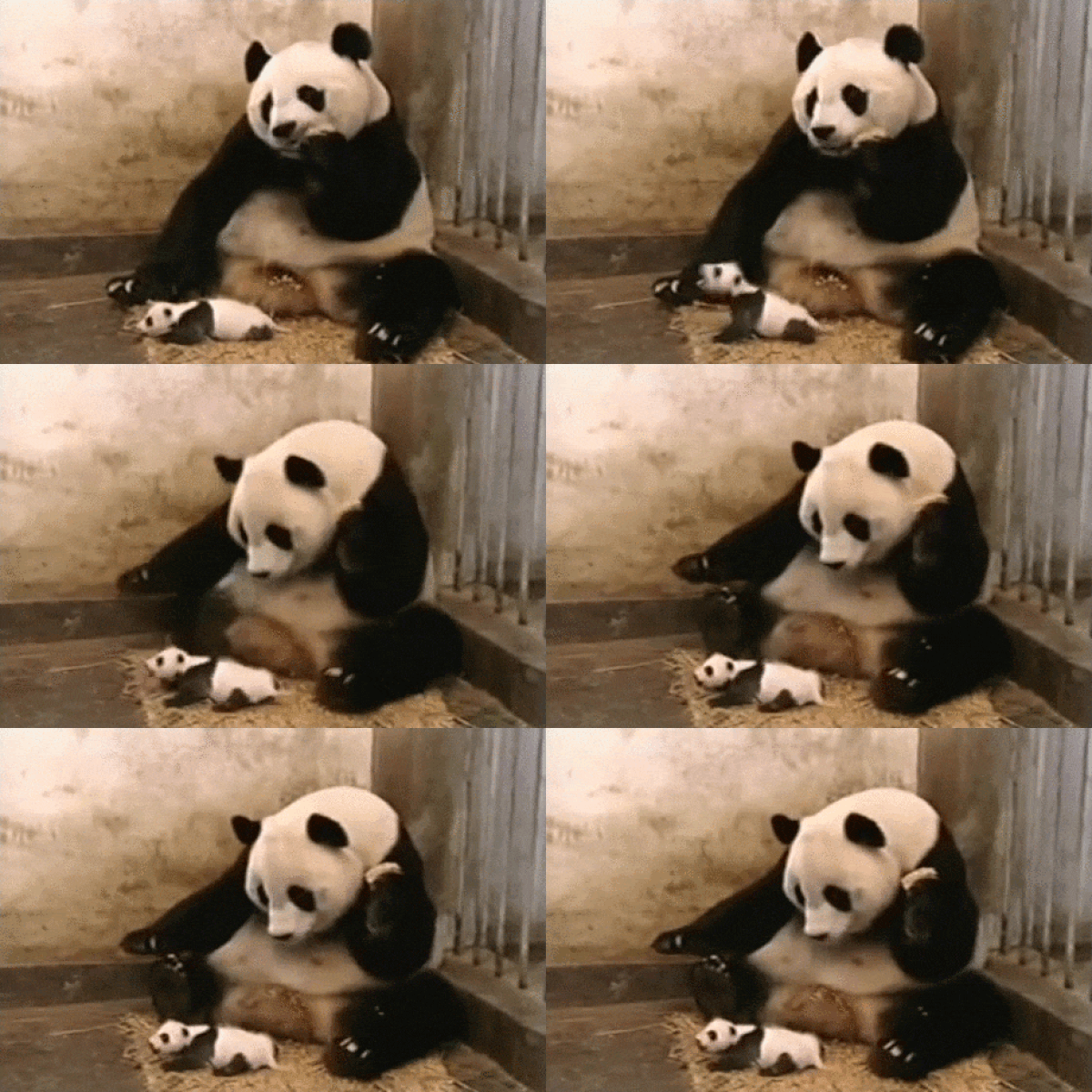
A key component of panda diplomacy is to encourage procreation, but getting pandas to mate is not so simple.
THE EDIT
🤑 China has long used pandas to signal which countries are its friends.
🤔 Unlike China’s panda programme, which often links placements to zoo quality and diplomatic ties, Malaysia wants to send orangutans to India, China and the EU, its largest palm oil trading partners.
✂️ The US went from having 17 pandas to now just two, largely part to the declining relationship between the two superpowers. Other countries, too, have recently returned their pandas to China, like Finland and Australia.
🤕 A recent animal diplomacy spat between Sri Lanka and Thailand has caused an elephantine issue between the two countries.

GEN.T x INNOPARK

For roughly half of the global population, medical imaging—a crucial tool that aids in diagnosis and treatment—remains out of reach. Simon Yeung’s Time Medical is dedicated to closing this gap by developing cost-effective imaging solutions that are accessible to everyone.
KEY PLAYER
Xi Jinping
The leader of China has followed in his predecessors’ footsteps and used pandas to signal his country’s diplomatic relations. He signalled his displeasure with Malaysia following the disappearance of MH 370 by delaying sending two pandas to the National Zoo of Malaysia, while recent tense relations with the US are reflected in the number of pandas left in the zoos there.
HONOUREE TO KNOW
Andie Ang
Andie Ang chairs the Raffles’ Banded Langur Working Group and is the head of Primate Conservation & Singapore Programmes at Mandai Nature Singapore. The primatologist travels the world to study endangered monkeys and is working to raise awareness and appreciation of Singapore's native wildlife. She is also a research committee member of the International Primatological Society.

ONE FINAL THING
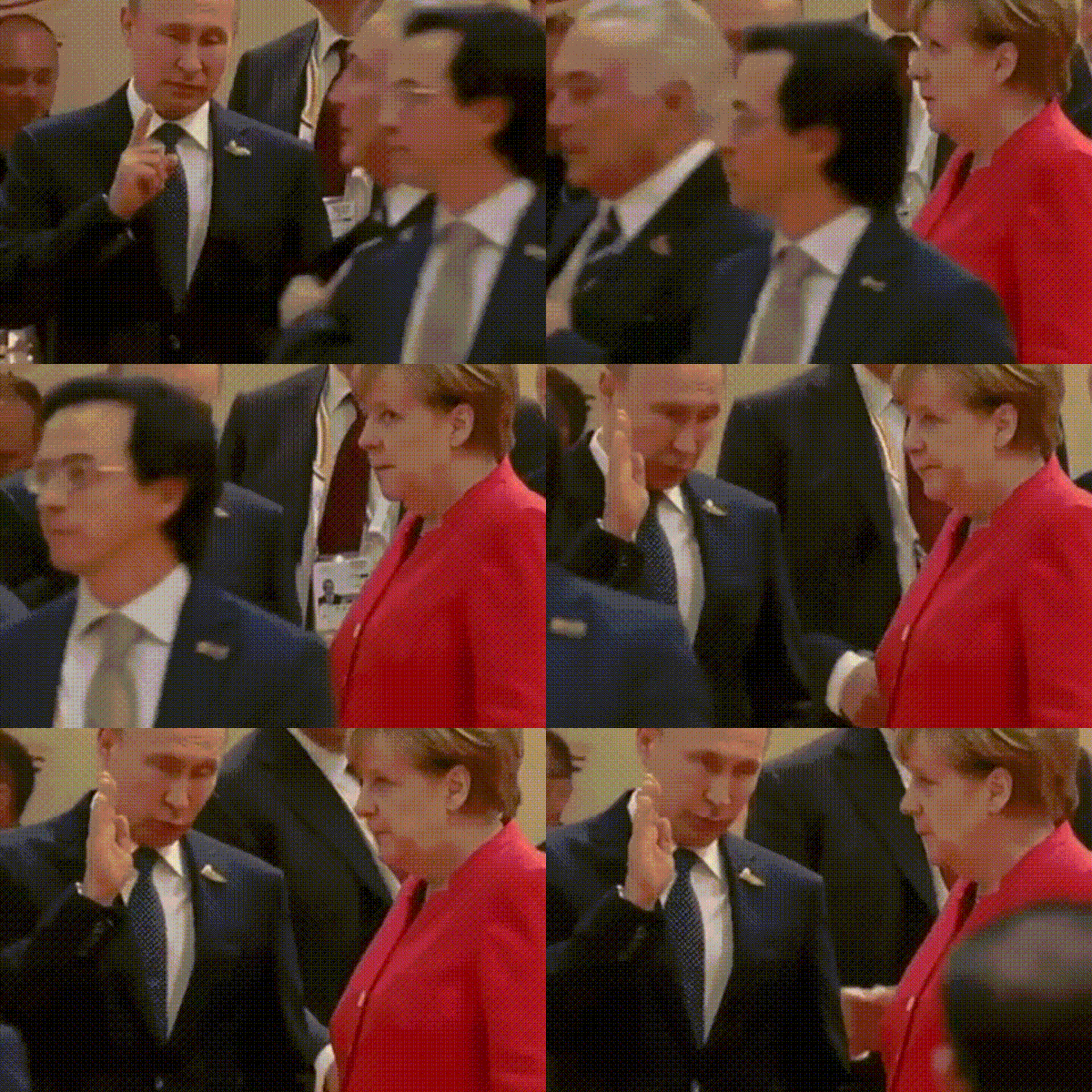
Animal diplomacy can also go horribly wrong: Russian President Vladimir Putin once brought a pooch to a meeting with the dog-fearing former German chancellor Angela Merkel, while a camel given to France by the government of Mali was slaughtered for a feast.