Namaste-cations: Where zen meets jet-setting
The days of flopping onto a sun lounger and sipping something with an umbrella in it are numbered. These days, tourism is all about the wellness. Let’s take a Deep Dive.
💊 Originally an outgrowth of the spa industry, the wellness tourism business has grown into a multiheaded beast, taking in everything from pampering to complementary medicine to yoga and meditation.
🧘 It’s divided into a smaller group of primary wellness travellers, who go on trips specifically for wellness reasons, and a larger group of secondary wellness travellers, for whom it’s just part of the reason they go.
💰 The industry is a goldmine: it’s growing fast, and attracts tourists who tend to spend a lot more than the average.
QUOTABLE
“Medical tourism can be considered a kind of import. Instead of the product coming to the consumer, as it does with cars or sneakers, the consumer is going to the product.”
— James Surowiecki, author and journalist

BY THE NUMBERS

$814.6 billion The global wellness tourism market was worth $814.6 billion in 2022. By 2030, it’s predicted to reach $2.1 trillion.
92% Of the two types of wellness tourism, primary and secondary, the latter is far bigger, accounting for 92 percent of trips and 90 percent of expenditure.
$2,898 In a 2024 report, the non-profit Global Wellness Institute cited that Singapore’s per-capita wellness spend of $2,898 is ranked 20th in the world, far outpacing both global and Asia-Pacific averages.
QUIZ
What percentage of global travellers say health and wellness are among the reasons they take trips?
A. 11%
B. 21%
C. 31%
Scroll to the bottom for the answer.
TATLER GEN.T x RETHINK

DID YOU KNOW?
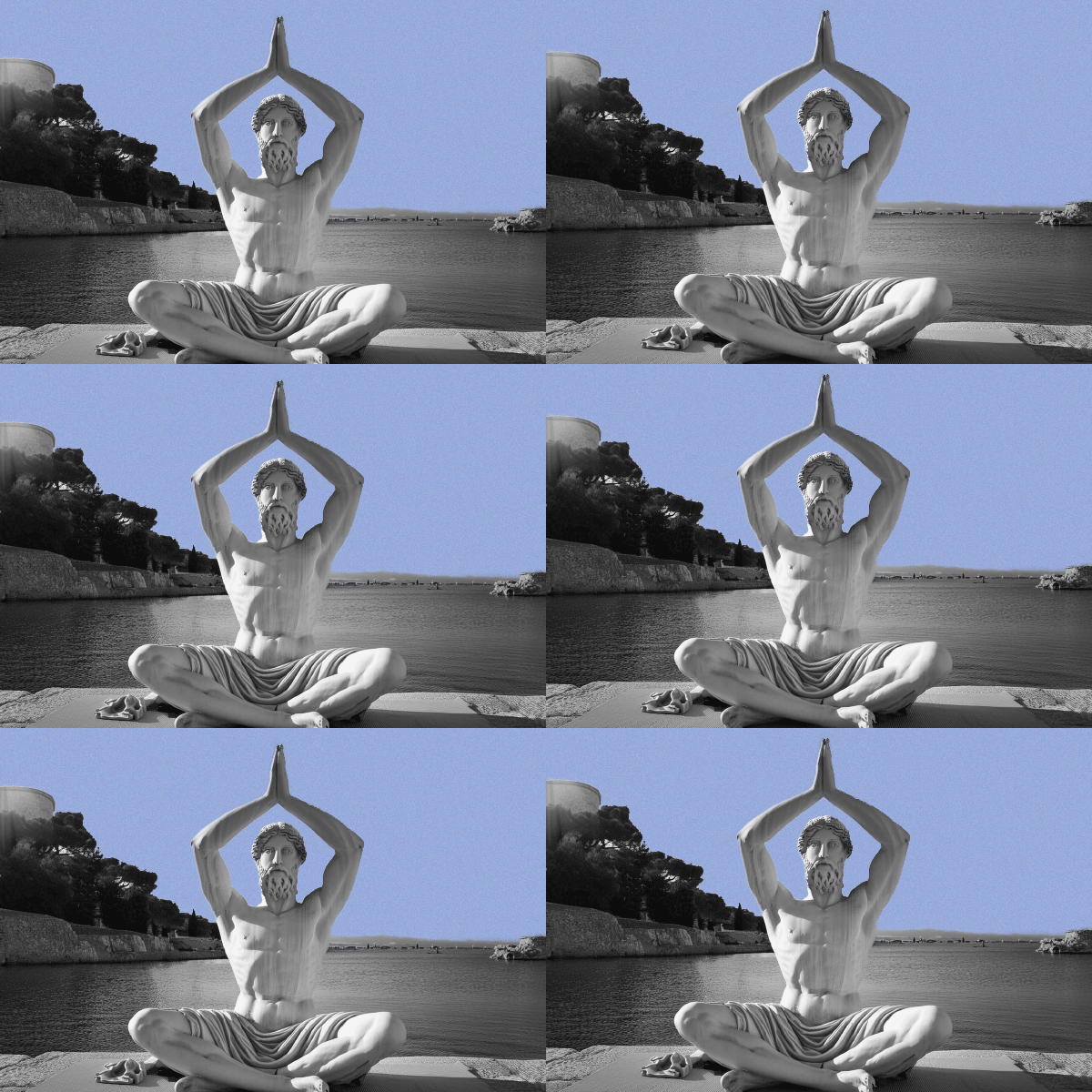
While the modern wellness tourism industry is only a couple of decades old, kicking off when the spa industry started changing its branding message from pampering to prevention, the tradition of travelling for health reasons stretches back to ancient times.
THE EDIT
🌏 Asia rising. This part of the world is likely to be the biggest reason for future growth in the global wellness tourism market.
🌐 Global gains. The world’s largest wellness markets are the US, China and Germany, with Japan, India and South Korea also in the top ten.
🤒 I’m not doing so well. The potential downsides of wellness tourism include a lack of regulation and some really unpleasant environmental impacts.
WATCH

With the industry’s growth, here’s a look at how hotels in Asia are tapping into the wellness tourism boom.
THE FULL PICTURE
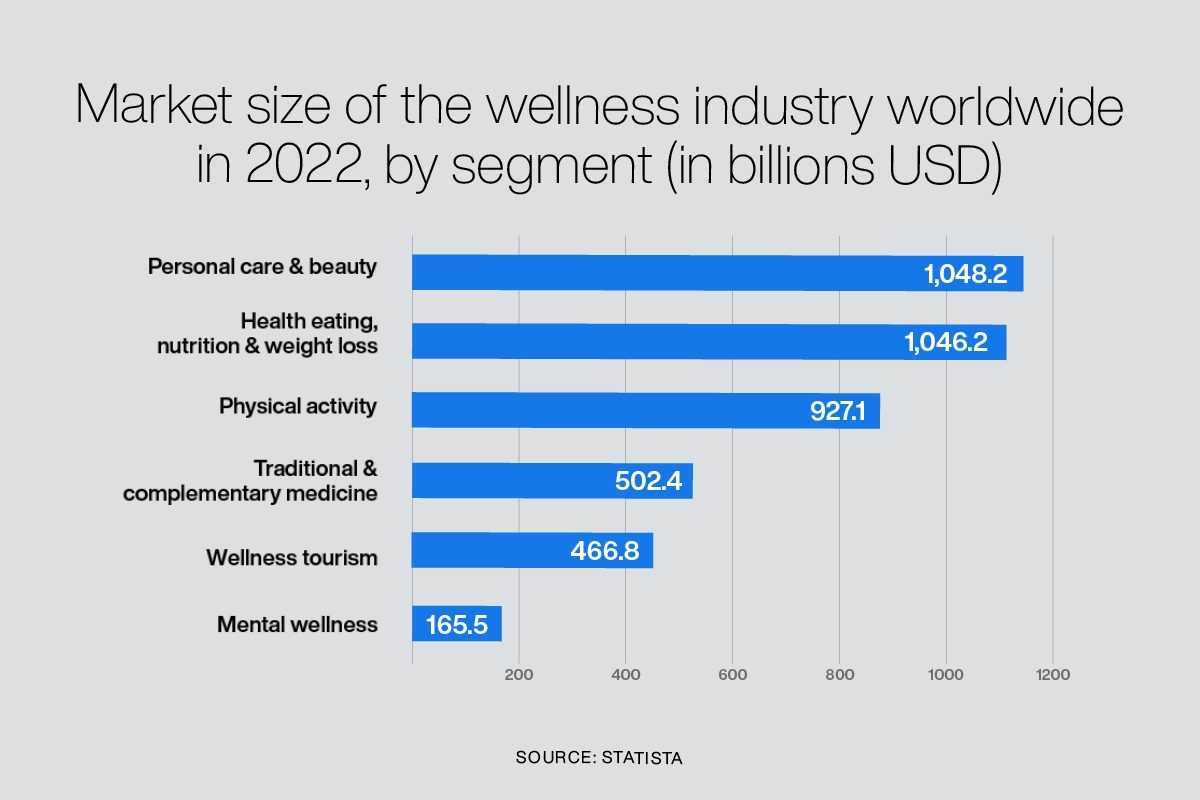
The wellness industry can be separated into various segments. The personal care category was a major contributor to overall revenue, with the skincare category following closely behind. Wellness tourism contributed $466.8 billion to the industry in 2022.
KEY PLAYER
László Puczkó
The man who literally wrote the book on wellness tourism—several books, in fact, including the self-explanatory Health, Tourism and Hospitality: Spas, Wellness and Medical Travel—László Puczkó is an economist, academic, wellness experience strategist and the founder of Health Tourism Worldwide.

HONOUREE TO KNOW
Alicia Pan
Move Repeat, the fitness company co-founded by Alicia Pan behind Yoga Movement, has more than 200 staff and ten locations in Singapore and Hong Kong. The company also has a partnership with Strong Australia to open 11 Pilates studios across the island.

ONE FINAL THING

As wellness tourism grows, so does the range of different activities, treatments and experiences available—and some of them are kind of weird.