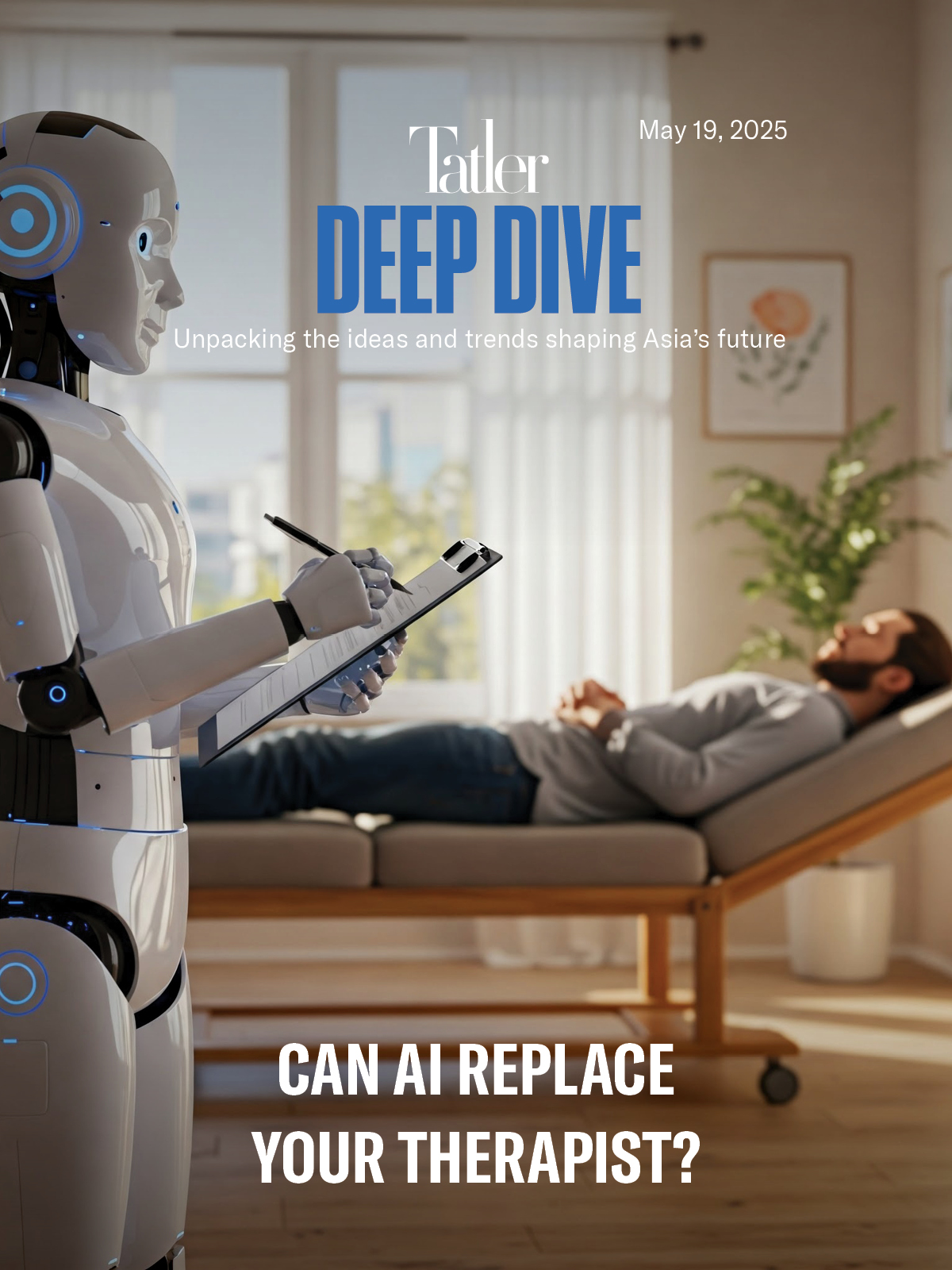
Talk to me, machine
From anxiety-tracking apps to emotionally responsive chatbots, AI could be an ever-present companion in our pursuit of mental well-being. But can empathy be programmed and human therapists be truly replaced? Let’s take a Deep Dive.
🧠 An increasing number of people are turning to general AI tools and specialised mental health apps for around-the-clock guidance, emotional support and companionship.
💬 Chatbots can simulate caring conversations, but they often fail to grasp the nuance of human emotions, sometimes offering oversimplified or inappropriate advice.
🕵🏻 In the absence of strong regulation, such tools may collect deeply personal data, which can be shared with third parties for marketing or profiling.
QUOTABLE
“If this sector remains unregulated, I am deeply concerned about the unchecked spread of potentially harmful chatbots and the risks they pose—especially to vulnerable individuals.”
— Arthur C Evans Jr, CEO of American Psychological Association

BY THE NUMBERS

$1.8 billion The global market for AI in mental health reached a value of US$1.8 billion in 2025.
32% About 32 per cent of respondents in a survey by Oliver Wyman Formum across 16 countries expressed interest in using AI instead of humans for managing their mental health.
49% Nearly 49 per cent of AI chatbot users in the US who self-report mental health issues utilise them specifically for mental health support.
QUIZ
Which of these technologies help AI mental health chatbots understand human language?
A. Computer vision
B. Natural language processing
C. Synthetic language processing
D. Emotional language processing
Scroll to the bottom for the answer.
DID YOU KNOW?

About 42 per cent of South Koreans in their 20s reported meaningful emotional exchanges with generative AI, much higher than those in their 30s, 40s and 50s, according to digital research company Embrain.
THE EDIT
🌐 Hope in the code. The World Economic Forum suggests AI could expand mental health care, especially in low-resource settings plagued by therapist shortages.
🫂 Alone, together. Heavy ChatGPT users report rising loneliness and emotional over-reliance—a paradox of constant connection without real intimacy.
📱Bots on the couch. Therabot, an AI therapy app, has shown early promise in easing depression and anxiety during clinical trials.
👩🏻⚖️ When AI gets too close. A grieving mother is suing a tech firm, alleging that its chatbot encouraged her son’s suicide—a chilling case testing the boundaries of AI accountability.
WATCH
In this TedX talk, Scientist Andy Blackwell explains how he improves mental healthcare by decoding hundreds of thousands of hours of real-world therapy data through his programme Eight Billion Minds.
THE FULL PICTURE
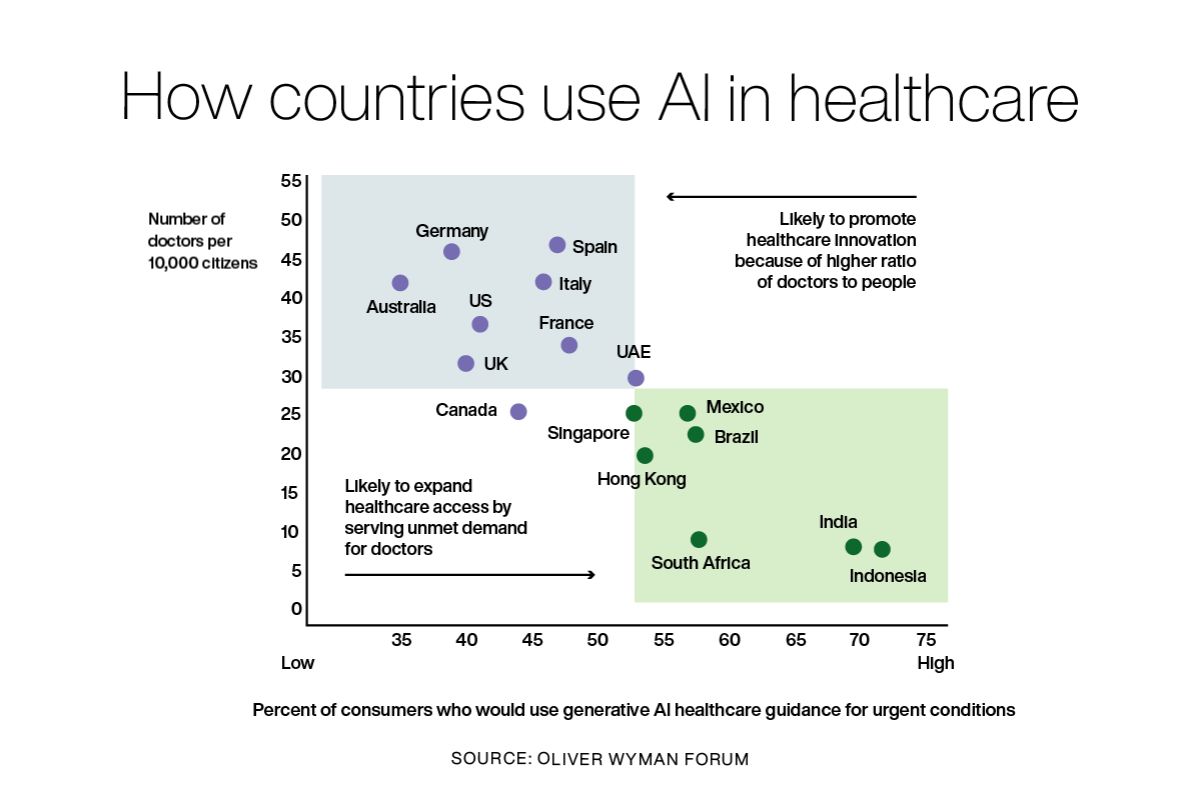
Countries like Germany and Spain, with high doctor-to-patient ratios, are more likely to drive generative AI innovation in healthcare. Meanwhile, Asia markets, such as Hong Kong, India and Indonesia, will deploy it to widen healthcare access due to critical provider shortages.
KEY PLAYER
Jo Aggarwal
Jo Aggarwal is the founder and CEO of Wysa, an AI-powered mental health support platform utilising cognitive behavioural therapy (CBT) and other evidence-based techniques. Its AI solution targeting chronic musculoskeletal pain with depression and anxiety has received FDA Breakthrough Device designation.

HONOUREE TO KNOW
Fatiha Shuib
Fatiha Shuib co-founded Sapot in 2022 to offer peer support through an app. The Malaysia-based community helps individuals find comfort and empowerment through personalised conversations with accredited recovered mental illness survivors in one-on-one virtual sessions.

ONE FINAL THING

California is weighing legislation to ban companies from deploying AI systems that impersonate licensed mental health professionals and allowing regulators to fine violators.