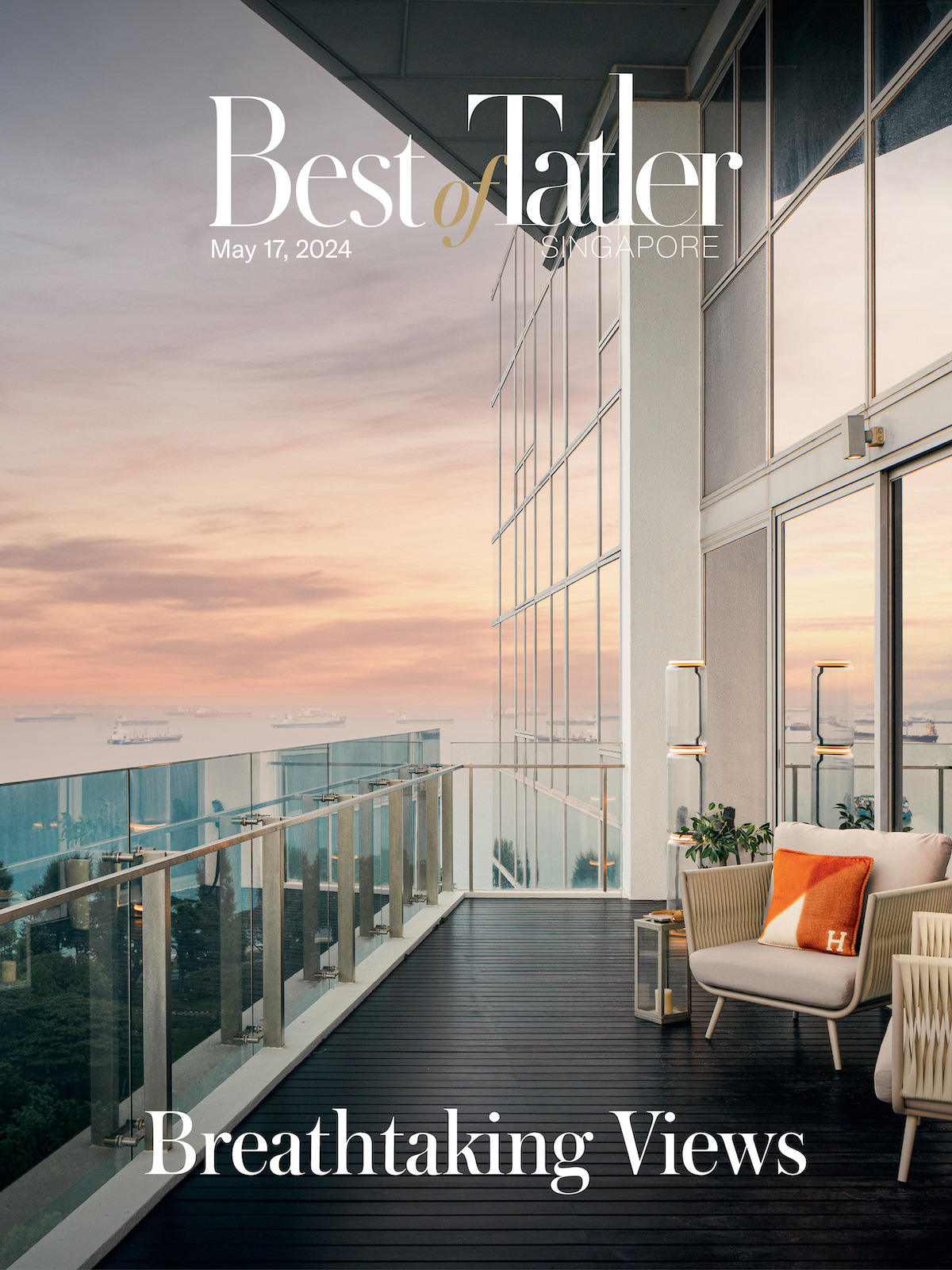
A lofty paradise
Rivalling Good Class Bungalows and landed properties, penthouses have a special place in Singapore’s property market today, especially amongst ultra-high-net-worth (UHNW) buyers worldwide. A true luxury and stylish investment, these homeowners benefit from the intrinsic value of having penthouses, given the limited development space in Singapore.
Indeed coveted amongst the elite, penthouses continue to be in demand for having the most exceptional views of the island city, utmost privacy, and generous spatial proportions, unlike typical high-rise properties. With ample room to dream up a lofty paradise, designers and homeowners alike enjoy having the freedom to create their desired homes within the penthouses’ expansive interiors and rooftops.
For one, the triplex super penthouse at Keppel Bay is one of Singapore’s largest purpose-built penthouses. It has everything a discerning ultra-high-net-worth sophisticate could ask for—a panoramic view of both Singapore’s cityscape and sparkling waterfront, an award-winning architectural shell by American architect Daniel Libeskind, and singularly elegant interiors by Edmund Ng Architects. Each level of the six-bedroom super penthouse has its own access to the lift lobby. Entering level 39, one is received into a handsome living space. Here, an oversized bespoke chandelier and plush furniture from Giorgetti create a stylish spot from which to admire the view of the glittering sea.
Speaking of unrivalled sea views, One of Seascape’s two villa duplexes was recently given a transformation by Singapore-based Architology Interiors and sold for close to $21 million. Also dubbed a “super penthouse” due to its impressive size, the 6,631 sq ft unit received a new look from the design practice, which had worked with Ho Bee Land on a previous project in the Cape Royale condominium. Beyond being prized by those who desire to sink into the beauty of its maritime setting, there is also a bevy of amenities for its close-knit community to enjoy. Inside Seascape, residents have full access to concierge services, including a clubhouse, a gym and a swimming pool.
Closer to town, find a 5,800 sq ft penthouse that serves as a retirement home for its resident couple. Antone by D founder and interior designer Divya Anthony refreshed the penthouse with an elegant ambience. Rich textures, patterns, and plush fabrics like velvet are also incorporated to enhance the luxurious and bespoke feel inside the apartment. In line with the homeowners’ desires, the penthouse features personalised spaces, such as the cosy open-plan living and dining room for intimate family gatherings, an oriental-inspired powder room, and a warmly-lit spiral staircase that doubles up as a tropical hanging garden.
Read the full story here.
DINING
Where to find the best Peranakan dishes in Singapore, according to a Peranakan
Where to find the best Peranakan dishes in Singapore, according to a Peranakan
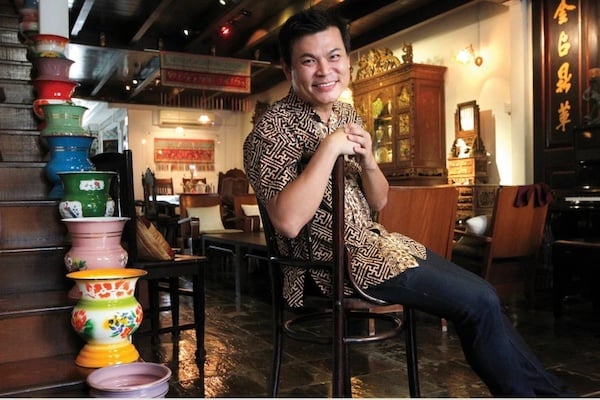
Opening your home to strangers isn’t all that common but Alvin Yapp is no stranger to that. For over two decades, the pure-blood Peranakan has successfully converted his home into a museum and boy, did he build up quite the collection. From the ubiquitous hand-beaded slippers to the alluring vintage jewellery, every nook and cranny of The Intan Museum—named after a rose-cut diamond—is replete with over 1,500 objects and trinkets, each with a story to be discovered. During Tatler Singapore’s visit to Yapp’s museum, we let our eyes wander into the abyss and travel back in time.
Among all, the strikingly vibrant enamel tiffin carriers and antique porcelain dishwares arrest my attention, sparking a spirited conversation about Peranakan food and its role in preserving such a unique culture in Singapore. Yapp then shares that he also hosts private dining experiences, showcasing home-cooked Peranakan dishes made using his mother’s recipes. And just as we imagined, no Peranakan experience is complete without a mention of its food. So we ask Yapp about the restaurants he visits whenever he isn’t busy playing host in his home museum.
One of his favourites is Guan Hoe Soon Restaurant. He shares: “The ayam buah keluak is one of those dishes that is highly protected by the Peranakan community and a little change can make a drastic shift in taste. The rempah is made fresh, while the buah keluak is stuffed with pork and fish meat. The entire process from nut to your plates takes about five to seven days to prepare.
The otak otak is made up of mackerel fish without any flour. I like the textures of the mackerel fish meat and the aroma that comes from steaming it in banana leaves. Jennie once told me that the Istana used to call and order food. Little did they know it was for the late Mr Lee Kuan Yew. He was Peranakan himself and his mother was known to be a great cook. The fact that he kept ordering their dishes, [suggests they] may have reminded him of his own mother’s cooking.”
While for lesser-known dishes in the Peranakan repertoire, he heads to Rempapa. “In chef Damian’s own words, babi tulang masak assam and sambal buah keluak are not commonly seen these days and even many Peranakans are not familiar with the dishes. Although babi tulang masak assam sounds simple, everything lies in the extraction of the robust flavours of the rempah and the sweetness of the pork. The flavour from the preserved soya bean and salted vegetables must also be balanced to enhance the sweet and savoury flavours. On the other hand, sambal buah keluak is much more complex. The rempah requires diligence to extract the full flavour of the rempah titek before the flesh of the keluak is added,” he explains.
Read full story here.
POWER & PURPOSE
Why Oniatta Effendi wants to revive the traditional art of batik
Why Oniatta Effendi wants to revive the traditional art of batik
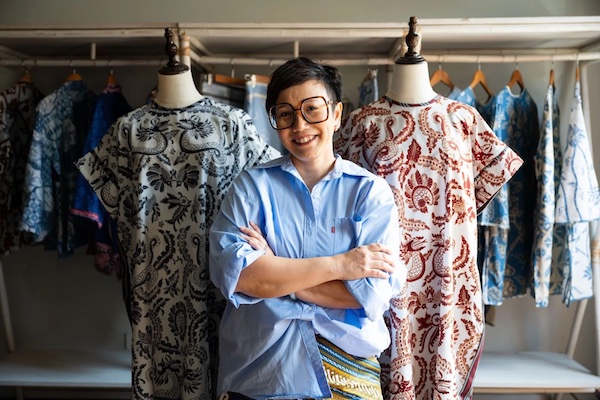
Originating from Java, Indonesia, Batik is a traditional art form featuring the Indonesian technique of wax-resist dyeing applied onto fabric either through copper stamps or drawn by hand. For Oniatta Effendi, batik is much more than a piece of fabric. Growing up in a predominantly Javanese household with her grandparents being Javanese, the founder of local fashion brand Baju by Oniatta remembers being constantly surrounded by batik. On top of seeing her grandma regularly wearing a sarong or kebaya in the kampong, Oniatta would also see photos of her mother in batik. “There was always something beautiful that she wore and I only learnt in recent years that she would sew her own batik pieces,” she continues. As she grew older, the entrepreneur began buying and collecting these beautiful garments.
Not just a piece of fabric, batik has become a way for Oniatta to connect to her cultural lineage. More than anything else, the art form spurred her to ask her mother and grandmother questions about their cultural background and how to sew batik. “[Batik] allowed me to grow a lot closer to understanding who grandma was and why my mother was like that,” she adds.
Oniatta has always been drawn to batik as a wearer and a child of the region. So, it’s not surprising that she has been an “excessive collector” of batik long before she started her brand. She shares how during her regular visits to Indonesia, she would be found sitting along the side of markets admiring and buying these fabrics.
Oniatta’s journey to creating her brand began in 2016 when she decided to share her passion for the art form with others. The Utama pants were the first in her collection—a pair of trousers in hand-stamped batik complete with a front panel to create the illusion of a sarung (skirt). She went on to produce 12 pairs of these pants after her friends noticed her wearing the piece and wanted a pair for themselves—the trousers sold out within two weeks.
The overwhelming response led her to launch Baju by Oniatta as a side gig while she continued working as an arts lecturer in multiple schools including Singapore Polytechnic and Nanyang Academy of Fine Arts (NAFA). Looking back, Oniatta shares that it was hard to balance her time between her full-time job and her side gig.
“When you have a full-time job, particularly in Singapore, that takes all your energy, you get questioned [when you’re being] pulled elsewhere and not focused on your work. While women wear many hats and we’re capable of multitasking, they’re not wrong in wanting to have 101 per cent of you,” she explains. So, when an opportunity to work on her brand full-time arose, she took a leap of faith. As she didn’t come from a business, art history or design background, Oniatta had to learn on the ground. She shares: “It was a steep learning curve but we have access to so much knowledge right now and we have people in the industry that we could ask.”
While Oniatta believes that she would still be lecturing in a classroom if it was not for her brand, she likes to think that her boutique studio is her new classroom. “I’m still learning new things and that [thirst for] knowledge is endless,” she says.
Read full story here.
LIFESTYLE
Aman Tokyo is a tranquil sanctuary in the heart of a city that never sleeps
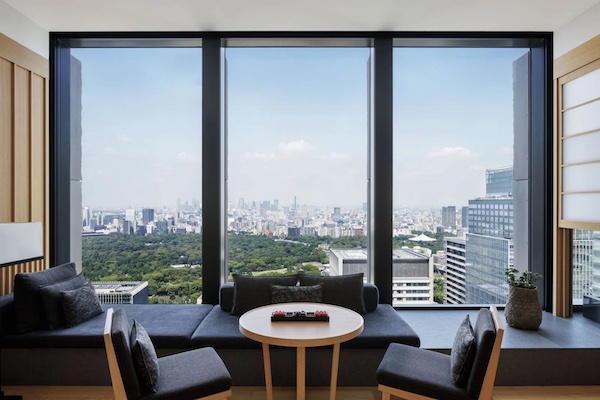
Aman Tokyo is a tranquil sanctuary in the heart of a city that never sleeps
In the past few years, many have taken great steps to satiate their deep feelings of wanderlust by travelling and exploring the world. According to Visa’s Global Travel Intentions report, Singapore travellers are planning to take an average of 4.6 trips this year, with Japan emerging as the top choice. But is anyone surprised by this result? Japan has long been regarded as a top destination for travel among Singaporeans. The country is not only popular for its delectable cuisine but also for sightseeing, cultural monuments and sites, hot springs, shopping districts, theme parks—the list goes on.
One of the biggest draws of Japan is its authentic and timeless approach to hospitality. The Japanese are well-known for their immaculate service, and this is evident everywhere–from public transportation to luxury accommodation.
Among the most recognisable names in the world of unrivalled hospitality is Aman. This year, Aman Tokyo celebrates its 10th anniversary since it first opened its doors in the city.
Nestled amidst the vibrant pulse of Japan’s capital city, Aman Tokyo stands as a serene oasis of luxury, seamlessly blending contemporary elegance with the timeless allure of architecture inspired by the grace and harmony of traditional Japanese homes. This harmony of architecture and design combined with elements of the local setting and culture is a classic hallmark of any Aman property.
Aman Tokyo is the sixth Aman property to be designed by Kerry Hill Architects; the beautiful luxury hotel offers a perfect blend of traditional Japanese design with a touch of modernity through the use of authentic materials such as wood, washi paper and stone alongside a variety of fabrics and textures.
Step into its hushed lobby and you will immediately feel enveloped in an atmosphere of exquisite luxury and refinement. The centrepiece of the lobby is a majestic architectural feature resembling the interior of a Japanese paper lantern. Soaring nearly 30 metres high (it rises six floors through the centre of the building), the feature measures 40 metres long by 11 metres wide and was created with layers of textured washi paper and stretched to fit a shoji frame.
The hotel’s inner garden sits beneath this breathtaking lantern. A prominent Ikebana sits atop a calming water feature that is complemented by two traditional Japanese rock gardens. Ikebana is a disciplined Japanese art form in which materials such as living branches and floral blossoms are carefully arranged to put together a piece of artwork. The rock gardens feature boulders from northern Japan and are minimal in design to offer a way to calm the mind. Surrounding the inner garden is an engawa, a Japanese term for a wooden space between the garden and living areas in traditional homes.
Read full story here.
DISCOVER THESE ON TATLER ASIA
Bottega Veneta’s new summer 2024 collection will whisk you away on a journey with its stylish must-have pieces.
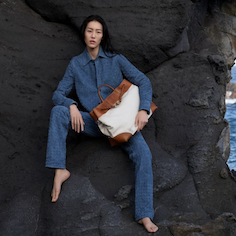
Discover Jamie Chua’s three rules of style at Paragon, one of the most beloved Singaporean luxury shopping destinations.

New restaurant alert: Nook is the latest restaurant, bar and members’ lounge to see and be seen in Tanjong Pagar.
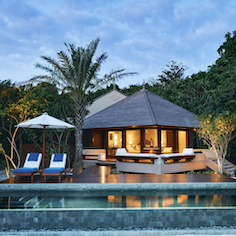
The best luxury resorts in Asia for a tranquil and tropical escape, whether you’re seeking a secluded island getaway or full cultural immersion.
Zoen Tay shares how she does it all as a junior doctor, skincare entrepreneur and budding actress.
How the new Range Rover Sport is a declaration of sophistication, power, and performance engineering.