Not your average chocolate
Inspiration often springs from the most unexpected places. For Jay Chua, it happens when he’s surrounded by food. With an appetite for culinary exploration, the co-founder of homegrown chocolate brand Fossa Chocolate constantly seeks out dishes that pique his interest and challenge his palate—it’s no wonder he’s continually able to dream up unique chocolate bar flavours.
Founded by Chua and his friends Charis Chia and Yilina Leong, Fossa Chocolate is Singapore’s first bean-to-bar chocolatier that’s known for incorporating bold flavours into its chocolate bars—think soy milk and you tiao (dough fritters), satay sauce, and spicy mala.
While the trio were never crazy about chocolate growing up, their perception of the sweet treat changed after trying a plain dark chocolate bar from abroad. “We tried a single-origin chocolate bar from abroad that opened our minds about what chocolate can be. It was a plain 70 per cent dark chocolate bar but the flavour was distinctively raspberries and almonds,” Chua explains, adding that they soon realised there was more to cacao than they thought.
The brand began as an at-home experiment where the trio would hand peel cocoa beans before turning the hobby into a venture at the end of 2017. But starting a business is never easy. Chua shares how the beginning was filled with trial and error, recipe development and more.
At the start, the trio only offered a range of single-origin dark chocolate made with cocoa from a few specially curated sources. Over the years, they began introducing bars inspired by cuisines and dishes which they enjoy. On top of chocolate bars, the brand also offers a small curated range of chocolate confections including chocolate-dipped fruits and chocolate-coated dragees.
Chocolate-making started as one of Chua’s many hobbies and he later got Yilina and Charis interested in the craft too. Eventually, they decided to try sharing these interesting chocolates with more people. Starting a business is never smooth sailing but their different career backgrounds allowed them to bring to the company different experiences and skill sets. According to Chua, there was much learning done on the job and making mistakes, even today.
But their combined passion for food continues to allow them to be creative with their work and ensures that the chocolate they make do not just sound tasty, but also tastes delicious.
Read the full story here.

LIFESTYLE
How AI is redefining luxury travel

How AI is redefining luxury travel
For the discerning traveller, the journey is as essential as the destination. But even the most meticulous planning can’t account for unforeseen delays, hidden gems or the ever-shifting tides of personal preference. Enter Artificial Intelligence (AI), what was once the stuff of science fiction is now weaving itself into the very fabric of high-end journeys, promising a level of personalisation and efficiency that was previously unimaginable. Today, AI is poised to transform luxury travel from a meticulously crafted experience to a seamlessly orchestrated adventure.
This isn’t about robots replacing human touch or algorithms dictating experiences. Rather, it’s a subtle yet profound shift in how the discerning traveller interacts with the world. AI’s influence is already being felt, becoming the invisible thread connecting every aspect of a journey, anticipating needs and tailoring recommendations to evolving itineraries.
Not only is AI changing the mechanics of travel, it’s redefining the very essence of what it means to embark on a luxury journey. For example, AI-driven platforms are now capable of crafting highly personalised travel plans that rival those created by seasoned travel professionals. From bespoke itineraries crafted by algorithms to sustainable practices, the future of luxury travel is being shaped by lines of code as much as it’s being shaped by human expertise.
Read the full story here.
DINING
Why Peranakan food is so challenging to cook, according to Peranakan experts
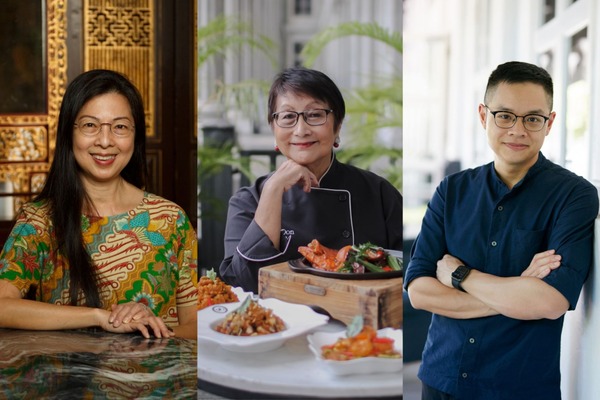
Why Peranakan food is so challenging to cook, according to Peranakan experts
Peranakan food has long been romanticised in the culinary melting pot of Singapore. It stands out like a perfectly crafted kueh lapis—layered, complex and utterly irresistible. Also known as Nyonya cuisine, it is a spirited fusion of Chinese, Malay, Indian, and Indonesian—oftentimes, even touches of European—intermarriage of cultures between Chinese immigrants and local women in the Malay Archipelago
While the distinctive cuisine is often lauded for its bold yet complex flavours and cultural significance, it is also notoriously tedious to prepare.
To unravel the complexities of Peranakan cooking today, Tatler Singapore spoke to four Peranakan experts, namely Violet Oon herself, acclaimed chef Malcolm Lee, former editor of The Peranakan magazine Linda Chee, and owner of The Intan Museum, Alvin Yapp, to find out once and for all why cooking Peranakan food is such a challenge.
First off, recipes—or rather, the lack of them—aren’t as straightforward as an instruction manual from Ikea. For many Peranakan home cooks, these time-tested recipes are shaped by memories, experiences and individual tastes. Seasoned home cooks can often tell from an aroma, a sizzle or a visual element, the exact moment to toss in the next ingredient or to execute the next step. Chee, a passionate Peranakan cook who learnt from her mother, recalls: “I was my mother’s sous chef the moment I could handle a knife safely, in primary school.” As the only daughter, she was trained from a young age to master the complex techniques and recipes of Peranakan cooking.
There she observed how her mother and aunties make their spice mixes, never by measure. “Takpa, lebeh sikit pun boleh”, which translates from Malay to English as: “Never mind, a bit more is fine,” Chee remarks. That instinctive approach—or agak agak, as most locals know it to be—is still hard-fastened in many households, resulting in different recipe variations based on the same foundational recipes today. “Every family has a unique story that influences their cooking. These recipes are seldom shared publicly or documented in detail, often passed down through memory,” adds Lee, the chef-owner of contemporary Peranakan restaurants Candlenut and Pangium.
We often hear of how laborious Peranakan cooking is and for that, we trace back to a few centuries ago, when many Peranakans built fortunes upon arriving in Southeast Asia. While the men kept busy with business, women had all the time on their hands. “Just imagine the courtly life of Downton Abbey,” quips Oon. Without modern entertainment such as television or even social media, making handicrafts (glass bead slippers and embroidery) and cooking then became favourite pastimes.
Chee echoes the sentiment. She remains firm in keeping to tradition and cooking exactly like how her grandmother and mother taught her till today.
Read the full story here.
HOMES
Home Tour: A condominium apartment in Singapore layered in subtle textures
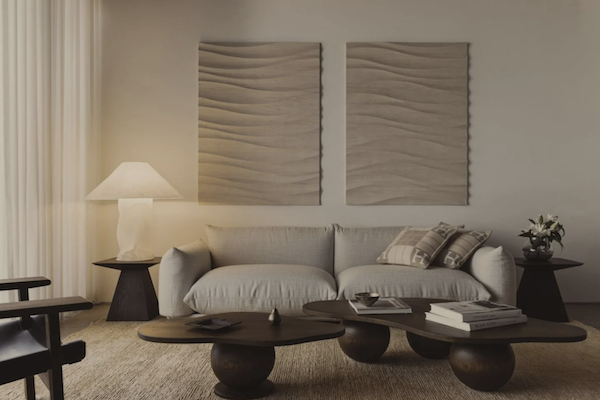
Home Tour: A condominium apartment in Singapore layered in subtle textures
When the owners of this apartment engaged Amy Lim of Pupil Office to design its interiors, they wanted it to be a sanctuary not just for themselves but also suitable for their young son. “We wanted a home that was warm and inviting, but still minimal and subtle, with a clean and neutral palette, as well as [natural] textures and finishing like stone and wood elements in the design,” says the wife.
She also wanted her son to have a dedicated play space “where he could freely explore, be creative and have fun without his toys taking over the entire home”. The brief for timber and wood was ideal for Lim. “Working with earthy tones and materials like wood and stone has become somewhat second nature to me now, and with the clients being very trusting in the process, it was smooth sailing,” she shares.
The original plan featured an open living and dining area facing a dry kitchen, with the bedrooms accessed via a long corridor like in typical condominiums today. The former dry kitchen counter was changed into a freestanding piece. The space also incorporates a wine fridge. Walnut timber cabinetry and a greyish-brown Grigio Bllieml marble cladding for the counter give a sophisticated character to the space.
These materials match the living and dining area furniture, reflecting Lim’s eye for timeless and well-made pieces. There is Børge Mogensen’s Spanish Chair from Fredericia—“we joke that it’s the toddler’s inheritance piece”, muses Lim—and a cream, poufy Marenco sofa from Arflex.
In the dining area, the sculptural Asterias dining table from Molteni & C is encircled by T Chairs from Carl Hansen & Søn. The owners saw the same table in Lim’s home and liked it so much that they wanted it for their apartment, too. Around the house, sideboards and chests of drawers from vintage store Noden add to the home’s timeless appeal.
Read full story here.
STYLE
Inside Chopard’s gold foundry and watchmaking manufacture
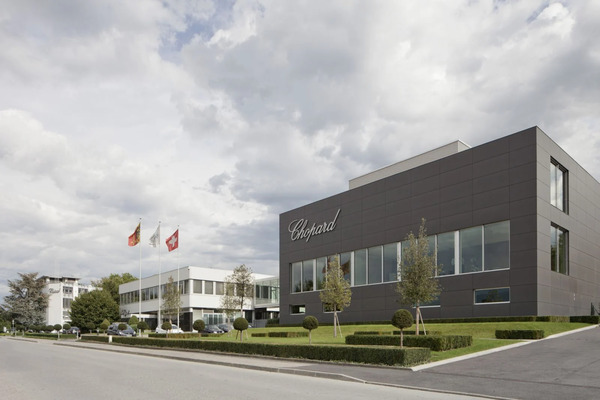
Inside Chopard’s gold foundry and watchmaking manufacture
For watch and jewellery lovers and connoisseurs alike, the thrill of a manufacture-visit to discover the inner workings of some of the world’s renowned luxury brands is no different from exploring Willy Wonka’s chocolate factory. The experience at Chopard’s headquarters in Meyrin, Switzerland, is one of the more special ones, for it allows access to one of the industry’s rare few in-house gold foundries, which Tatler Singapore had the opportunity to visit in April this year.
Located just a 20-minute drive from Geneva city centre, the 26,000-sqm facility was built in 1974, with 5,000sqm dedicated to the production of the Swiss family-owned manufacture’s luxury watches and jewellery. In 1978, Chopard’s visionary founder Karl Scheufele, the father of current co-presidents Caroline and Karl-Friedrich Scheufele, decided to vertically integrate production, starting with gold smelting.
Given how important gold is in watch and jewellery production, the foundry, which is located in the basement of one of the buildings, is certainly the heart of the manufacture. Just like how blood runs through our veins, the gold produced at the foundry is a life source that flows through the other workshops of the manufacture. It is the foundation, and essential in lending preciousness and strength to the final product.
All of the gold used in Chopard’s creations come from this foundry. Not only does the brand smelt its own gold, it, since 2018, only uses 100 per cent ethical gold sourced from mines that adhere to stringent international best practice environmental and social standards. More specifically, the ethical gold used is sourced through two transparent and traceable schemes: freshly mined artisanal gold produced in a responsible manner, and Chain of Custody gold from Responsible Jewellery Council-certified refineries. This commitment is deeply rooted in the Scheufele family’s values—to be transparent and responsible in its processes, ensuring the gold used in its creations are not only beautiful but also morally permissible.
Read the full story here.
DISCOVER THESE ON TATLER ASIA
A decade in, here’s how Joey Khu crafts tasteful interiors tailored to unique and discerning clients.
Piaget sets a world record with the Altiplano Ultimate Concept Tourbillon.

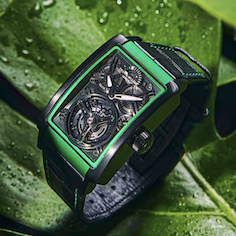
Franck Muller’s exclusive Long Island Evolution Asia Pacific collection challenges conventions.
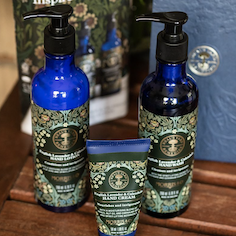
Neal’s Yard Remedies hand care collection shows love to the earth and our hands.
Ride the revolution: Experience the new frontier of electric motoring with Zeekr.

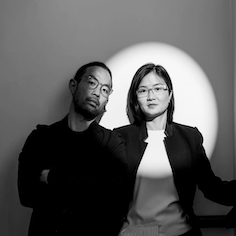
Huiyi Lin of artistic duo Chow and Lin on how her childhood shaped her outlook on life and museum-worthy art.
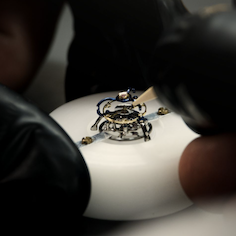
Bovet’s Récital 28 Prowess 1 fundamentally improves the worldtimer complication.
Eternal Water: Boucheron’s Claire Choisne melds art and nature in new Or Bleu Collection.