

1 / 1
You are not alone in this battle. These brave individuals came forward to share their stories with us at the recent She Talks Asia conference on mental well-being, iMatter. Here are some morsels of wisdom, real but raw sound bites, and pieces of advice that might change the way you feel about yourself and how you treat others.


Above Kylie Verzosa, Claudia Barretto, Isabelle Daza-Semblat, Dr. Sylvia Claudio, and Sheila Tan
Kylie Verzosa, Claudia Barretto, Isabelle Daza-Semblat, Dr. Sylvia Claudio, and Sheila Tan
1 / 1
Art is therapy. Just like poetry, prayer, and letter writing, the visual arts control can ‘tremors’ of mental patients
I was doing everything right but didn’t feel self-fulfilled and I was unhappy. I couldn’t get out of bed and I had crying spells. It’s so exhausting when you feel you cannot ‘touch it.’ So, when I wrote my thoughts down, I could make the distinctions as to what was important. When I put things from pen to paper, it became tangible, it became something that I owned. I overcame depression the natural way
I’m diligent about being self-reflective. Mental health… Just because it’s not a physical wound and we can’t see it doesn’t mean that it’s not there. The brain is also a biological thing that can be helped with treatment and medication, and there’s no shame in that.
You go to a cancer specialist to treat cancer so why not go to a “brain doctor” to help organise your thoughts? See a psychiatrist. Get medication…approach it by changing your lifestyle such as diet, exercise, and working on positive connections by choosing your friends wisely. How deep are our relationships? Three good friends are enough.

Above Professor Vim and Dr. Dinah Nadera
Professor Vim and Dr. Dinah Nadera
1 / 1
The worst thing you can say to a medically depressed person is “You can just snap out of it!”
Say ‘I’m here for you.’ ‘Let’s talk.’ ‘Let’s go through things together’.
My theory is that the reason why there is a higher rate of people who are clinically depressed is because of social media. When we’re constantly bombarded with images, we not knowingly tend to feel jealous and it grows inside of us. We don’t want to admit it but it happens.
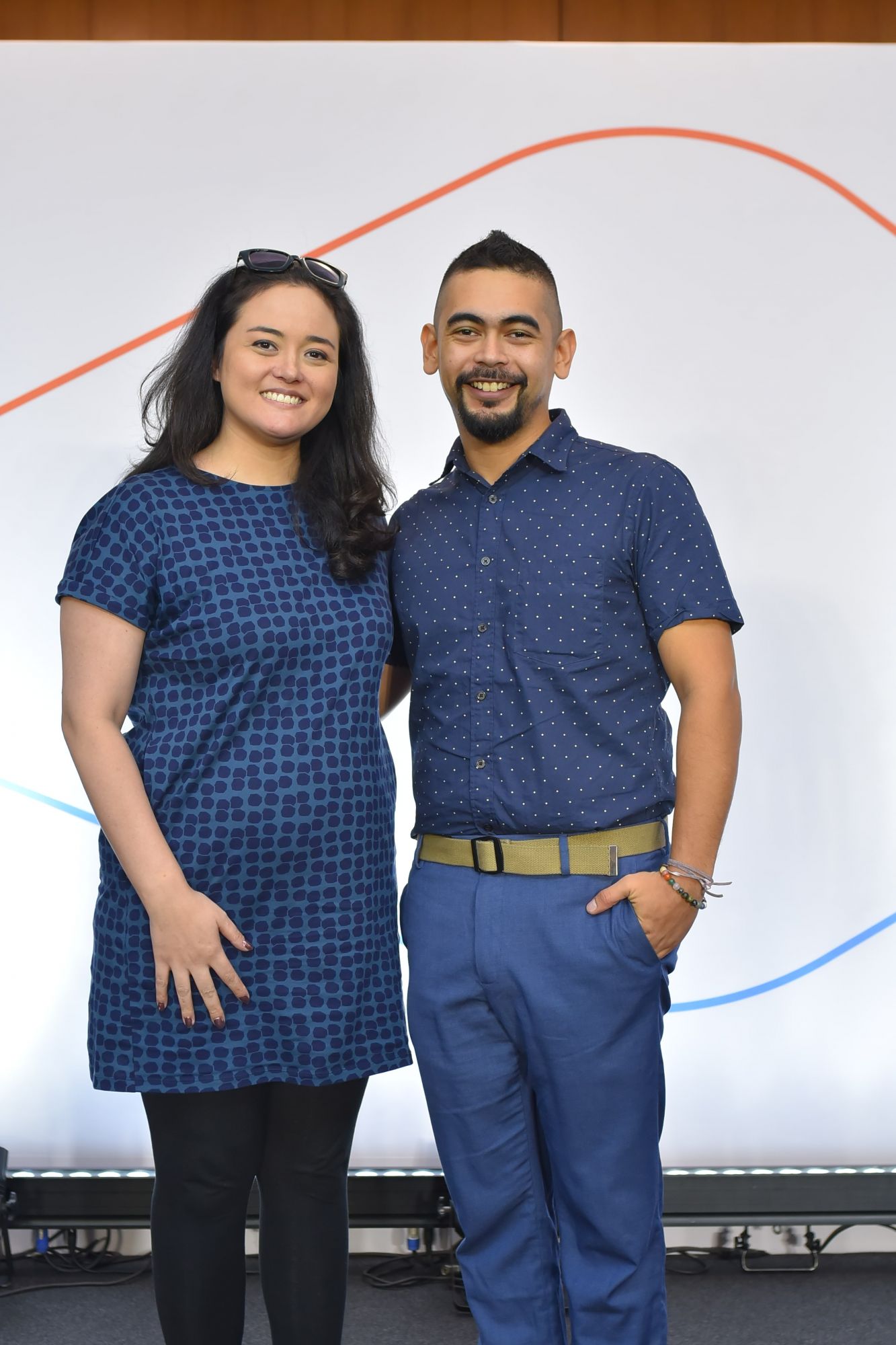
Above Kat Alano and Julian Rodriguez

Above Sharmaine Buencamino
Kat Alano and Julian Rodriguez
1 / 2
Ask yourself, is your friend become a little a bit of a weirdo? Gained weight? Angry? Aggressive? Withdrawn?
I discovered the concept behind kintsugi (Japanese bowls) and applied it to life. When you’re broken, you don’t try to fix yourself—you have to evolve
Here are five tips to keep alive inside and out. 1.) Be here now. Do a body language audit and pull yourself in the moment. 2.) Find your tether—your harness, the rope that can pull you through mentally and emotionally. 3.) Remember that not all people play by the rules or have values. It's good to expect the best from someone but it helps to imagine all possible variables. 4.) Understand medication, therapy, and healing. Remember that you can't pour from an empty cup, and even harder to pour from a broken one. 5.) Sharing your story is building power. Wear your pain and find strength in others who share. Live your truth and people will feel it.

Above The founders of She Talks Asia: Vicky Herrera, Lynn Pinugu, Iza Calzado-Wintle, and Bianca Gonzalez-Intal
The founders of She Talks Asia: Vicky Herrera, Lynn Pinugu, Iza Calzado-Wintle, and Bianca Gonzalez-Intal
1 / 1
People were questioning me as a parent. What should we have noticed? How could we have noticed? What were the signs? How could someone so loved experience so much pain? We submitted evidence and did a psychological autopsy and found out Julia had borderline personality disorder. The need for the truth slowly healed me. I learnt I wasn’t I control. It cured me of finding happiness in material things and I stopped wasting time on being angry and worried
When we look inwards and talk about self love, it’s just accepting who you are. We are enough. We are human beings, not human doings.
Credits
Words: Shauna Jay Popple Williams and Jeanna Lanting





