
1 / 1
Our guest columnist Joanne Chan goes behind the scenes to see how the legendary event is done
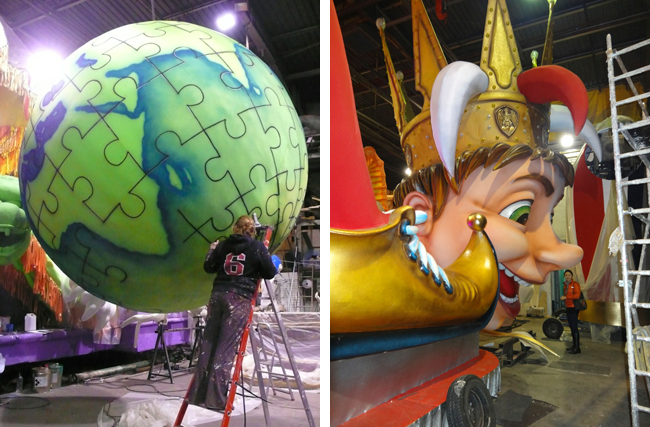
Two years ago, I met Annie Sidro, the President of "Carnival without Frontiers" and became friends. Her family has been in the vocation of carnivals (they are known as Carnavaliers) for four generations, and she is a world-renowned carnival historian. She is in her sixties, but works like someone in their twenties where she travels around the world building carnivals.
Drawn by her passion and energy and my love for a good spectacle, I joined Annie at the Nice Carnival this year. She was a wonderful host and showed me how the carnival is done. This is the travelogue of my journey to carnival wonderland!
Like the Niçois proudly say, “Being a Carnavalier is not a profession, but a passion or a vocation.” There is no doubt about that, as without passion, the Nice Carnival would not have survived since it started in the Middle Ages.
The Nice Carnival is a tradition that is associated with the Catholic tradition of Lent where meat is prohibited for 40 days. As demonstrated by the most commonly believed etymology of the word “carnival”, “carne levare” from an Italian dialect means “to remove meat”. The Nice Carnival was therefore intended as a way for the public to let loose, enjoy life, right before the 40-day fasting began. The Carnival continues to evolve, and the tradition continues today with street festivities, flower parades, fireworks, and the giant parade floats.
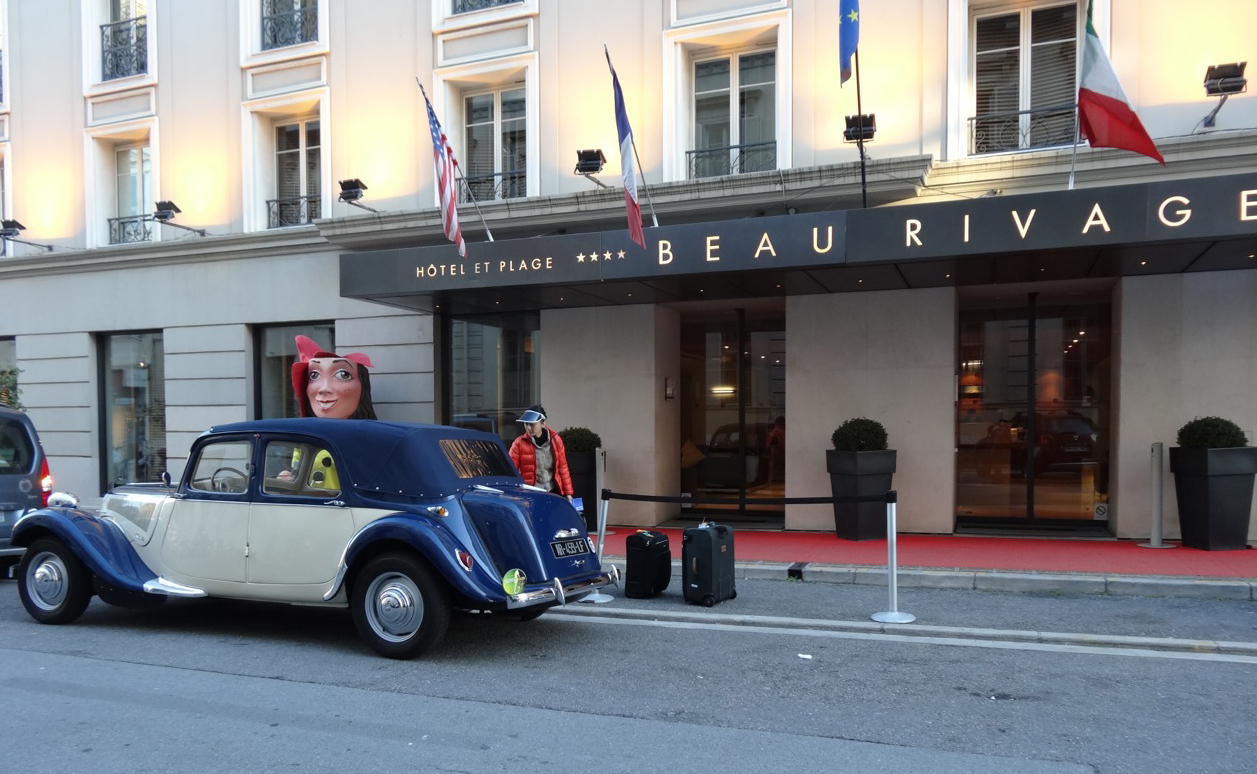
On a late afternoon of Valentine’s Day this year, I arrived in style in Nice in my vintage car at the Hotel Beau Rivage, a venue made famous by Henri Matisse, who moved to Nice and stayed there in 1917. This iconic building is now the official hotel for many official events in the city, including the Nice Carnival. Can you see the Big Head puppet at the left side of the entrance in the photo above?
These grosses têtes – papier-mâché big head puppets – are a tradition of the Nice Carnival and can be seen around the city during the period of the Carnival.
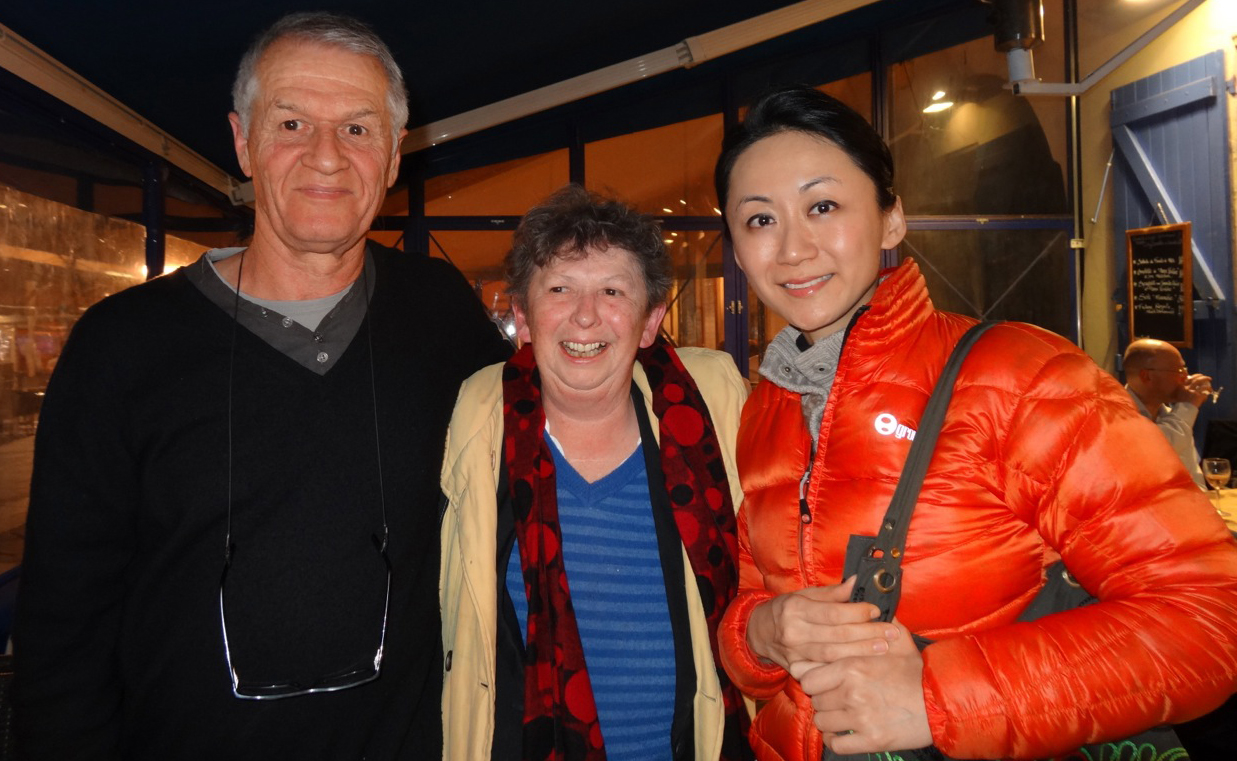
Annie Sidro (centre) and I had dinner that evening where she introduced me to Daniel Deschâteaux, a photographer who for many years lived in China. He speaks Mandarin, and has presented an exhibition during Le French May some 15 years ago.
Once I dropped off my luggage, I met up with Annie for a lovely dinner. After dinner, Annie spontaneously proposed to take me to visit the Carnival Workshop. We drove for 20 minutes into a dimly lit backstreet of Nice and arrived at “La Maison De Carnaval”.
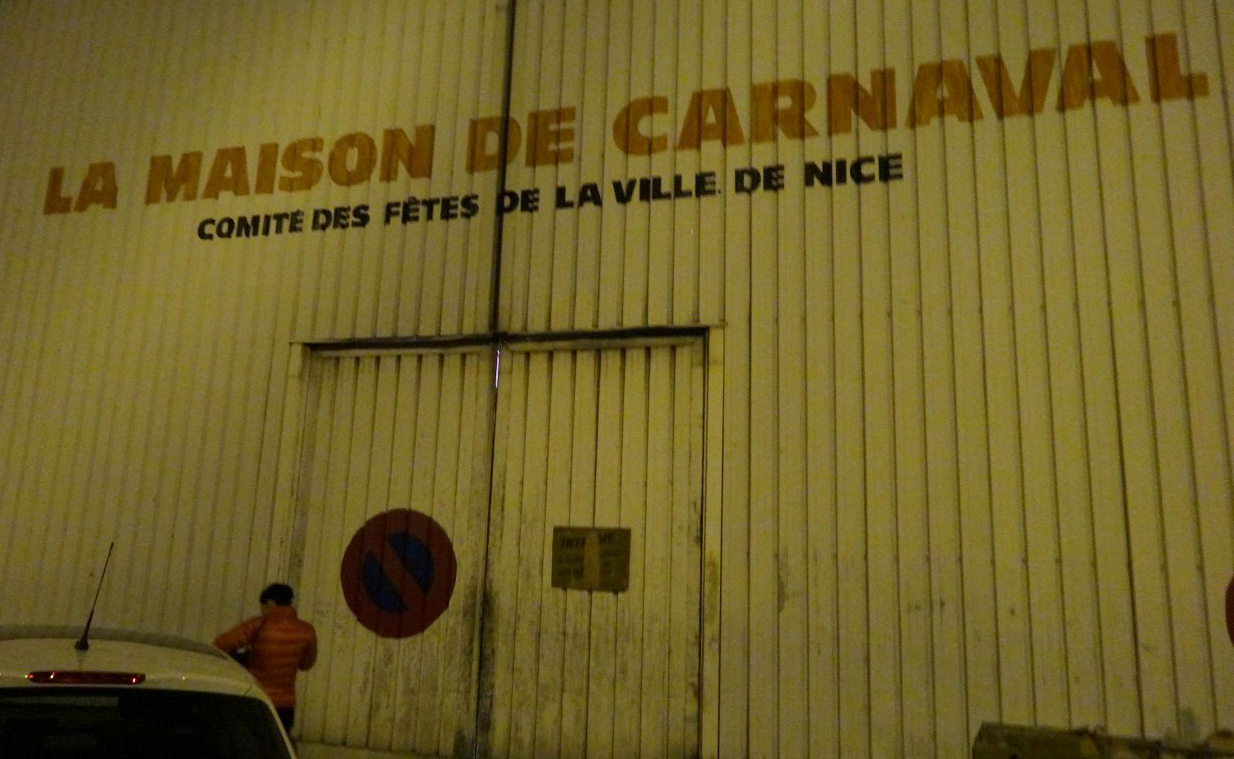
When the doors were flung open, my jaws dropped. I was in awe.
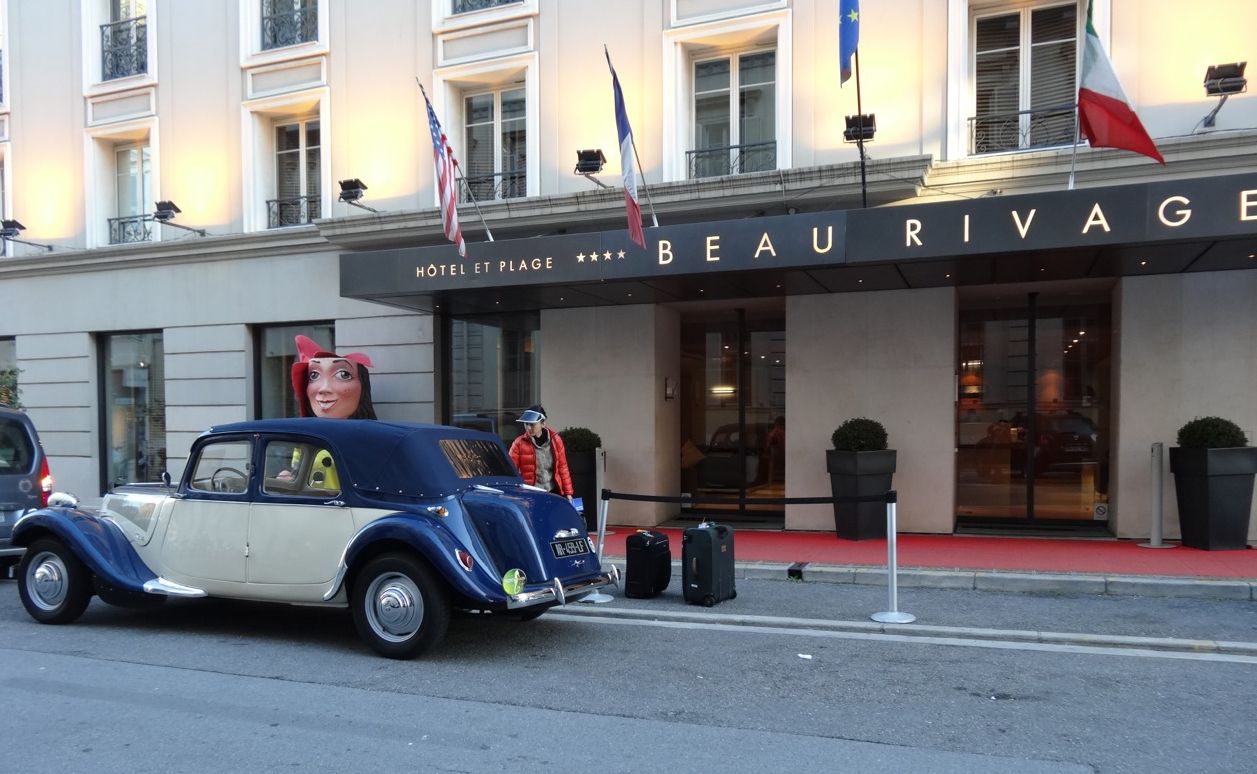
This large factory depot houses the workshop where all the floats and big head puppets and costumes are made. This publicly funded event is organised mainly by three families who have, for generations, worked on animating the cities during the winter. I was told that in the 1800s, there were some twenty families participating, and now there are only a handful left.
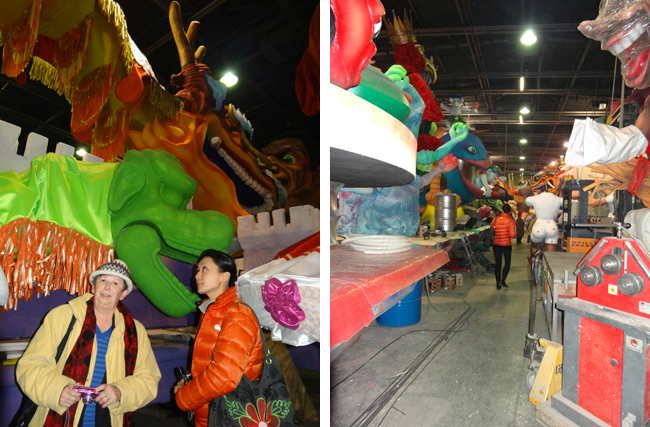
The Carnavaliers based the manufacturing of the floats from award winning drawings selected by the Nice Tourism Bureau and its selection committee. The theme for this year’s Nice Carnival was “Five Continents” and a competition was held at the end of 2012 where international cartoonists submit concept designs for the floats.
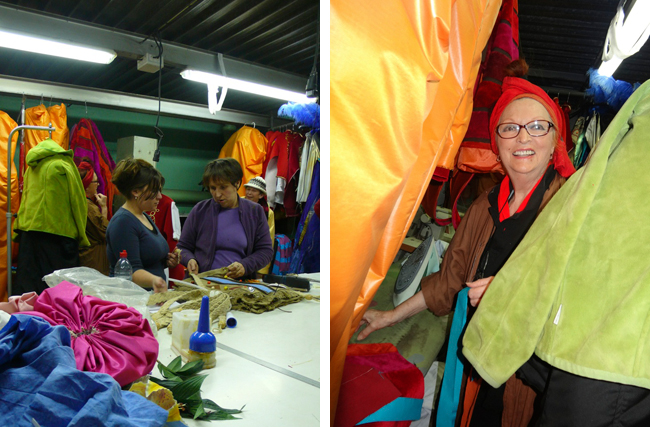
Last minute sewing and stitching at 1 in the morning. / I particularly loved this colourfully dressed lady who works on costumes, and had a glow from within.
I hope you find this article interesting. If you are interested in seeing the end results of the Carnival, email me and I will do a photo story of the actual Nice Carnival.
Till next time, thanks for reading!
Acknowledgments:
Hotel Beau-Rivage, 24 rue Saint François de Paule 06300 Nice, France
Nice Carnival
Nice Tourism Office





