
1 / 1
The site may have been used in neolithic times for rituals or as some kind of arena.
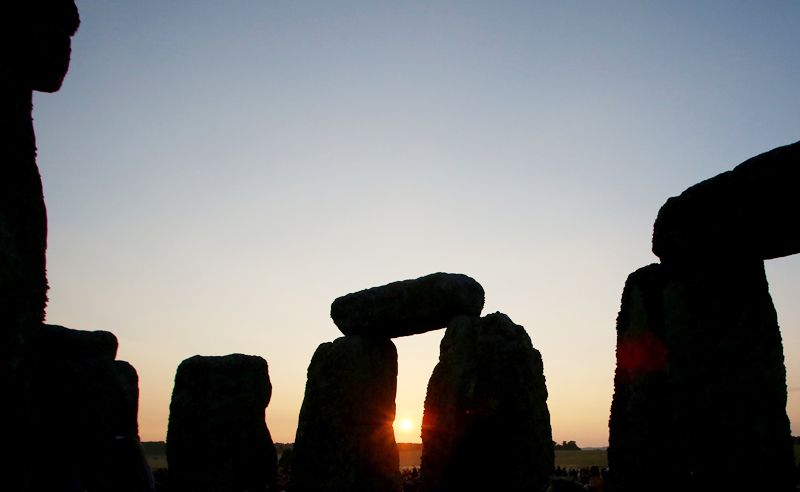
Archaeologists on Monday said they had found the buried remains of a mysterious prehistoric monument close to Britain's famous Stonehenge heritage site.
Up to 90 standing stones, some originally measuring 4.5 metres (15 feet) and dating back some 4,500 years, may have been buried for millennia under a bank of earth, they said.

The discovery was made at Durrington Walls -- a so-called "superhenge" located less than three kilometres (1.8 miles) from Stonehenge -- thanks to hi-tech sensors, they said.
The site may have been used in neolithic times for rituals or as some kind of arena.
"Durrington Walls is an immense monument and up until this point we thought it was merely a large bank and ditched enclosure, but underneath that massive monument is another monument," Vincent Gaffney, of the University of Bradford, told the BBC.
The discovery was made by the Stonehenge Hidden Landscapes Project, a collaboration between the University of Birmingham and the Vienna-based Ludwig Boltzmann Institute for Archaeological Prospection and Virtual Archaeology (LBI ArchPro).
The newly discovered stones, which have yet to be excavated, are thought to have been toppled over, with the bank of the later Durrington Walls henge built over them.
The monument, which lies in the Stonehenge World Heritage Site, is one of the largest known henges -- a circle of stone or wooden uprights -- ever found.
It measures 500 metres (yards) across and more than 1.5 km in circumference. Surrounded by a 17.6m-wide ditch and a bank around 1m high, the site has long mystified archaeologists as one side is straight and the other curved.
Now ground penetrating radar has revealed that the straight edge in fact sits on top of a "C-shaped" monument, which may have been used as a site for rituals or an arena for gatherings, researchers said.
Love being surrounded by history? Here are some UNESCO Heritage sites around Southeast Asia to fulfill that thrill.





