
1 / 1
It won’t be long until spring finally springs in Japan.
The elusive cherry blossoms will be making their yearly appearance in Japan in a matter of days. Local and International tourists alike are starting to flock to Tokyo and other Japanese cities to catch a sight of the extraordinary pink-and-white tinted view of the land. If you’re planning to participate in the magical festivities, here are some things you should know about the Sakura Festival.
The beginning of the season depends on how cold the winter was.

If the weather during the months and weeks leading to the cherry blossom season is mild, blossoms will open early, and the opposite is also true. Generally, the subtropical climate in southern Japan makes it possible for the blooms to start appearing as early as January, while in the north where it’s cold, it can happen as late as May. But for the area in between, the season starts at around late March to early April.
In mid-March, forecasters have released the estimated dates of kaika, or first bloom, in the different cities for the 2015 Sakura season. Okinawa, which is located in the southern part of Japan, was the first to experience the blooming of the cherry blossoms back in January. Fukuoka, Shizuoka, and Nagasaki can expect the first blooms to appear on March 21 to 22. Other central Japan cities such as Tokyo, Hiroshima, Nagoya, Osaka, and Kyoto won’t have to wait long for the cherry blossoms because they are expected to bloom between March 24 and 26. Up north, the cities of Ishikawa, Sendai, and Niigata will get their fill of the Sakura season starting April 2 to 7. The last to experience the first bloom is Hokkaido, since it is located in the northernmost area of the country.
The whole season lasts for about two weeks.

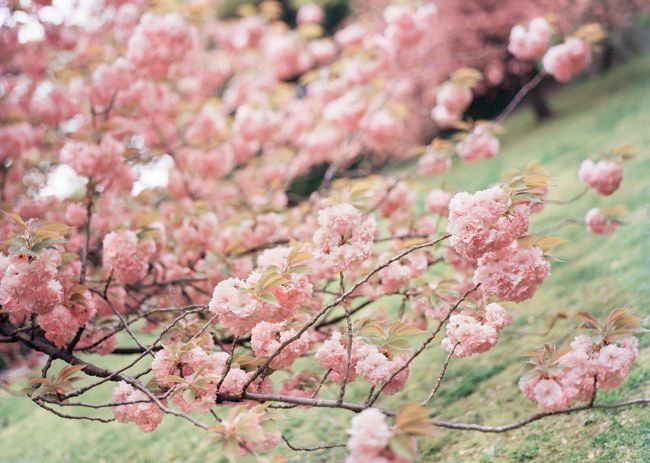
Renowned photographer Fernando Manso capturing the cherry blossoms in full bloom
It takes about a week for the blossoms to fully bloom (from kaika to mankai, or full bloom), and another until they start gently falling off the trees to make an elegant pink carpet of petals. That’s also how long the Sakura Festival lasts. But don’t fret, the trees do not bloom on the same day, so you’d have just enough time to bask in the beauty of the scenery.
A picnic in the park is a must.

Filipino designer Rajo Laurel during his visit to Japan
Well not really, but if you want to fully take in the glorious view, this is the way to go. You just have to pick a spot in any of Japan’s public parks, and lay out a blanket for you and your loved ones to sit, eat, and lie on. If you want to keep moving, take a stroll through Yasukuni Jinja Shrine, and you’d be amongst travellers and locals who are just as entranced by the spectacle of over a thousand Sakura trees in full bloom.
Felling adventurous? Try boating or scaling Mt. Fuji.

Paddle boating in Ueno Park is a good way to enjoy a perfect spring day with the backdrop of cherry blossoms all around you. On the other hand, you can go do something more extreme like climbing Mt. Fuji. Day trips from Tokyo to Mr. Fuji are abundant this time of the year, and being at the mountaintop provides a glorious view of the cherry blossoms below.
Don't forget to swing by Ginza District.

Hop over to the Ginza district of Tokyo for a plethora of food and retail choices. What better way to cap off a sweet moment under the pink shade of the cherry blossoms than enjoying a delectable bite of a Japanese dessert? Wagashi cakes artfully decorated to resemble cherry blossom flowers are available in this period. Also, visit the home of one of the most discreet royal families in the world, The Imperial Palace. The gardens surrounding the palace is open to the public, and of course, lined with cherry blossom trees.
Photos of cherry blossoms and Fernando Manso from Manso himself, and photo of Rajo Laurel from Laurel himself (all printed in Philippine Tatler Traveller). Photos of Mt. Fuji and the Imperial Palace from japan-guide.com.
You might also like:





