
1 / 1
For tea lovers seeking a fully immersive experience in the art of growing, picking and drinking the leaf, there are now more luxury pickings than ever before
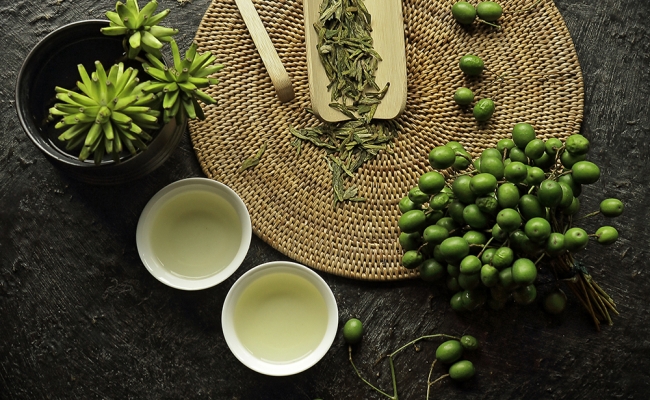
It was in Sri Lanka where the culture of tea drinking took seed under the British to become a 1.5-billion dollar industry locally. When its 26-year civil war ended in 2009, developers were quick to leverage on the beautiful colonial bungalows in tea estates, to develop resorts for affluent travellers seeking a cultural experience in tea appreciation.
Though Ceylon – Sri Lanka’s old name, is synonymous with tea drinking, the first tea leaf, the camellia sinensis, was actually brought by the British from China. As the latter develops a local infrastructure for luxury travel and reconnects with the cultural components of its 5000-year history (much of it was obliterated during the Cultural Revolution), more luxury resorts have opened in its tea-growing areas. We round up some of these luxury tea experiences around the world.
Tea Trails, Bogawantalawa Valley, Sri Lanka
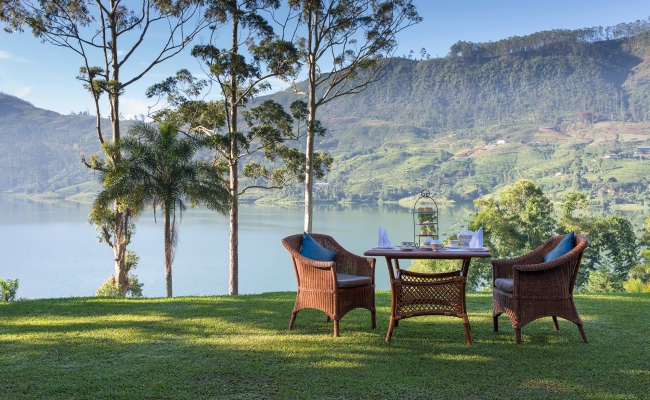
Photo by Sebastian Posingis
On a 200,000-hectare tea estate in southern Sri Lanka, a clear expanse of lush green tea terraces greets you while a crisp breeze envelops you at 1250 metres above sea level. Getting here takes up to five hours by car from Colombo airport, but the journey is worth it when you arrive surrounded by a peaceful panorama of tea terraces that lulls into a sense of serenity and exclusivity.
The latter is reinforced by the fact that there are only four restored tea planters’ bungalows built between 1890 and 1939 on the working tea estate for the live-in British managers of yore. All bungalows are decked in soft furnishings of warm, antiquated hues and come with a Swiss-trained butler.
A highlight of your tea experience is the plantation tour and tasting led by fourth-generation tea planter-in-residence Andrew Taylor who knows all about tea and the plantation which is owned by the Dilmah tea company, the most well known Sri Lankan tea label in the world.
Nosh here is a wide selection of English and Sri Lankan made with produce from the estate and tea-infused touches such as the Keemun tea and fresh tarragon infused roasted chicken and apple tart with Assam tea cream anglaise. www.teatrails.com
Fuchun Resort, Fuyang, Hangzhou, China
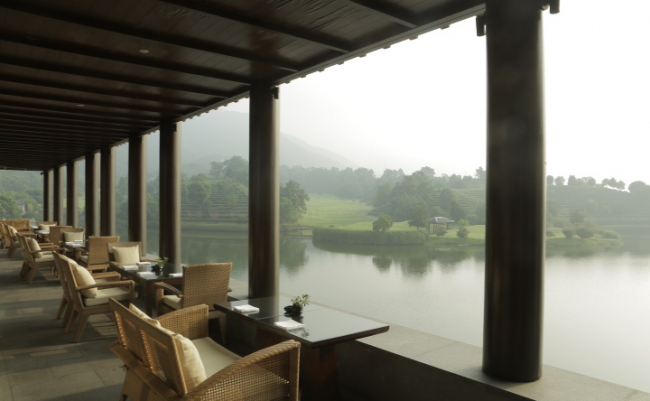
Located in picturesque and cultural Hangzhou, two hours away from Shanghai, is a tea resort which has consistently won international accolades for its spa and golf course.
Fuchun Resort spread over 60 hectares and fringed by idyllic pastures, verdant tea plantations and glassy lakes against a backdrop of mountains – the very stuff that Chinese poetry is made of; is designed by Jean-Michel Gathy, one of the world’s top architects who works for the likes of Aman. You can expect interiors in its 70 rooms and 17 villas that celebrate nature in luxury - dark wood, monolithic granite blocks and fine soft furnishings that combine modern and classic Chinese elements, and understated opulence in the form of large in-villa pools.
Tea appreciation sessions of the lightly fragranced longjing tea that Hangzhou is famous for are held all year round but guests can only take part in harvesting during April and May. Fret not should you visit outside of these months, there are many other activities designed to relax your soul – like walking trails, Chinese calligraphy and painting workshops.
Dining options in its three restaurants range from healthy Asian to international, with some tea-infused dishes like stir-fried prawns with longjing tea leaves. www.fuchunresort.com
Sheraton Xishuangbanna, Yunnan, China
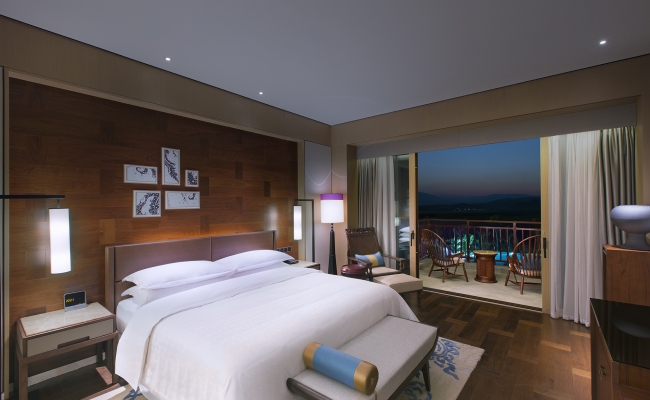
This is the third luxury hotel offering in the pu’er growing areas in the southern end of Yunnan in the far southwest of China and home to 24 of the 50 ethnic minority groups in China. But it has a clear advantage over its two predecessors. At only 10 minutes away from the nearest Xishuangbanna airport by car, it is the most accessible.
Given the area’s proximity to Laos, Myanmar and Thailand, it’s natural that much of the architecture and design are redolent of Southeast Asian influences which have also permeated the culture of the ethnic minorities. Its 326 rooms and suites are furnished in a tropical flavour with teak wood native to the region, and folkloric motiffs of the Dai group, the largest ethnic minority group in the area.
The main tea leaf being planted here is the Menghai big leaf, a variety of camellia sinensis which goes through a fermentation and oxidation process after the leaves are dried and rolled (though it can be drunk raw), to become pu’er tea. Guests can learn about the growing, harvesting and production (pressing into tea discs) processes here. www.starwoodhotels.com
Cameron Highlands Resort, Cameron Highlands, Malaysia
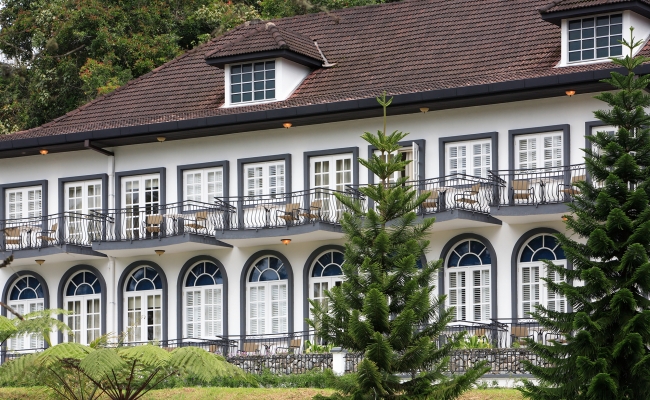
A visit to the cooler climes of Cameron Highlands 1,500 metres above sea level (3.5 hours away from the Kuala Lumpur international airport) is viewed as an escape from the tropical heat in Malaya. During colonial times, it was a popular retreat with the British as well, whose legacy can be seen in the names of many local landmarks and in the architecture and tourist offerings, right down to the English afternoon tea with scones and clotted cream served in hotels.
The most extensive and elaborate of these teas can be found at the Cameron Highlands Resort, undisputedly the most luxurious resort in the area with its beautiful colonial architecture – statuesque French doors, high timber-beamed ceilings and plantation shutters.
Manipuri and Rajghur jats (also a variety of the Camilla sinensis) are grown here, which are processed and packed as BOH tea, a brand famous in Southeast Asia for its full-bodied taste and rich honey hue. A cultivation tour and tasting in the Boh Gardens will end with a picnic in the rolling tea-laden hillsides. A visit to the standalone Spa Village is highly recommended for its extensive spa menu which includes traditional Southeast Asian treatments. www.cameronhighlandsresort.com





