
1 / 1
The museum's focus is particularly on stars of the "Korean Wave" of pop songs and TV dramas that have become the country's most potent cultural export.
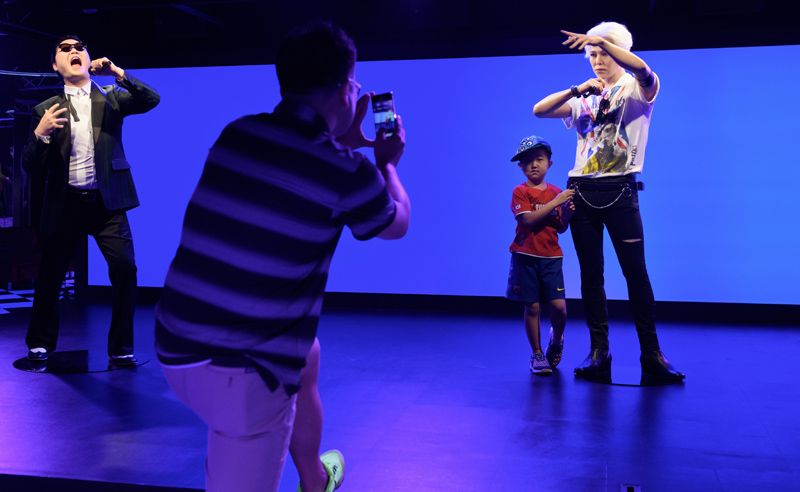
Psy, Paris Hilton and Queen Elizabeth II all made it, but South Korean President Park Geun-Hye turned down her chance of immortality in the first Asian outpost of France's famous waxwork museum, Musee Grevin, that has opened in Seoul.
The new museum's focus is firmly on the world of entertainment and, in particular, stars of the "Hallyu" or "Korean Wave" of pop songs and TV melodramas that have become the country's most potent cultural export.
As a result, waxworks of global icons like Michael Jackson and Madonna rub shoulders with the likes of actress Choi Ji-Woo -- star of one of the original Hallyu dramas "Winter Sonata" who enjoys a major fan following in Japan.

The overseas popularity of Korean celebrities like Choi and "Gangnam Style" singer Psy was a major factor in the choice of Seoul for Grevin's first Asian museum.
"South Korea has become a major regional trend-setter and Seoul is increasingly a flagship Asian destination," said Dominique Marcel, CEO of Grevin's parent company, Compagnie des Alpes.
"Being here, we can attract not only Koreans, but also Chinese, Japanese and Taiwanese visitors," Marcel said.
And there is the added bonus that Grevin's main competitor, Madam Tussauds, which has wax museums in Bangkok, Hong Kong, Shanghai, Singapore and Tokyo, is not present in South Korea.
The timing of the Seoul opening is slightly unfortunate given the dramatic plunge in tourist arrivals to South Korea because of a recent outbreak of Middle East Respiratory Syndrome (MERS) that claimed 36 lives, but there is a promotional silver lining with Seoul tourism officials desperate to push any new project or venue that might help bring the foreign visitors back.
The Seoul museum is being run with a South Korean partner, Mast Entertainment, which was largely responsible for choosing which celebrities and historical figures to include in the initial waxwork lineup.
"Our real goal was to get those people who represent the Korean popular culture that is so dominant in Asia," said Mast CEO Kim Yong-Kwan.
We recommend:





