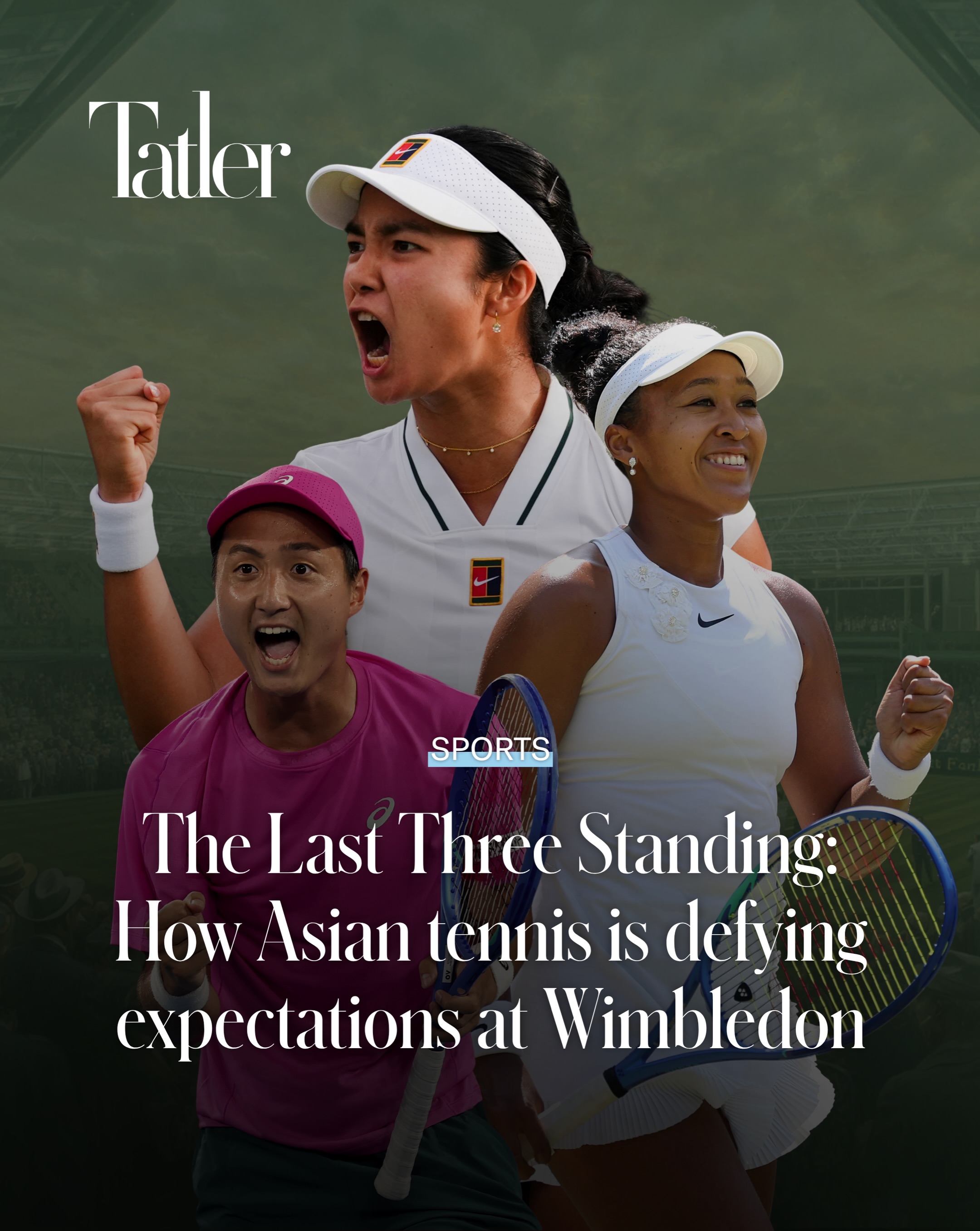

Cover Walking away from a final, pausing a season or trading podium pressure for therapy: see how eight global stars are rewriting the playbook on mental health in athletics. Photo shows Naomi Osaka of Japan at All England Lawn Tennis and Croquet Club in London (Photo: Cameron Spencer/Getty Images)
Walking away from a final, pausing a season or trading podium pressure for therapy: see how eight global stars are rewriting the playbook on mental health in athletics. Photo shows Naomi Osaka of Japan at All England Lawn Tennis and Croquet Club in London (Photo: Cameron Spencer/Getty Images)
1 / 1
From Olympic arenas to NBA courts, eight champions are redefining how sport approaches mental health and personal identity
For decades, professional sports operated on an unspoken code: physical pain was a badge of honour, while psychological strain was a private liability to be concealed until retirement. That framework has shifted substantially over the past ten years, driven by competitors who chose to address their struggles publicly while still at the peak of their careers. Rather than treating psychological wellbeing as secondary to physical conditioning, a new generation of Olympians and league champions has reframed it as foundational to both longevity and human identity. By withdrawing from major events, documenting therapy sessions and speaking candidly about diagnoses, these eight athletes have altered how institutions, sponsors and audiences understand the internal demands of elite competition.
Read more: How to leave work at work: what Cillian Murphy, Rosamund Pike and more teach us about switching off
Eileen Gu – Separating self-worth from results
Freestyle skier Eileen Gu approaches psychological conditioning with the same analytical rigour she brings to halfpipe mechanics. Rather than waiting for a crisis to address her mindset, the multi-time Olympic medallist uses daily journaling to examine and modify her own thought patterns, a habit she explicitly links to neuroplasticity. During the 2026 Winter Olympics, Gu drew widespread attention for dismantling a reporter’s framing of her silver medals as “two golds lost”, demonstrating cognitive reframing in real time. She has consistently emphasised that athletes must prepare thoroughly and then detach their personal value from competitive outcomes.
Don’t miss: Eileen Gu’s net worth: how the freestyle skier built a $50 million fortune
Alysa Liu – Neurodivergence and athlete autonomy
Figure skater Alysa Liu’s trajectory highlights the intersection of neurodivergence and high-control sporting environments. After retiring at 16 due to exhaustion, Liu was diagnosed with ADHD during her final year of high school. When she returned to the ice and eventually captured Olympic gold in 2026, she insisted on controlling her own music, costumes and training schedule. Speaking after her victory, Liu noted that she hoped the attention would raise awareness around mental health in athletics, adding of her gold medal, “I don’t need this. What I needed was the stage”.
Naomi Osaka – Establishing personal boundaries
Four-time Grand Slam champion Naomi Osaka forced a reckoning across international tennis in 2021 when she declined post-match press conferences at the French Open to protect her psychological wellbeing,subsequently withdrawing from the tournament. Osaka has frequently shared unvarnished journal entries on social media to connect with younger fans. Through her work with Maybelline’s Brave Together initiative, she has spoken about untangling her self-esteem from match results, noting that returning to the tour after motherhood required learning to accept losses without viewing them as personal failures.
Simone Biles – Prioritising safety over competition
When Simone Biles withdrew from multiple finals at the Tokyo Games in 2021 after experiencing “the twisties”,a dangerous disconnect between mind and body in mid-air, her decision challenged the expectation that athletes must push through peril at any cost. Biles has been transparent about the grief of stepping back from events she spent five years preparing for, as well as the relief she found in regular therapy. Ahead of and following her return to Olympic gold in Paris, she has underscored that every individual’s mental health journey is distinct and requires tailored support.
Michael Phelps – Post-Olympic depression and youth wellness
As the most decorated Olympian in history, Michael Phelps helped dismantle the assumption that competitive triumph insulates athletes from severe distress. Phelps has spoken candidly about experiencing acute depression and suicidal thoughts following the 2012 London Games, eventually entering inpatient treatment. In 2020, he co-executive produced the documentary The Weight of Gold, which examined systemic neglect of Olympic athletes’ psychological needs and characterised the rate of depression and suicide among competitors as an “epidemic”. Through the Michael Phelps Foundation, he has embedded emotional wellness and coping skills into youth programming across dozens of countries.
Chloe Kim – Normalising rest and life outside sport
Snowboarder Chloe Kim became an Olympic champion at 17, an achievement that brought immediate commercial visibility alongside intense scrutiny. Kim has repeatedly chosen rest over uninterrupted competition, taking a break during the 2019–20 season to attend Princeton University after winning gold in 2018 and later sitting out the entire 2022–23 campaign. Explaining her hiatus, Kim stated that she needed time to “make the non-snowboarder Chloe happy”, pointing out that constant travel and expectation had eroded her enjoyment of the sport.
Suni Lee – Imposter syndrome and chronic illness
Gymnast Suni Lee’s experience illustrates how rapidly public triumph can collide with private upheaval. After winning all-around gold in Tokyo, Lee dealt with imposter syndrome, questioning whether she deserved her title following Simone Biles’s withdrawal. Ahead of the 2024 Paris Games, Lee was diagnosed with an incurable kidney disease that caused significant physical swelling and forced her off the training floor,triggering months of depression and an identity crisis. Her eventual return to the podium in Paris was accompanied by open discussions about relying on medical mentors and rebuilding self-belief.
Kevin Love – Male vulnerability and league resources
In March 2018, NBA forward Kevin Love published an essay in The Players’ Tribune detailing a panic attack he suffered during a game against the Atlanta Hawks. Writing directly to men and boys raised to equate silence with strength, Love described spending 29 years treating mental health as someone else’s problem before seeking therapy through his team. His candour, alongside that of fellow player DeMar DeRozan, prompted the NBA and its players’ union to expand psychological resources and mandate team-affiliated mental health professionals across the league.


Chonx Tibajia is a senior editor at Tatler Asia’s T-Labs team, where she writes widely on lifestyle subjects including beauty, style, entertainment and travel. She has a long career in journalism, including roles as a columnist at The Philippine Star, and is the founder of the creative platform Pineappleversed. Beyond Tatler, her bylines appear in regional lifestyle and business publications, showcasing a broad portfolio that spans beauty trends, travel guides and culture pieces.
Curated for you
The stories, profiles, and cultural moments featured on our Instagram feed