Cover Rattan sticks are the most expensive of its kind because of the wood's renowned durability and strength.
Rattan sticks are the most expensive of its kind because of the wood's renowned durability and strength.
1 / 1
This month we take a closer look at the national sport Arnis, and why this uniquely Filipino martial art has become a reflection of the Philippine society and culture
Recognised by law as the country’s national sport and martial art, Arnis hails its origins from pre-colonial Philippines and continues to be appreciated today by the young generation.
The book The Filipino Martial Arts—compiled by Dan Inosanto, Gilbert L Johnson and George Foon—cites theories that using bamboo canes as weapons may be traced to Indo-Malayan migrants from India and the Indonesian islands or from the Arab missionaries who were known for their mastery of blades.

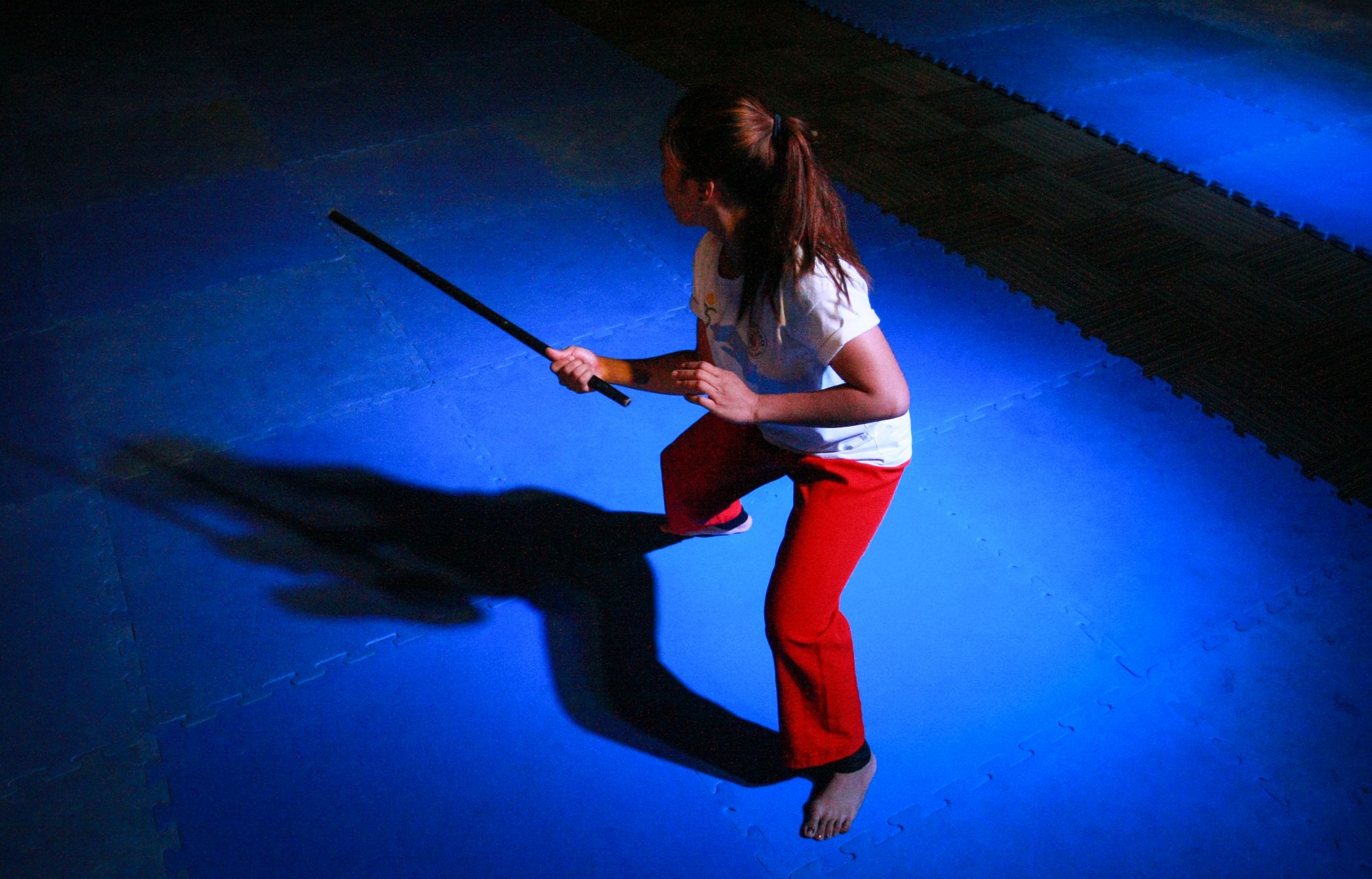
Above PEKAF's 1st National Championship and Battle of the Champions last 2018
PEKAF's 1st National Championship and Battle of the Champions last 2018
1 / 1
However, the first documented account of using wooden sticks and spears as weapons was written by Antonio Pigafetta in his chronicle of the Battle of Mactan in 1521. Pigafetta wrote that the natives used bamboo spears to stab Ferdinand Magellan, leading to his death.
Today, Arnis is one of the three weapon-based fighting sports in the country under the umbrella term of Filipino Martial Arts. The other two are Kali and Eskrima. Together with hand-to-hand combat, grappling and weapon disarming techniques, arnisadores use bastons (sticks) made of either rattan or kamagong wood. Knives, blades, spears, bolo, the Indonesian dagger kalis and the single-edged sword kampilan from Mindanao are just some of the sharp-edged weapons also used in this sport.

Above Rattan Arnis Sticks with Engraving Design. It is common to use rattan for making impact weapons in the Filipino and Indonesian martial arts. When rattan breaks, an advantage of it is that the material frays, which makes its fibres degrade rather than splinter, still causing a dangerous injury to the opponent.
Rattan Arnis Sticks with Engraving Design. It is common to use rattan for making impact weapons in the Filipino and Indonesian martial arts. When rattan breaks, an advantage of it is that the material frays, which makes its fibres degrade rather than splinter, still causing a dangerous injury to the opponent.
1 / 1


1st PEKAF Drafting Camp last March 2019 at PhilSports Arena, Ultra, Pasig City
1 / 2
The angles of strikes and attacks used by arnisadores have unique names. Sinawali is the signature double-stick weaving movement that takes its name from sawali, the woven coconut palm leaves used as walls of nipa huts. Redonda is a continuous circular downward-striking double-stick twirling technique that serves as both a good defence and a good offence. The name which means “round” is of Spanish origin and implies a strike that whips in a circle and returns to its point of origin. Puño (which is also Spanish for “fist”, “hit”, or “handle”) is a strike using the butt of the weapon. It targets nerve points and soft spots of the opponent; it can also be used to shatter bones.
These and more support the notion that Arnis, despite its multi-racial influences, was formalised during the Spanish Colonial Period and has become a practical tool for self-defence and for the revolutions against the colonisers.
Read also: Derek Ramsay On His Passion For Sports And His Best Fitness Tips
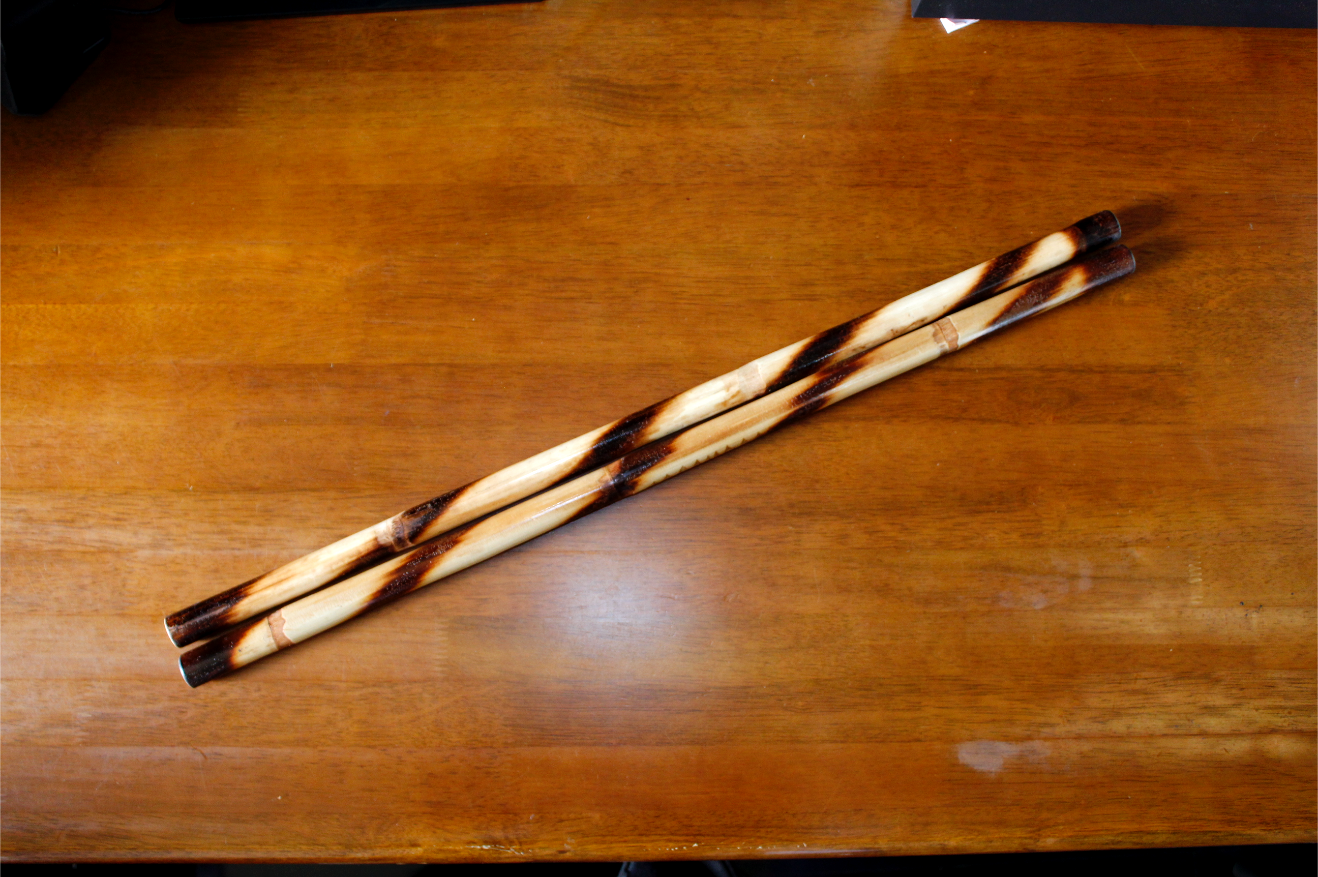
Above Rattan Arnis Sticks with Spiral Design
Rattan Arnis Sticks with Spiral Design
1 / 1
Read also: A Quick Look At The National Symbols Of The Philippines
The longstanding history of using these weapons with beautiful yet deadly choreography is shared by the Filipinos with its neighbours in the Southeast Asian region. After rising to prominence because of the Asian Hollywood films of Bruce Lee, the art of Arnis has been well received worldwide in pop culture and international sports competitions.
Just recently, the Philippine Eskrima Kali Arnis Federation’s arnisadores earned 14 gold medals at the Southeast Asian Games 2019, bringing pride to the winners’ respective indigenous peoples communities as well as the entire Filipino nation.
Read also: 2019 Southeast Asian Games: 5 Things You Should Know About The Biggest Edition Yet

Above Arnis Expo hosted in Manila last 17-19 July 2019 with ASEAN country representatives
Arnis Expo hosted in Manila last 17-19 July 2019 with ASEAN country representatives
1 / 1
A testament of Filipino resourcefulness and creativity, and witness to our resistance to oppression, Arnis, with Kali and Eskrima, are cultural treasures that embody dignity and heroism.
For more information on the featured arnis sticks, visit arnismartialarts.com
Read more: All About The Barong Tagalog: The Traditional Filipino Men's Attire
Credits
Images: (Cover and Close-ups of Arnis) Arnis Grand Master Rodel Dagooc / arnismartialarts.com
Images: (Competition) Philippine Eskrima Kali Arnis Federation / Thanks to Sen. Juan Miguel Zubiri

Franz writes about the local cultural scene and rediscovering the country’s storied past and rich heritage. He earned his bachelor’s degree in Journalism from the University of Santo Tomas and is currently pursuing a master's degree in Art Studies at the University of the Philippines Diliman. Besides working on this luxury lifestyle magazine, Franz is an avid book reader, local traveller, museum-goer, chorister, and community theatre playwright. But above all this, this Aether main spends more time in Teyvat than anywhere else.
Curated for you
The stories, profiles, and cultural moments featured on our Instagram feed