1 / 1
Hing Chao looks back at the long road taken to document and preserve legendary Grandmaster Lam Sai Wing’s teachings

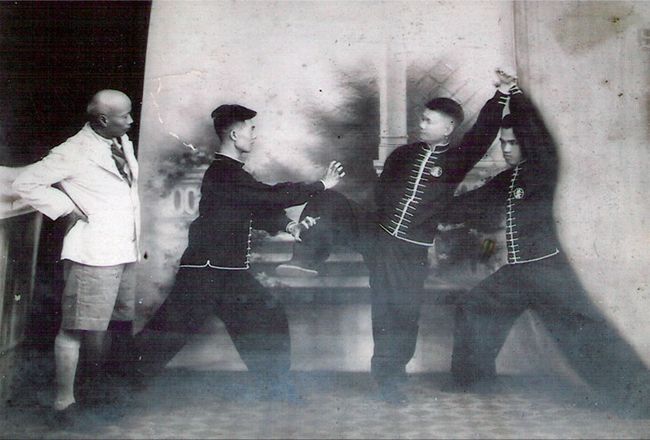
To any kung fu aficionado the name Lam Sai Wing would not be unfamiliar. The greatest martial artist in Guangdong of the early 20th century, his fame spread far and wide as his followers and branch of Hung Kuen first migrated to Hong Kong, and subsequently disseminated to the rest of the world. Celebrated for his awesome tiger claws and bridge-hand techniques, surviving photographs of Lam Sai Wing testify to his powerful build and exceptionally well-developed forearms.
Celebrated deeds of Lam Sai Wing, such as the Lok Sin Theatre incident, where he was famously ambushed by nearly two hundred assailants – and made a narrow escape after breaking the arms of seventy-eight of them in the process! – continue to feed popular imagination and provide creative inspiration to film-makers.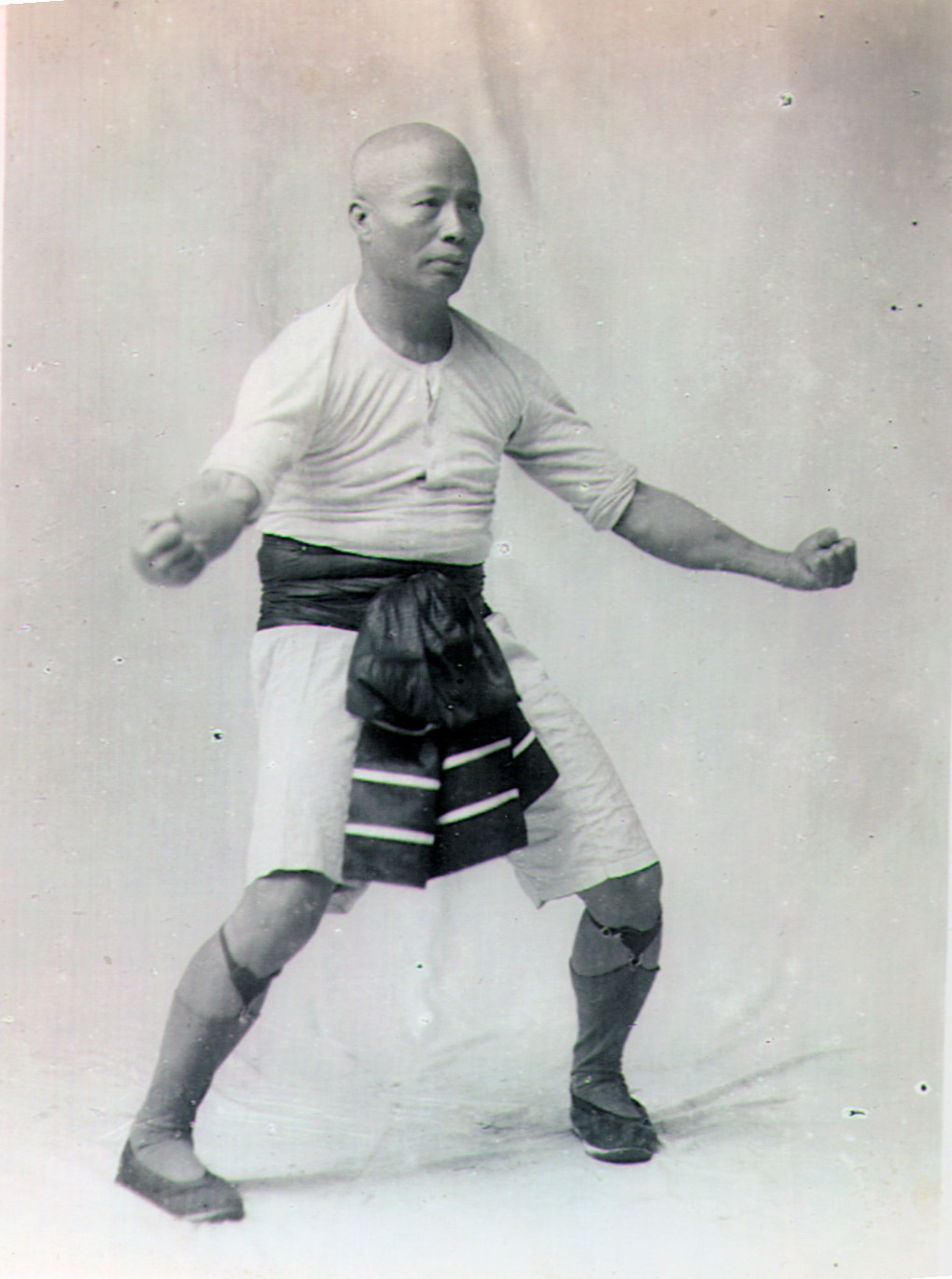
What distinguishes Lam Sai Wing from other martial art figures of the popular realm, however, is that he left behind much more than a clutch of legends, but a substantial body of teachings with three published manuals, writings and articles on the history and principles of Hung Kuen, as well as a sizeable collection of photographs including a full set of Gung Gee Fok Fu Kuen (published in 1936). This latter collection were probably shot some time in the mid-1930s when Lam Sai Wing was already over seventy years of age.
These manuals, texts and photographs constitute a rich and important source of knowledge, as well as an archive of unique historic and cultural value for our understanding of Lam Family Hung Kuen in the early 20th century.
Read more about the art of hung kuen and its masters
The published manuals focus on the three core empty-hand sets (sometimes called the ‘three treasures’) in Lam Gar Hung Kuen – Gung Gee Fok Fu Kuen (Pattern Taming Tiger Boxing), Fu Hok Seung Ying Kuen (Tiger and Crane Boxing), and Tit Sin Kuen (Iron Wire Boxing). We can never know for certain whether Lam Sai Wing intended to make a full visual documentation of his martial arts. However, that he published the full catalogue of names for the postures in his famed Ng Long Baat Gwaa Gwan (Fifth Brother Trigram Pole), suggests Lam Sai Wing perceived a need to carefully document and preserve these names, which had until then been orally passed on. In addition, his effort to personally pose for the entire sequence of Gung Gee Fok Fu Kuen in the 1930s despite old age and failing health, intimates a strong desire to record his teachings as faithfully as possible.
Unfortunately, a combination of ill health and the Japanese invasion brought Lam Sai Wing’s project to a halt. In 1940, at the age of eighty, Lam Sai Wing returned to his ancestral village in Ping Chou to end his days. In the meantime, most of the photographs he posed for the Iron Wire set were destroyed during the war. Furthermore, the Tit Sin Kuen manual he intended to publish was not complete until 1951, eight years after his passing, and by that time under the auspices of his student, Chu Yu Zhai the writer, who was well-known for story-telling rather than his martial arts.
In reviewing and assessing Lam Sai Wing’s three manuals it is necessary to set them in context. The first manual – the first of two Gung Gee Fok Fu Kuen manuals – was published in 1923 when Lam Sai Wing was still at the height of his reputation, while the last manual was released after his death. A gap of almost three decades separate his three works. From a technical standpoint, the Fu Hok Sheung Ying Kuen manual is the most well-executed while Tit Sin Kuen is the least satisfactory, which abounds with mistakes. The two Gung Gee Fok Fu Kuen manuals fall somewhere in the middle. The first, earlier manual shows a fitter and younger Lam Sai Wing, so the illustrations evince better form and techniques. However, it also contains a number of mistakes, probably as a result of the editor’s oversight. In any case, Lam Sai Wing considered it necessary to rectify the mistakes, which led to the second version.
The second Gung Gee Fok Fu Kuen manual was handled directly by the Lam family (and his closest students) and is considered in some respects the correct and definitive version. It is also the only manual with a full set of photographs, which minimized the occurrence of mistakes due to misinterpretation. Looking at the illustrations of the first Gung Gee Fok Fu Kuen manual, which vary considerably in terms of quality and technical exactitude, I am also of the opinion that only the key postures were photographed and that the illustrator drew the rest from verbal instruction of the editor.
However, the second Gung Gee Fok Fu Kuen manual is not free from defects either and suffers from the fact Lam Sai Wing was by then quite old and suffering from terminal illness. He was unable to get into the low stances required for many of the postures, and the quality of his movements are palpably inferior to some of the earlier photos taken during his prime.
In making a new version of Hung Kuen’s most fundamental Gung Gee Fok Fu Kuen set, therefore, we aim to rectify these shortcomings and present an authoritative account of this important foundation set. Summing up, I would like to cite the words of my co-author and Hung Kuen teacher, Master Lam Chun Fai:
‘Gung Gee Fok Fu Kuen is a classic South Chinese kyunfa manual widely circulated in Hong Kong, China and beyond. However, it has been well over seventy years since the publication of Lam Sai Wing’s original manual, which were released in the 1920s and 1930s. In addition, due to limitations of the times, as well as the fact the original manual was composed towards the end of Lam Sai Wing’s life when his health was already in terminal decline, inevitably there were omissions and mistakes in the original publication. This has called for a new corrected edition. This illustrated and annotated edition offers the first Gung Gee Fok Fu Kuen manual with a full exegesis on the teachings of the Lam Family.’
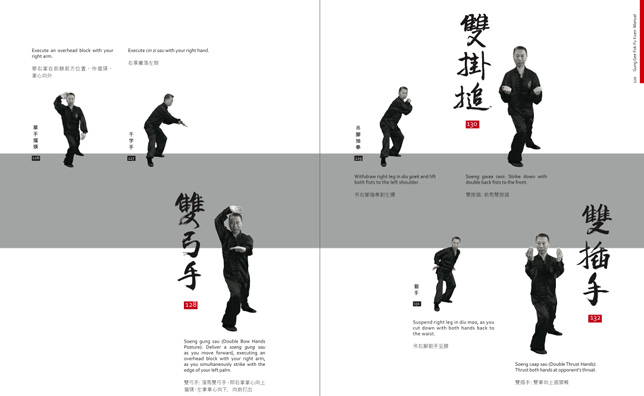
Hung Kuen Fundamentals: Fok Fu Kuen is 70 years in the making but in many ways, the publication of this book is merely the first step in our plan to document the core empty-hand and weapon forms of Lam Family Hung Kuen. In doing so we are continuing in the spirit of Lam Gar Hung Kuen’s founder, my Great Grandmaster Lam Sai Wing, who was a true pioneer and, through his untiring dedication to documentation, left behind the first published Chinese boxing manuals in this region.

Carrying in his footsteps we hope to contribute towards preserving this vital, much publicized, and yet greatly neglected heritage of our culture, which we wish would one day be declared a monument of intangible culture not only for Hong Kong but all humanity.
Find out more about Hung Kuen Fundamentals, released this May 2013
Curated for you
The stories, profiles, and cultural moments featured on our Instagram feed