
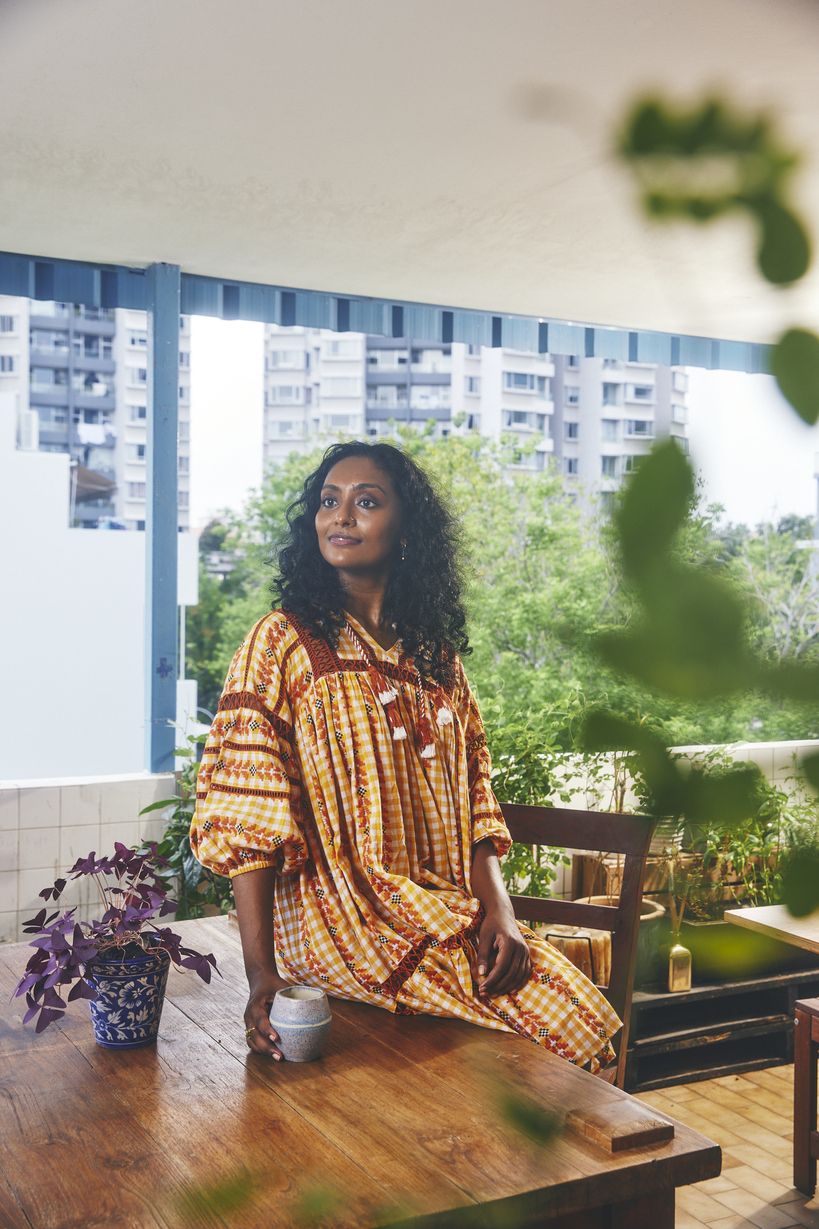
Cover Nithiya Laila grows native plants on her rooftop in Singapore (Photo: Darren Gabriel Leow)
Nithiya Laila grows native plants on her rooftop in Singapore (Photo: Darren Gabriel Leow)
1 / 1
We spent time with home farmers in Singapore, who offered us food for thought on ethno-botany, sustainability and how the produce we grow and eat tells the story of who we are
Growing up in Singapore, Nithiya Laila remembers her grandfather bringing home produce he had foraged like mangoes and soursop. Her grandmother, she says, always seemed to know which herb or plant to use if she was feeling unwell.
“As kids, if we had a cold, she would take turmeric, put it in some milk and bring it to a boil with a bit of black pepper,” Laila shares, comparing it to the turmeric lattes sold today in cafes and health stores. And that’s the point she’s trying to make. So many of today’s “superfoods”, made trendy by the wellness cults of Hollywood, are nothing new.
“Coconut, moringa, turmeric … all the stuff I grew up eating, which wasn’t cool then, we’re now paying ten times the price for. It’s been gentrified,” she exclaims. “Why are people buying moringa powder from Australia or the US, when it’s native here?”
This is why Nithiya is passionate about instilling a sense of pride among people in the region by reintroducing and embracing local ingredients. Starting with her rooftop garden, which is blooming with native ingredients like lemon balm, sawtooth coriander, butterfly sorrel, lime and moringa.
“These plants hold stories and when you cook with them, you create new stories,” she says. “If you stop growing and stop cooking, that knowledge doesn’t get passed on. These aren’t things I read in a book or on the internet, I lived it. It’s infused when you’re a kid. If you want to take it, if you want to keep these traditions alive, it’s there.”
For years, Nithiya hosts a culture-based pop-up dining club called Brunch Bandits, inviting guests to enjoy feasts inspired by the histories of food, community and local farmers. Wanting to emphasise the versatility and diversity of local bounty, Brunch Bandits serves feasts that range from Ethiopian, Brazilian, West Indian and Southeast Asian cuisines, all made using locally-grown ingredients.
“Across the global south, there’s this connection, and it’s not one we see or think about often,” she says. “We don’t see how similar we, and the food we grow, is across the equator.”
Nithiya currently has a grant from the Ministry of Sustainability and the Environment to build a platform where people can locate and exchange seeds, with the hopes of encouraging more people to start growing and using indigenous plants once again. It’s a project that she hopes will break down the silos around having access to seeds, plants and cuttings.
“What we can do is preserve the species we have in our region and be a leader in growing heirloom varieties,” Nithiya shares. “Singapore is the best of East and West, and in our historical push for growth, we moved away from tradition and away from the plants around us, looking instead to European or Japanese cuisine. But the reason those cuisines are what they are is because they focus on the produce. There’s a movement now to decolonise our plates.”


Coco Marett is a writer and editor who grew up between Hong Kong and Melbourne. She currently heads the travel section for Tatler Asia, and manages the Tatler Travel account on Instagram. She is known for her features on unique, under-the-radar properties and destinations. She's also known for her in-depth interviews that paint a refreshingly candid portrait of influential figures across various industries —from artists to political figures, CEOs to celebrity chefs. Follow her on Instagram @cocomarett





