
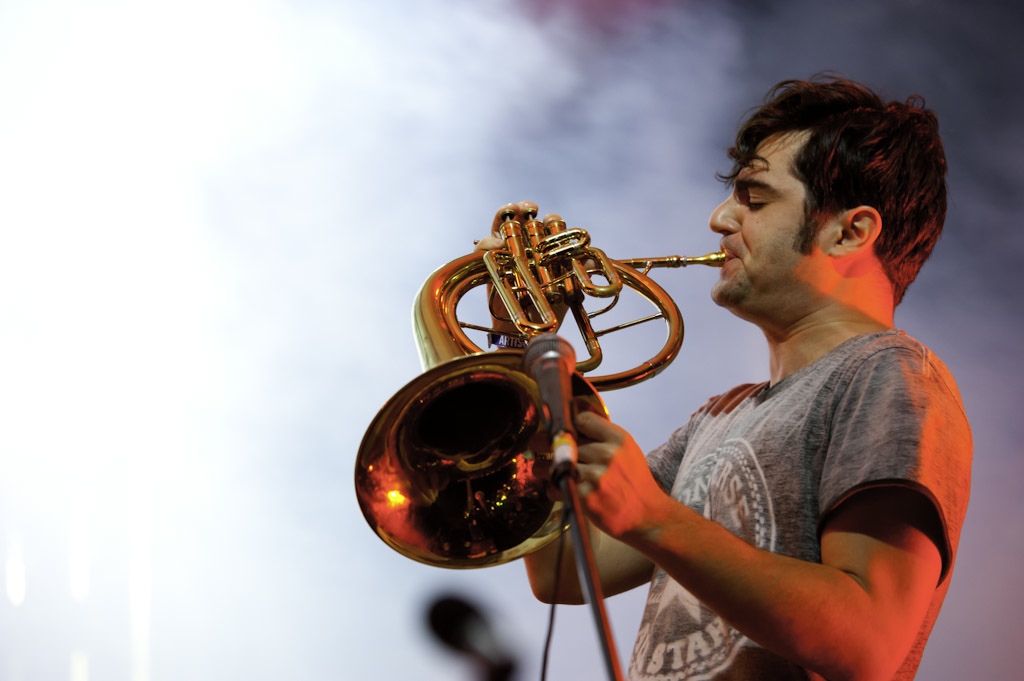
1 / 1
Two founders of Clockenflap tell us why it is sad to organise the only real music festival in Hong Kong
It was 2005 when the name Clockenflap dropped out of thin air. Without a clue of where he could use it, Jay Forster scribbled it down onto a piece of paper anyway, knowing in his mind that he’s “got it”. That was the anticlimactic beginning of the biggest annual live music festival in Hong Kong’s history. There wasn’t any immediate or glorious goal at the time either – the music festival didn’t materialise until 2008 - nor could Forster, together with friends Mike Hill and Justin Sweeting, possibly envisage that in merely seven years’ time, their brainchild Clockenflap will host a total of 32,000 music lovers on the West Kowloon Promenade next month.
Friends and peers, said Forster and Hill, had advised them strongly against the idea before 2008, arguing that hosting an outdoor music and art festival in Hong Kong was “unfeasible” and “ridiculous”.
“Since the Harbour Festival, there’s been some unwritten law that Hong Kong will not support outdoor art events,” said Forster, referring to the government’s heavily criticised HK$100 million-dollar music program in 2003 that aimed to revive Hong Kong’s economy and morale after the outbreak of SARS. “But we’ve managed to overcome that through sheer determination.”
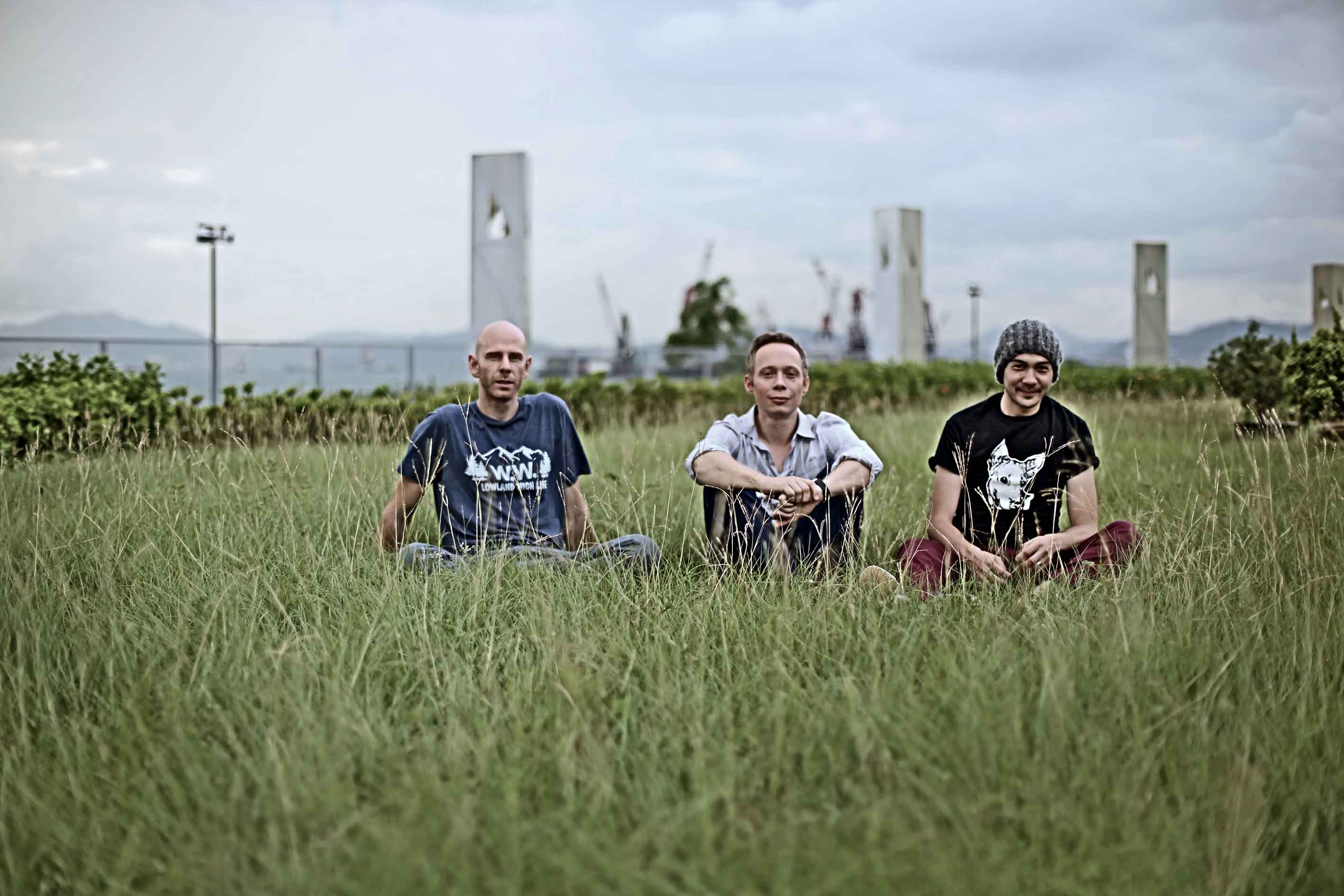
Founders Jay Forster, Mike Hill and Justin Sweeting
Compared to the Harbour Festival, Clockenflap had struggled to get the essential support and trust from the government. And without big names like the Rolling Stones, Santana and Neil Young, its lineup looked close to negligible.
The first two years of Clockenflap, said Forster, was about securing a venue. Although Cyberport, where the event was held in 2008 and 2009, was “just fun”, there were red tapes, including noise complaint, that pushed Clockenflap to the verge of extinction in its third year, when it had to resort to a warehouse with an even more modest lineup.
In December 2011 however, Clockenflap came back with its biggest ever, two-day event on the West Kowloon Promenade. For those who braved the chilly weather, it was unprecedented. Bands were jamming in parallel on multiple stages and drinks and food were flying off kiosks, while spectators hopped around. It had an air of a carnival with precisely the atmosphere Forster and Hill had hoped to create. But a number of restrictions ruled that it would be a non-ticketed event. In other words, most of the funding came from the founders.
“Last year worked, but it was the most expensive marketing exercise we’ve done – everything came from our pockets,” Hill laughed. “A lot of people are asking, ‘Why isn’t it free this year?’, the simple answer is because it isn’t sustainable.”
Costly or not, the two-day event in 2011 was a huge success with a record number of spectators and the biggest ever lineup. It also proved a point – Clockenflap was not a ridiculous idea after all.
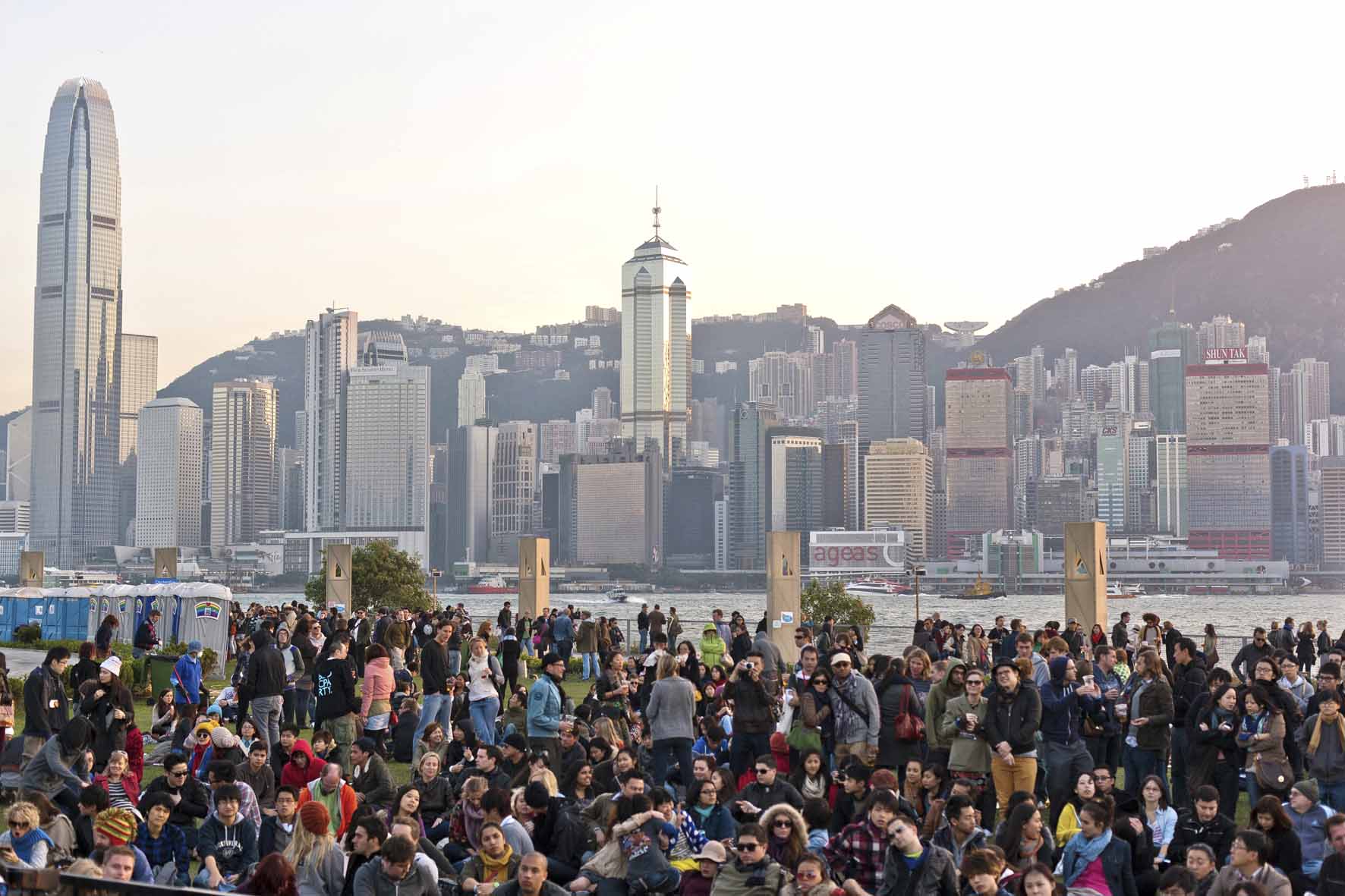
“The government, until we did it, didn’t think there was a real interest. They thought it was a bit of a gweilo festival,” said Forster. “But last year, 55 per cent of the audience was Chinese - or at least had a Chinese last name.”
“The main reason to do [Clockenflap] is that we don’t want Hong Kong to only offer indoor concerts with a very passive, two-hour experience,” Hill continues. “It doesn’t really create a platform, there’s no exchange, and Clockenflap is all about that. To be honest, to be called the ‘only music festival in Hong Kong’ in the 21st century, it’s a little bit sad, a little bit shameful.”
This year, Clockenflap is returning to the West Kowloon Promenade on December 1 and 2 with an extra stage, and yet a more impressive lineup, including Primal Scream, De La Soul and Robot, the band Forster and Hill are a part of, as well as a capacity to host 16,000 people every day.
With “more breathing space” to plan this year’s event (six months compared to two to three months previously), the organisers are giving people more reasons to attend. A kids’ zone will be set up, as well as Hong Kong’s first silent disco. Here, people will be given Bluetooth headsets with the options of two music channels coming from two DJs’ live music. With that, dozens of people will be dancing to each other in silence.
The ultimate goal according to the duo is more than just organic growth, though. Imagine this: at dusk, scores of international and local bands are playing different genres of tunes in parallel on an expansive strip of land; there are movie tents, face painting and food and drink kiosks. Then you turn around and see the incredible skyline, with container ships floating by. It is unique, something that will grow, and it will start to get a reputation. Ultimately, it becomes a reason for people to come to Hong Kong.
“Anybody who doesn’t see this is kind of short-sighted really,” says Hill. “And it’s surprising that it took so long for somebody to figure this out.”
See our interview with Lana del Rey who talks about her music and biggest fear.





