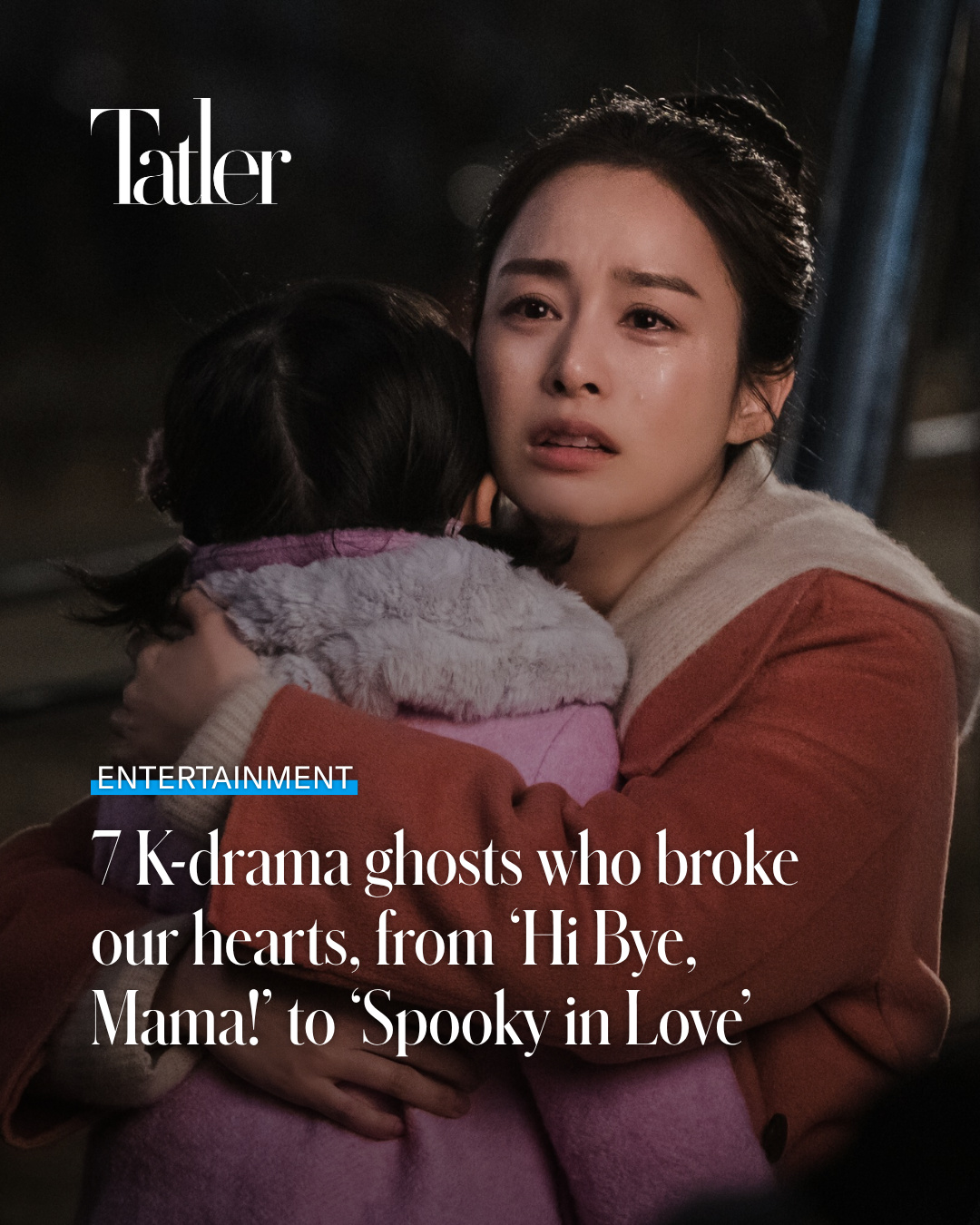
Cover These Netflix K-dramas are often overlooked but have great stories and characters you shouldn‘t skip (Photo: Netflix)
These Netflix K-dramas are often overlooked but have great stories and characters you shouldn‘t skip (Photo: Netflix)
1 / 1
Think you’ve seen all the best Netflix K-dramas? These overlooked Korean series have the sharp writing, addictive plots and complicated characters to turn ‘just one episode’ into an entire weekend
There is a particular kind of K-drama that refuses to let you behave sensibly around a streaming service. You tell yourself you’ll watch one episode, discover that the episode ends with a revelation, a betrayal or someone making an objectively terrible romantic decision and suddenly it’s 2am.
The trouble is that Netflix’s biggest K-drama hits tend to dominate the conversation. We know the obvious ones. We know the romances everyone watched, the thrillers everyone argued about and the endings that temporarily took over social media. But some of the platform’s most satisfying Netflix K-dramas have been hiding in plainer sight.
These are the overlooked K-dramas worth rediscovering: series whose writing does the heavy lifting, whether through an unusually clever premise, complicated characters, escalating mysteries or the simple ability to make the next episode feel unavoidable. They may not have generated the same frenzy as Netflix’s biggest Korean dramas, but that can make discovering them feel even better.
Because sometimes the best K-drama recommendation is not the one everyone has already told you to watch. It’s the one that makes you wonder how you somehow missed it.
In case you missed it: 10 underrated K-dramas that deserve your attention
1. ‘Inspector Koo’ (2021)
Above A disgraced former police officer hunts a charming young serial killer in a gloriously strange game of cat and mouse
If Inspector Koo were a conventional detective drama, it would already be interesting: a former police officer turned insurance investigator is drawn into a series of suspicious deaths and begins to suspect that a seemingly harmless university student, Song Yi-kyung (Kim Hye-jun), is responsible. But Inspector Koo has no interest in behaving like a conventional detective drama.
Koo Kyung-yi (Lee Young-ae) is brilliant, deeply antisocial and more comfortable in an unwashed T-shirt playing video games than interacting with another human being. Yi-kyung, meanwhile, is an intelligent, calculating murderer who treats killing almost like a puzzle. The result is less a straightforward investigation than an elaborate game between two women who are constantly trying to predict each other’s next move.
The writing is what makes the series so addictive. Just when you think you understand what is happening, the perspective shifts or another layer of Yi-kyung’s plan comes into view. The comedy is equally important: Koo’s dysfunctional investigative team and bizarre methods prevent the show from becoming relentlessly grim.
It is a murder mystery with the energy of a dark workplace comedy, populated by characters who are all operating according to their own strange logic. You may not know where the story is going, but you can be sure it will get there in the most entertaining way possible.
2. ‘The Good Detective’ (2020)
Above Two detectives with radically different methods reopen a murder case and discover that the truth has been buried beneath years of institutional self-preservation
Kang Do-chang (Son Hyun-joo) is an old-school detective who trusts experience and instinct. His younger partner, Oh Ji-hyuk (Jang Seung-jo), is more analytical and considerably more sceptical of the shortcuts that have become routine in their police station.
Their investigation begins when new evidence casts doubt on a murder conviction that has already been settled. What follows is not simply a race to identify the real culprit. The deeper problem is figuring out why so many people—from police officers to chaebols—have a reason to prefer the original version of events.
The drama’s pleasures come from watching the investigation widen. A supposedly closed case becomes a story about professional ambition, institutional loyalty and the damage caused when people become more invested in being right than finding the truth.
And because the detectives themselves don’t always agree, the series avoids the familiar K-drama formula in which one brilliant investigator simply sees what everyone else missed. Here, the investigation is collaborative, messy and occasionally infuriating—which makes the eventual breakthroughs considerably more satisfying.
3. ‘One Spring Night’ (2019)
Above A librarian falls for a single father and discovers that ending one relationship is considerably easier than explaining why
Lee Jung-in (Han Ji-min) has been in a long-term relationship with a successful banker, but the relationship has become more habit than love. A chance meeting with Yoo Ji-ho (Jung Hae-in), a pharmacist and single father, unsettles the comfortable life she has constructed.
The complication is not simply that Jung-in has fallen for another man. It is that everyone around her has an opinion about what she should do next. Her family, particularly her father, sees Ji-ho’s status as a single parent as a liability. Her existing relationship has its own expectations. Even Jung-in’s sisters are navigating their own complicated ideas about marriage and happiness.
One Spring Night takes an apparently familiar romantic premise and slows it down enough to examine the consequences. The drama is less interested in grand declarations than in conversations that become increasingly difficult to avoid.
That makes it particularly binge-worthy in a quieter way. The tension comes from watching people approach decisions they already know they need to make. And when the characters finally say what they have been avoiding, the emotional impact comes from everything that preceded it.
4. ‘Be Melodramatic’ (2019)
Above Three best friends in their 30s juggle careers, relationships, grief and the absurdity of adulthood in one of the smartest K-drama ensembles around
Be Melodramatic follows three women whose lives intersect so completely that their apartment becomes part home, part therapy office and part writers’ room.
Im Jin-joo (Chun Woo-hee) is a television screenwriter trying to turn her increasingly strange personal life into material. Lee Eun-jung (Jeon Yeo-been) is a documentary filmmaker dealing with profound grief after losing her partner. Hwang Han-joo (Han Ji-eun) is a single mother attempting to survive the entertainment industry while raising her son.
The series is ostensibly a romantic comedy, but that description barely covers what it is doing. It jumps between absurdist humour, workplace satire, grief, friendship and the mechanics of writing television itself. Characters occasionally break the fourth wall. Stories interrupt other stories. A joke can suddenly turn into something devastating before the show cheerfully moves on.
It is also unusually generous to the idea that adulthood is messy without necessarily being tragic. Nobody has completely figured out their career, love life or emotional baggage. They have dinner together and keep going.
That combination makes Be Melodramatic a particularly dangerous recommendation for a binge-watch: you may arrive expecting a quirky comedy and end up emotionally attached to three women, their friends and a television production company before you realise what happened.
5. ‘A Model Family’ (2022)
Above One desperate professor steals a bag of drug money and discovers that his family’s ordinary life is about to become a very complicated crime story
Dong-ha (Jung Woo), a financially desperate university professor on the verge of losing everything, stumbles across a car containing two dead men and a substantial amount of cash. Instead of calling the police—the sensible thing to do—he takes the money.
That one decision turns his already troubled family life into a nightmare. The cash belongs to a drug organisation, and Dong-ha soon finds himself caught between criminals, police officers and people who have considerably more experience with violence than he does.
A Model Family has a plot that keeps tightening the screws. Dong-ha isn’t a criminal mastermind suddenly pretending to be one. He is an ordinary man making increasingly desperate decisions, and every attempt to solve one problem creates another.
The series also understands that crime thrillers become more interesting when the criminals aren’t the only people with secrets. Dong-ha’s strained marriage, his children and his financial problems are not merely background details; they become part of the machinery of the plot.
It is essentially a thriller built around one terrible decision. Then another. Then another. By the time Dong-ha realises how far he has wandered into the criminal underworld, getting back to normal is no longer an option.
6. ‘Diary of a Prosecutor’ (2019–2020)
Above Forget glamorous courtroom geniuses: this is the K-drama about exhausted prosecutors doing paperwork, arguing over lunch and occasionally solving crimes
If most legal K-dramas make the justice system look like a collection of dramatic monologues and perfectly tailored suits, Diary of a Prosecutor is its exhausted office-worker cousin.
Lee Sun-woong (Lee Sun-kyun) leads a team of prosecutors in the fictional city of Jinyoung. They investigate cases, deal with mountains of paperwork and navigate the peculiar hierarchy of a government office where getting through the day can sometimes feel like an achievement in itself.
The drama’s main pleasure is its refusal to turn every case into a life-or-death courtroom spectacle. Instead, it finds comedy and humanity in the mundane machinery of the justice system: colleagues arguing, bosses making unreasonable demands, office politics and prosecutors trying to maintain some semblance of a personal life.
It is precisely the sort of series that can disappear beneath louder Netflix K-dramas because it isn’t constantly shouting for your attention.
See more: 10 courtroom K-dramas that are guilty of being addictive
7. ‘The Light in Your Eyes’ (2019)
Above A woman desperate to reclaim lost time discovers that getting older is not quite the tragedy she thought it was
Kim Hye-ja (Han Ji-min) has a magical watch that can manipulate time. But when she uses it recklessly, she wakes up one morning in the body of her 70-year-old self, played by Kim Hye-ja.
The premise initially suggests a whimsical fantasy about getting her youth back. Instead, The Light in Your Eyes becomes something far more emotionally ambitious. Hye-ja’s altered life intersects with Lee Joon-ha (Nam Joo-hyuk), an aspiring journalist whose circumstances are considerably darker than they first appear.
The drama is difficult to discuss without spoiling its central revelation. What looks like one kind of story in its early episodes eventually reveals itself to be another. The shift is not merely a twist for twist’s sake. It changes the meaning of scenes you have already watched and forces you to reconsider what the drama has actually been asking you to pay attention to.
It is one of those rare Netflix K-dramas where knowing the ending genuinely changes the beginning.
8. ‘Live’ (2018)
Above Rookies learn that protecting people involves paperwork, exhaustion, office politics and occasionally getting punched in the face
Live follows a group of newly recruited police officers as they enter the Hongil Patrol Division and discover that the job they imagined is very different from the one waiting for them.
Han Jung-oh (Jung Yu-mi) and Yeom Sang-soo (Lee Kwang-soo) arrive with very different expectations, but both quickly learn that police work is less about heroic speeches than long shifts, difficult calls and trying to make the right decision when there is no perfect option.
The series comes from writer Noh Hee-kyung, whose dramas tend to take ordinary people seriously. Here, that means allowing the officers to be funny, exhausted, frightened, petty and compassionate. Sometimes, all those emotions within the same episode.
There is action, but Live is ultimately interested in the people doing the job. That makes the cases feel more consequential because the drama has taken the time to establish who these officers are before putting them under pressure.
For anyone exhausted by the K-drama detective who solves a murder before lunch, this is a refreshing alternative: a police drama where the bureaucracy is part of the story and competence is something characters have to learn.
See more: Architects of Korean shows: 11 K-drama screenwriters whose works never miss
9. ‘Missing: The Other Side’ (2020)
Above A con artist discovers a mysterious village where the dead wait for someone to find their bodies
Kim Wook (Go Soo) makes his living deceiving people until he crosses paths with a strange village that doesn’t appear on any ordinary map. There, he discovers something even stranger: the residents are all dead. Their bodies have disappeared, their deaths remain unresolved and they cannot leave until someone in the living world discovers what happened to them.
Rather than turning this into a conventional supernatural horror story, Missing: The Other Side uses its fantasy premise to construct something closer to a detective anthology. Each missing person brings a new mystery, while the larger story gradually reveals how the village works and why these particular people remain trapped there.
Wook becomes involved with Jang Pan-seok (Heo Joon-ho), a man who has his own mysterious connection to the village and has dedicated himself to finding the missing. Together, they begin investigating deaths that nobody else has been able to solve.
The cleverness of the series lies in its emotional architecture. Every mystery has two endings: discovering how someone died and discovering who was still waiting for them to be found. What initially looks like a supernatural thriller gradually becomes a story about families, grief and the terrible uncertainty of not knowing what happened to someone you love.


Sasha Lim Uy Mariposa is a lifestyle journalist who is known for her food writing. Based in Manila and currently a marketing content specialist, she still dabbles in entertainment, beauty and dining coverage. She was the former managing editor of Esquire Philippines and was the food editor at SPOT.ph. She also edited several best-selling books about food.
She now writes for the different Tatler Asia markets as a contributing writer for T-Labs.
Curated for you
The stories, profiles, and cultural moments featured on our Instagram feed