
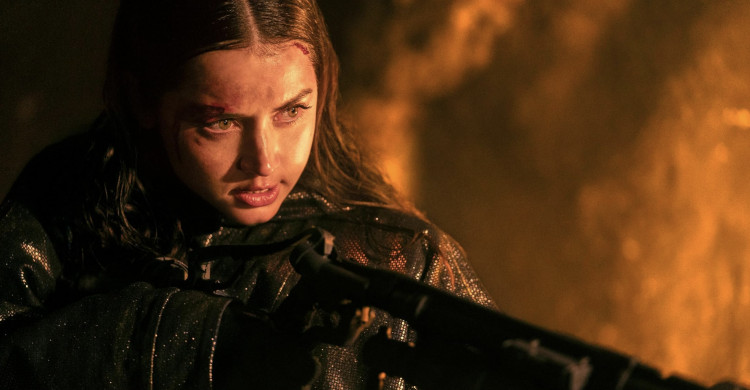
Cover Ana de Armas stars as the lead of 2025 action film, 'From the World of John Wick: Ballerina' (Photo: Instagram/@ballerinamovie)
Ana de Armas stars as the lead of 2025 action film, 'From the World of John Wick: Ballerina' (Photo: Instagram/@ballerinamovie)
1 / 1
Ana de Armas brings raw intensity to a fledgling assassin’s revenge tale in ‘Ballerina’, a welcome detour within the world of John Wick—spoilers ahead
Grief is a powerful, maddening and messy thing. A little over a decade since the first movie of the franchise came out, the world of John Wick has unravelled a layered mythology, expanding its sleek, hyper-stylised underworld governed by honour codes, stealth killers and merciless mayhem. At the centre of this: Keanu Reeves, as the title character, plays a man of few words and relentless action, who is pulled back into this world for revenge, pain and love—those which endure and push us beyond reason.
The legendary Baba Yaga finds a kindred spirit in Ballerina, the new spinoff from director Len Wiseman and screenwriter Shay Hatten. Chad Stahelski, who directed the four chapters of Wick’s saga, is a producer for the film. Slotting between the events of the third and fourth movies of the series, it follows the Ruska Roma ballerina-assassin, Eve Macarro (Ana de Armas), as she sets out to avenge her father’s death. Spoilers ahead.
Read more: Female action heroes: 8 women who redefined courage long before ‘Ballerina’ pirouetted in
At a glance, it is easy to point out the similarities and differences. Familiar faces from previous films appear in Ballerina, including Anjelica Huston as the Director, Ian McShane as the New York Continental Hotel owner Winston Scott, Lance Reddick (in his final screen appearance) as the concierge Charon and of course, Reeves as the man, myth and legend in a supporting role. An outstanding addition to the cast is Norman Reedus as the mysterious Daniel Pine, who is compelling in his scenes albeit a bit lean.
But this is a story about Eve, who delivers a notable contrast to John Wick in terms of experience, age and gender (an early scene lays this on quite thick), though she is no less lethal and, well, nearly invincible. Like him, she is trained by the Russian crime syndicate known as Ruska Roma—which takes up most of the film’s somewhat slow start, especially when posited alongside other movies in the franchise. Upon killing a man with the same mark bore by her father’s murderer, Eve pays a visit to Winston and pleads for answers, presenting him with the “marker” (a medallion that symbolises an unbreakable oath in this universe) he gave her as a child.
Winston’s acquiescence leads her to the Prague Continental where she meets Pine, and where the action really begins to build. It’s in the middle act, which moves from Prague to a sequestered alpine village, that Ballerina finds its footing. Here, it gains hold of that exhilarating, time-tested mix of phenomenal fight choreography and back-to-back brawls, with a wide range of weapons thrown in, that fans love about the quadrilogy.
More from Tatler: ‘Mission: Impossible - The Final Reckoning’ is one last blaze of glory
I must admit, at this point, I was hooked. With a few missteps aside—particularly the formulaic plot line and twists—Ballerina makes for an entertaining watch that’s adrenaline-packed, visually stunning and doesn’t take itself too seriously. The cinematography definitely leaves a lasting impression—there’s a fight with a flamethrower that is possibly among the finest shots of the franchise.
De Armas is a gripping heroine throughout the film, vengeful and unfettered until the end when an entire cult-like town is after her. She brings a raw intensity to Eve, new to the blood-soaked path she’s chosen, and fights with an instinctive energy that ultimately feels very human. Perhaps a quiet strength of Ballerina is the fact that it isn’t the sleek ballet of a master killer—it’s a messy revenge tale that slowly but surely carves its place in the John Wick universe.
NOW READ
How Ryan Coogler’s ‘Sinners’ raises the bar for the horror genre
Cate Blanchett and Michael Fassbender deliver a masterclass in espionage and intimacy in ‘Black Bag’
What began as a disguise became Vice Ganda’s most authentic self


Trained as a student journalist, Mac’s knack for writing was a serendipitous discovery. Years later and she can’t imagine doing anything else. When she isn’t typing away on a story, she revels in being lost in a new city, revisiting a cosy film or sitcom, and idling away with her dogs.





