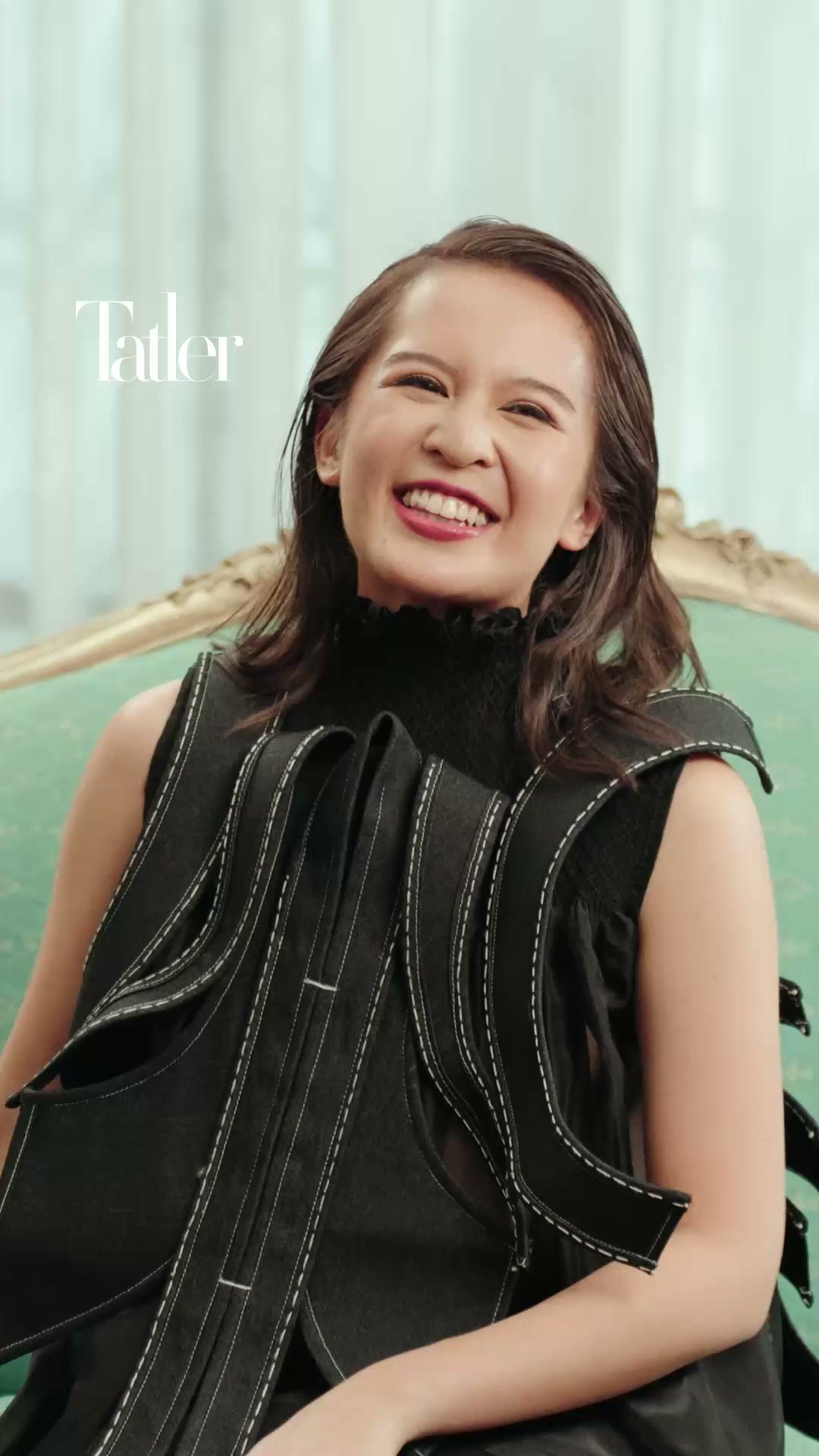
Cover Wawi Navarroza shares insights on self-portraiture, transformation and the work of staying present (Photo: Studio Wawi Navarroza)
Wawi Navarroza shares insights on self-portraiture, transformation and the work of staying present (Photo: Studio Wawi Navarroza)
1 / 1
For 25 years, Wawi Navarroza has used self-portraiture to reclaim agency, celebrate Filipino visual abundance and expand conversations around contemporary photography.
Across a body of work that spans photography, self-portraiture and contemporary art, Wawi Navarroza has consistently placed herself before the camera—not as muse or subject alone, but as author. Looking back on 25 years of practice, she sees her work as an ongoing exploration of photography’s possibilities within contemporary art, one that has evolved alongside her own transformations as an artist. Central to that journey has been the self-portrait, which she has long used as a means of asserting agency and authorship, particularly from the perspective of a Southeast Asian woman artist.
That commitment emerged alongside a rejection of inherited ideas about taste and sophistication. During her studies in Europe, Navarroza observed a preference for austere, minimalist aesthetics that felt distant from the visual culture she knew growing up in the Philippines. Instead, she embraced the layered, hybrid, and often exuberant visual language of Filipino life, drawing inspiration from Nick Joaquin’s notion of the tropical gothic and what she calls the “super powers of Asian polychrome.”
Today, as images proliferate across screens, Navarroza sees a different urgency: a return to embodiment and lived presence. Her photographs continue to insist on the importance of inhabiting the body and remaining grounded in physical experience, not only as a way of seeing but as a way of remembering who we are.


Above ‘Hot Summer/May in Manila (Self-Portrait After Balthus)’ by Wawi Navarroza
‘Hot Summer/May in Manila (Self-Portrait After Balthus)’ by Wawi Navarroza
1 / 1
Q&A
Looking at where your industry is now, where do you feel your work has made the most lasting impact?
I think where I've made the most honest dent in my industry is my stubborn belief and showing what I can do with the medium of photography in conversations with contemporary art for the past 25 years, dancing with the changes and always transforming. Through my works, I’ve underlined the role of the Self-Portrait as a vehicle of reclaiming sovereignty and one’s agency, especially as a Southeast Asian, as a woman who is also an artist. She is not just behind the camera “taking pictures” but bravely in front of it, present to her-story/history. A very complex combination of vulnerability and strength.
What about your work feels most urgent or necessary today compared to when you first started?
When I started, in terms of image-making and photography, there was that typical but unspoken post-colonial shame about embracing anything “native” or being local. I remember during my Master's and art education in Europe, I observed there seemed to be an abhorrence to anything colourful or “too much”, that the measure of sophistication was sleek lines, clinical, austere, low-saturated, minimal compositions, with cerebral intellectual theory as a cherry on top. I enjoyed my time with it, and I can sing that tune, but as to anyone who was born and raised in the Philippines—with all our folk, fiesta and family toomuchness — it felt off, as if something was waiting to let itself be known. And it did for me when I chose to finally celebrate the colours, the multi-layered bricolage, the hybrid and pastiche of what it is to be Filipino and Other plus plus... Through my art practice, I unlearned and reframed the way I see things through the lens of the “tropical gothic” (thank you darling Nick Joaquin) and by calling back the superpowers of Asian polychrome.
For me, what is most urgent now is for all of us to come back to the body, be in the body (less disembodied on our phones!), and live with Self-awareness. Abre tus ojos, niña. Remember who you are.
See also: Diasporic artists Wawi Navarroza and Xyza Cruz Bacani talk about Filipino identity

Above ‘Remember Who You Are (Strange Fruit/The Other Asian, Self- Portrait with Pineapple)’ by Wawi Navarroza, 2019
‘Remember Who You Are (Strange Fruit/The Other Asian, Self- Portrait with Pineapple)’ by Wawi Navarroza, 2019
1 / 1
What challenges have you faced as a woman in your field, and what have they taught you?
It’s true that art and photography is a field dominated by men. But it’s also true that I didn’t allow that to be the centre of my attention, and instead I just focused on doing my own thing relentlessly. On the whole, a woman who is practising the arts is not only facing the gender imbalance in the system we belong in, but also the mental load and labour at home, plus the demands of a studio/art practice that, yes or yes, needs you to have time alone to imagine, to create. To be an artist is a privilege, and the fact is I wade through a sea of both beautiful and unpleasant things and make it work. Of course I notice things that are sadly unfair, but I learned soon enough that I can choose not to be part of it. It was a good day when it arrived that I stopped needing permission and validation no matter where I was at in my career. I made my own path, and that was that. I make art, and it’s an invitation. If you come with me on this adventure, thank you. If not, you can still enjoy the drinks.
On the shallow end, yes, as a woman it felt harder at times to be taken seriously because I cared not just for my art being critical and on the nose, and/but I also cared about a life lived with depth, savoir faire and a certain leonine largesse. In short, if you’re ma-arte, you must be too frivolous to be a serious artist. I laugh at this now because for all these centuries with the belief and thinking that art is essentially about freedom, some have been stuck on one romantic idea of what an artist should be. All of this has taught me to have a bit of humour and let them think what they want to think. Because at the end of the day I’m like Bad Bunny… I do whatever I want.
Beyond your own projects, how do you hope your journey inspires the next generation of women in your industry?
I hope the next generation of women artists/photographers see, first and foremost, that they are capable if they choose to. A woman who has the strength of will is unstoppable. I hope they will be continually inspired by the quiet questions they ask themselves first, then of the world, and use art to explore where it takes them. Use the technology the time has given you. I wish for women in the arts to take an active role in organising, researching, retrieving and writing our pictorial history, as it is largely absent and might be the missing piece to all of us understanding a bit more about ourselves as Filipinos.
Looking back, is there a moment in your career that stands out as a turning point or a proud milestone?
Come to think of it, all my career and artworks are about turning points; a series of Calls and Responses. Whether through my profession as an artist or through my many lived experiences as a transnational, the art was always there to serve one purpose: to tell the story of transformations and rebirths. When I became a new mother at the height of a global pandemic, while also packing my things and moving to a new continent, I seriously thought that was the end of me being an artist. But life has its ways… the sign at the end of the tunnel didn’t say “Exit”, but a chance to begin again. The sign said “Art”. Now I’m back in Manila, and I’m energised to the brim. To return is not a defeat. Volver is for the brave, and those who return are stronger than ever.
NOW READ
International Dance Day Fest returns to Circuit Makati this April 2026
Encore Theater stages ‘Miranda & Yolanda’, a twin bill examining the cost of power
Asian ballerinas who made history on the world stage, from Misa Kuranaga to Lisa Macuja-Elizalde
Topics

Syrah is Tatler Philippines’ Power & Purpose editor, where she spotlights extraordinary journeys shaping the Philippines and Asia. She covers business, innovation, impact, and culture—chasing the people, ideas and forces shaping how we live and think today.
Curated for you
Discover the stories and updates featured on our Instagram page