

Cover Jose Rizal (1861-1896), Philippine patriot and writer. He advocated reformation of Spanish rule, and was a national hero of the Philippines. He was executed upon his return from exile. (Photo: Getty Images)
Jose Rizal (1861-1896), Philippine patriot and writer. He advocated reformation of Spanish rule, and was a national hero of the Philippines. He was executed upon his return from exile. (Photo: Getty Images)
1 / 1
Dr Jose Rizal’s life, albeit short, was made colourful by these nine women he courted
Dr Jose Rizal’s advocacy for reforms in the Philippines under Spanish colonial authorities led to his execution on the morning of December 30, 1896. In a span of 35 years, he was a polymath who took the role of a scientist, artist, journalist and author whose words pierced through the hearts of many Filipinos.
It is not a secret that women played a big part in Rizal’s patriotic journey. In this article, Tatler gives a glimpse of the hero’s romantic interests.
Related: Dr Jose Rizal: A closer look on the more human side of the National Hero of the Philippines
1. Segunda Katigbak


Above Many historians believe Segunda Katigbak was Rizal's "Puppy Love" (Photo: Positively Filipino)
Many historians believe Segunda Katigbak was Rizal's "Puppy Love" (Photo: Positively Filipino)
1 / 1
Many historians claim that Segunda Katigbak was Rizal’s “puppy love”. Coming from a wealthy clan in Lipa, Katigbak was a close friend of Rizal’s sister, Olympia Mercado.
Katigbak was just 14 years old when she met Rizal, who was then 16. In Rizal’s writings, he described Katigbak as:
“May mga matang kung minsan ay makislap at nangungusap, may ngiting nakagagayuma… Hindi siya ang pinakamagandang babeng nakita ko, ngunit hindi ako nakasilay kailanman nang higit na kaakit-akit. (She has eloquent eyes and an enchanting smile; she is not the most beautiful woman I have ever laid my eyes on, but I have never seen someone as enticing)."
Rizal and Katigbak did not end up together. The former could not confess his true feelings, and Segunda was promised to Manuel Luz Y Metra, a member of a wealthy family in Lipa.
Katigbak and Metra had 12 children, but only nine survived.
Read more: Inspiring Filipino biographies and autobiographies to read
2. Leonor Valenzuela
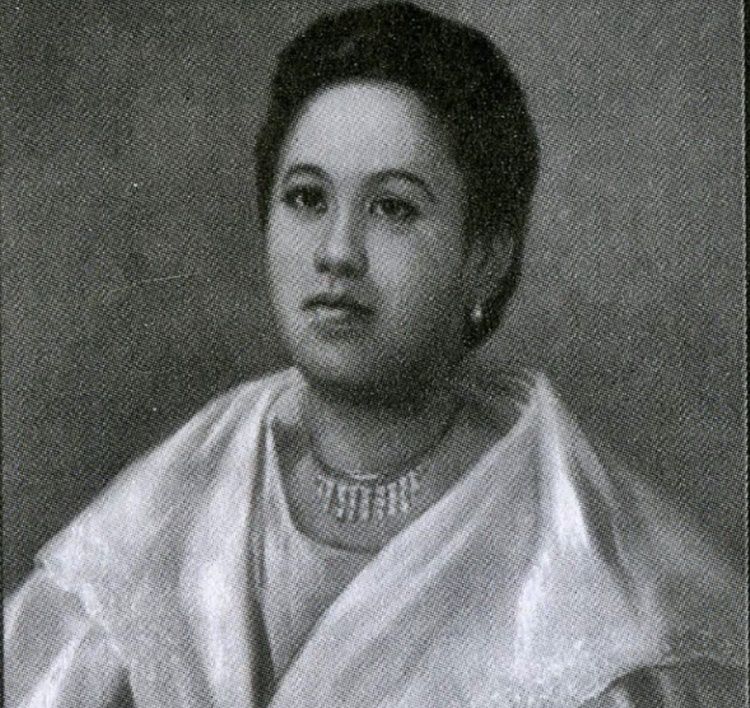
Above Rizal was heavily attrached to Leonor Valenzuela (Photo: Philnews PH)
Rizal was heavily attrached to Leonor Valenzuela (Photo: Philnews PH)
1 / 1
Among Rizal’s long list of ex-lovers is Leonor “Orang” Valenzuela, who met Rizal while studying medicine at the esteemed University of Santo Tomas.
Valenzuela was Rizal’s next-door neighbour when he stayed in the house of Doña Concha Leyva in Intramuros. Even without a special occasion, Rizal would always visit Valenzuela’s home and impress her family with his cleverness and sleight-of-hand tricks.
Rizal was strongly attached to Valenzuela and pursued her by sending love letters with invisible ink that could only be read when heated over a candle or lamp. The ink was a mixture of substances he had learned in his chemistry class.
Rumour has it that Rizal used the invisible ink because he was courting Leonor Rivera then.
3. Leonor Rivera
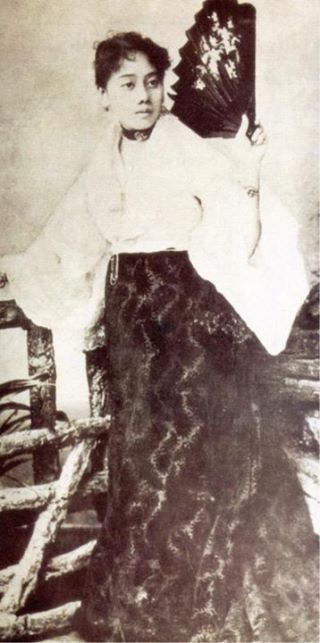
Above Rizal met Leonor Rivera when he was 18. Rivera was just 13 (Photo: Kahimyang)
Rizal met Leonor Rivera when he was 18. Rivera was just 13 (Photo: Kahimyang)
1 / 1
The 13-year-old Leonor Rivera met the 18-year-old Rizal at the boarding house of Rizal’s uncle in Intramuros. Rizal described Rivera as a charming woman with a beautiful singing voice and good piano skills.
Despite a strong and fruitful bond, Rivera and Rizal faced two problems: they were second cousins, and their family disapproved of their relationship. Rivera’s parents were not fond of their connection, saying that Rizal was a filibuster or a freebooter.
On the other hand, Rizal’s brother Paciano Rizal disagreed with the idea of Rizal marrying Rivera; he said it would be unfair to Leonor if he were to leave her behind after exchanging vows.
The two wanted their relationship to prosper. They tried to continue sending each other love letters, a lot of which were kept hidden by Rivera’s mother. In 1890, Rivera wrote to Rizal that she was already engaged to Henry Kipping, a British engineer who helped build the Manila-Dagupan Railway system in the same year.
Some accounts claim that Rivera burned Rizal’s letters to her, but she kept the ashes in the hem of her wedding gown. When Rivera died during second childbirth, documents showed that Rizal did not speak for days.
Some historians believe Rizal immortalised Rivera through Maria Clara’s character in Noli Me Tangere.
Here is a poem Rizal wrote for Rivera:
And so it has arrived — the fatal instant,
the dismal injunction of my cruel fate;
so it has come at last — the moment, the date,
when I must separate myself from you.
Goodbye, Leonor, goodbye! I take my leave,
leaving behind with you my lover’s heart!
Goodbye, Leonor: from here I now depart.
O Melancholy absence! Ah, what pain!
4. Consuelo Ortiga
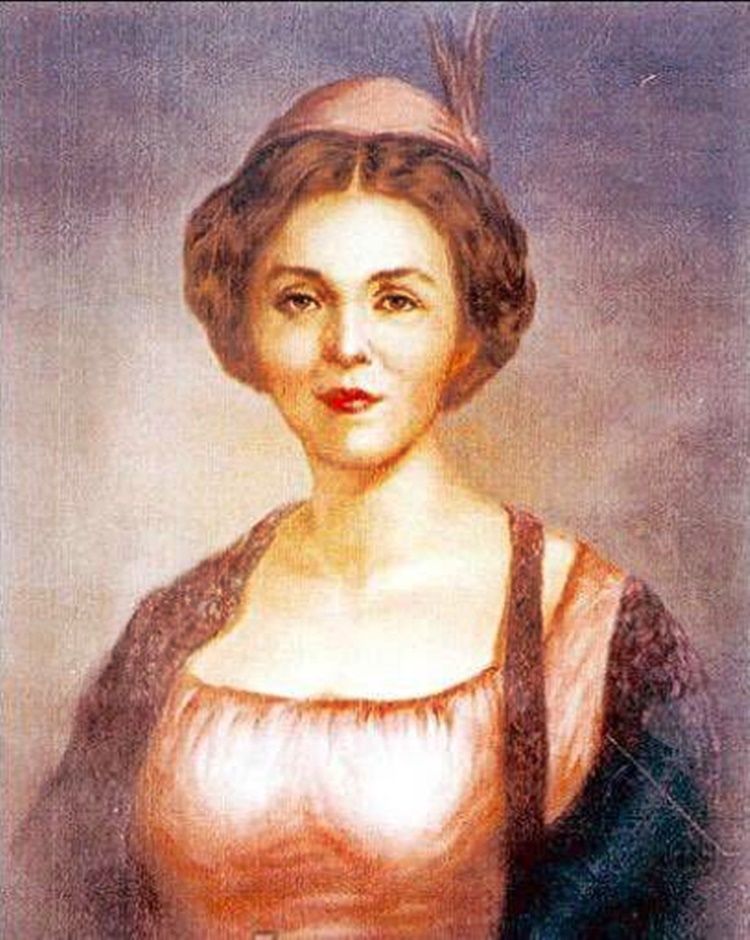
Above Rizal met Consuelo Ortiga during his visit to Madrid (Photo: Philnews PH)
Rizal met Consuelo Ortiga during his visit to Madrid (Photo: Philnews PH)
1 / 1
During Rizal’s vacation in Madrid, he met Consuelo Ortiga y Rey, the daughter of then Manila mayor and vice president of the Council of the Philippines in the Ministry of Colonies Don Pablo Ortiga y Rey.
On 18 January 1883, Rey wrote in her diary: “Rizal talked with me for a long time, almost the whole night. He told me that I was very talented, that I was very diplomatic, and that he was going to see if he could extract some truth from me within two weeks; that I was mysterious and that I had a veil over my ideas.”
Back in the Philippines, Rey had many suitors, including Eduardo de Lete, a Philippine-born Spaniard who is also part of La Solidaridad, and brothers Maximo and Antonio Paterno. Rizal grew fond of Rey but eventually gave up because he was still in love with Rivera.
Related: Why Philippine music is so deeply embedded in our culture?
5. Seiko Usui
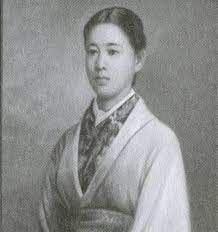
Above Rizal and O-Sei-San's friendship blossomed in Tokyo, Japan (Photo: Philnews PH)
Rizal and O-Sei-San's friendship blossomed in Tokyo, Japan (Photo: Philnews PH)
1 / 1
Seiko Usui or O-Sei-San and Rizal met when the latter was still working at the Spanish Legislation in Tokyo. Their friendship blossomed after Rizal asked a gardener to introduce him to O-Sei-San, who was surprisingly fluent in English and French, two languages Rizal knew how to speak.
In many accounts, Rizal was said to have almost moved to Japan permanently to spend his remaining days with O-Sei-San; however, his patriotic responsibilities prevented him from doing this.
Rizal moved to San Francisco and never met the Japanese woman again.
More from Tatler: For Sale: Rizal’s Love Letters
6. Gertrude Beckette
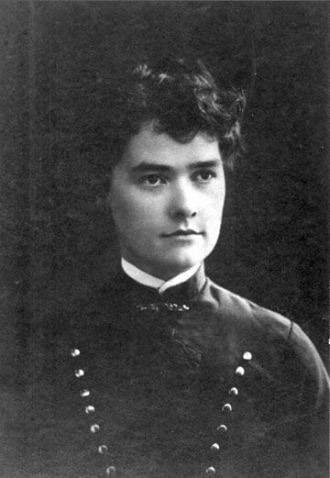
Above Gertrude Beckette was with Rizal when he made his famous sculptures (Photo: Ancient Faces)
Gertrude Beckette was with Rizal when he made his famous sculptures (Photo: Ancient Faces)
1 / 1
During his stay in London, Rizal met the beautiful Gertrude Beckett, the eldest daughter of Rizal’s landlord, Charles Beckett.
Beckett has poured most of her time and attention into Rizal, assisting him in his famous sculptures: Prometheus Bound, which depicts the Greek legend Prometheus, who brought fire to man; The Triumph of Death over Life, a clay sculpture depicting a young, nude woman bearing a torch; and The Triumph of Science Over Death.
Despite having “pet names” for each other (Rizal called Beckett “Gettie” while Beckett called Rizal “Pettie”), Beckett’s feelings for Rizal were not reciprocated.
Read also: The Rizal Shrine in Fort Santiago holds the prized birth centennial paintings of the national hero
7. Nellie Boustead
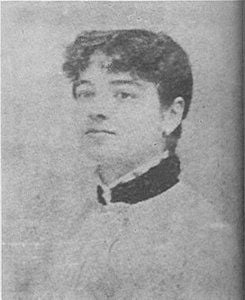
Above Nellie Bousted asked Rizal to convert to the Protestant faith (Photo: Inquirer)
Nellie Bousted asked Rizal to convert to the Protestant faith (Photo: Inquirer)
1 / 1
When Rizal lost Rivera, he entertained the thought of meeting and courting other ladies. When Rizal stayed as a guest in the Boustead family, he befriended the two daughters of his host, Eduardo Boustead.
Rizal, brothers Juan and Antonio Luna used to fence with the sisters. Antonio would often visit the Bousteads and court Nellie, but the latter was already infatuated with Rizal.
Nellie and Rizal’s love affair did not last. It failed because Nellie demanded Rizal convert to the Protestant faith, but he refused. Nellie’s mother also frowned upon Rizal’s background, saying she did not like a doctor without enough paying clientele.
Related: Filipino iconography: 5 cultural markers that are unmistakably ours
8. Suzanne Jacoby
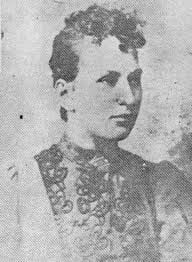
Above Rizal saw Suzanne Jacoby when he was 29 (Photo: Inquirer)
Rizal saw Suzanne Jacoby when he was 29 (Photo: Inquirer)
1 / 1
Rizal was 29 years old when he first saw Belgian lady Suzanne Jacoby. During his six-month stay in Brussels, he and Jacoby attended Belgium’s summertime festival of 1890, where multi-coloured costumes and animated floats were very much alive.
In August 1890, Rizal left Belgium but left the young Jacoby a box of chocolates, which the latter did not eat nor touch. Many historians believed that the affair was one-sided, as is evident in the letters sent by Jacoby to Rizal.
Below is an excerpt of Jacoby’s letter to Rizal:
“Where are you now? Do you think of me once in a while? I am reminded of our tender conversations, reading your letter, although it is cold and indifferent. Here in your letter, I have something which makes up for your absence. How pleased I would be to follow you, to travel with you who are always in my thoughts. You wish me all kinds of luck, but forget that in the absence of a beloved one a tender heart cannot feel happy.”
9. Josephine Bracken

Above Josephine Bracken and Riza's relatiobship blossomed quickly (Photo: Josephinerizal Blog)
Josephine Bracken and Riza's relatiobship blossomed quickly (Photo: Josephinerizal Blog)
1 / 1
Josephine Bracken was Rizal's common-law wife. She was the daughter of Irish parents James Bracken and Elizabeth MacBride. She first met Rizal when she was 18. The relationship between the two blossomed quickly, but one of Rizal’s sisters suspected Josephine was a spy for the Spaniards. Nevertheless, Rizal loved Josephine and affectionately called her Josefina.
Some sources show that as a mason, Rizal could not wed Bracken in the Catholic church; however, the latter bore him a stillborn son who would have been named Peter in honour of Rizal’s late father. Bracken last met Rizal in the latter’s cell in Fort Santiago on 30 December 1896. The couple were able to exchange their vows in Catholic rites by Fr. Victor Balaguer two hours before Rizal’s execution.
Bracken is the foreigner alluded to by Rizal in his poem Mi Ultimo Adios (My Last Farewell), where he wrote: “Farewell, my sweet foreigner, my darling, my delight.”
References:
SEGUNDA KATIGBAK
Imus Institute College. "Si Segunda Katigbak"
LEONOR RIVERA
José Rizal. "Goodbye to Leonor", translated by Nick Joaquin.
SUZANNE JACOBY
University of San Jose Recolectos. "El Filibusterismo; A Revolution That Failed"
*Historical accounts written on this story are all researched-based; if you happen to be an expert (historian, professor, a direct relative, et al.) please do not hesitate to contact the author.
NOW READ
7 must-watch Filipino historical series and films to stream now
Netflix’s war drama ‘Pulang Araw’: Musings of cast Barbie Forteza, David Licauco, and more
Topics

Jove holds a degree in Journalism and is currently pursuing graduate studies in Philosophy at the University of the Philippines–Diliman. She has flair for in-depth, interview-driven stories that explore politics and culture, shaped by her background in national broadsheets.
When she’s not on assignment, Jove spends her days painting, sipping lemonade, and walking her dog, Jupiter. She can often be seen in Escolta with a film camera in hand, browsing novelty shops in search of rare memorabilia. For leads, reach her at Jove@tatlerphilippines.com.





