
1 / 1
As Hong Kong gets its first look at the M+ museum’s cornerstone collection of Chinese contemporary art, the donor, Uli Sigg, discusses his seminal archive with Chloe Street
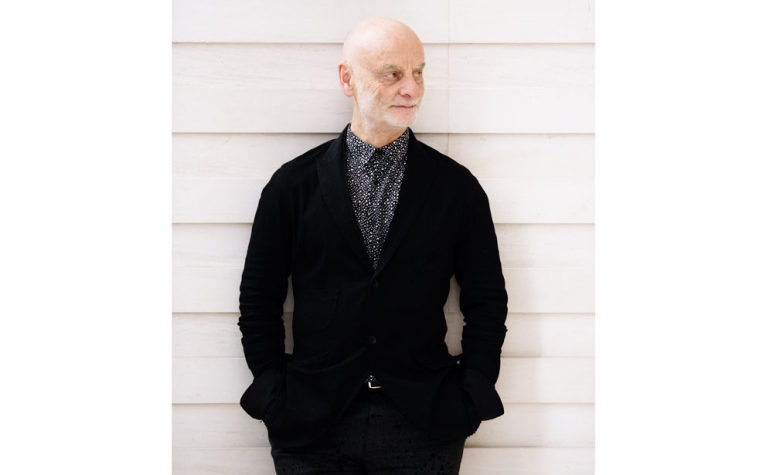
Art angel: Businessman, former diplomat and arts patron Uli Sigg’s donation has given M+ a comprehensive foundation for its collection of Chinese contemporary art
A decade before his death in 1899, English industrialist Henry Tate bequeathed his contemporary art collection to the nation along with money to build a gallery. This was the nucleus of what would become Tate Britain. Similarly, a bequest of modern art from US collector Lillie P Bliss in 1931 formed the foundation of New York’s Museum of Modern Art (Moma), which she also helped found. Just as Peggy Guggenheim’s purchases and home became the Peggy Guggenheim Collection, a modern art museum on the Grand Canal in Venice, and Catherine the Great’s acquisitions formed the State Hermitage in St Petersburg, nearly every world-class public art institution is born of an individual’s collection. So when, in 2012, Swiss collector Uli Sigg pledged the vast majority of his unparalleled collection of contemporary Chinese art to the M+ museum of visual culture, Hong Kong rejoiced.
Now, for the first time since the bequest was announced, Hongkongers are to get a glimpse of this cornerstone of the M+ collection. A pop-up exhibition at Quarry Bay’s Artistree gallery, M+ Sigg Collection: Four Decades of Chinese Contemporary Art, will display 80 key works. The show, the latest in a series of temporary events organised in the run-up to completion of construction of the museum in late 2017, has been curated to reflect the Sigg Collection’s telling not only of the evolution of contemporary Chinese art, but also of the incredible social and economic upheaval that followed the
Cultural Revolution.
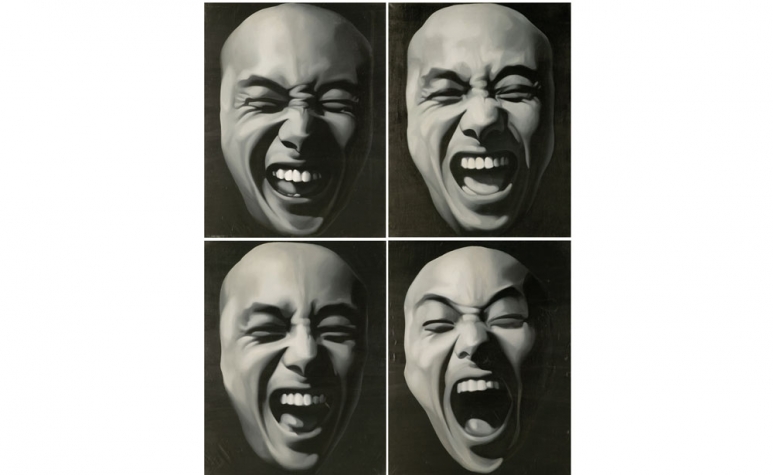
The second situation, Geng Jianyi painted this set of four oils on canvas in 1987. The soundless, cynical laughter in these early, anti-authoritarian works is a critique of prevailing Confucian teachings emphasising stoic restraint above individual passion.
The Sigg collection is universally recognised as the world’s largest and most comprehensive assemblage of Chinese contemporary art from the 1970s to the present. It comprises more than 1,500 works from 350 artists working in a range of formats and mediums, including painting, ink, sculpture, photography, video and installation. The 1,463 works donated by Sigg, as well as the 47 additional pieces purchased by M+ as a demonstration of its commitment to the collection (a common practice in such circumstances), have been valued by Sotheby’s at HK$1.3 billion.
So how did the visionary Swiss national come to own a more comprehensive body of Chinese contemporary art than any Chinese individual or institution? It all began when Sigg moved to Beijing from Switzerland in 1979 to negotiate, on behalf of lift manufacturer Schindler Group as its Asia-Pacific manager, the first joint venture between the newly opening up China and the West. Sigg, already a collector of Western art, immediately took a keen interest in China’s contemporary art scene. By the 1990s he realised no individual or institution had been assembling Chinese contemporary art since the 1970s in a systematic fashion. He decided to alter his approach, which up to that point had been based, like most private collectors, on personal taste; he would take a disciplined approach akin to that of a museum.
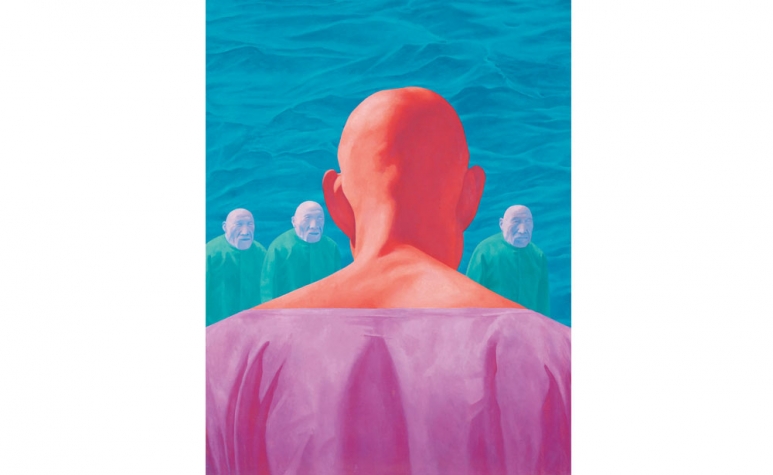
Untitled, 1995. Painted as a reaction to the 1989 student protests, Fang Lijun’s oil on canvas depicts a group of generic-looking youth facing an anatomical study of the back of the artist’s own bald head. The grimacing faces, painted in a high-pitch colour palette, make cynical comment on the differences between the private and public self in traditional Chinese society.
“My aim has been to collect the works that mirror best the art production in China across all media along the timeline, so that when you see the collection, you get an idea of what the artists’ concerns were at a specific moment,” says the slight, softly-spoken intellectual, who was Swiss Ambassador to China from 1995-99. But his vision went further. His “ultimate goal is to know more about China,” says Sigg, who meets in person 99 per cent of the artists whose work he buys. “At the beginning, the art was a way to access and study China, so the interaction with artists was very important. It allowed me to see this other China that I couldn’t see as a business person or diplomat.”
Aside from 30 pieces by Hongkongers and a scattering by artists from the Chinese diaspora, Sigg’s collection comprises works from artists living on the mainland. How does he decide which art is deserving of a place in his “historical document?” To deny aesthetics and personal taste can be no easy task and yet Sigg is committed to avoiding emotional purchases. “I have collected many works that I would not want to have around me because they are not my very personal taste, but it’s not about that.” As the leading cataloguer of Chinese contemporary art, some have also noted (and several criticised) Sigg’s power to make or break the careers of artists through inclusion or exclusion from his collection. It’s a responsibility of which he is keenly aware. “Once, as a collector, you reach the point of having accumulated a critical mass for a culture, then you have to be more diligent and more aware of the impact your decisions to buy or not buy will have on an artist’s career.”
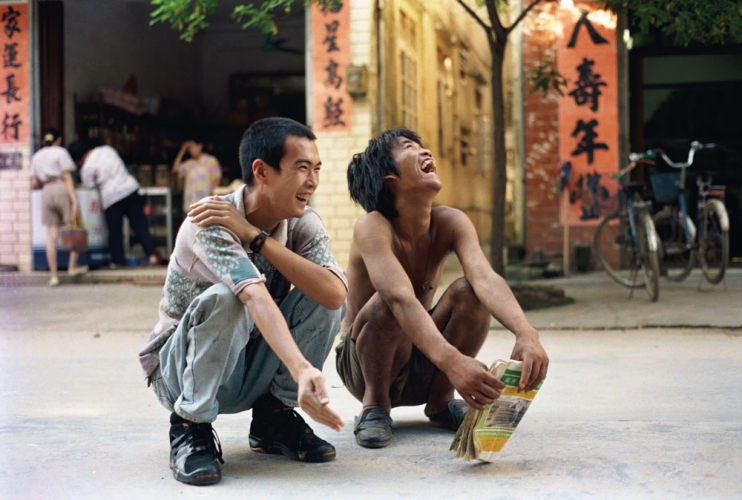
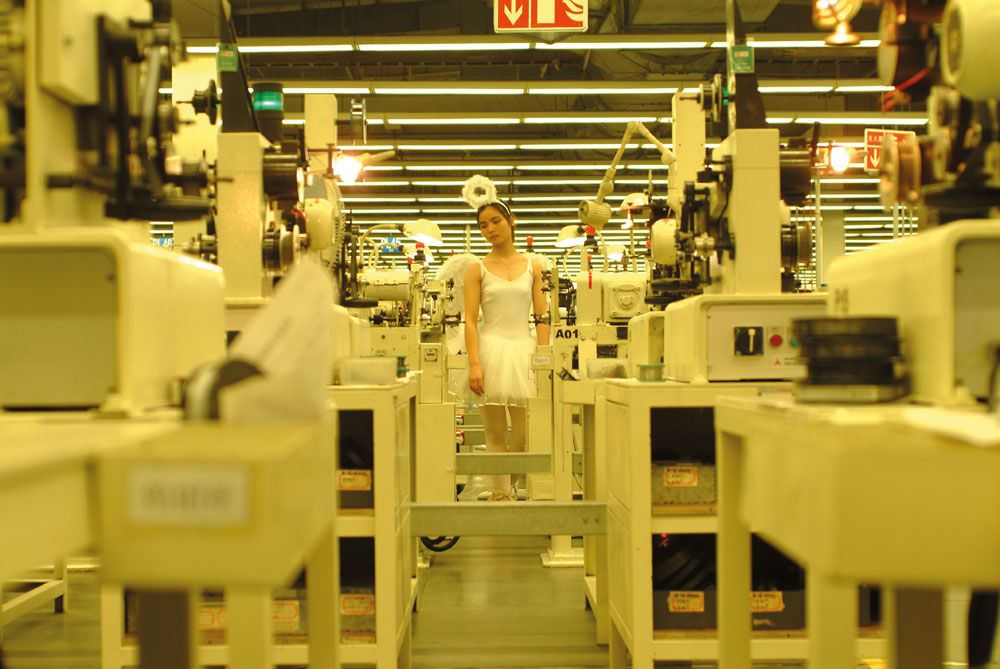
Me and my teacher, 1993. Zheng Guogu worked primarily with photography at the beginning of his career in the 1990s, when few Chinese artists were interested in the medium. He accompanied a homeless man with learning difficulties through the streets of Yangjiang for six months, documenting his companion’s day-to-day life.
Sigg originally wanted to find a home for his collection on the mainland, but its bureaucracy and censorship were discouraging. So if not on the mainland, then close to its shores—“I always felt that a coherent and substantial collection of Chinese art should be in the Chinese cultural space, not London, New York or Switzerland,” and so Hong Kong, which Sigg regards as “the place in Asia for contemporary art,” became a suitable alternative.
Ever conscientious and involved, Sigg will co-curate the inaugural exhibition when M+ finally opens its doors. He believes the project will “bring a lot of energy” to the city. “Today’s tourist demands more than just shopping. Cities must now offer a feature of interest, such as a big international museum, to engage the local population and also an international crowd.” Indeed, museums are undoubtedly important business in terms of city marketing. Citing their size and usually beautiful architecture, along with the huge numbers of visitors they attract, Sigg muses that there is “no other institution comparable. Museums represent the cultural memory of a society. They have become the cathedrals of our time.”
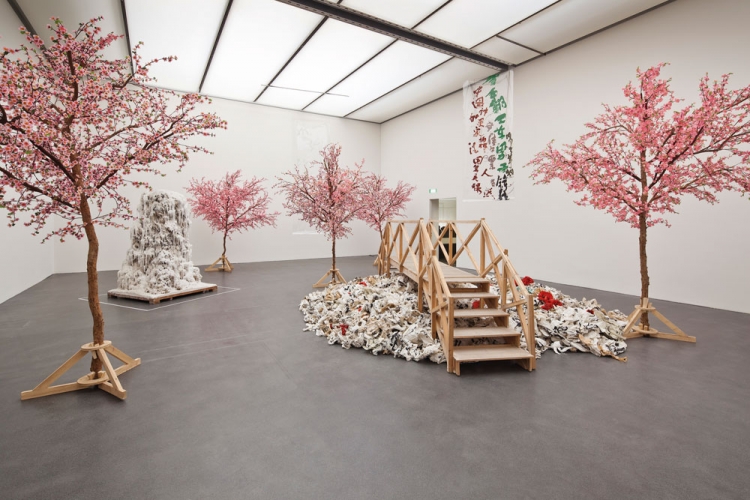
Calligraphy peach blossom garden. The wooden bridge and artificial flowering trees that comprise this installation by the Yangjiang Group (formed by three Yangjiang-based artists in 2002) appear tranquil, but closer inspection reveals the balled up sheets of calligraphy beneath the bridge to be shaking and moving—a subversion of the typically traditional medium that makes comment on breaking the rules.
Topics





