

1 / 1
One of China’s most successful young architects is feeling the force. Recently commissioned by Star Wars creator George Lucas for a museum, Ma Yansong talks about his design philosophy
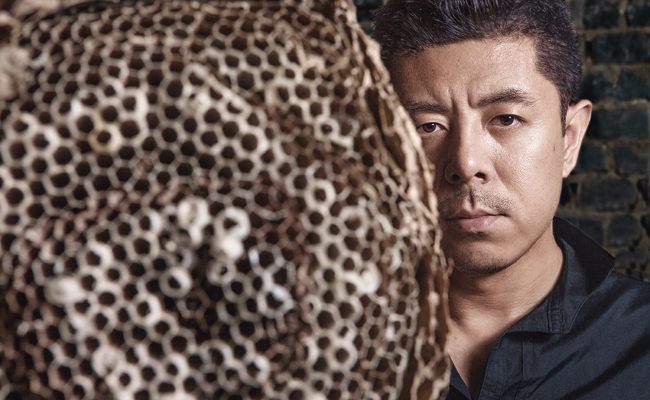
Ma Yansong in his Beijing office
For one of his first projects as a master’s student at Yale in 2002, Ma Yansong imagined an island filled with verdant gardens floating in the clouds above New York City, held aloft by pillars. In the illustrious career he has forged as an architect since, he’s proposed many more concepts that would pique the interest of sci-fi enthusiasts—including a museum shaped like a flying saucer in the middle of Beijing—and realised a good number of them. So it should have come as no surprise that the creator of the Star Wars series of sci-fi blockbusters, George Lucas, chose the 38-year-old wunderkind to design the Lucas Museum of Narrative Art, which is due to open on the Chicago lakefront in 2018.
As well as memorabilia from Star Wars and other movies, the museum will display artwork from Lucas’ collection, which includes such 20th-century American masters as Norman Rockwell, but with a specific focus on art that tells a story. A broad cross-section of media will be exhibited, including comics, illustration and photography alongside more traditional art forms such as painting. And here is another area in which Ma is a good fit for the project; the Beijing native draws inspiration from traditional Chinese ink painting and nature in creating the organic, flowing designs for which he and his firm, MAD Architects, are renowned.
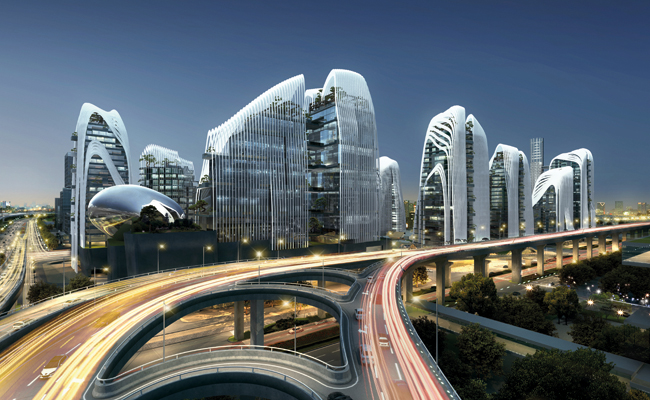
A panorama of the Nanjing Zendai Himalayas Centre
Take a look at the firm’s plans for the Nanjing Zendai Himalayas Centre, unveiled at this year’s Venice Architecture Biennale, and you’ll see the limestone pinnacles beloved of Chinese artists—a “city of mountains” due for completion in 2017. Or the undulating Harbin Cultural Island, a mix of theatres, recreation centres and a wetland park enveloped by rivers. Already complete are the curvaceous Absolute Towers—a pair of award-winning 56-storey residential structures in Mississauga, Canada—the stunningly modern Ordos Museum in Inner Mongolia and the sprawling China Wood Sculpture Museum in Harbin.
Ma is particularly interested in solving the architectural and design problems that China’s modern cities present. “We need a lot of large buildings in China because of the population and the density of our cities,” he explains on the phone from his Beijing office. “Not like in Japan, for example, where many nice buildings are actually of a smaller scale. But nowadays a lot of people think that making buildings higher challenges nothing but how much money and power you have. This is a unique challenge for us architects.”
Beijing has developed at a dizzying pace since the 1980s, when the 2nd Ring Road was completed, swiftly followed by the 3rd to 6th Ring Roads. Many famous foreign architects have constructed innovative, avant-garde and sometimes downright strange buildings. Rem Koolhaas’ CCTV headquarters, for example, is a bizarre two-legged tower that has earned the nickname “Big Trousers” among residents.
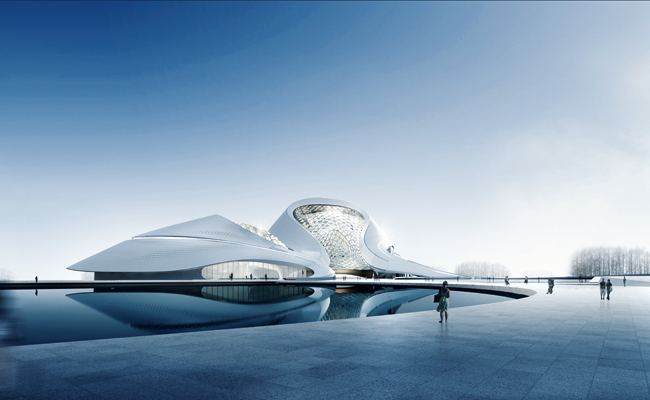
An artist's rendering of the Harbin Cultural Island, which is nearing completion
For Ma, however, the ideal buildings—for Beijing and beyond—aren’t impressive skyscrapers or designs so avant-garde that they work against their surroundings. The crux of his design philosophy is a notion he calls “shanshui city” and it’s detailed in his book of the same name, which was launched internationally in October. The expression shanshui directly translates as “mountain and water” and references the aspects of the natural landscape that feature most frequently in traditional Chinese ink painting. Applied to architecture, the idea results in buildings that harmonise with their natural landscape rather than disrupt it, that reflect the feelings of the people who use them while still being functionally and technically brilliant, and that have a strong link to art. In short, a shanshui city is a modern city with heart, not a city that favours countless massive high-rises that all look exactly the same. The Nanjing Zendai Himalayas Centre, with its gently curving asymmetrical “mountains” reminiscent of ink paintings, is a stellar example of Ma’s philosophy at work.
The idea of relating art to architecture first occurred to Ma when he was studying under Iraqi-British architect Zaha Hadid, who is known for her futuristic designs—and who was also a bidder for the Lucas museum. Hadid, a winner of the Pritzker Architecture Prize, was one of Ma’s professors at Yale and made a strong impression on him. “She was the first teacher who talked about contemporary art with me. After she saw my initial sketches, we didn’t talk about architecture much. She showed me a lot of artists’ work. Now I think my work has a very tight relationship with art.”
Other architects whose work inspires Ma include Frank Lloyd Wright and Louis Kahn. In spite of their vastly different styles, Ma says he can tease out the idea of shanshui city in their work, citing as contrasting examples Wright’s Fallingwater, a home designed in the 1930s over a waterfall in Pennsylvania, and Kahn’s 1960s Salk Institute of Biological Studies in California. “Fallingwater has a lot of greenery; the Salk Institute is purely a concrete and stone building. But if you look at the Salk Institute, you feel so connected to nature, to the sky, to the ocean.”
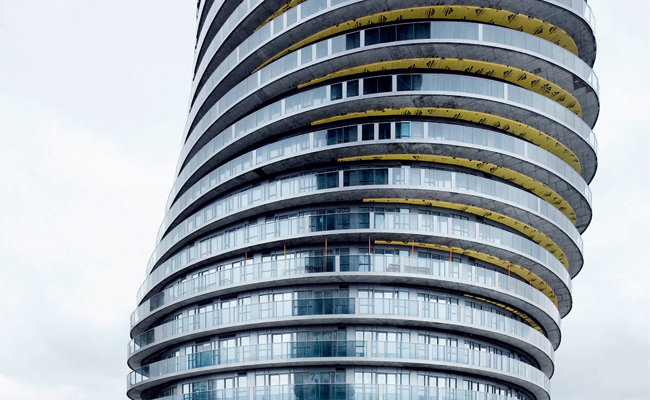
One of the Absolute Towers near Toronto
In the decade since he founded MAD Architects, Ma has won numerous commissions and competitions, and has been honoured around the world. In 2011, he was awarded a Royal Institute of British Architects international fellowship. In the jury report for the fellowship, the president of the institute, Ruth Reed, said, “Ma Yansong is a young Chinese architect—just 35—who has come to architectural maturity at a time when his country is beginning to allow the freedom of expression so vital to the artist, and sufficient freedom to the economy to allow his ideas to be realised as buildings. His work expresses the tension between the individual imagination and the needs of society as a whole.”
Some in the industry refer to Ma as a utopian architect, a description he can relate to. “It’s really difficult—good ideas are difficult to realise, and the ideas that are realised are not ideal. My real goal as an architect is to build one building after another following my philosophy. In the end, through this process, I hope something good will turn up. It takes a long time to push some ideas to be realised. [My awards] are encouragement for me to carry on.”
This article originally appeared in the December 2014 issue of Hong Kong Tatler





