
1 / 1
The acclaimed Singaporean violinist tells Asia Tatler about her earliest experiences with music and the importance of arts education

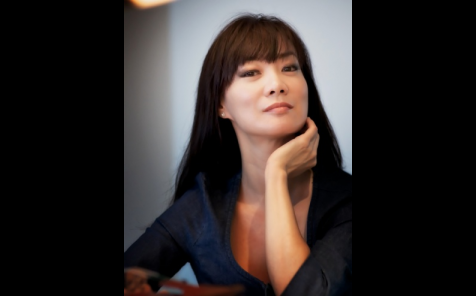
Siow Lee-Chin has, to date, has played with some of the most renowned orchestras, performing at some of the world's most prestigious venues. But like any other child going through the process of learning, the acclaimed violinist grew up having a love/hate relationship with music. "No child really wants to sit and practice, and until you get past the initial difficult stage, you can't really reap the benefits," she says. "It's been widely documented that to be really good at something, you need at least 10,000 hours of practice. So there are no geniuses, it's a matter of being so familiar with it. Of course when you do it with passion, it's inspired, but you still need to clock in the hours."
The hard work has paid off, and today, Siow is the director of strings and professor of violin at the College of Charleston, South Carolina, and co-founder and artistic co-director of the Charleston Music Festival. Her latest album is titled Songs My Father Taught Me, and she is set to play at the Singapore Symphony Orchestra's 33rd Anniversary Concert on January 7 next year. Though based in the US, she remains very much rooted to Singapore. Asia Tatler chats with the Singaporean virtuoso about life lessons and her teaching philosophy.
Asia Tatler: Tell us more about your childhood - what were some of your earliest experiences with music?
Siow Lee-Chin: Music has always been a big part of my life and when I was little, my dad was my violin teacher and we were very close. He would teach me a lot beyond music lessons. Unbeknownst to me, he already had it in his mind that I was going to be a violinist. [laughs] As a child, you're not really thinking about all the nuances. He taught me how to listen and that the details are what set you apart. That was what prepared me for all my years abroad. Tying back to the SSO's 33rd anniversary, it's a big honour but also because as a kid, I was the youngest trainee at 11 years old, and I played with all the grown-ups. It's interesting that I'm now part of the celebration and it makes me very honoured that I was there in the beginning.
AT: You left home for the US to study music at just 15 years old. What was that like?
SLC: My guardian was all of 18 years old, so I think I was quite mischievious, and my whole repertoire of cooking was just boiling water. You learn to grow up very fast, but looking back, it was a good thing because you become very independent. My parents instilled a very strong sense of self in me, and that's very important. I try to impart that to my students; that they can do it as long as they work hard.
AT: How did living abroad shape you as an artist?
SLC: Leaving home fairly young has made a lasting impact on me as a person, as a teacher and as a performer. I've lived in many cities - Chicago, New York, Philadelphia, also London and Europe. I spent several years in Italy. My first trip abroad as a child was to the Philippines for a music camp. I have friends all over the world and this profession has given me the privilege of meeting celebrities and even heads of state. I met Elton John and did a fundraiser for him for his AIDS Foundation. It really widened my horizons, yet I still feel very rooted in my upbringing because of my family. Being away so young, you need to be somewhat adaptable and being in the US, I learnt to be more proactive. I created my own music festival because there wasn't one and I thought we needed one. When I was a child, music in Singapore wasn't as thriving, but my dad just told me, "Whatever you do, you have to work hard, and you can achieve anything." These were just simple principles but I felt like I could do anything.

"My philosophy in teaching and in life is: ask a lot of questions. Don't be satisfied with the status quo."
AT: Do you ever think about coming back to Singapore for good?
SLC: I have lived abroad so many years, and my ideal situation would be to spend half the time in the US and half the time in Asia because I like to be close to my family. The arts are thriving a lot more in this part of the world, so there are always projects, but for the long-term, I don't know, as I have a job in the US. I come back whenever there are projects. For example, earlier this year, I toured China and it culminated in a performance here with the Oberlin Conservatory, and I also launched my CD here. So I always try to include home because my family is here, and it's nice for them to be able to hear me play.
AT: What is your teaching philosophy?
SLC: I believe in the holistic approach. Music is about life, so if you don't know anything about life, your music will have less dimensions because you haven't lived. I always say then whenever you have difficulties, you should embrace them because you can draw from it. You can sense a selfish musician from a generous soul, and I require my students to go to many concerts, even the ones that are maybe not that exciting. I tell them that they can't expect the audience to come to them when they're not world famous, so they have to go to their peers and support them. I always encourage my students to ask questions. I may not have all the answers, but the fact that you've asked those questions means you have thought about it. It is about curiousity. My philosophy in teaching and in life is: ask a lot of questions. Don't be satisfied with the status quo.
AT: How do you see the future of music education?
SLC: I believe that passion and focus are lacking in many youths. Maybe I'm generalising, but music education has gone down the tubes. In the US, the funding comes more and more from the private sectors. I see the need of music education whether it's classical music or not. I admire what Obama is trying to do with education. It's not the most popular idea when the economy is down, when we don't have food on the table. But what about food for the soul? When you're nourished on such a fundamental level, you can rise above many things. I really hope that at our next [Singapore] election, we hear more about arts education.
AT: What do you think of the music scene in Singapore today?
SLC: It's so encouraging. We have ways to go but I think it's really moving in the right direction. It's important to have it as part of your life, to go to concerts, especially in this age where everything moves so fast. For a young person - and by young I mean early 20s - to go and sit through a concert and be really engrossed, that takes getting used to. I think it's about getting exposed. Go to concerts that require you to slow your mind down.
(Photos: Siow Yew Nam; Daniel Schloss)





