
1 / 1
Mañosa Properties, Inc. (MPI) reveals Tagô, its newest property development situated in the heart of Tagaytay City, envisioned to become a thriving eco-friendly community of Filipino architectural homes.


1 / 1
The climate-conscious houses by the Mañosa Properties, Inc. (MPI) have recently reached the lush fields of Tagaytay City, providing artisanally-made recreational homes to Filipino families for years to come.
Modernising the Bahay Kubo
Designed to withstand the tests of time, the traditional Filipino house, bahay kubo, is an architectural achievement in the country. Having bamboo floorings, nipa huts, and functional interior design from stairs to windows, the bahay kubo is indeed the perfect house type in the country. With his strong vision and exemplary talent, the renowned architect Bobby Mañosa, has made throughout his six-decade-long career numerous establishments inspired by this traditional Filipino abode.
“Ever since, we have seen our father’s frustrations on some developers cutting down the budgets on their projects and simplifying his designs for Bahay Kubo-inspired houses, hence we decided to have our own property arm that will bring to reality the designs and materialise the noble vision of our father,” said Bambi Mañosa, interior design director and chief creative officer of the Mañosa & Company, Inc. (MCI). Fueled by their desire to continue the design philosophy of their father, her brothers Dino and Angelo Mañosa founded Manosa Properties, Inc. (MPI), through which they have been developing contemporary, environment-friendly homes inspired by the bahay kubo in strategic locations around Metro Manila.
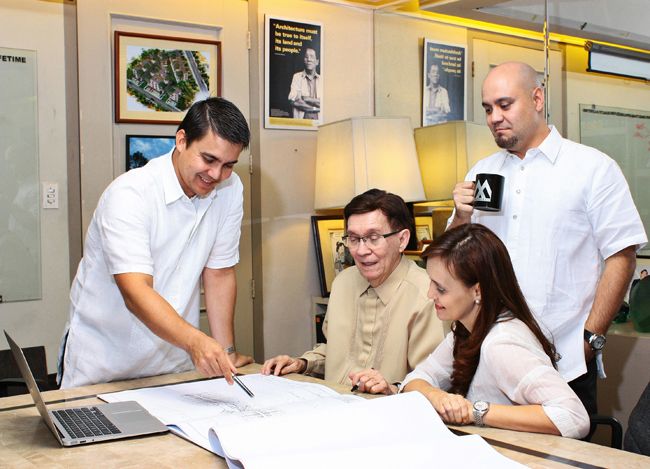
Above Architect Bobby Mañosa with his children Angelo, Dino, and Bambi
Architect Bobby Mañosa with his children Angelo, Dino, and Bambi
1 / 1
Together, MCI and MPI worked to come up not only with artisanal houses but also with earth-conscious designs and materials envisioned to be appealing to many generations. MPI developed three communities in peaceful areas of New Manila — Campanilla, Ylang, and Lantana. By far, the Tagô property in Bonifacio Drive, Tagaytay City, beside the Our Lady of Lourdes Shrine, is MPI’s biggest development with 52 single-detached houses and lots.
MCI maximised the cool breeze of the city by designing the houses with an airy, open-plan design. The Tagô development uses locally-sourced sustainable materials and native design elements. Bamboo, coconut, mat weaving, native stones, recycled lumber, and a mix of farmed and reclaimed wood are utilised in the building and interiors. The signature Mañosa staircase with señorita steps, the banggerahan (which is used for the natural drying of dishes), as well as Mañosa-designed wooden wall lamps and other accessories provide classic Filipino touches. To modernise the Filipino traditional house, the banggerahan was actually made of steel and the mat weavings for the cabinets and bedroom ceilings are of PVC materials. With the Mañosas’ exquisite design, the materials still look and feel genuine. The glass windows took design inspiration from the traditional kubo windows that are pushed and suspended, making it resistant to strong typhoon winds. These windows allow passive cooling and natural lighting in all rooms, and in rainy seasons are natural watering systems for the plant boxes below.
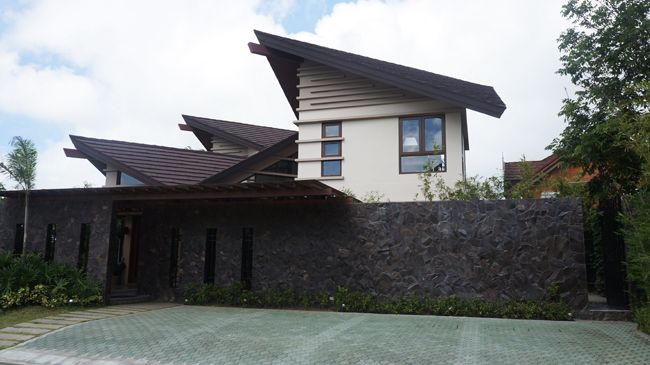
Above Ara-al house model unit
Ara-al house model unit
1 / 1
Being one of the pioneers in green architecture designs, MPI’s properties, including Tagô, has BERDE certifications, mainly because of its unique rain water collection system and other sustainable features.
Thriving Community
Tagô has 52 house and lots units split into two designs named after the stones used for its walling: the 12 Ara-al homes ranging from 350-400 sqm, amounting to 20 million pesos selling price; and, the 40 Adobe homes with 250 sqm at 15 million pesos. Designed to provide relaxation for its residents, especially for the elderly market, MPI partnered with Nurture Wellness Village to cater housekeeping and butler services as well as spa treatments. With this, residents are assured that their rest houses are monitored and maintained and that they are well treated whenever they come home.
With its earth-conscious efforts, MPI has designed the community to have sustainable landscape and lush greenery. Welcoming the residents at the gate is the Tagô clubhouse, which is a perfect venue for private events and gatherings and has other recreational amenities like a swimming pool. In the middle of the three-hectare area is a park with a pond and a creatively designed landscape.
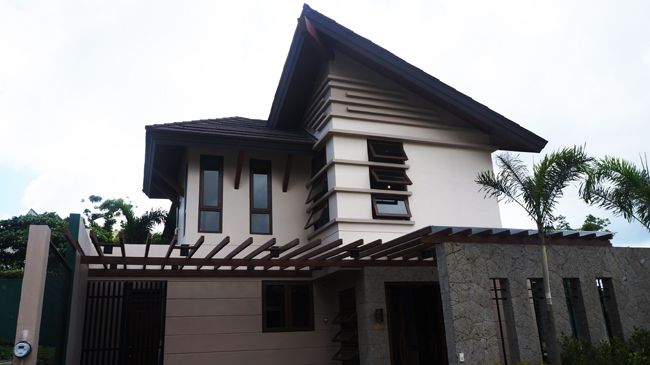
Above Adobe house model unit
Adobe house model unit
1 / 1
To make living attainable in the Tagô community, MPI introduced factional ownership where the title deed is legally divided, owned, and shared by up to 7 persons (ideally but can go up to 15). MPI encourages persons of filial relationships or mere friendships to take the fractional ownership option to avoid sharing the house with complete strangers. While MPI can provide a suggested guide or formula for usage rights, the group of co-owners may agree on their own year-long cycle of usage and implement their own house rules.
Also, Tagô homes are released to owners fully fitted but without furniture. However if they decided to achieve Filipino interior design, MCI may provide that service on top of the rates with the team working closely with the owners to make the designs suitable to their lifestyle and preferences.
Above Tagô clubhouse
Tagô clubhouse
1 / 1
“What we will have in Tagô are pioneering designs and work that put more emphasis on sustainability and environmentally responsible construction practices. Indeed, Tagô in Tagaytay City will prove that it is possible to live a green lifestyle while still enjoying modern comforts,” said Dino.
For more information, visit www.manosa-properties.com or contact 0917-8825604 / sales@manosa-properties.com.
Topics

Franz writes about the local cultural scene and rediscovering the country’s storied past and rich heritage. He earned his bachelor’s degree in Journalism from the University of Santo Tomas and is currently pursuing a master's degree in Art Studies at the University of the Philippines Diliman. Besides working on this luxury lifestyle magazine, Franz is an avid book reader, local traveller, museum-goer, chorister, and community theatre playwright. But above all this, this Aether main spends more time in Teyvat than anywhere else.
Curated for you
The stories, profiles, and cultural moments featured on our Instagram feed