
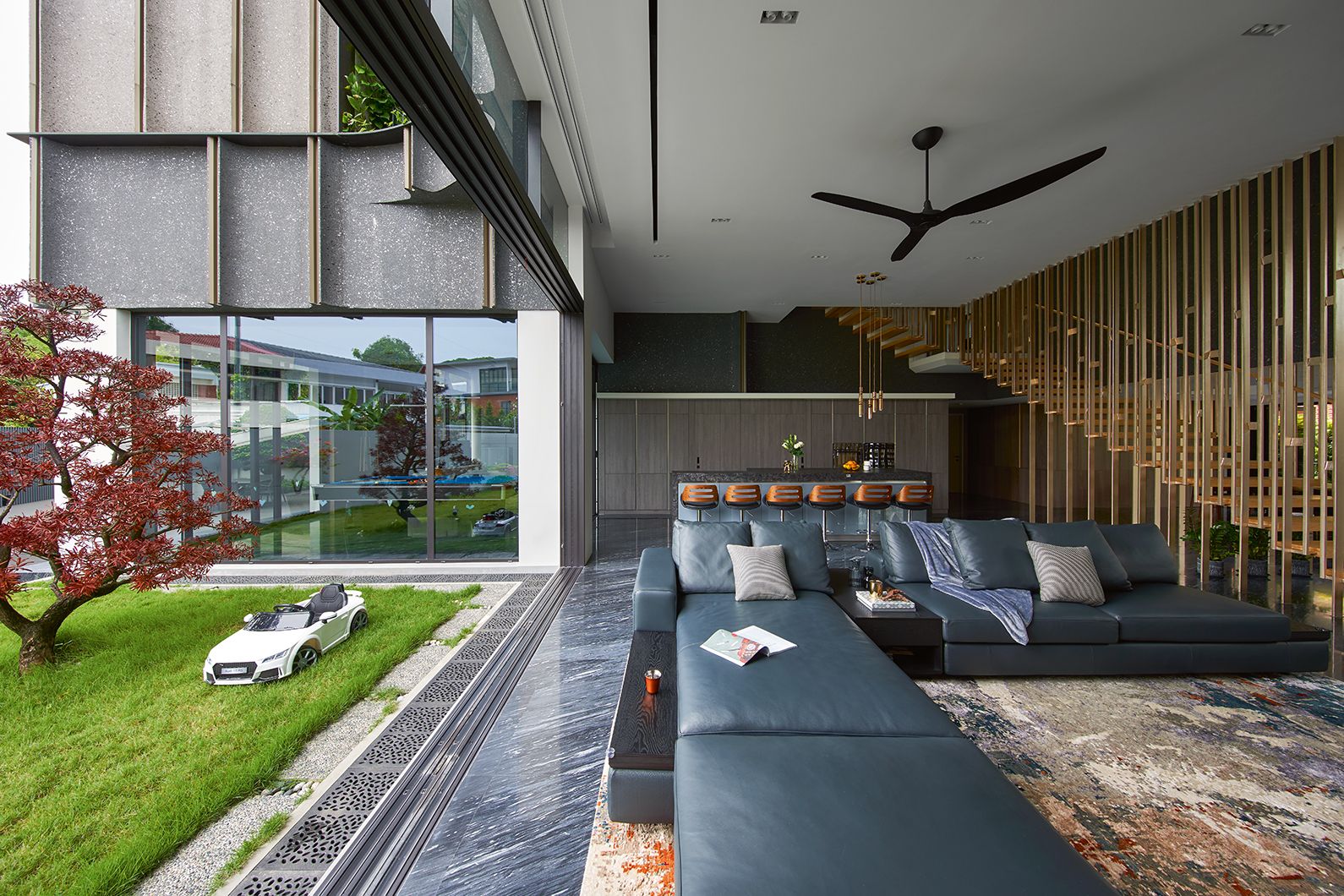
Cover The sliding doors in the
living room open up
to serene views of the
bonsai garden
The sliding doors in the living room open up to serene views of the bonsai garden
1 / 1
This multi-generational home by Meta Architecture boasts an innovative facade that wraps an assortment of private and communal zones for its inhabitants
Housing three generations under one roof, this 9,730sqft house is a symbol of familial unity and love. Located in a sleepy residential neighbourhood, its distinctive, fluid shell encloses three interconnected volumes. The owner of this home, who works in the marine industry, lived abroad for 18 years before returning to Singapore; he has three sons, the eldest of whom is married with two children.
Meta Architecture designed the house, which features a striking facade that traces the trapezoidal corner plot. When the sun’s rays hit the surface, the blend of quartz, minerals and mica gives the exterior a subtle shimmer. It was crafted with Dryvit ETICS (External Thermal Insulation Composite System); the firm’s founder and lead architect Adrian Lai chose the durable and lightweight composite material for its ability to mimic stone while having the malleable qualities of concrete. Accentuated by metal flutings, the fluidity of the facade mitigates the large scale of the building

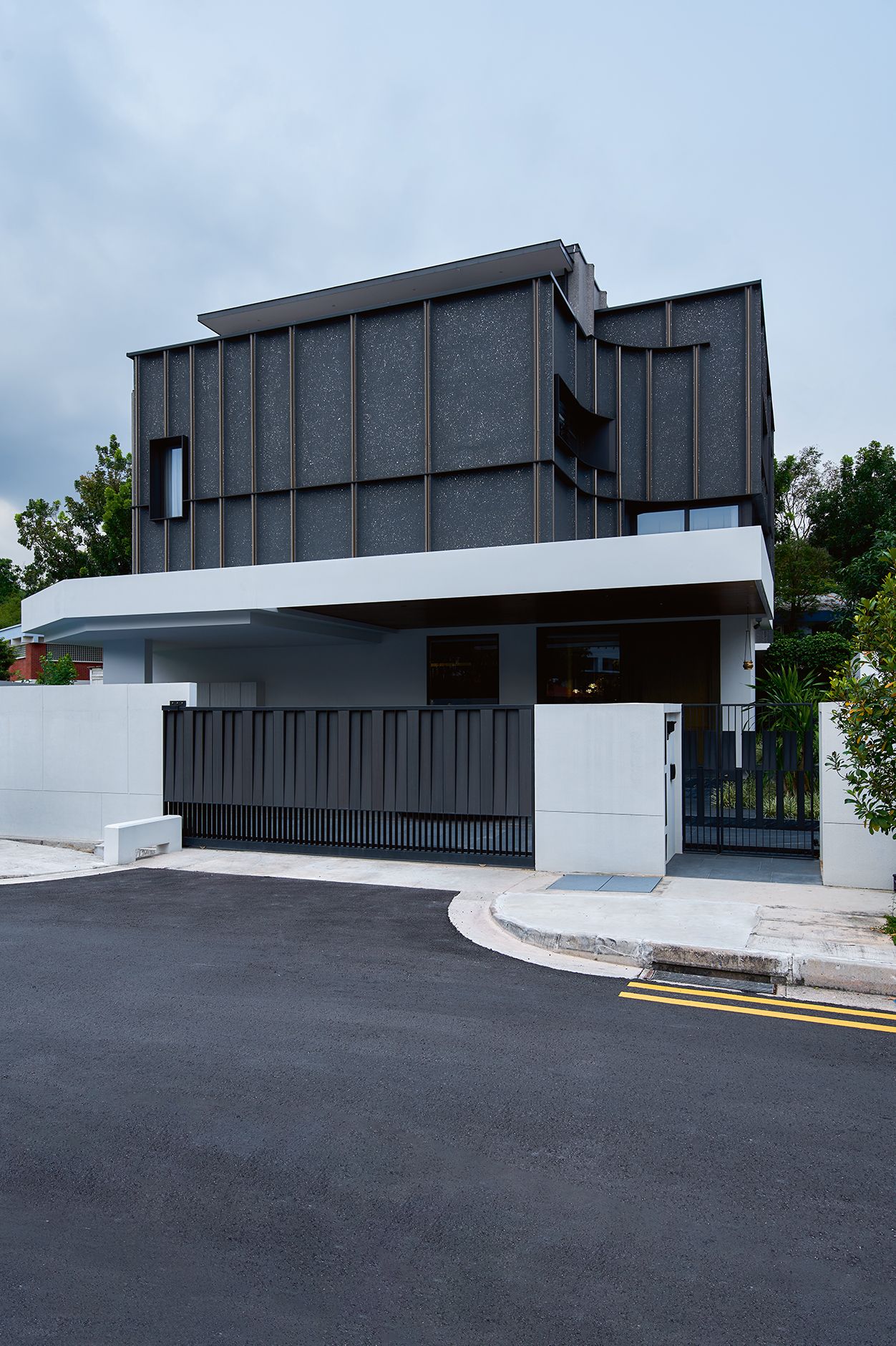
Above The facade
of the house sports
a decorative cladding
made with Dryvit
The facade of the house sports a decorative cladding made with Dryvit
1 / 1
The two-and-a-half storey house contains two additional internal mezzanine levels, made possible by the Urban Redevelopment Authority’s Envelope Control guidelines. These levels are contained within the monolithic structure.
The gardens are an important aspect of the design. “The living, dining and entertainment areas on the first floor were designed as if they were sheltered parts of the garden, immersed in natural light and surrounded by greenery or water,” says Lai. “The goal was to create many different rooms within the house, each always drawing you towards light and greenery.”
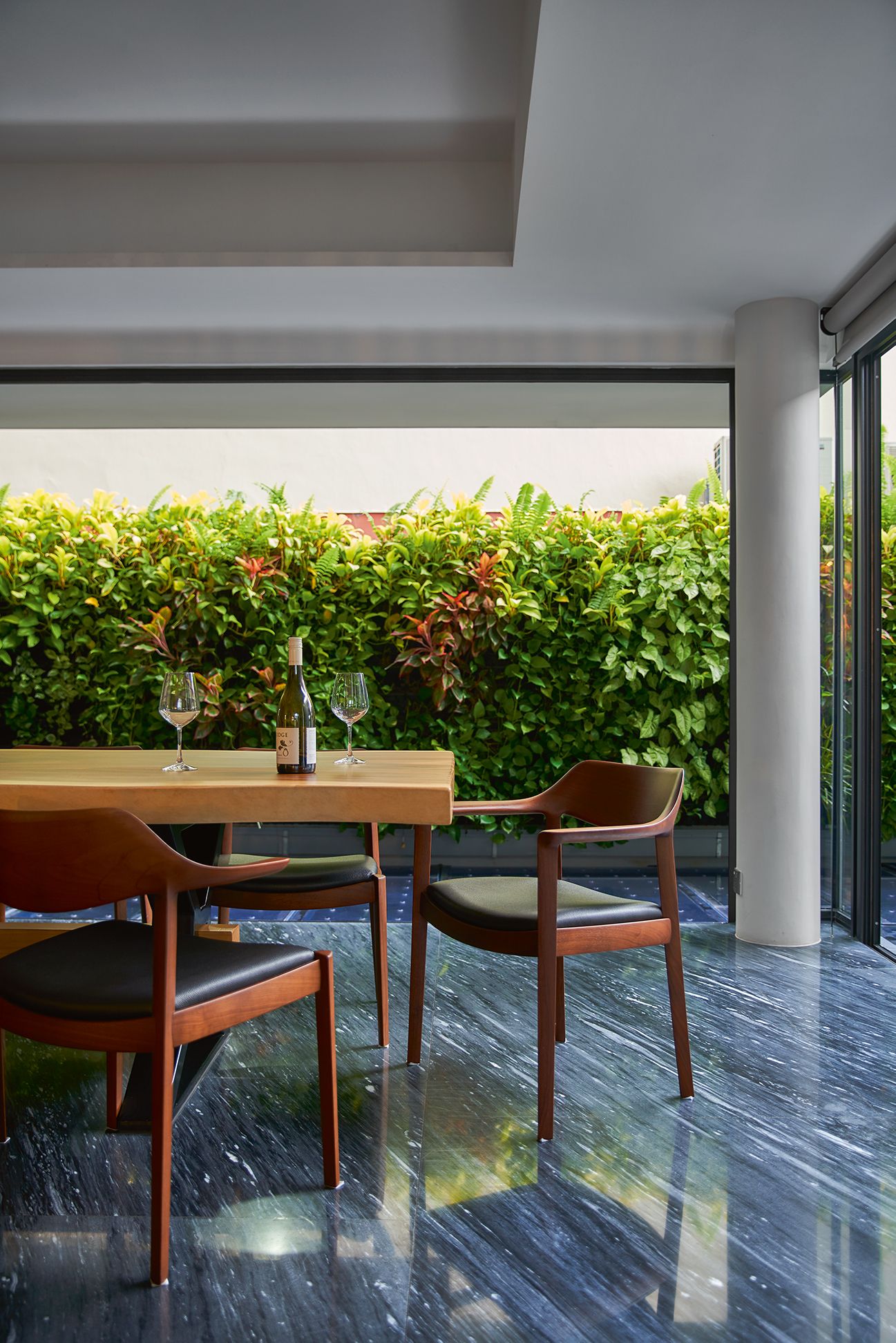
Above A vertical
garden adds to the
tranquil ambience in the
dining room
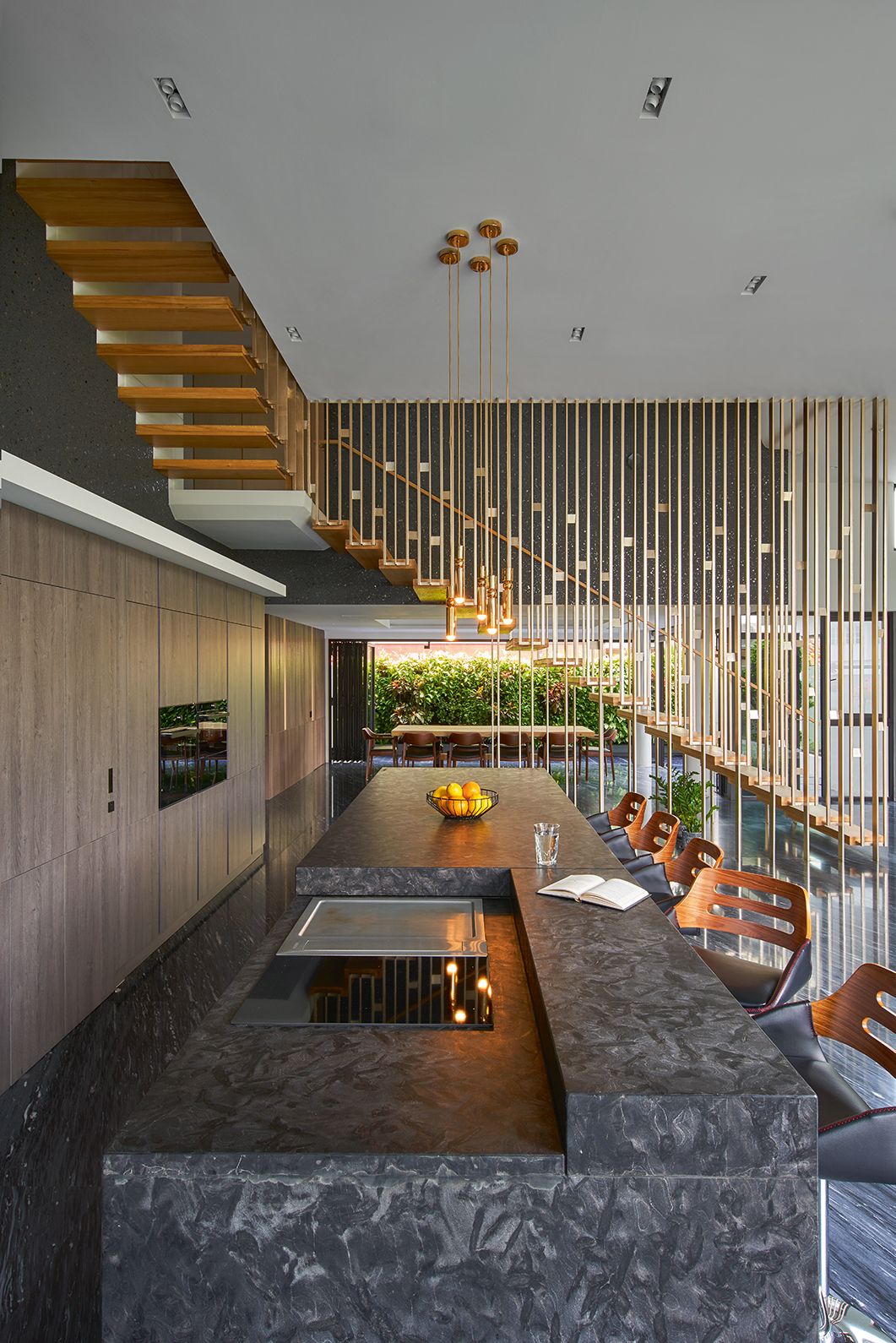
Above The
kitchen features a pair
of sleek V-Zug ovens
from Kitchen Culture
and the Lee Broom
Fulcrum chandelier
from Space Furniture
A vertical garden adds to the tranquil ambience in the dining room
1 / 2
Past the front entrance is a glassed view of an outdoor koi pond. This same scene is experienced in its full glory when one turns the corner to the dining area. Feng shui principles guided the positioning of this water body, which is an element of tranquillity backed by a green wall.
The living and dining areas, as well as the entertainment lounge, were designed as separate spaces but share the same garden vista. The architect designed the first storey areas to be used either collectively or separately.
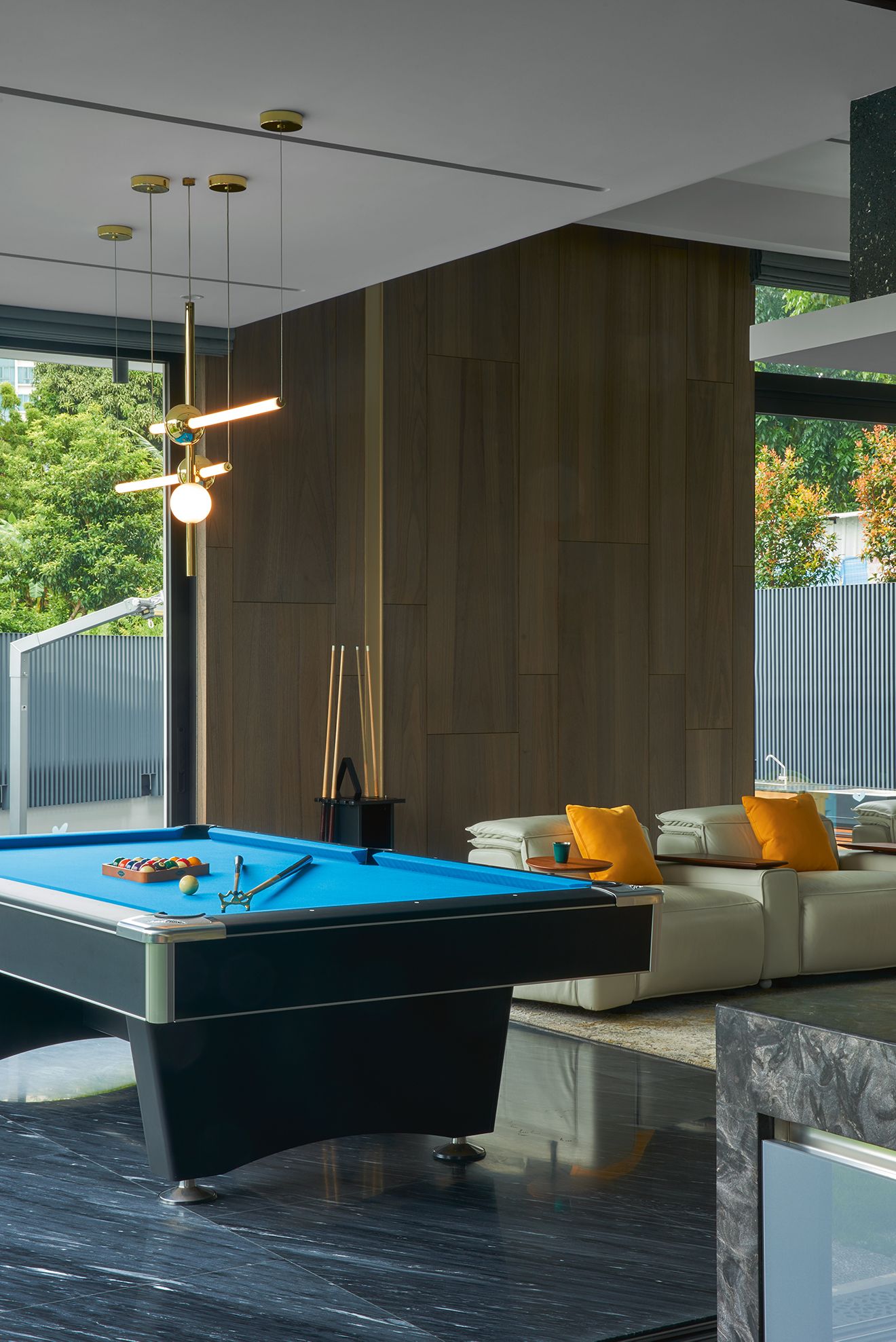
Above The entertainment
lounge next to the
living room features
a pool table, the Lee
Broom Orion Globe
pendant lights from
Space Furniture
and a sofa from
King Living
The entertainment lounge next to the living room features a pool table, the Lee Broom Orion Globe pendant lights from Space Furniture and a sofa from King Living
1 / 1
“There have been occasions when the family hosted different parties in various areas on the first floor at the same time,” shares Lai. The kitchen island unites all three spaces as the central preparation and serving area. Neat panelwork conceals refrigerators and storage, as well as the doors that lead to the powder room.
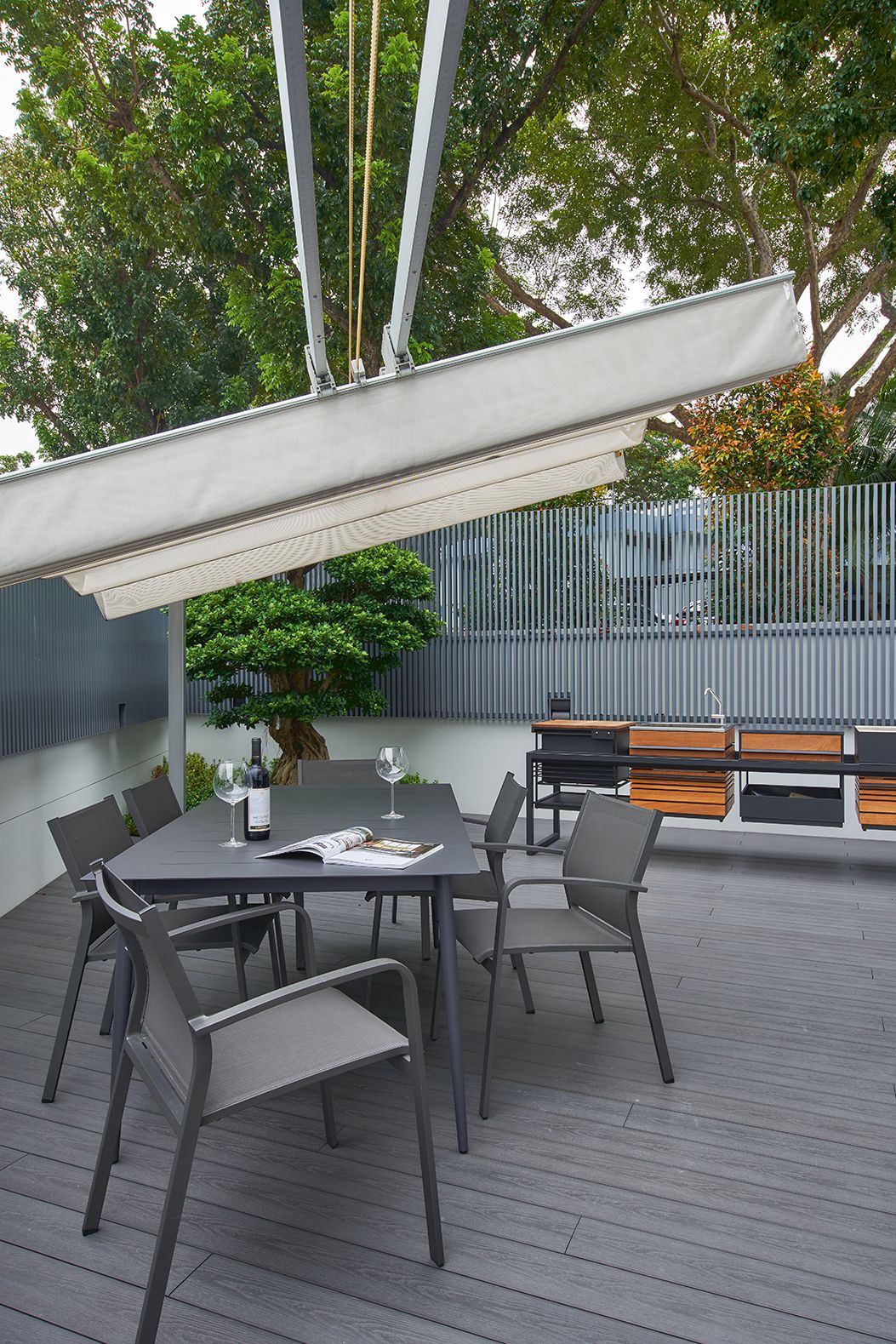
Above Furnished with
an outdoor dining set
and kitchen counter,
the garden terrace
is the perfect spot
for barbecues
and family meals
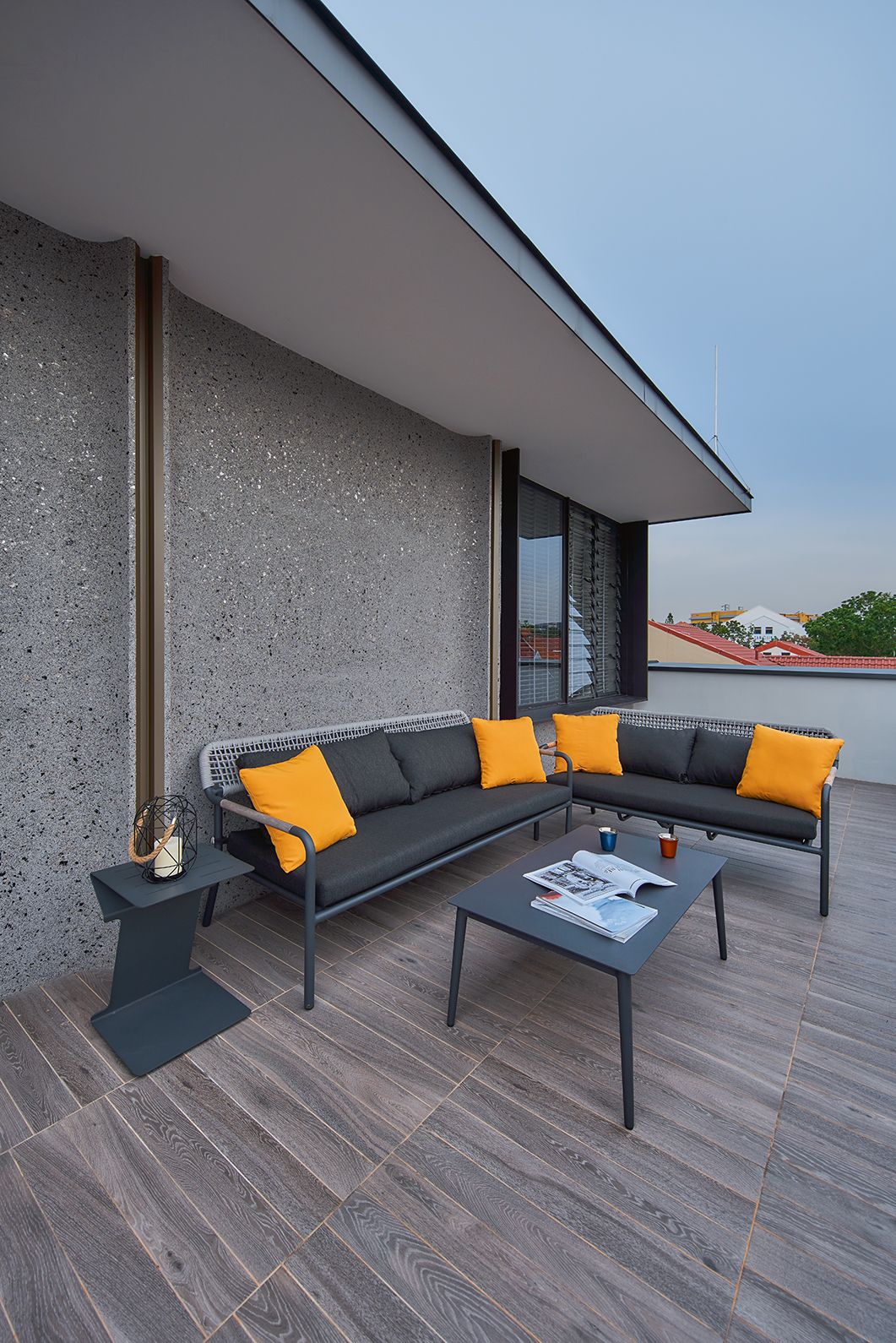
Above Yellow
cushions liven up the
rooftop terrace
Furnished with an outdoor dining set and kitchen counter, the garden terrace is the perfect spot for barbecues and family meals
1 / 2
The facade material is also used indoors, this time as a decorative feature on the first storey. It runs around the top part of the walls, close to the ceiling, tying various spaces together visually. Its dark tone contrasts with the staircase, which rises majestically up the first storey. The steps are framed by a golden metal screen that lets the light and wind in.
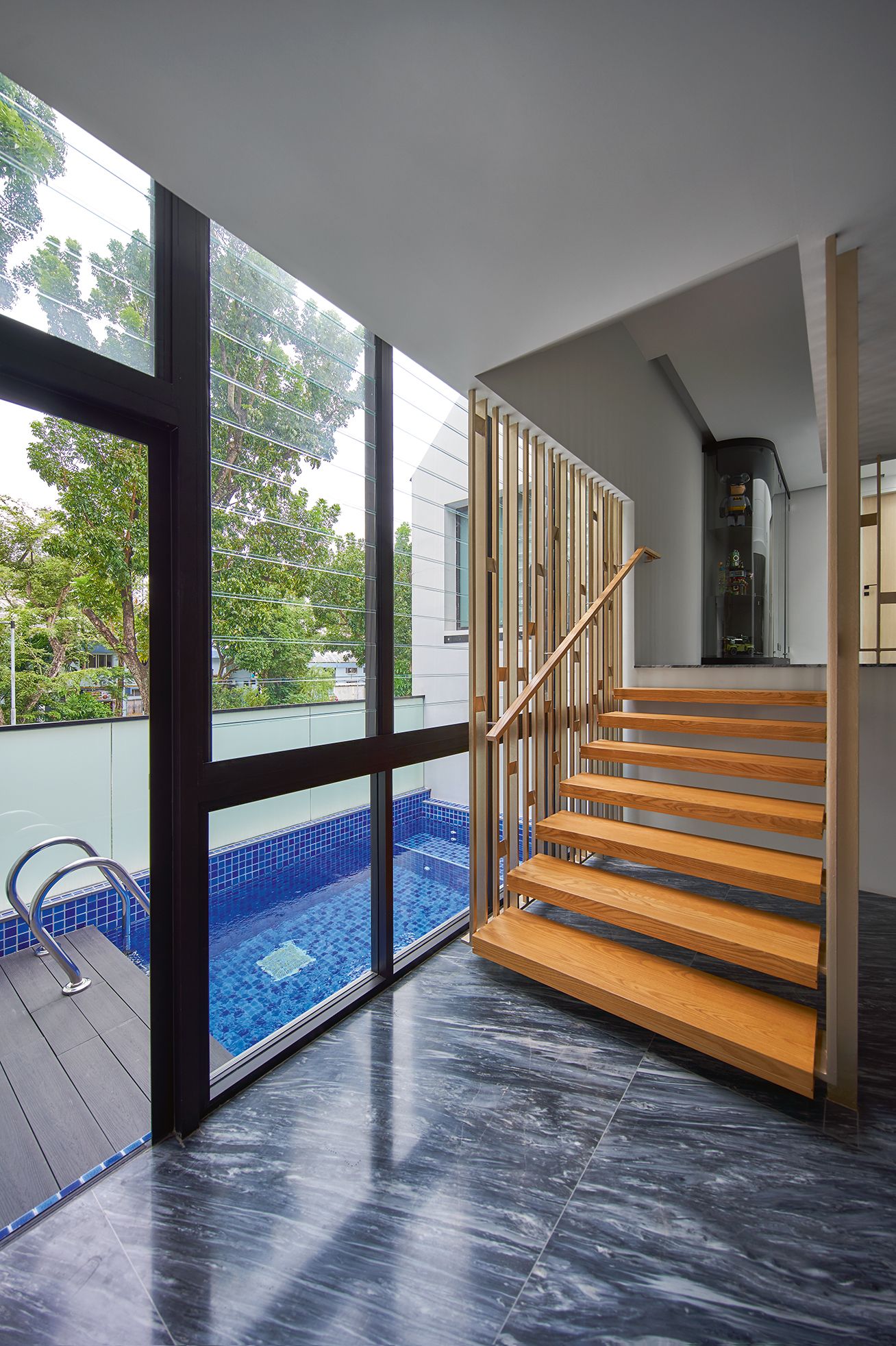
Above The staircase on the
mezzanine continues
the same gilded
screen designed for
the staircase on the
ground storey
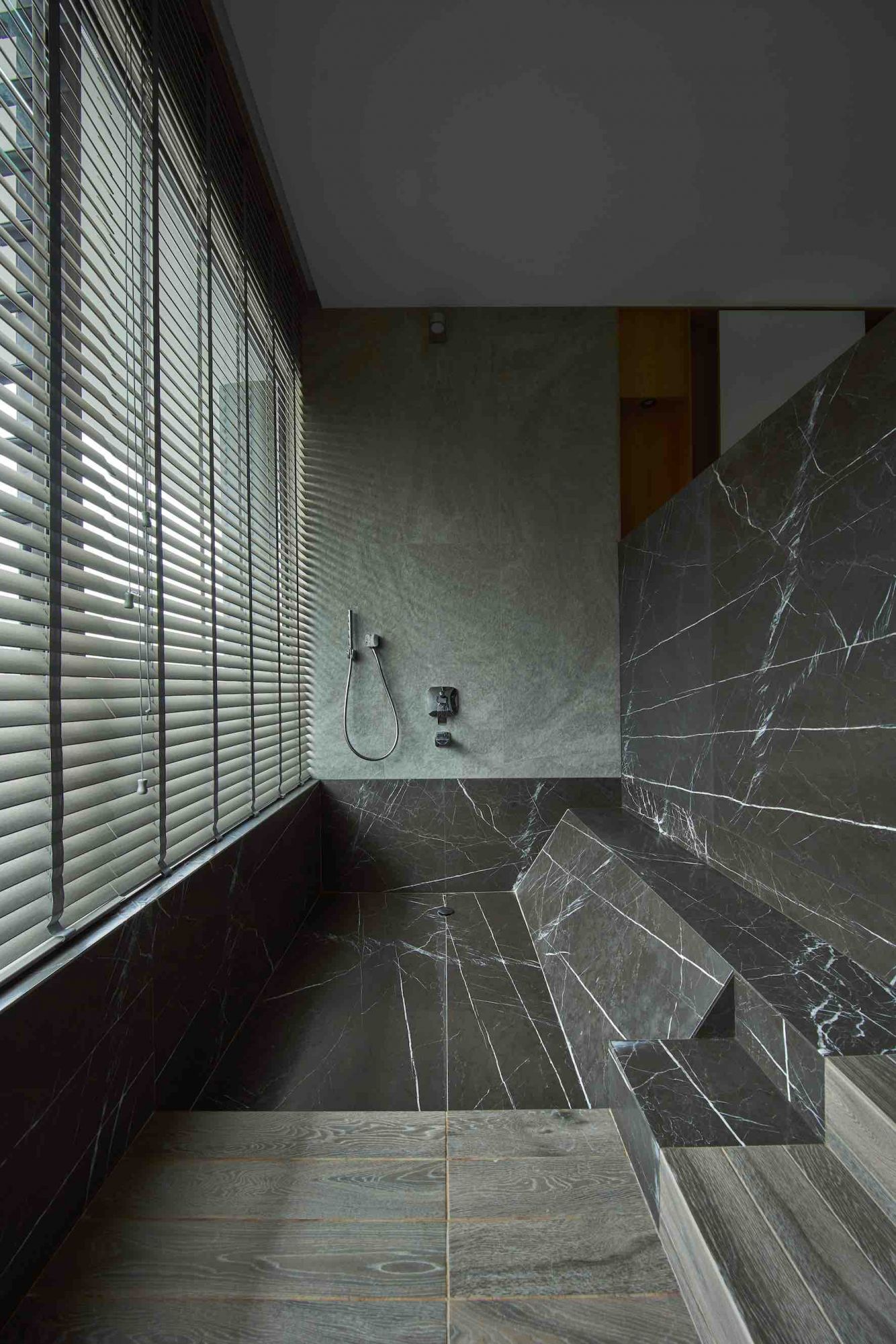
Above The
bathroom on the
top floor features
a sunken shower area
The staircase on the mezzanine continues the same gilded screen designed for the staircase on the ground storey
1 / 2
Although the gilded staircase injects a dose of sophistication, it is also grounded in functionality. “Composed of vertical metal fins and horizontal metal plates that warp and weft like fabric, the champagne bronze-finished steel screen was designed as both structural support and sculptural object. The composition maximises the effect of light bouncing off the metal reflector plates while maximising structural stiffener pieces to maintain a sense of lightness,” says Lai.
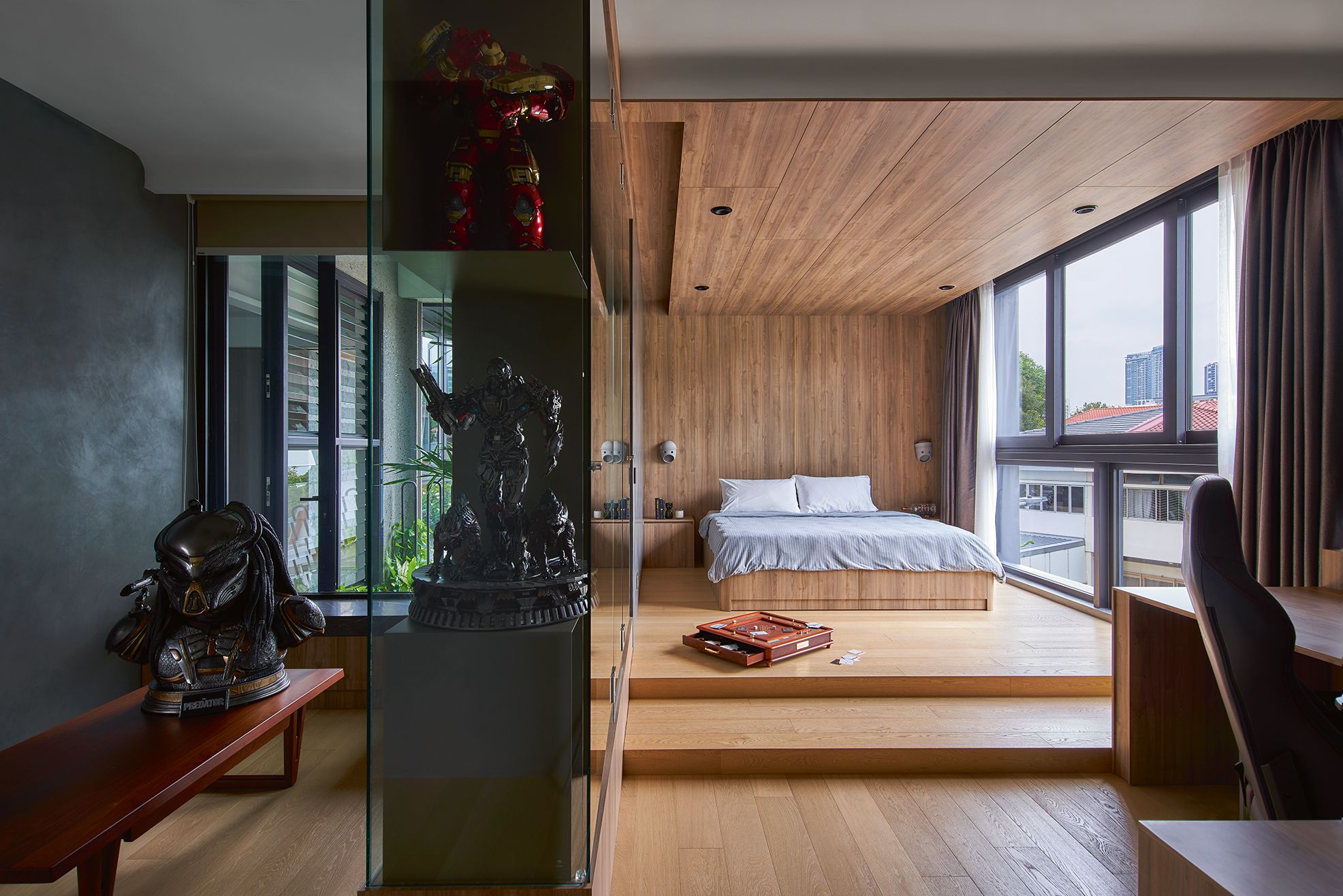
Above the youngest son’s
bedroom showcases
his favourite movie
collectibles
the youngest son’s bedroom showcases his favourite movie collectibles
1 / 1
Upstairs, the architect dotted the plan with pockets of greenery hugged by the sweeping architecture. Shared spaces located around the air and light well feature porous walls that enable light and breezes to pass through. Automated louvre windows surrounding the skylight draw rising hot air upwards and out, thus ventilating the home in a passive manner. When it gets too hot, motorised roller blinds provide shade.
“Within this central light well, we situated all the shared family areas such as pantries, playrooms, lounge areas, reading corners and display cases,” says Lai. These spaces feature porous walls to enhance the perpetuating effect of cross ventilation and lighting.
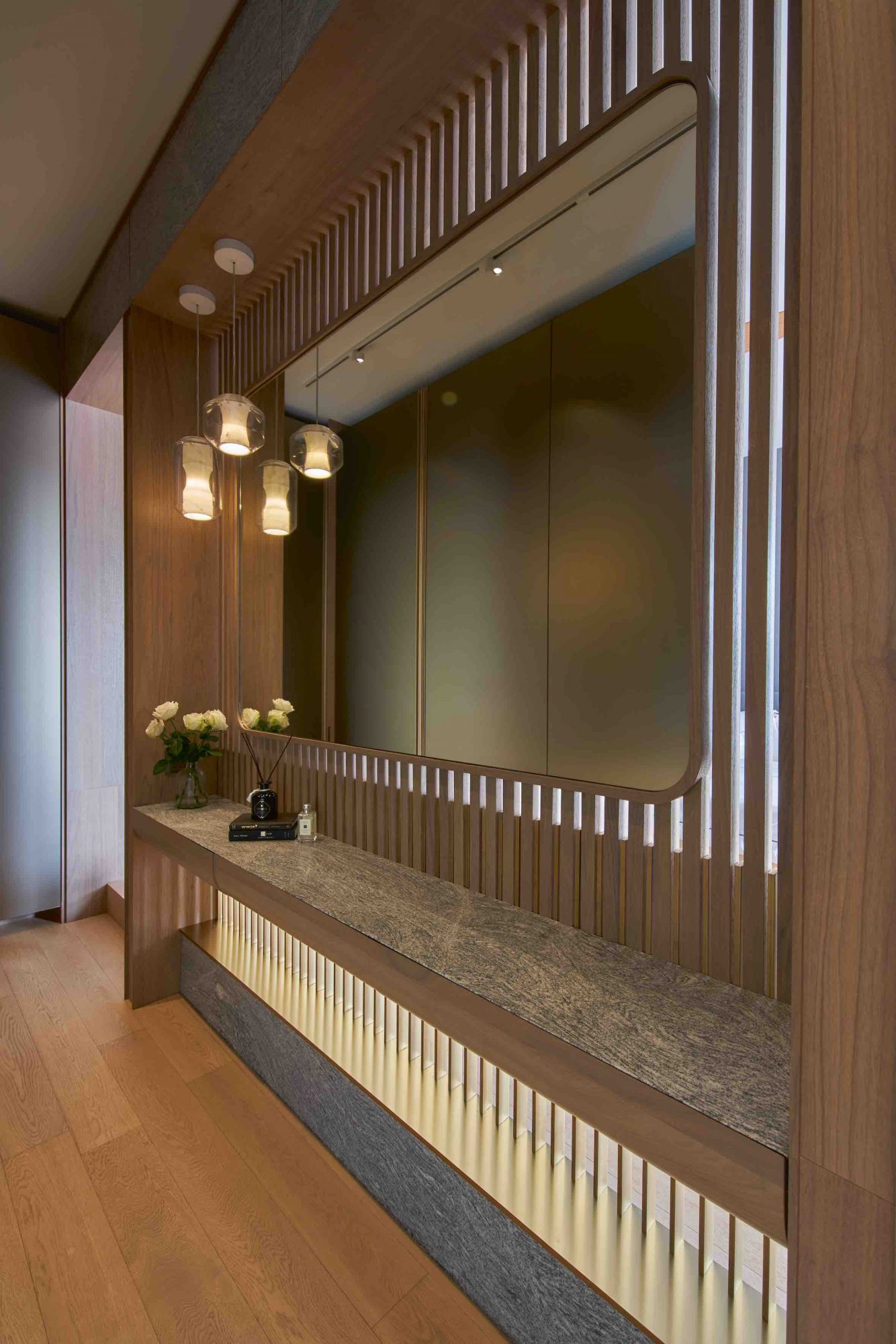
Above The eldest son’s
bedroom deliberately
eschews a TV
screen in favour of
a beautiful wall clad
in natural stone
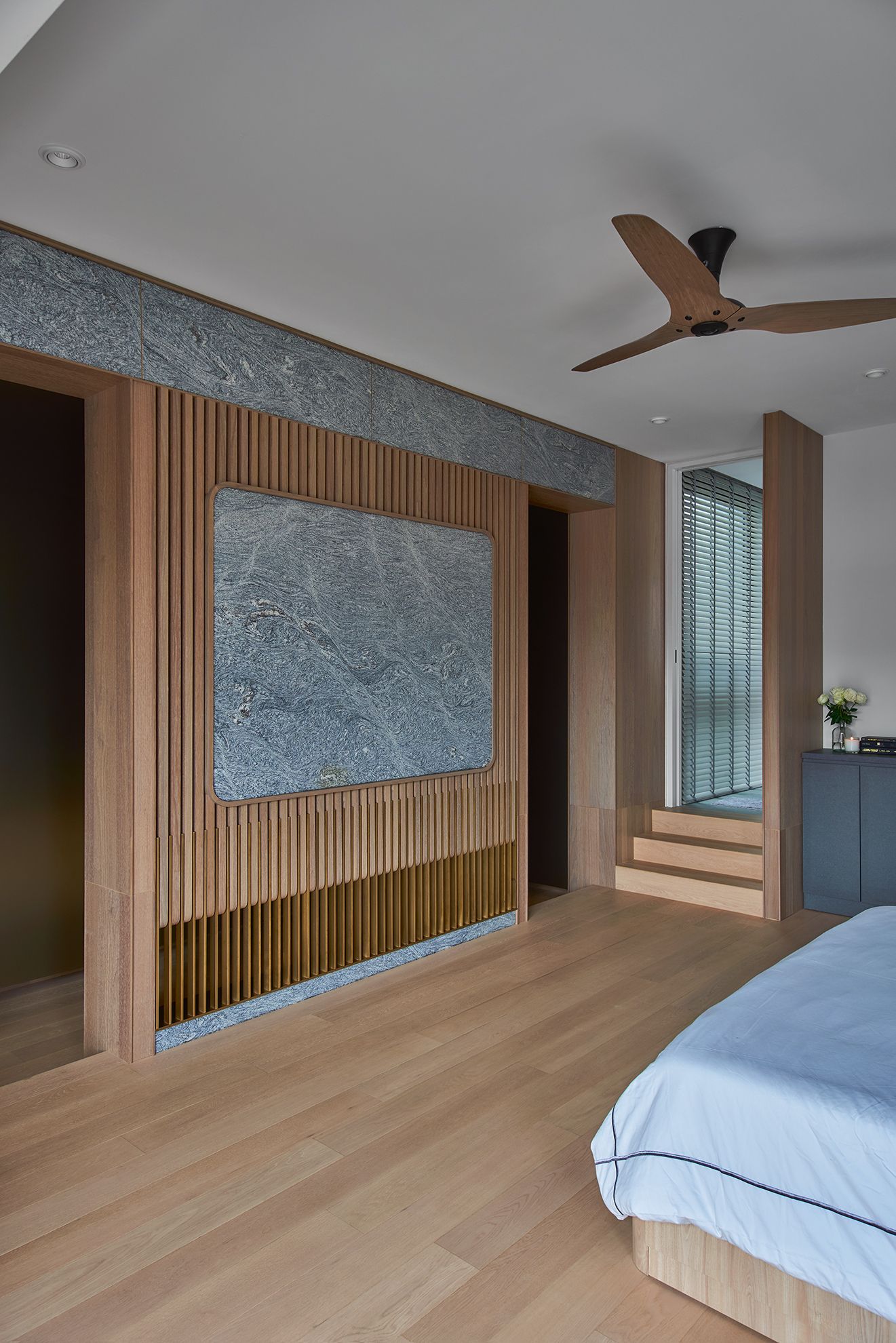
Above The
Lee Broom Chamber
chandelier brings
a gentle glow to the
vanity area in
this bedroom
The eldest son’s bedroom deliberately eschews a TV screen in favour of a beautiful wall clad in natural stone
1 / 2
The eldest son and his family live on the entire top level, which is designed like a private suite. There is a bedroom for his children and a separate study. The ensuite master bathroom on this floor features a step-in shower that doubles as a bathtub for the child to play in. Here, the screen element reappears as a privacy device at the sleeping area, but its materiality is more calming.
“The screens were designed to be self supporting. Solid timber pieces are tied to brass fins at the base by a solid brass rod to form a veil-like screen. With the right balance of depth and width of the timber pieces, light on one side appears as a glow on the other side,” says Lai.
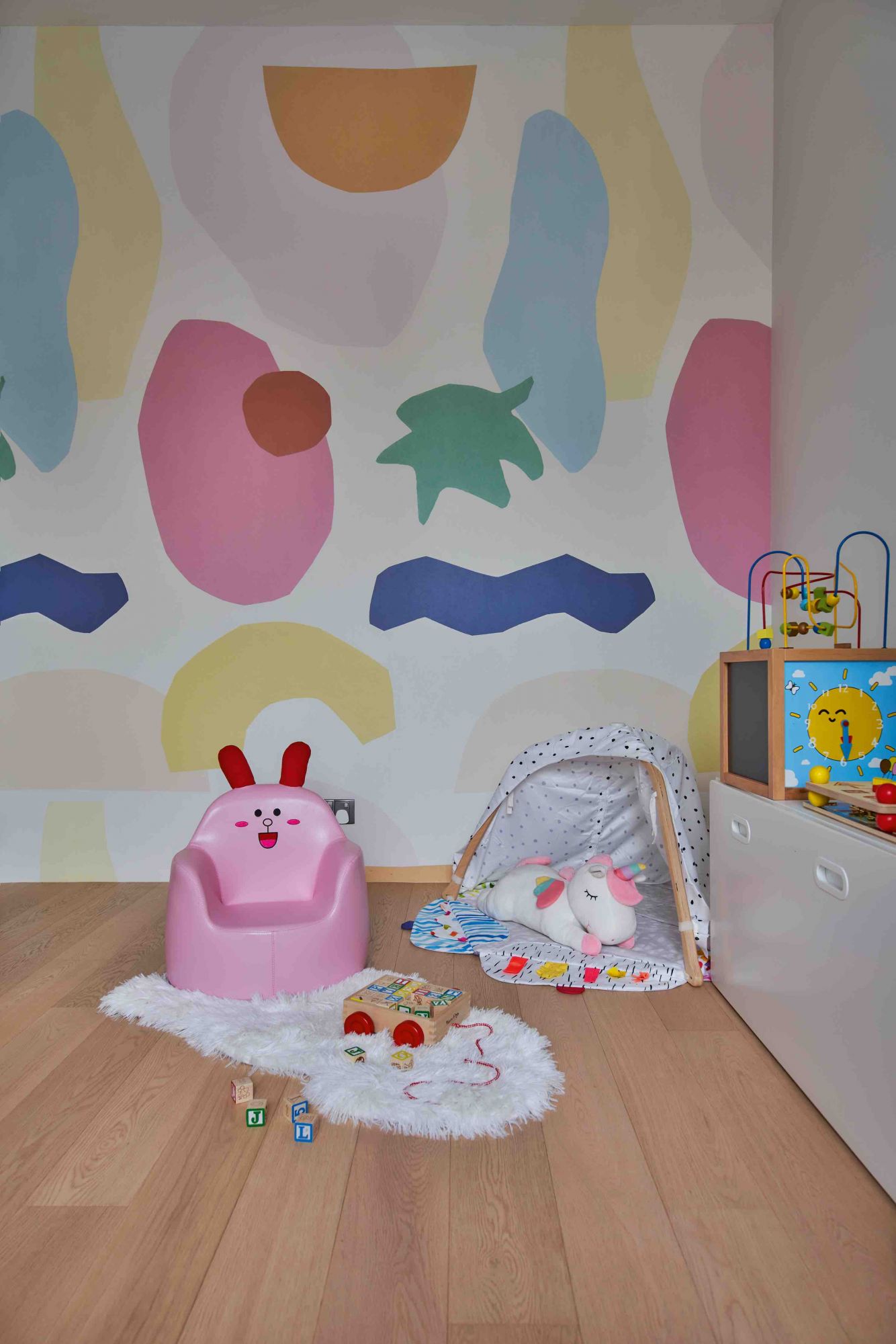
Above The
playroom features
a colourful wallpaper
composed of
vibrant shapes
The playroom features a colourful wallpaper composed of vibrant shapes
1 / 1
It is evident by the house’s design that the architect leans toward a disciplined palette; this is an apt approach to creating a well-tempered and serene home environment.
This story was first published in the February 2021 issue of Tatler Homes Singapore, available with our compliments on Magzter.
Credits
Photography: Jasper Yu
Art Direction: Charlene Lee
Stylist's Assistant: Sarah Ng





