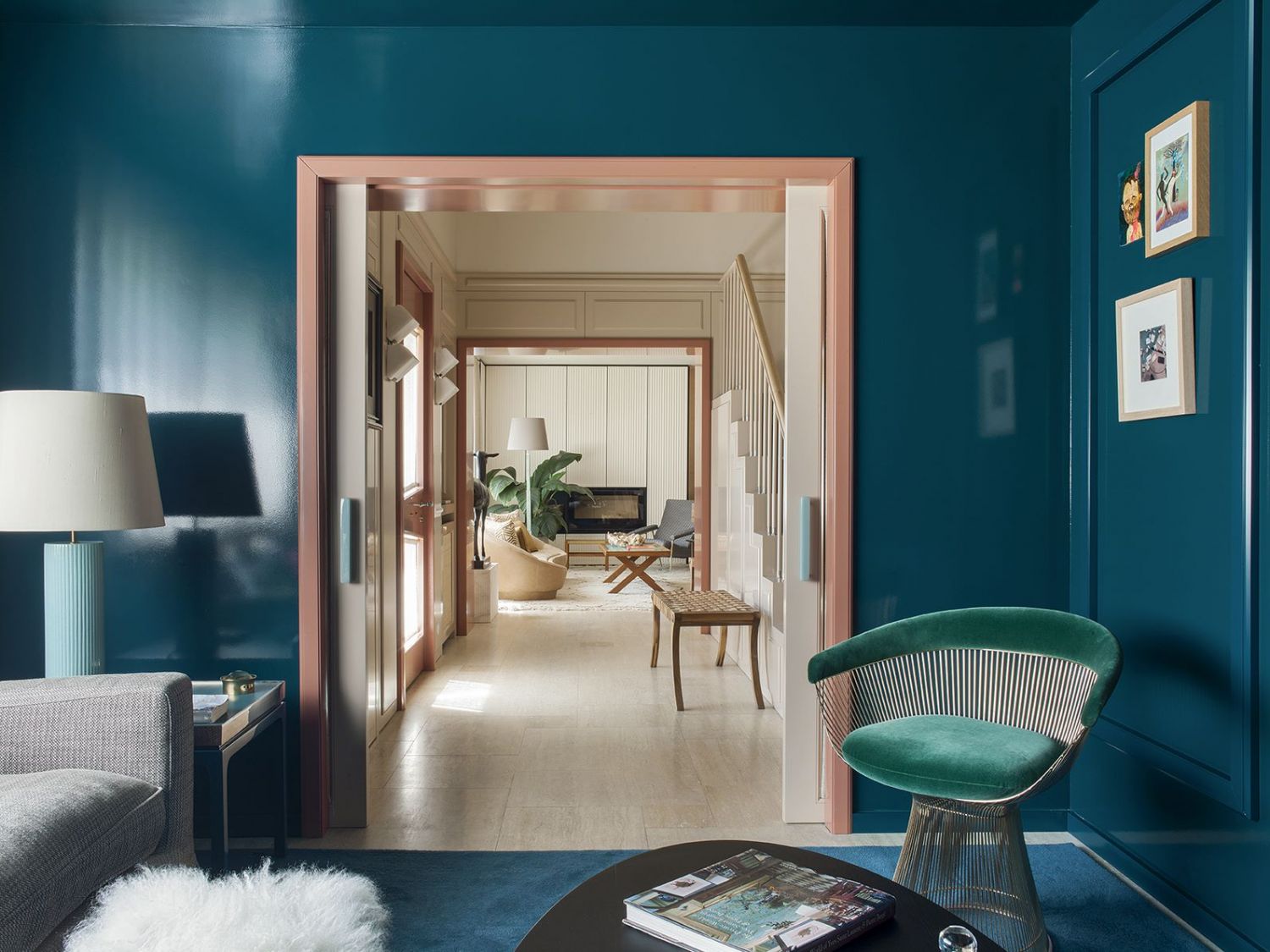
Cover The teal-green TV room is among the statement spaces in this home in Miramar, Portgual
The teal-green TV room is among the statement spaces in this home in Miramar, Portgual
1 / 1
First built in the 1950s, this home in Portugal marries its mid-century influences with an eclectic mix of contemporary accents, artworks and vintage furnishings
For Michael Miranda, his childhood love of art that inspired him to study architecture, which later became his “passion and obsession”. “As a child, I used to draw and paint all the time, anywhere. For me, there are no boundaries between the fields of architecture, art, design and interiors,” shares Miranda, who is the creative director and co-founder of Portugal-based firm Ding Dong.
Based in Porto, Ding Dong comprises a design studio as well as a retail arm that carries a playful combination of decor, furniture and other products that the firm has designed. This eclectic mix comes into play in the architect’s very own home in Portugal, which is the epitome of his firm’s creative ethos.
Don’t miss: Home Tour: A Colourful Townhouse Inspired by Dance and Music

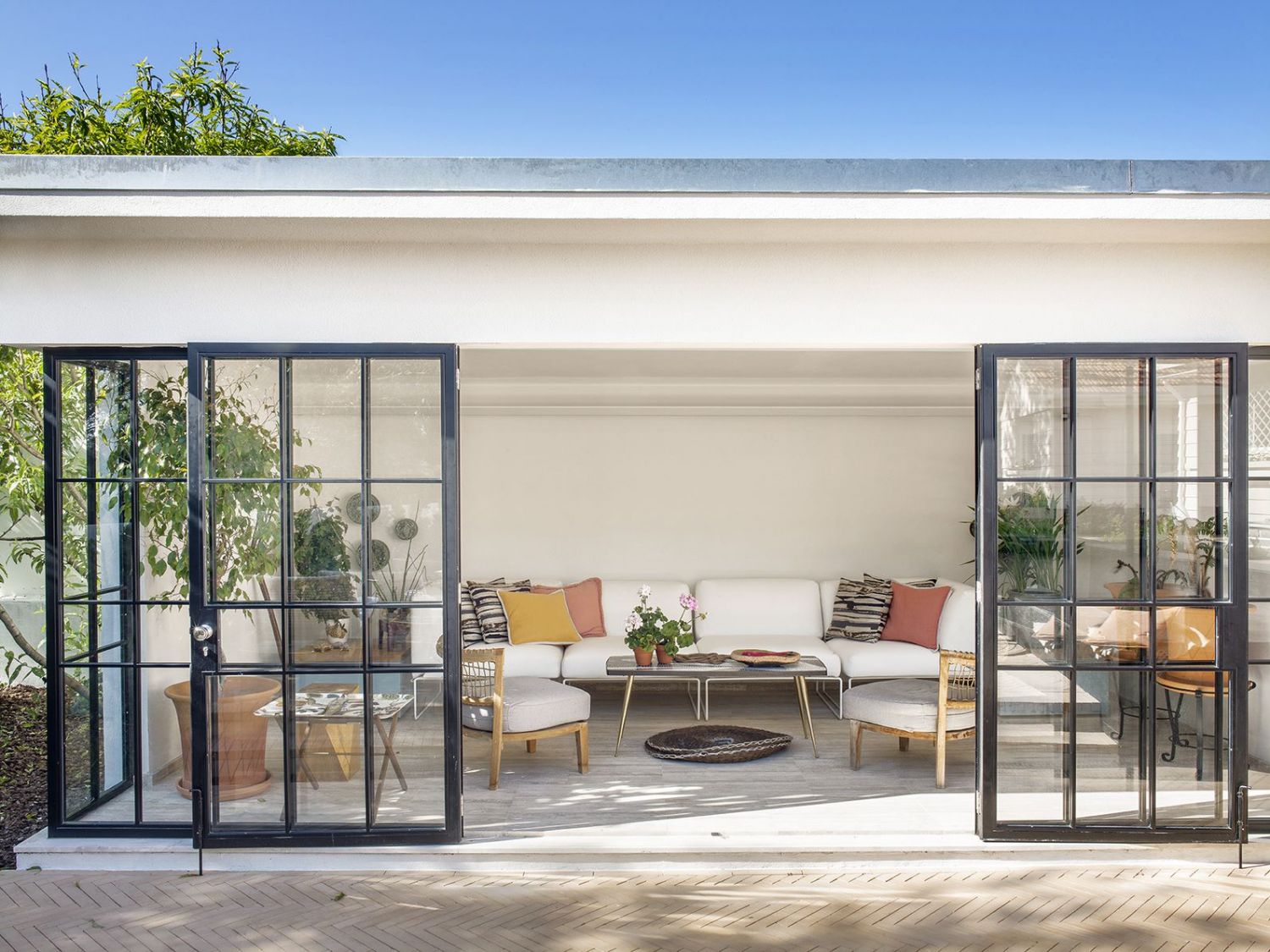
The pool area of the home of Ding Dong creative director Michael Miranda
1 / 3
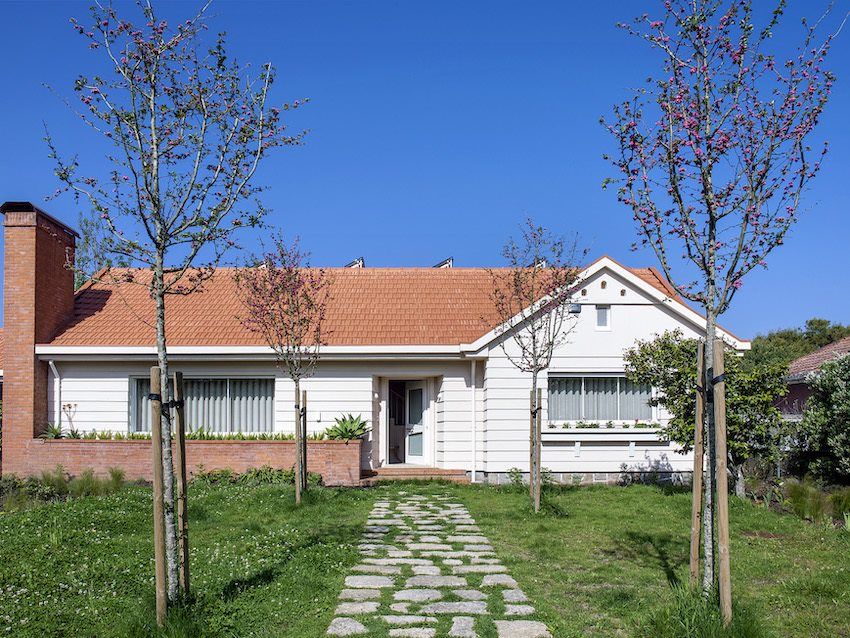
Located in Miramar, a cosy Portuguese seaside town a short drive from Porto, the two-storey house was first constructed on a 15,069 sq ft site in the 1950s for a Dutch family. Marrying modern influences with the local vernacular, the abode also conveyed elements of American countryside houses.
The home was admittedly a “very impulsive buy”, shares Miranda. Initially, he had designed it as a weekend house before deciding to convert it into the permanent residence that he shares with his partner and their two Portuguese water dogs, Boris and Lupita.
“I was driving by this area and by chance just stumbled upon the house on sale. I was intrigued and called the agency straight away to appoint a visit; I purchased the house a couple of weeks after the first visit. I must say that at the time I had no intention of moving to a different house; it was unplanned, just happened.”
In case you missed it: Why Singaporean Designer Gabriel Tan Chose to Relocate to Portugal

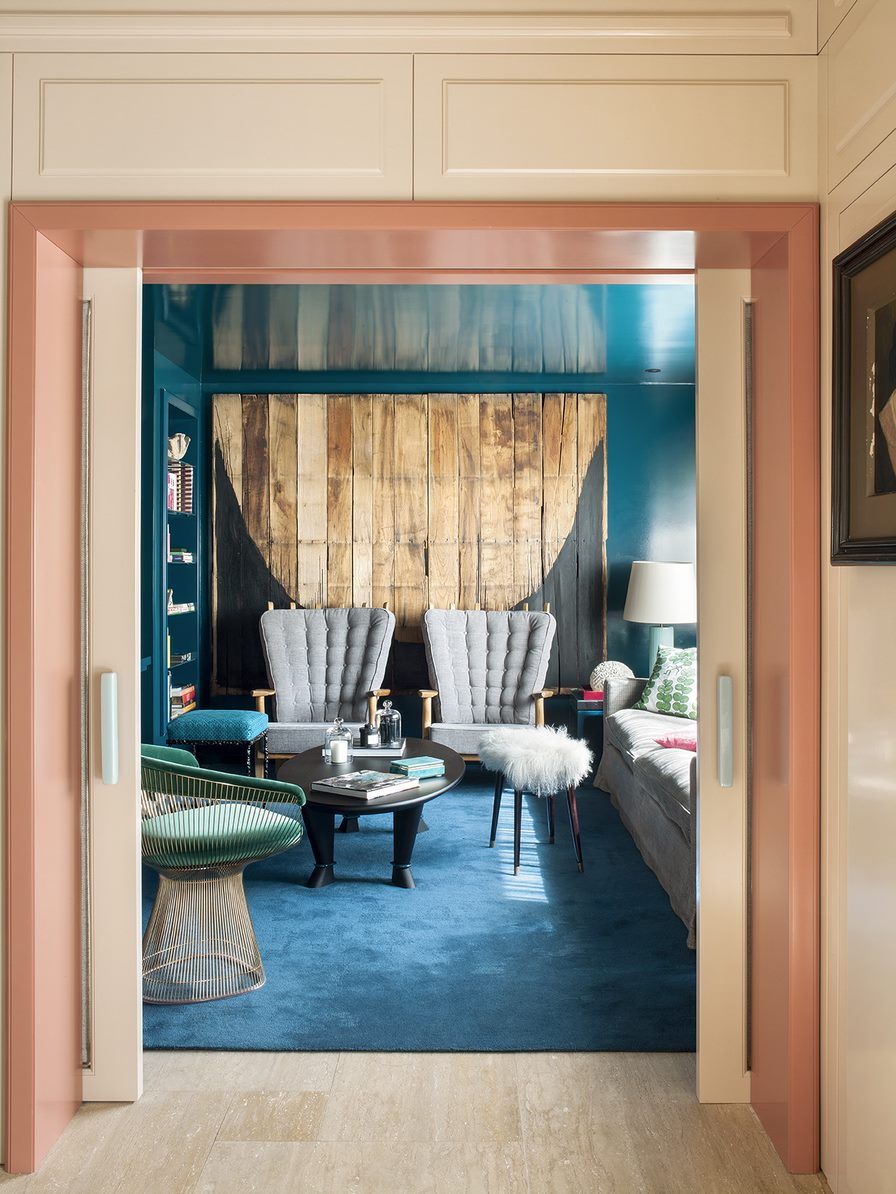
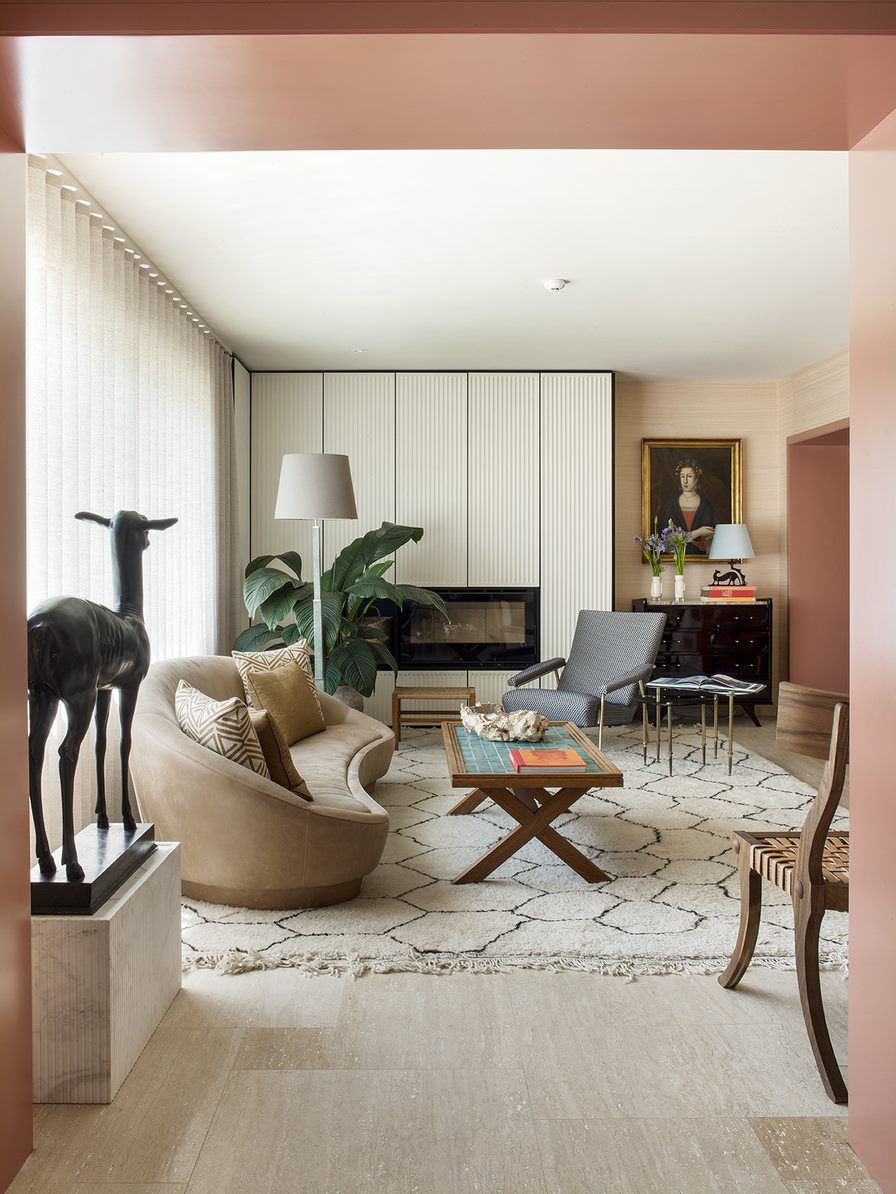
Above The pink entryway beautifully frames the rich hues of the TV room
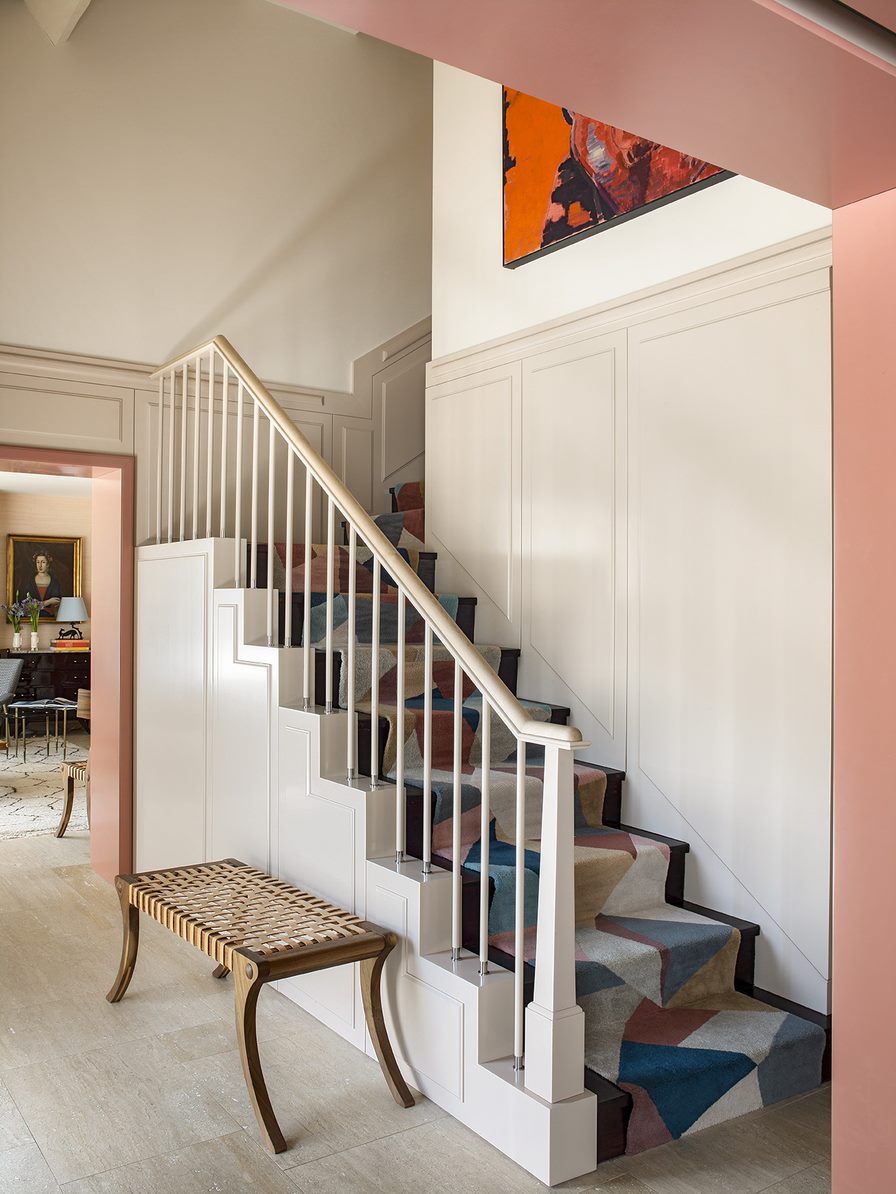
Above A multicoloured wool runner adds a dose of fun to the staircase
The pink entryway beautifully frames the rich hues of the TV room
1 / 2
1 / 2
There was, however, a lot of work to be done. The house was in a poor state as it was abandoned for a few years. In addition to the primary residence, an expanded and newly renovated pool house on the site encourages the owners to enjoy the abode’s connection to nature; this latter building now features a new roof, window frames, an indoor lounge, and a bathroom. The refurbished garage also features an ensuite guest room that visiting family and friends would use.
Miranda roped in his firm Ding Dong to first preserve the overall structure and facade, and restore the original iron radiators and wooden ceilings before starting on the interior makeover; everything else within was renovated and built anew. “You almost can’t differentiate between what’s new or originally built,” quips Miranda.
The 1,937 sq ft house features mostly bespoke touches, much like the projects that Miranda undertakes for Ding Dong. It also draws from his extensive personal collection of art and furnishings that he has assembled over the years. Key pieces include Seduzir, a photograph by the renowned Portuguese talent Helena Almeida, a work by German-based artist Burkhard Held, and a handmade piece with banana leaves created by the Portuguese sculptor Iva Viana.
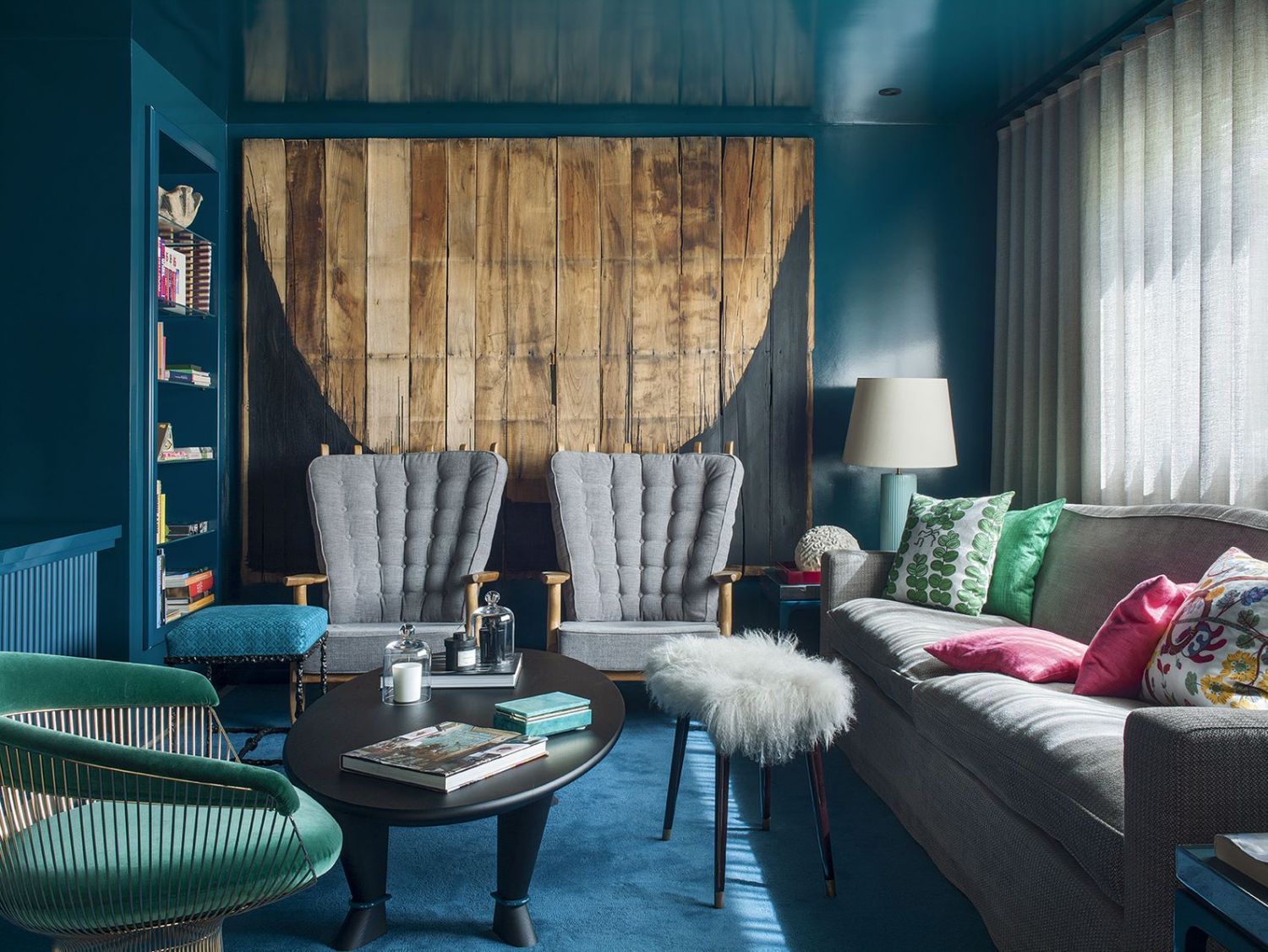

At the centre of the TV room is a pair of oak Grand Repos vintage lounge chairs by Guillerme et Chambron from the fifties, a painting on wood by André Fonseca, decorative pillows by Josef Frank for Svenskt Tenn and a Meridiani sofa designed by Andrea Parisio paired with coffee tables were designed by Ding Dong
1 / 3
For this abode’s two-year-long renovation, the architect was clear that he wanted to create a “warm, livable, and easy-going feeling” and to create a design scheme that conveys “mid-century modern with a 21st-century twist”. He says: “The main idea was to keep the interiors well-balanced and fun, giving them character and building on the amazing spirit from the fifites that was still very much present in the house.”
The use of natural materials was hence crucial to the design scheme. Miranda selected travertine flooring, and a cosy mix of lacquered wood, wool carpets, and natural wallpapers in silk or grass. “For me, it’s all about [using] natural, long-lasting materials as much as possible. I need to be able to touch and grab things,” he declares.
The first floor was crafted as a space to welcome guests and entertain without neglecting an effortless sense of comfort. The seamless connection between the interior and the exterior was also a significant part of this seaside abode to celebrate its proximity to the sea.
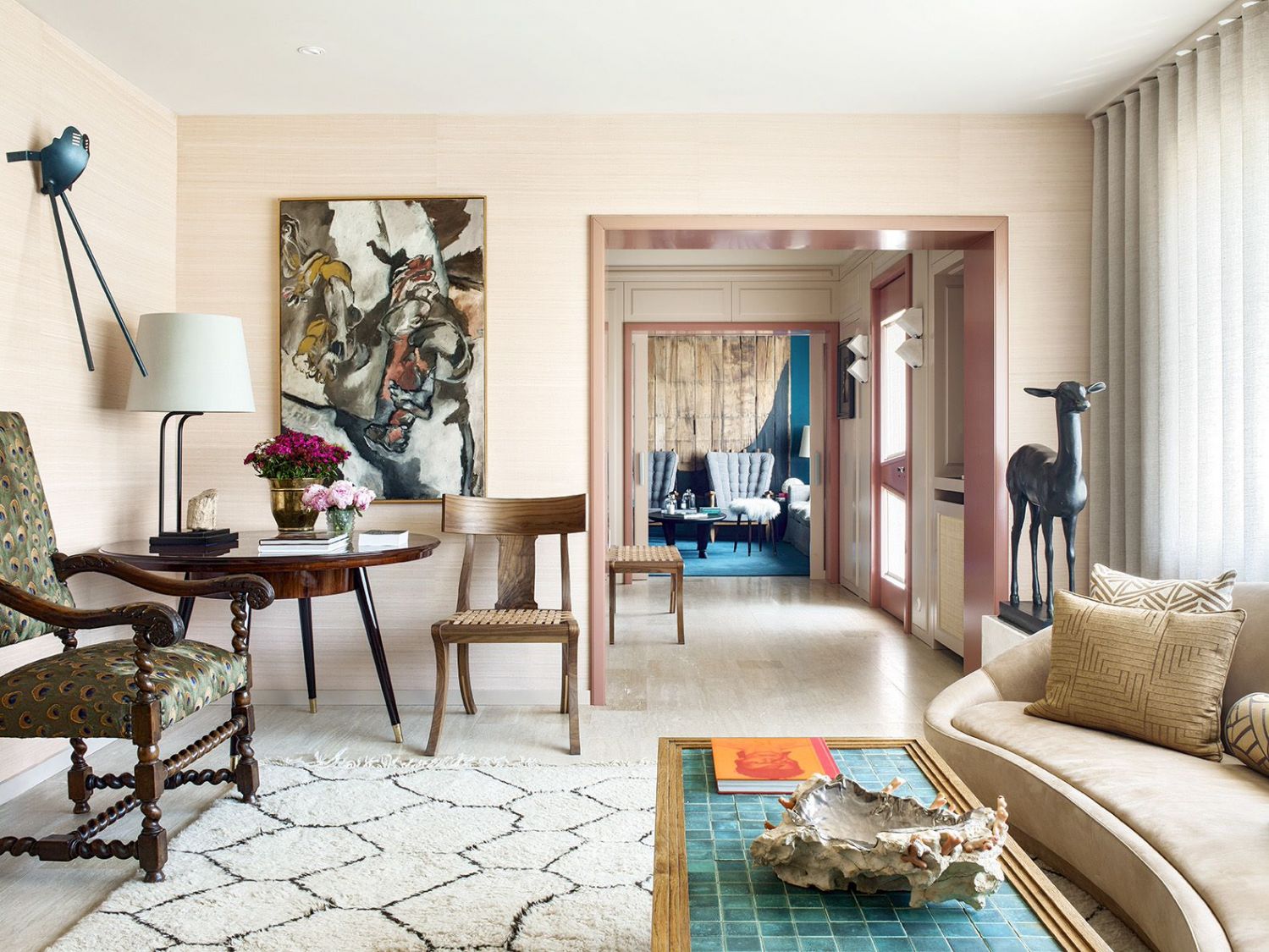
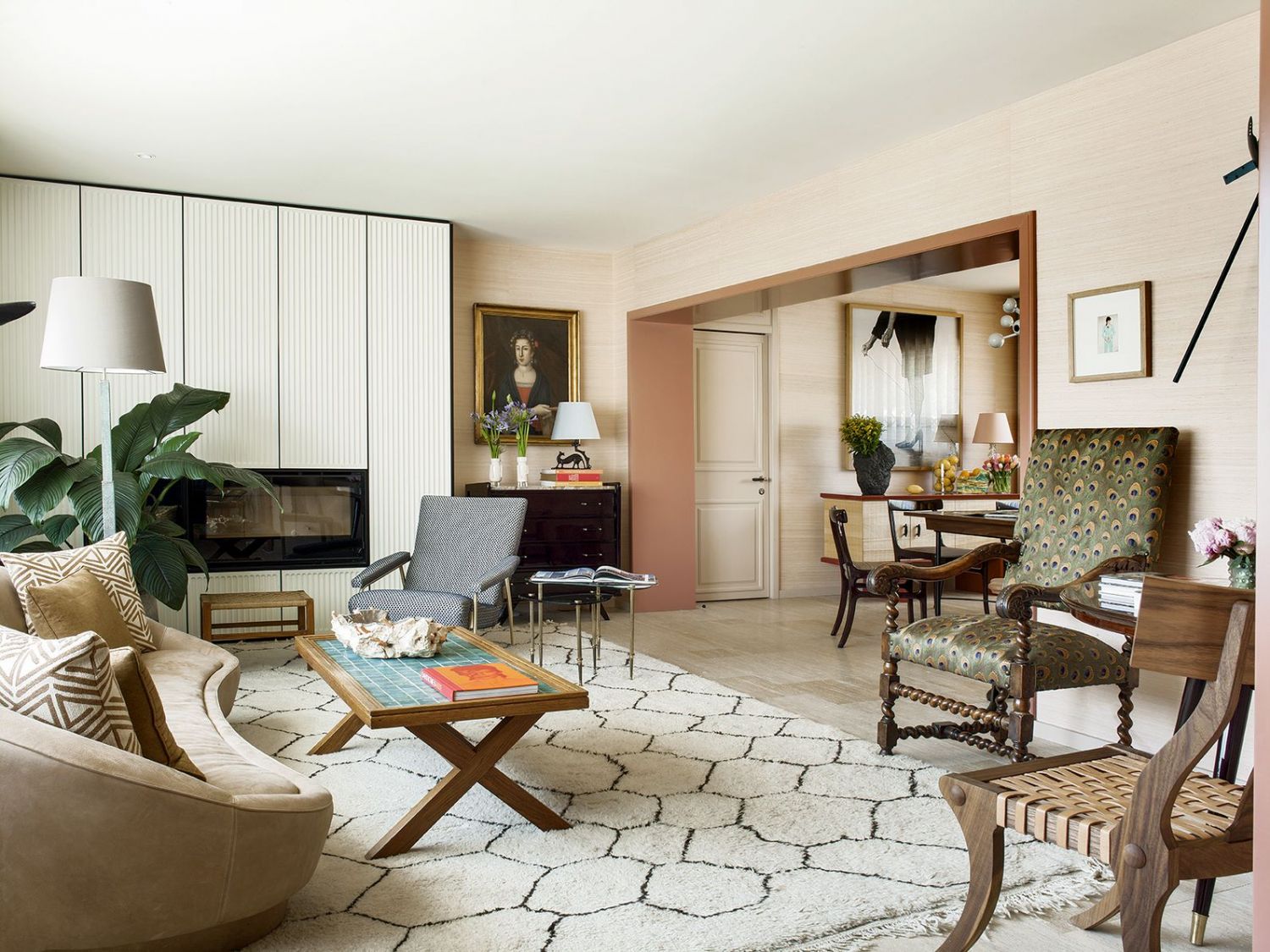
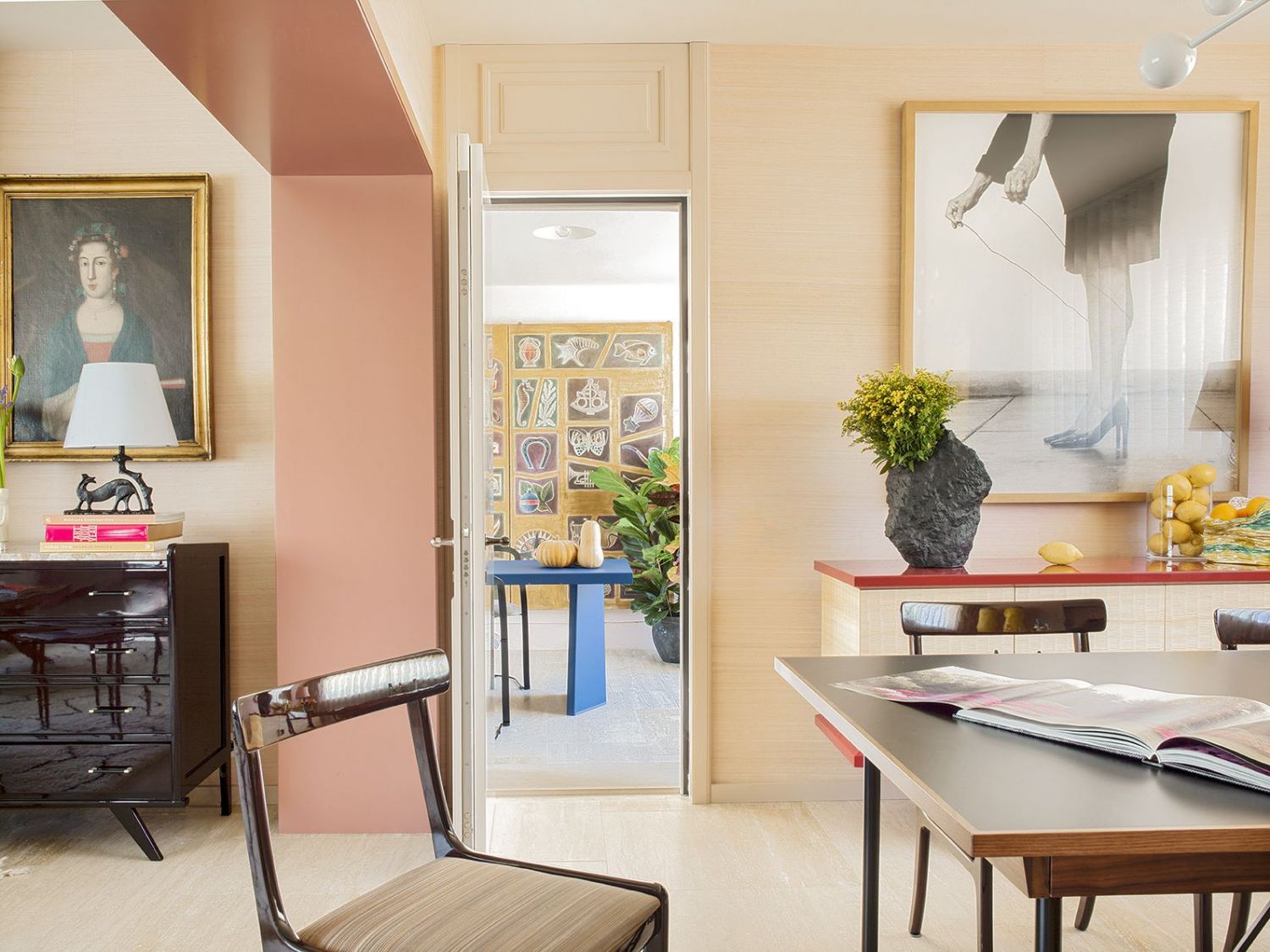
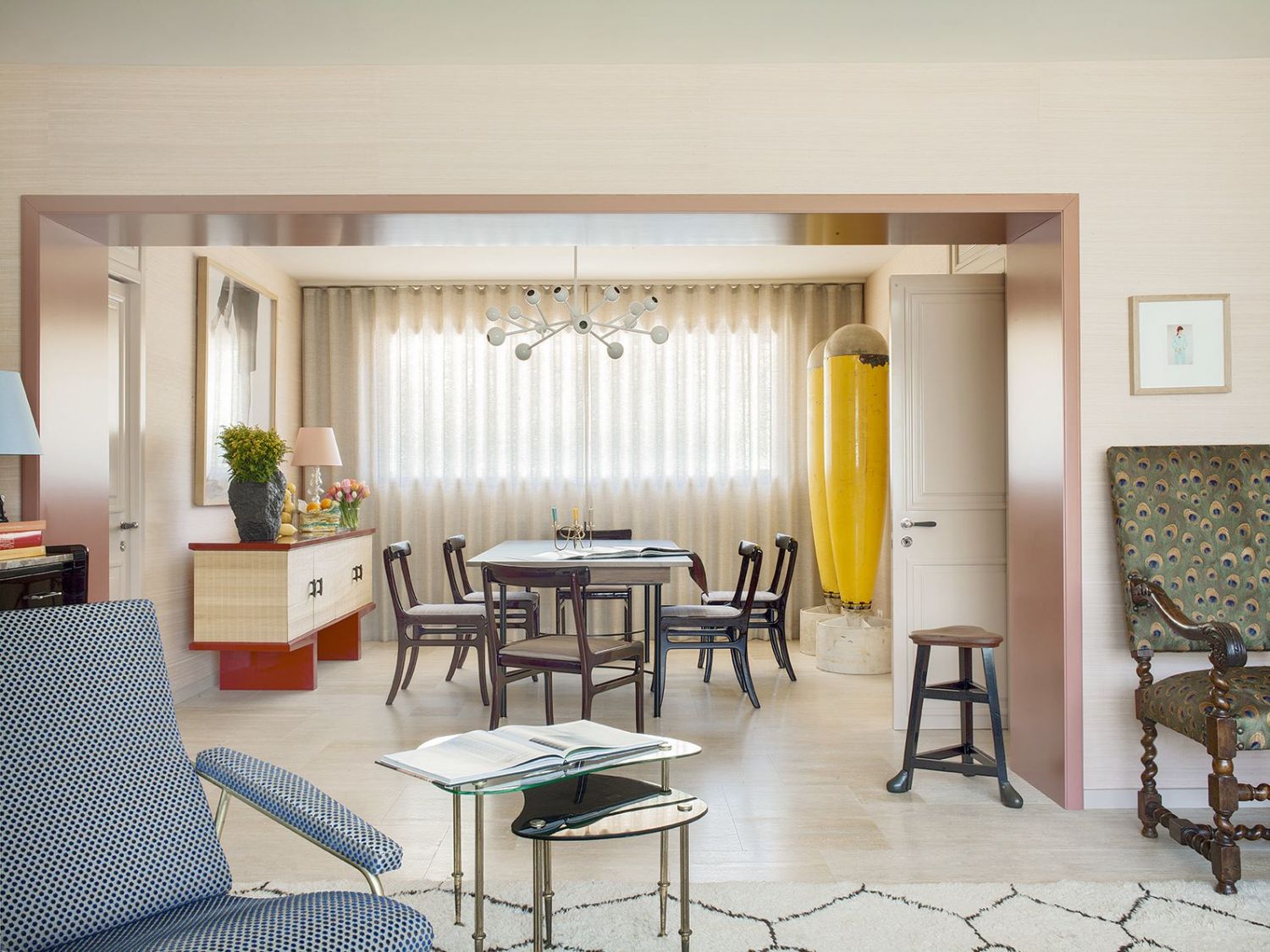
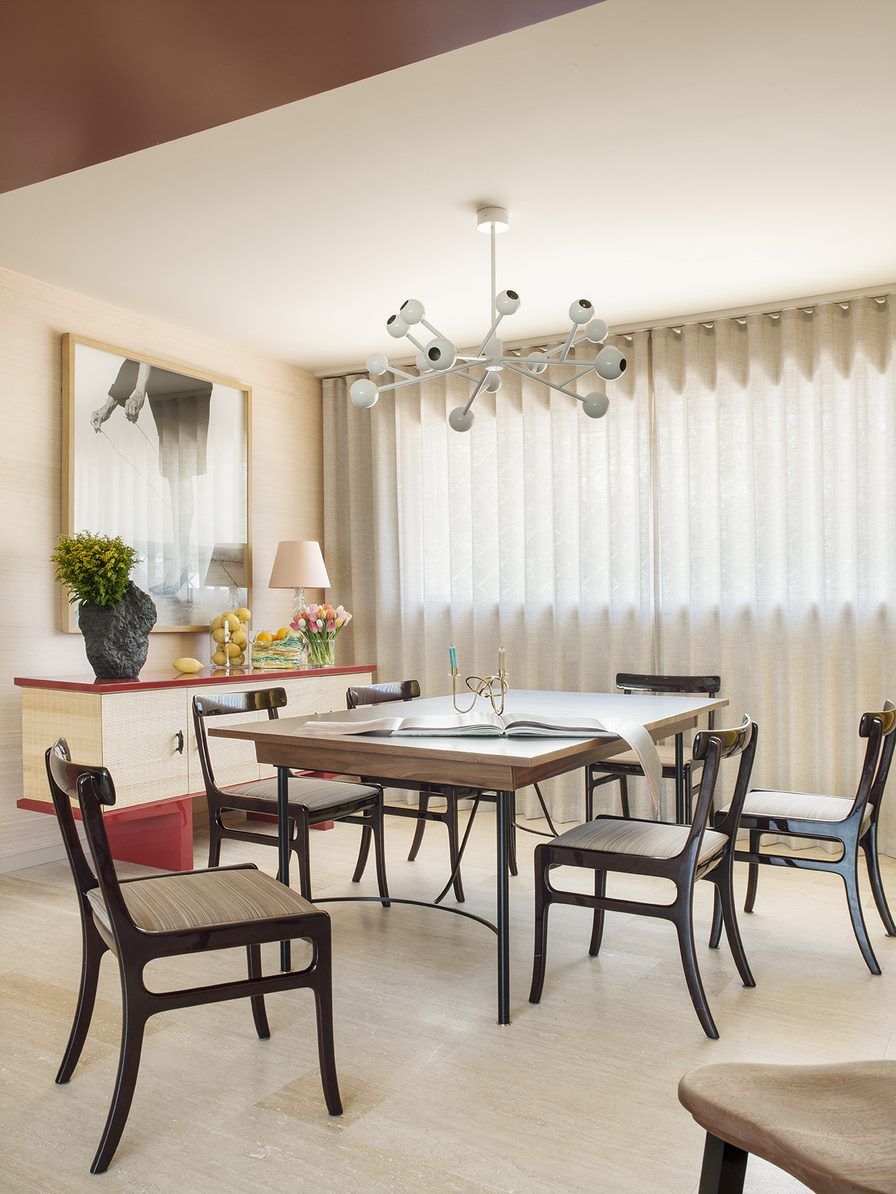
On the opposite side of the living room are a Ruhlmann side table, the Klismos chair by Jamb, a wall sculpture by Rui Chafes, and a Fossil table lamp designed by Ding Dong
1 / 4
A cheerful array of hues ranging from soft shades to bold tones were selected for the walls and furnishings to emphasise the charm of the abode’s mid-century influences. Pink lacquered wood panels help frame the entrance hall and various common areas, creating a graphic impact. With its rich teal green walls, the TV room is among the most striking spaces in the home. The kitchen is the other, with its mint green lacquered cabinetry and black granite countertops, accented with sprightly red and blue pieces.
Throughout the abode, various artworks and collectibles add character to the interior. The living room features a glamorous mix of pieces that include a Berber rug, Baxter leather sofa by Roberto Lazzeroni, the iconic Molteni&C D.153.1 armchair by Gio Ponti, a 19th-century French armchair upholstered with an embroidered peacock-patterned fabric from Lizzo, a bronze deer displayed on a Calacatta marble plinth, and a fireplace framed with textured panels carved in black steel.
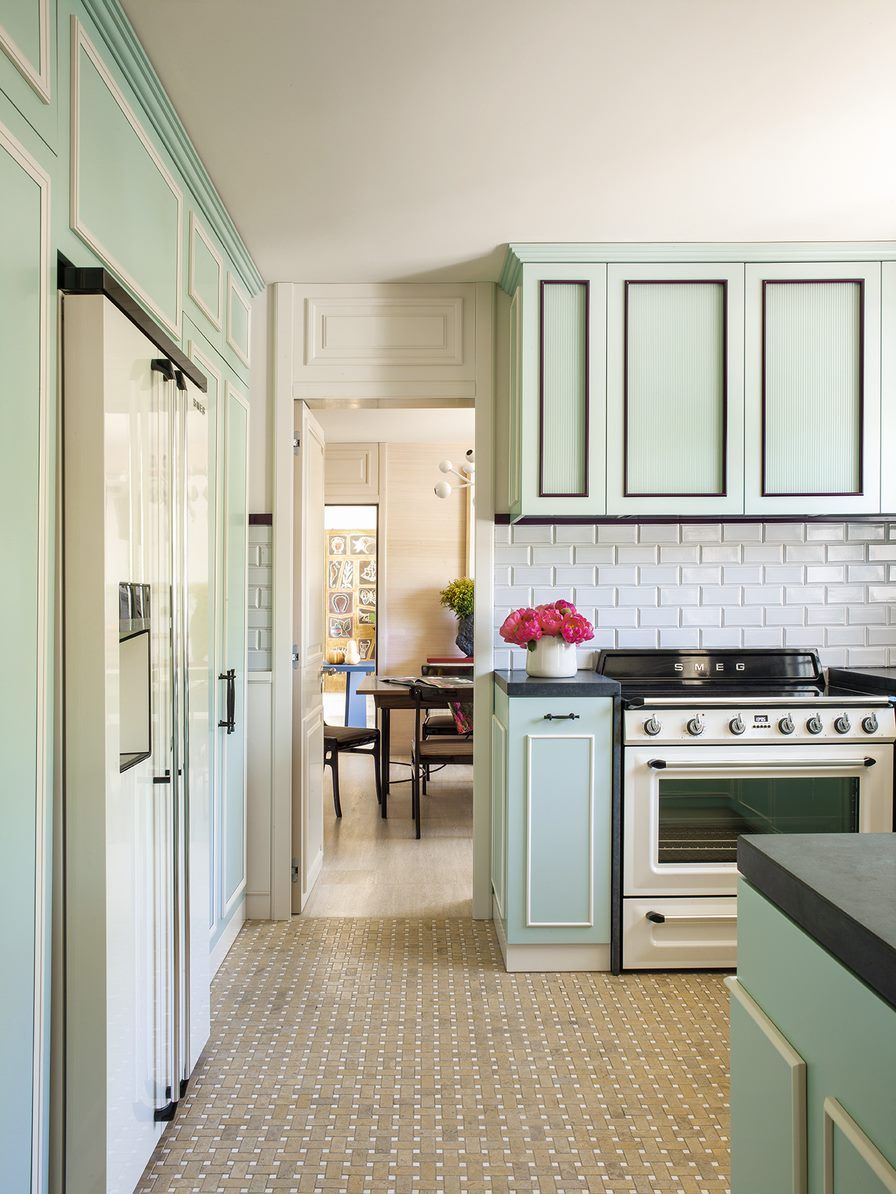
Above The mint green kitchen cabinetry from the fifties forms a pleasing contrast with the other lighter toned elements in the culinary space
1 / 2
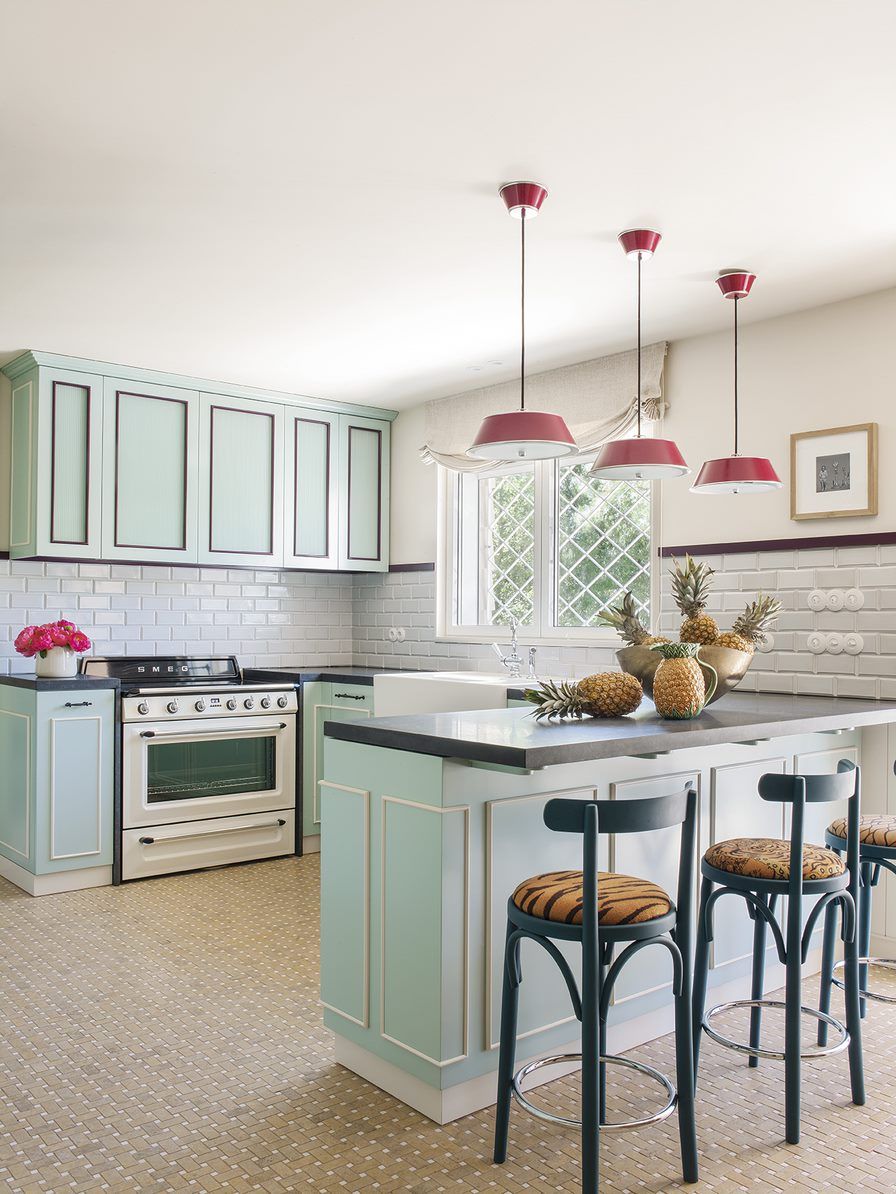
Above The kitchen also features the light grey handmade tiles, two-tone marble mosaic flooring and complemented with bronze handles and deep blue bar stools upholstered in a leopard-print upholstery fabric and sprightly red pendant lamps
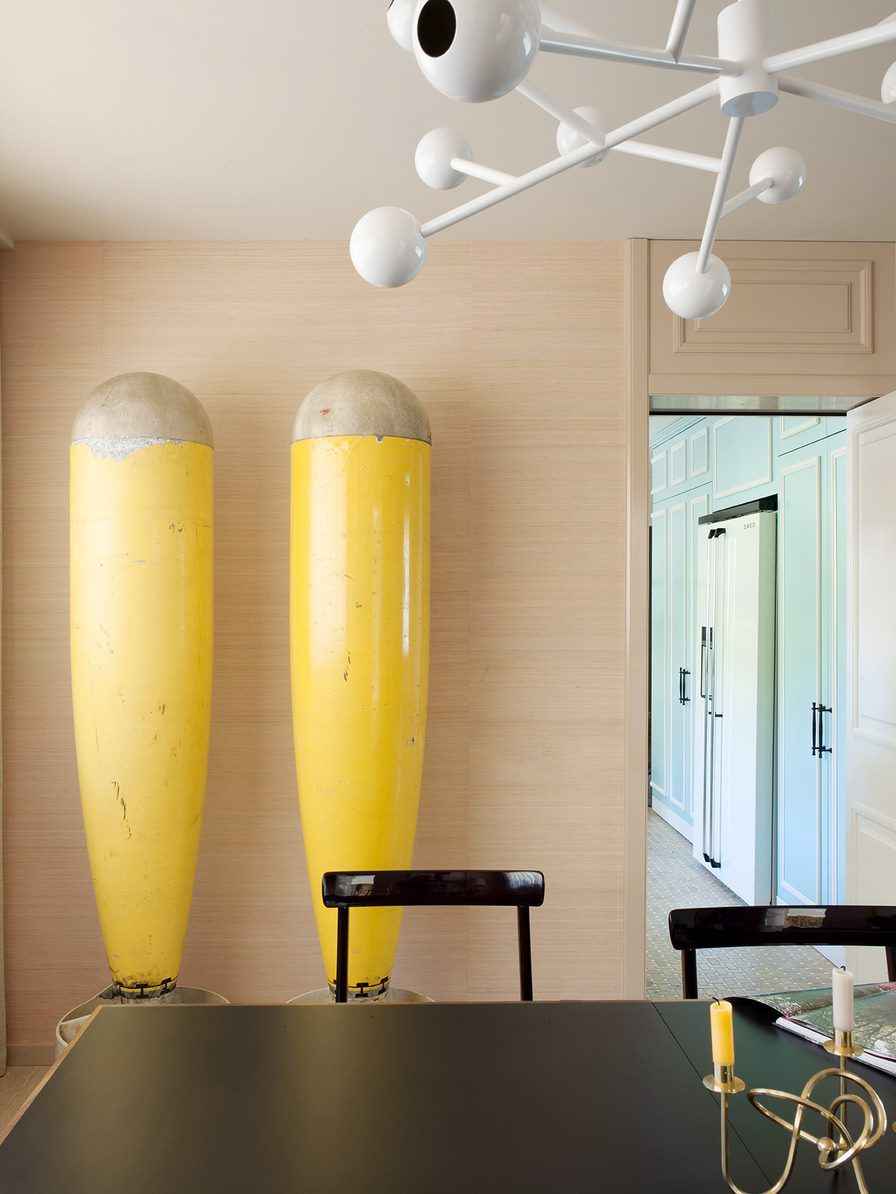
Above Another view of the dining area that looks towards the kitchen
The kitchen also features the light grey handmade tiles, two-tone marble mosaic flooring and complemented with bronze handles and deep blue bar stools upholstered in a leopard-print upholstery fabric and sprightly red pendant lamps
1 / 2
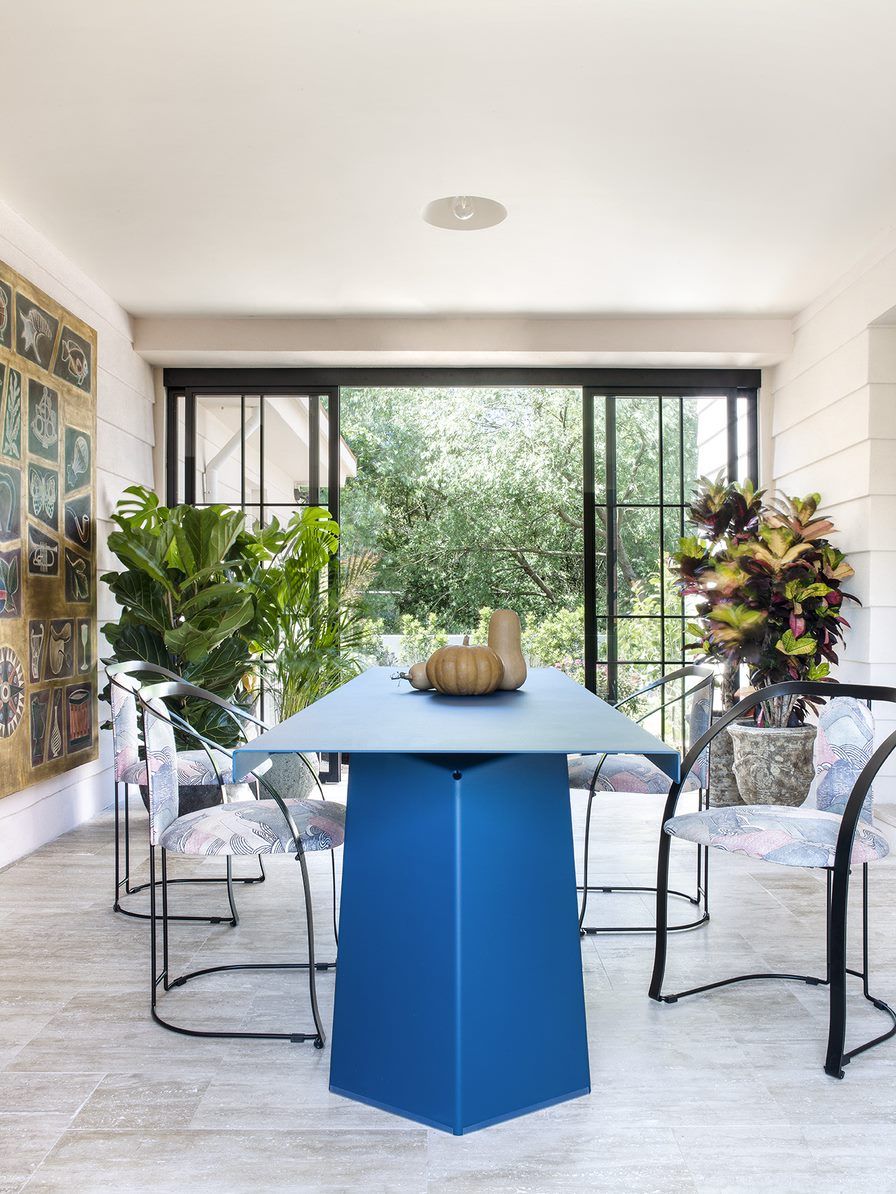
A secondary dining area dubbed the “summer room” is another enviable space with direct views of the lush garden and patio. “I love the outdoor spaces and the relationship between the house and the gardens,” shares the architect.
The ClassiCon Pallas table designed by Konstantin Grcic that takes centre stage in the summer room is paired with vintage chairs and a wooden triptych from the fifties which was a piece originally designed for the restaurant and bar of the mythical and luxurious Santa Maria cruise liner. The latter is among Miranda’s favourite artworks in his home.
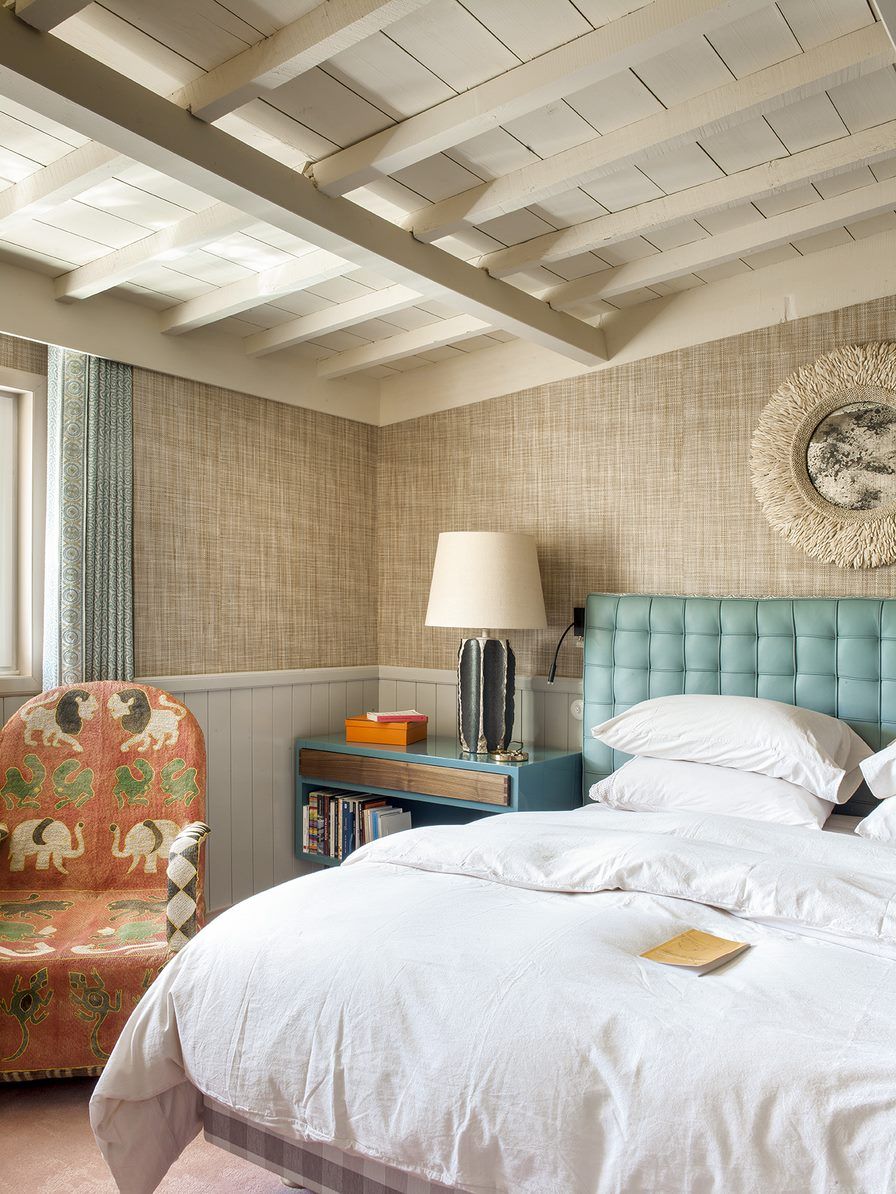
Above The 19th-century Nigerian Yoruba high back chair and a blue-lacquered bedside table by Ding Dong are among the playful touches in the master bedroom
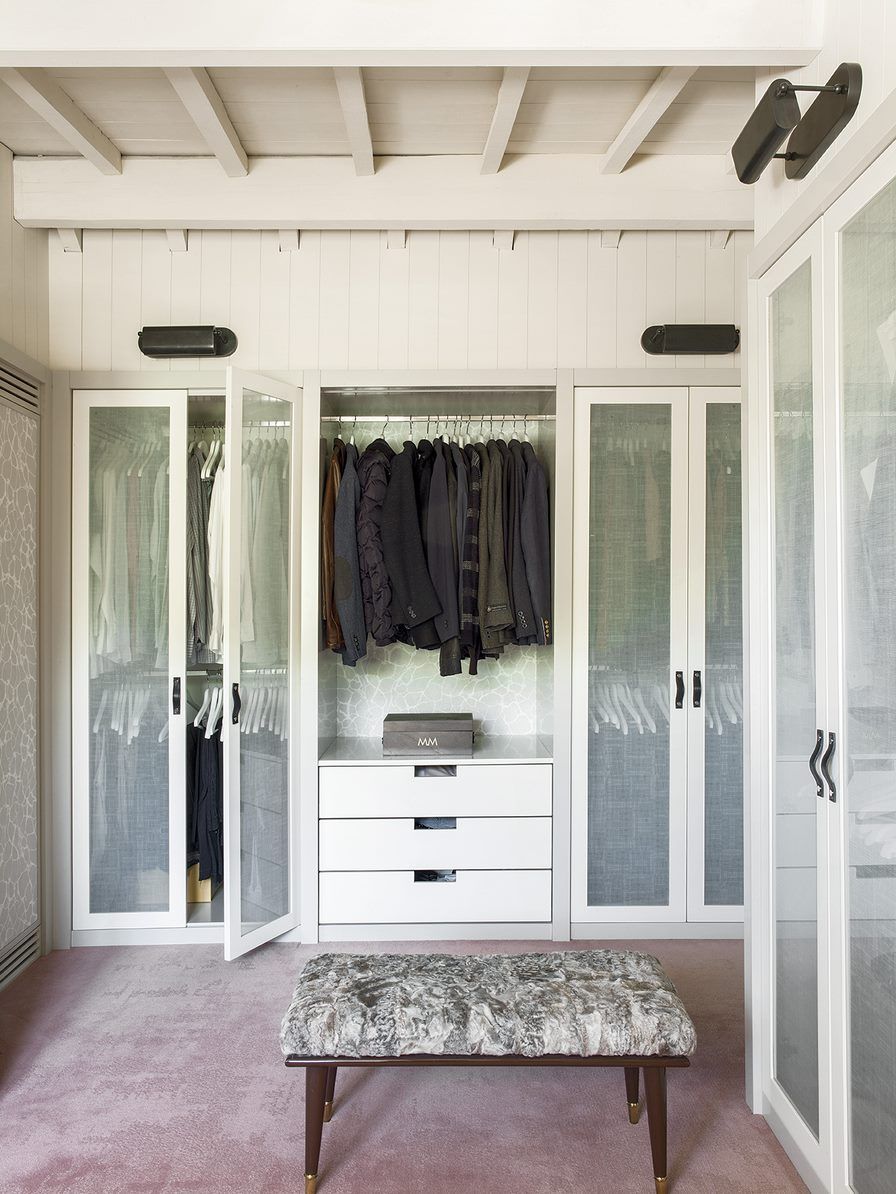
Above A pink carpet adds a plush touch to the wardrobe area in the master bedroom
The 19th-century Nigerian Yoruba high back chair and a blue-lacquered bedside table by Ding Dong are among the playful touches in the master bedroom
1 / 2
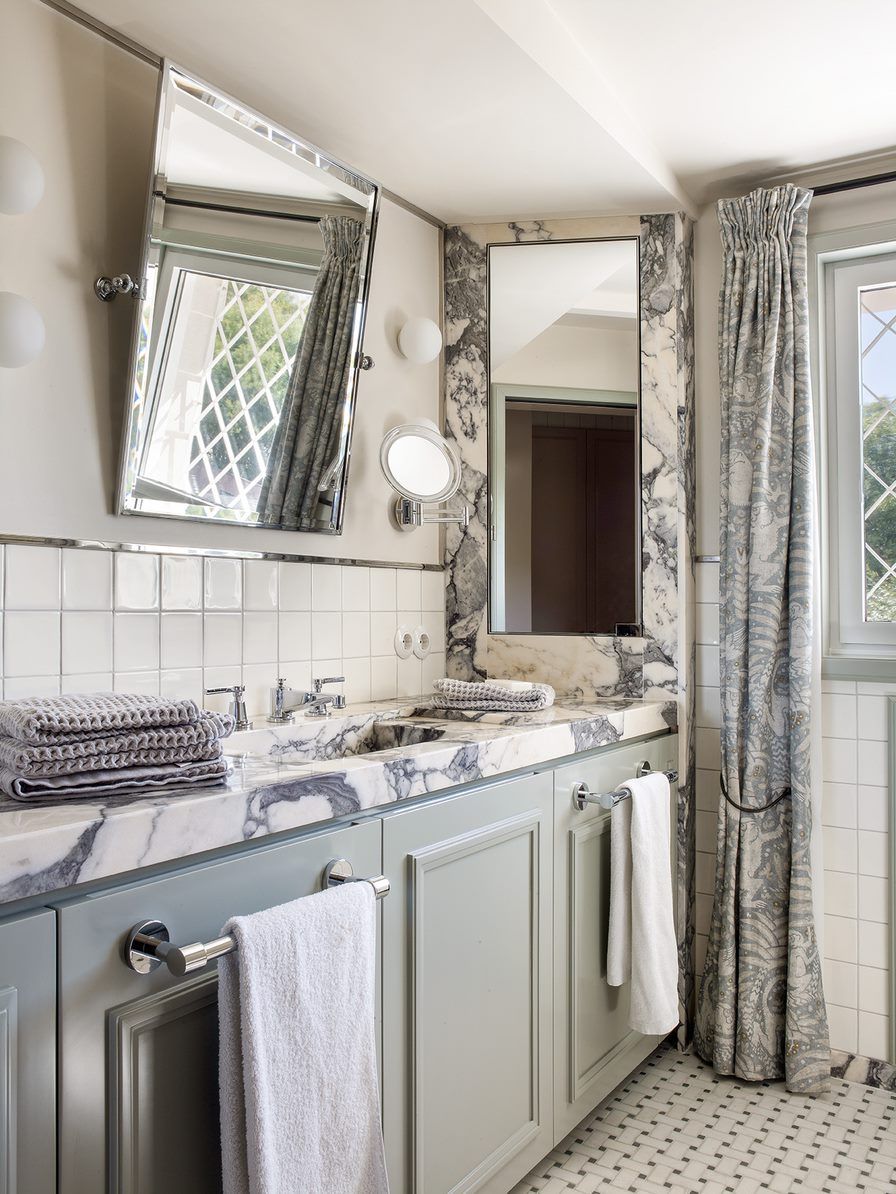
Above The grey-lacquered cabinetry and marble top are among the graceful touches in the master bathroom
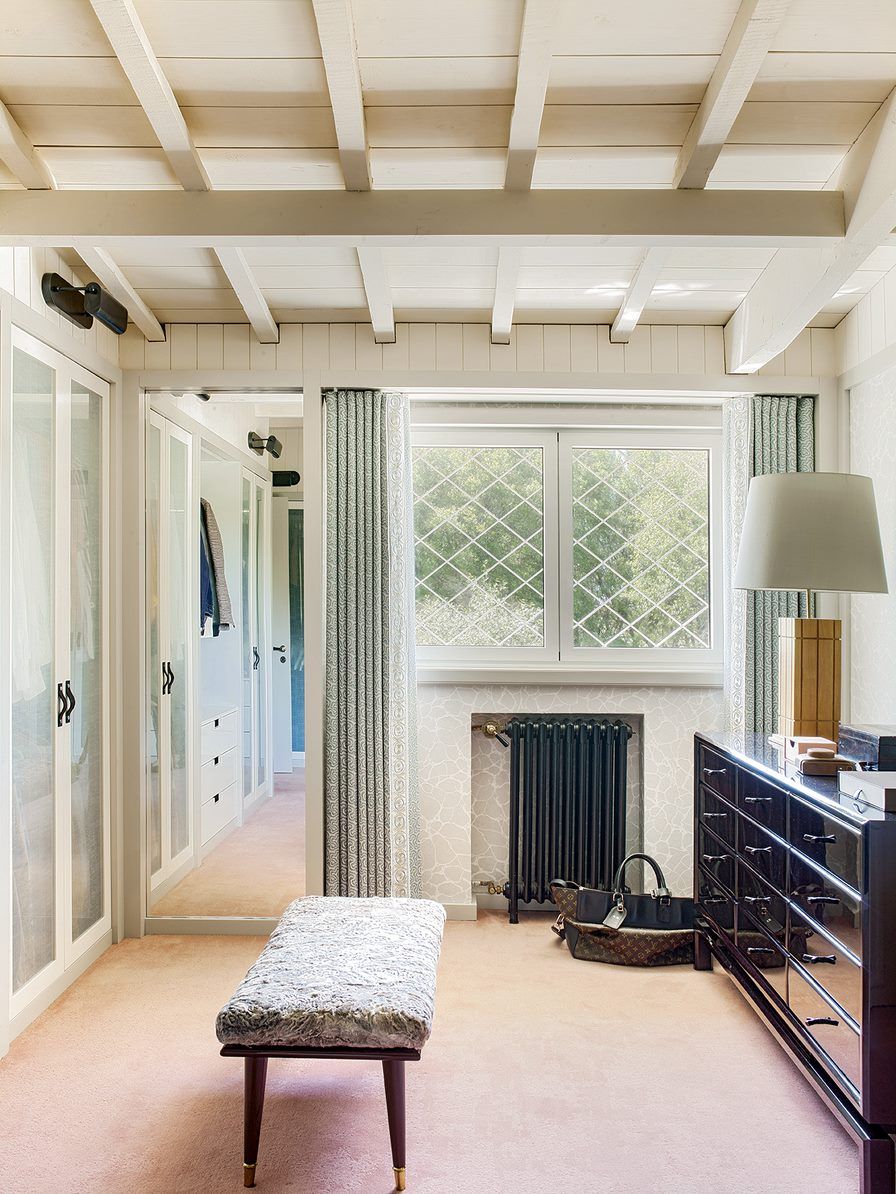
Above Another view of the wardrobe area in the master suite
The grey-lacquered cabinetry and marble top are among the graceful touches in the master bathroom
1 / 2
In contrast to the colourful ground floor, the second storey was designed to remain the most private area of the main house. The master bedroom is situated in the attic, which features a ceiling with exposed timbered beams. These rustic elements are paired with classic wainscotting, straw-clad walls, a leather headboard, a jute table lamp by Gilles Caffier and a pink wool carpet, and contrasted with an eclectic blend of furnishings that include a 19th-century Nigerian Yoruba highchair and a blue-lacquered bedside table by Ding Dong with black leather.
The bathroom in the master suite is a tranquil space fitted with a marble counter washbasin with grey-lacquered cabinet; jungle-themed patterned curtains bring a playful flourish to the space. It’s among Miranda’s favourite spaces in the home that’s part of his daily routine: he enjoys “[starting] the day with a quick energetic shower and end the day with a long relaxing and purifying bath.”
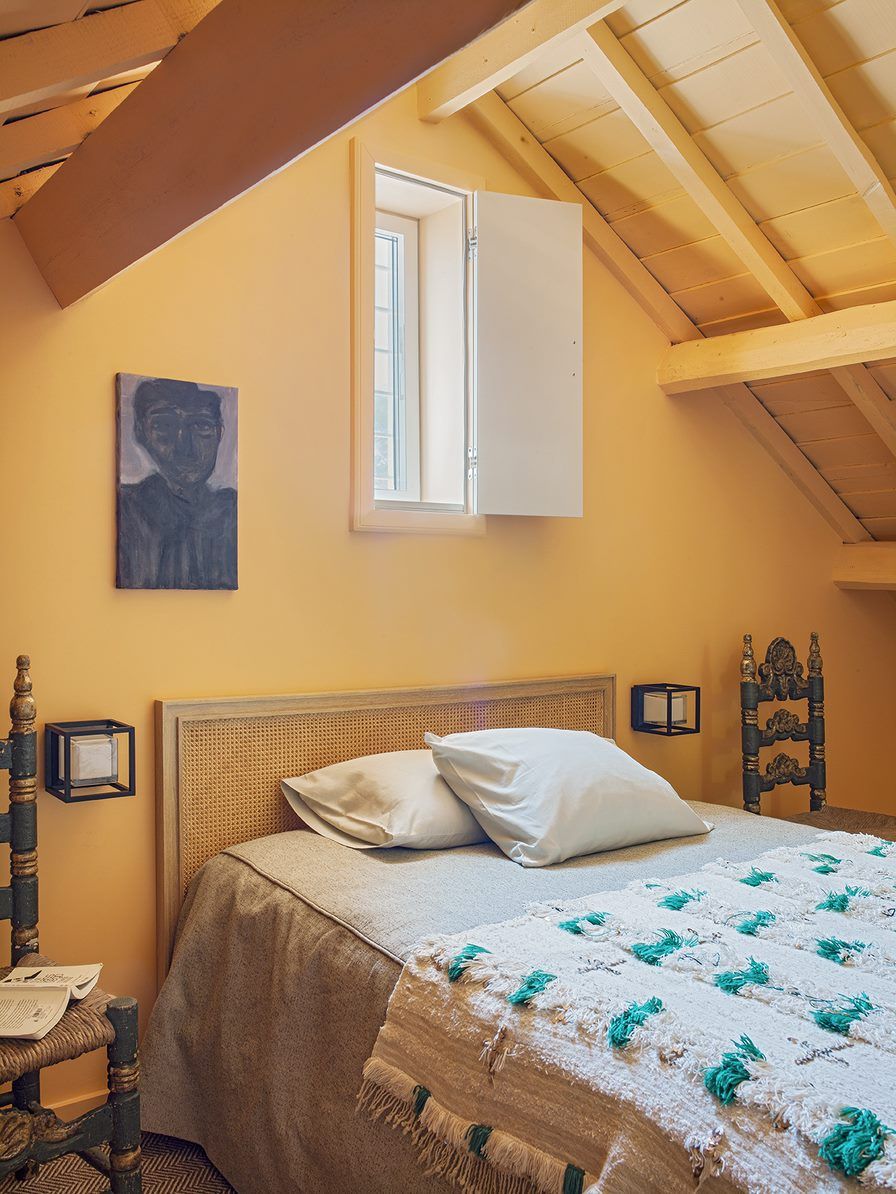
Above A rich mustard yellow tone applied to the walls, timber beams and ceiling spruces up this guest room in the attic
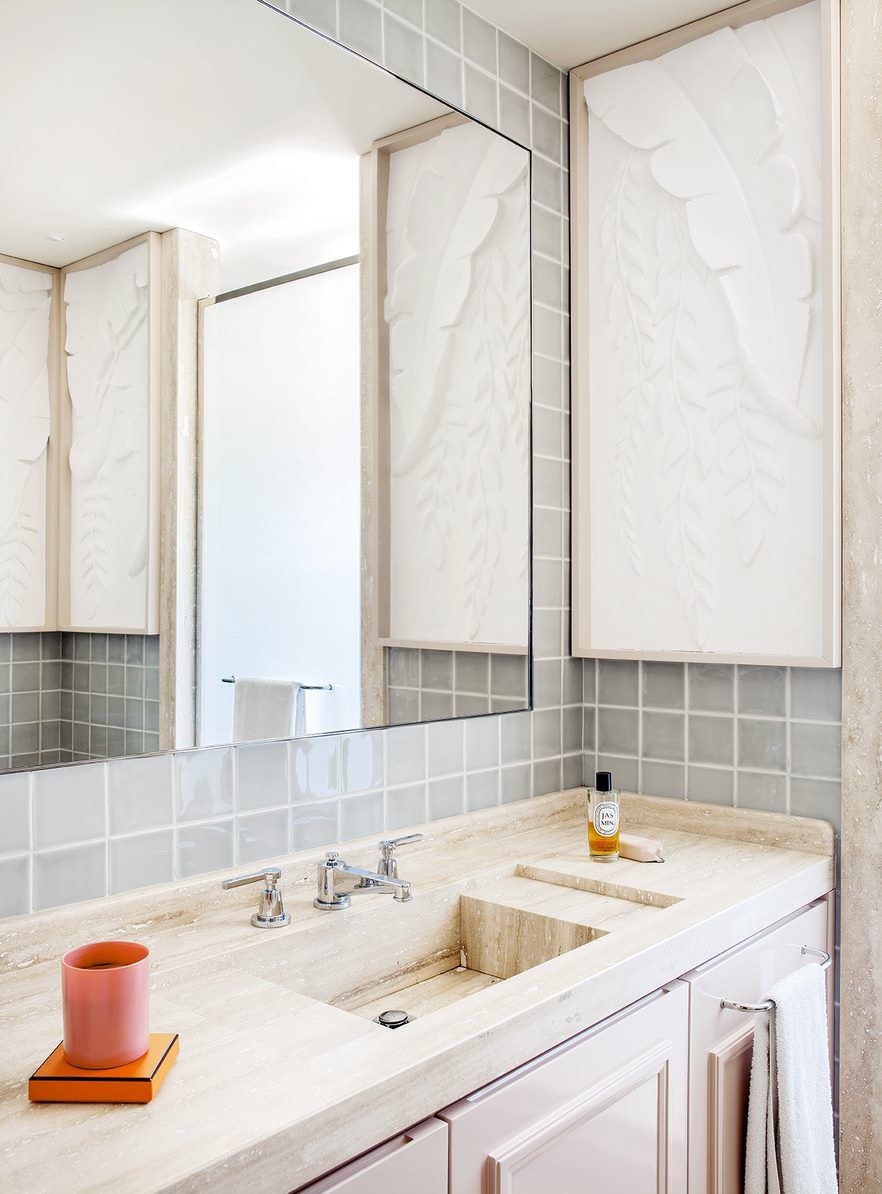
Above A tranquil bathroom in the guest suite
A rich mustard yellow tone applied to the walls, timber beams and ceiling spruces up this guest room in the attic
1 / 2
Altogether, the abode has become a sanctuary with a laidback spirit while celebrating its connection to nature; something that the owners really relish in their seaside abode.
“You’ll never see artificial flowers in my home because fake stuff doesn’t bring me joy,” shares the architect. “The beach is quite close to the property; there is also a small river near the house that runs towards the beach where you can spot different birds and ducks, and you really can unplug from the running urban life of the city and day-to-day work. [The house provides] the perfect space to breathe in nature in all its glory.”
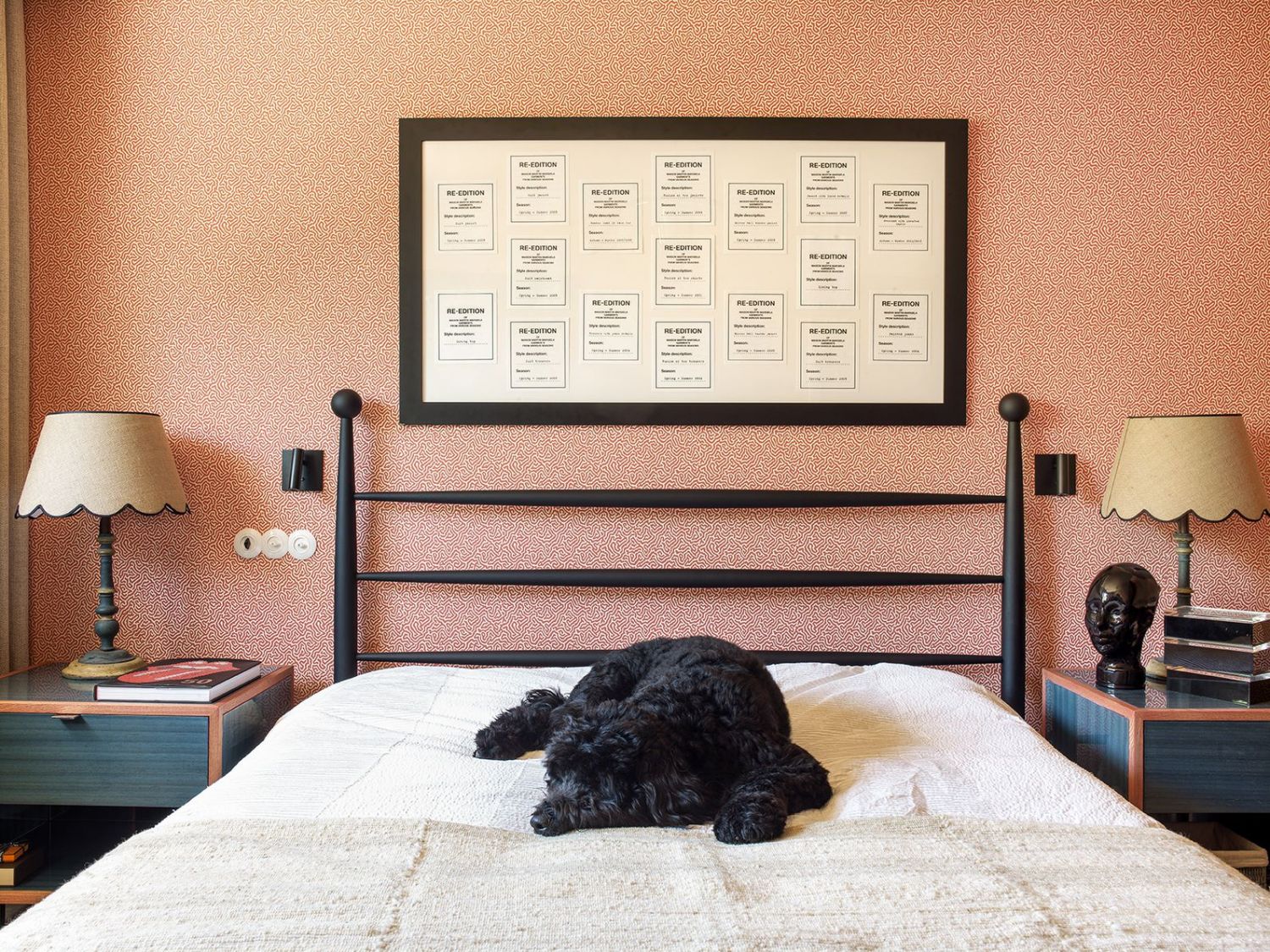
Above Miranda’s Portuguese water dog enjoys a nap on the bed in this cosy guest room
Miranda’s Portuguese water dog enjoys a nap on the bed in this cosy guest room
1 / 1
Curated for you
The stories, profiles, and cultural moments featured on our Instagram feed