
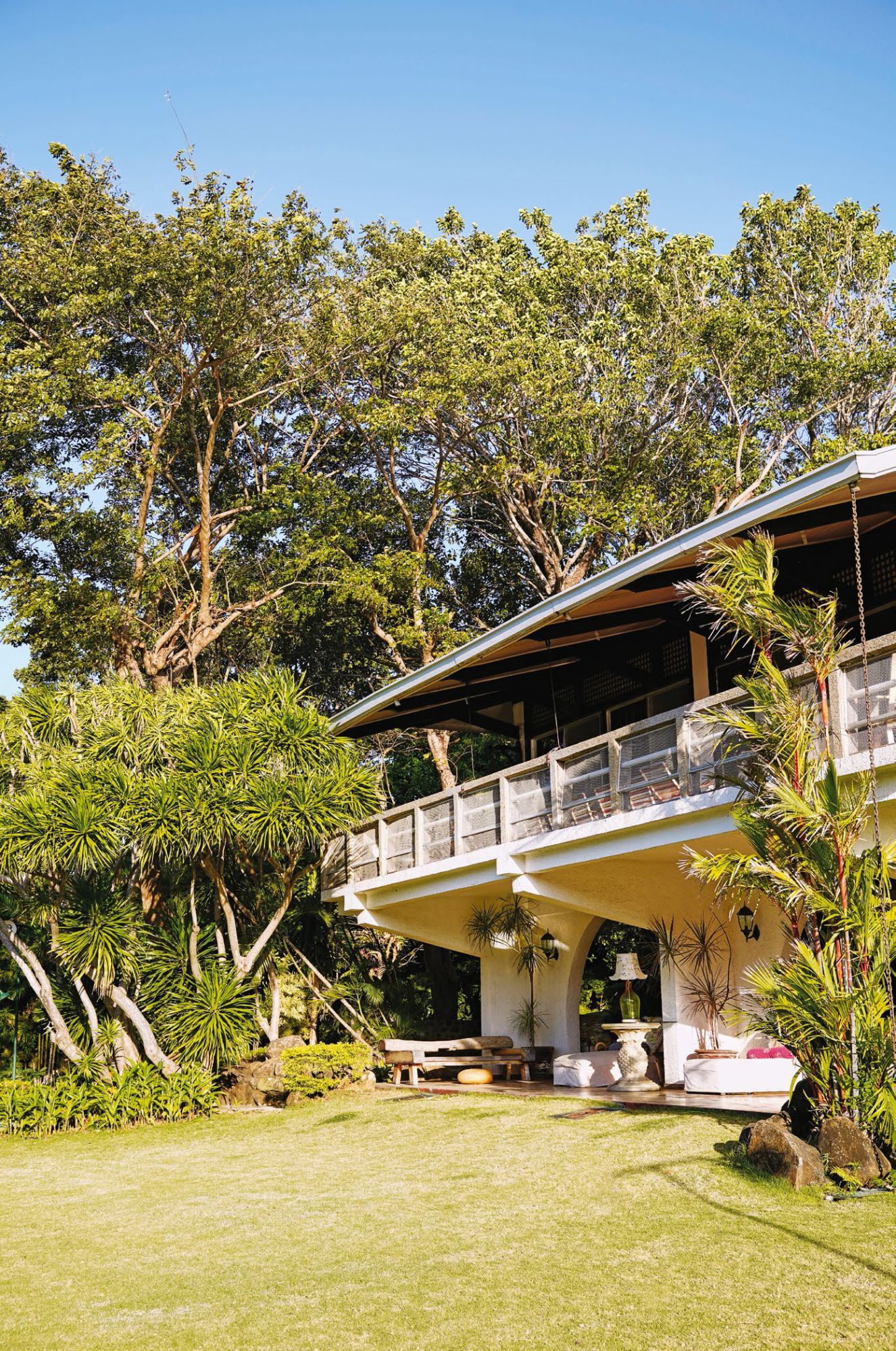
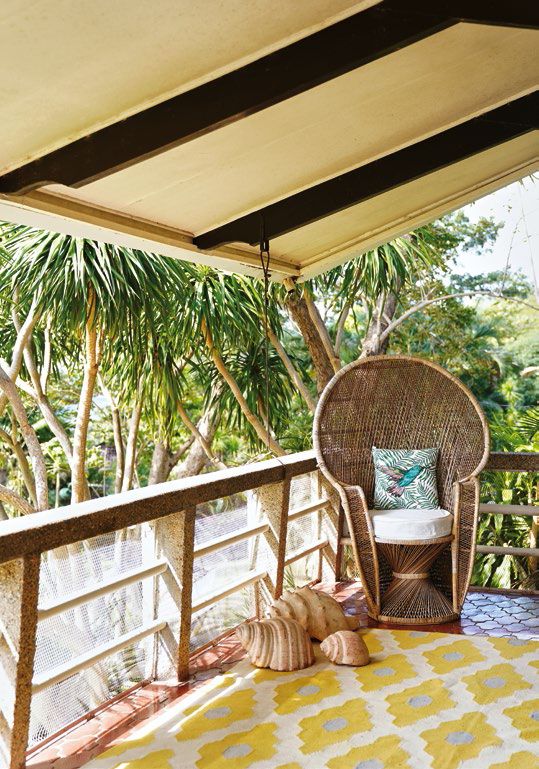
Cover The 1960’s home was designed to let the outdoors in taking into account natural ventilation.
The 1960’s home was designed to let the outdoors in taking into account natural ventilation.
1 / 1
Personal touches and home-based traditions make unique sanctuaries of this family’s two residences.
Looking at the interiors of this vibrant two-storey apartment, one might never guess its metropolitan address. Dressed in lively colours and prints, and peppered with quirky accessories, this family residence in Makati exudes some of the warmth and charm of a quaint European country home. “I love a lot of pretty things, and as long as they kind of go together, it works for me,” says the owner, who describes her style as eclectic and maximalist. “I’m much more traditional than modern, but fun,” she adds.
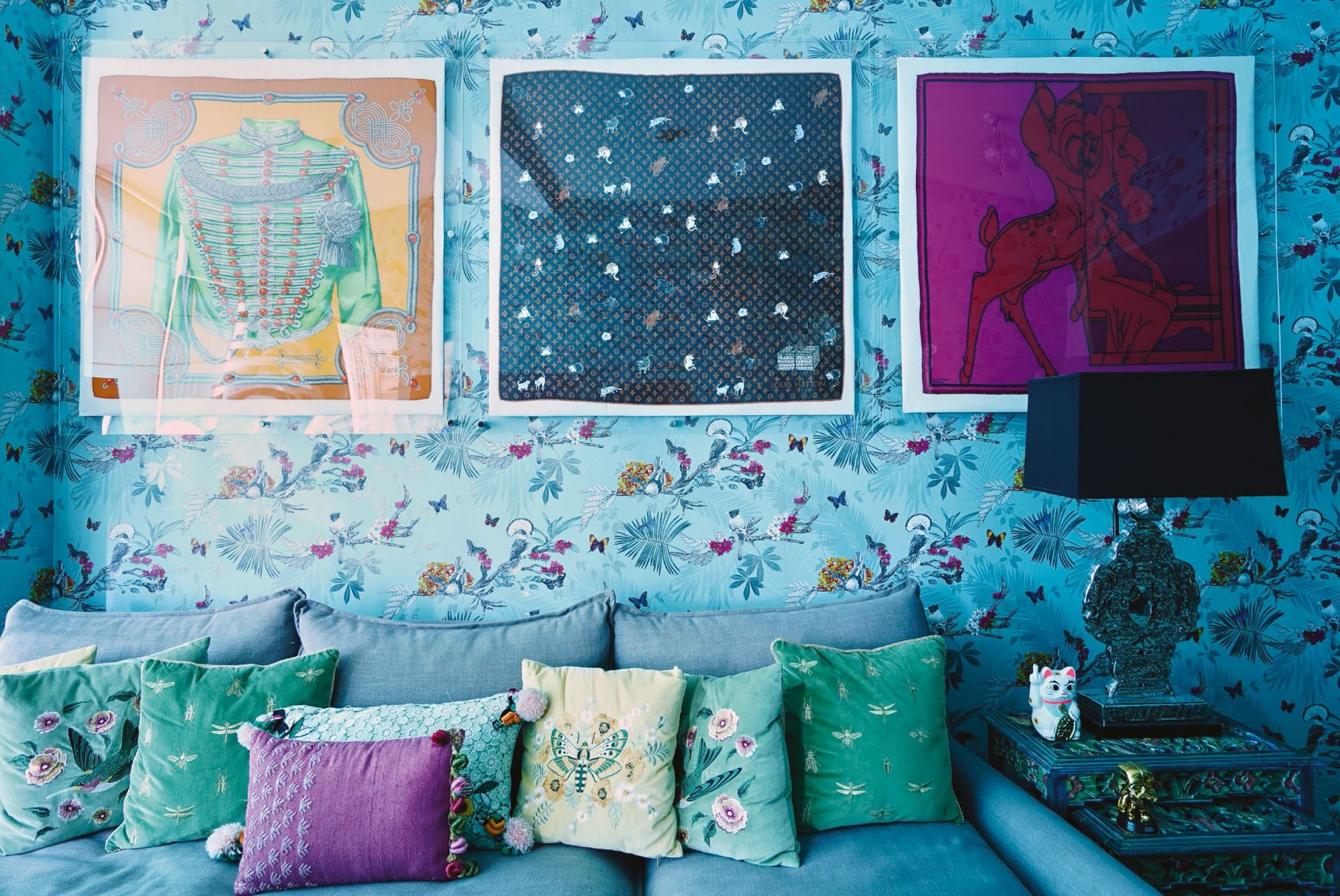
This playful, unorthodox aesthetic is unmistakable in every detail of the house; from the choice of furniture and wallpaper—a popping magenta for the living and dining areas, for instance, and a calming blue aviary print for the more intimate sitting room—down to the storied decorations artfully placed around the home. The common areas are replete with vintage art pieces and mementoes from the residents’ many trips abroad. Among the homeowner’s current favourites is a collection of brass pineapple desk lamps, purchased from a beloved antique shop in Madrid. One of these lighting fixtures is set atop a wooden chest that stands by an expansive bay window—a focal point of the living room—where it is flanked by stacks of books, punctuated by even more unique accessories, such as a true-to-life mould of former U.S. President Abraham Lincoln’s hand clutching a portion of a broomstick.

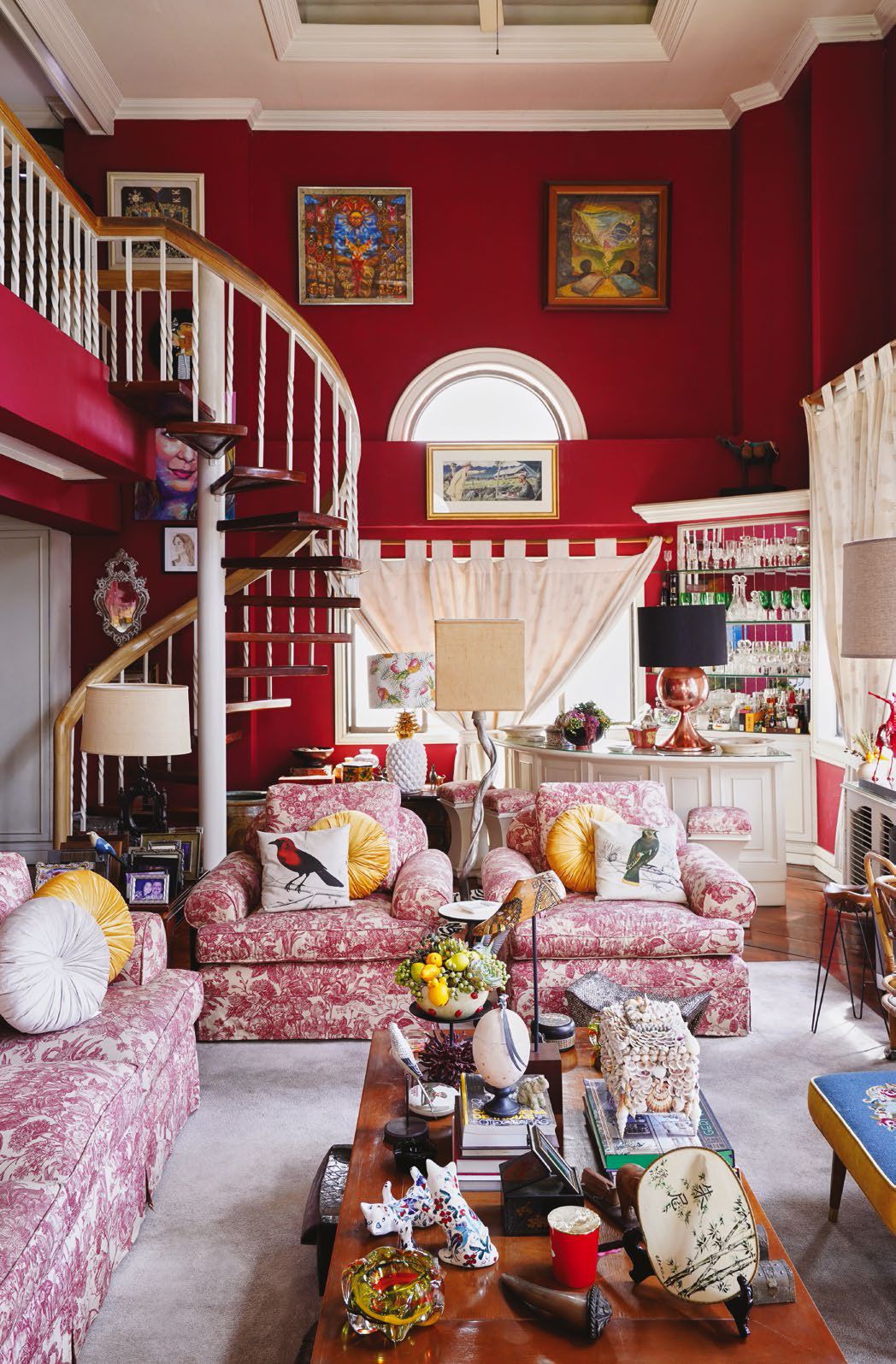
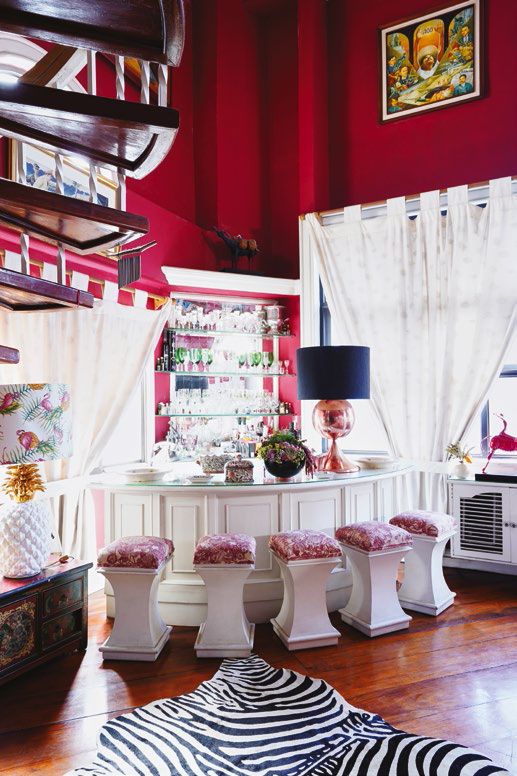

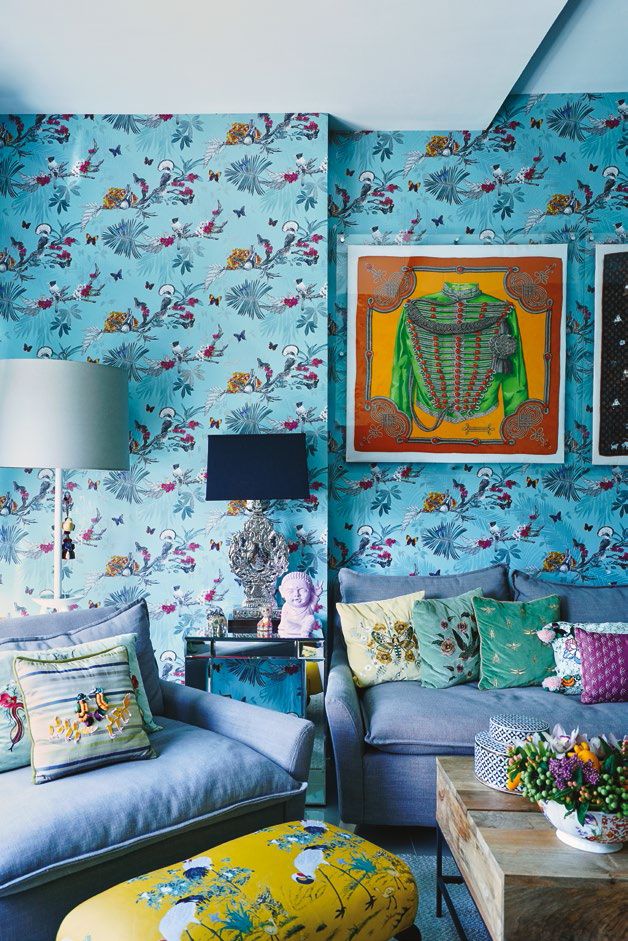
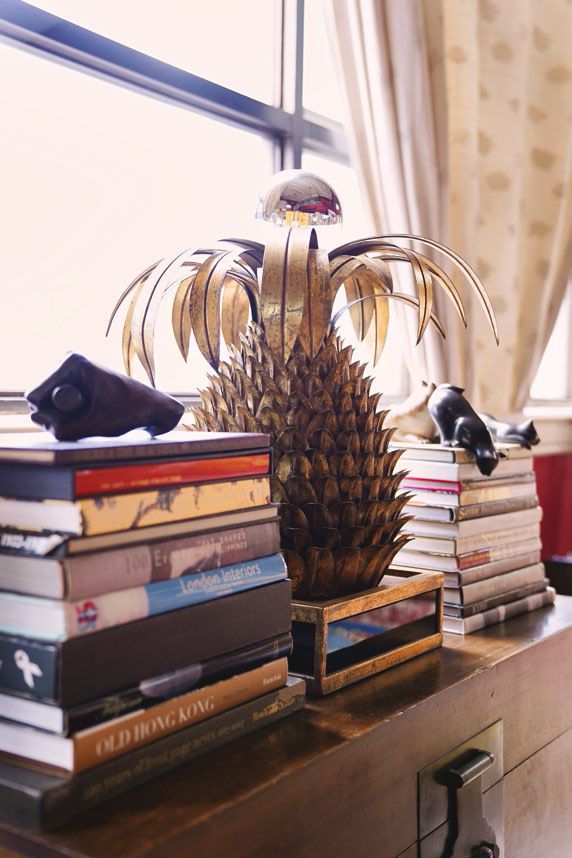
The open-plan design of this penthouse unit flows seamlessaly from the dining area to the living to the bar. Inspired by classic French and English country style but filled with the homeowners’ collections of decor and memorabilia, this space is a unique and ecclectic testmaent to personal style.
1 / 7
Inspired by her husband’s affinity for Filipino art, the owner also made sure to devote select areas of the home to local pieces. One corner of the living area proudly highlights a selection of paintings made by young Filipino artists for a national competition commissioned many years ago by a major telecommunications company, which aimed to find the next cover art for its now-defunct phonebooks. “We collect what’s meaningful to us and what we like,” she says, explaining how their selection of these objet d’art relies more on their personal preference and the sentimental value of each piece rather than on what they might be worth someday. “Like these ones,” she adds, pointing to the local paintings, “we couldn’t get the winning artwork because they had to keep it for the cover, but we got the top 11. My husband likes these patriotic Filipino pieces.”
It’s personal touches such as these which have made this urban dwelling a true sanctuary for its residents. Filled with keepsakes from their travels and expressions of the people and things they hold dear, it’s a space they look forward to coming home to every day. Although once in a while, they do enjoy a quick escape some 50 miles down south to Batangas, where, for six years now, they have been the proud owners of a two-storey, eight-bedroom oasis by the sea.
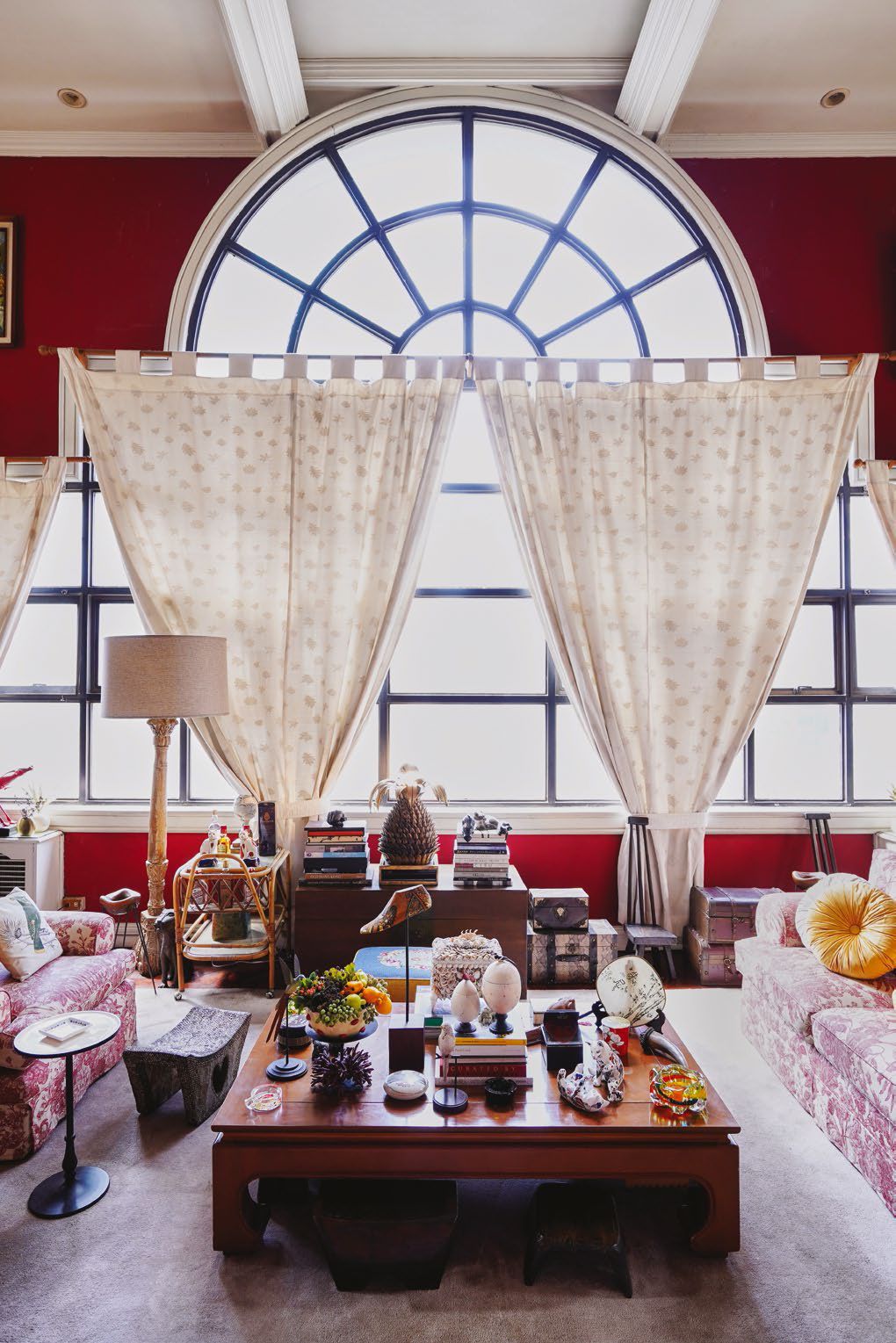


The unique, large arched windows are the dominant feature in their living space allowing beautiful natural light to flood in.
1 / 3
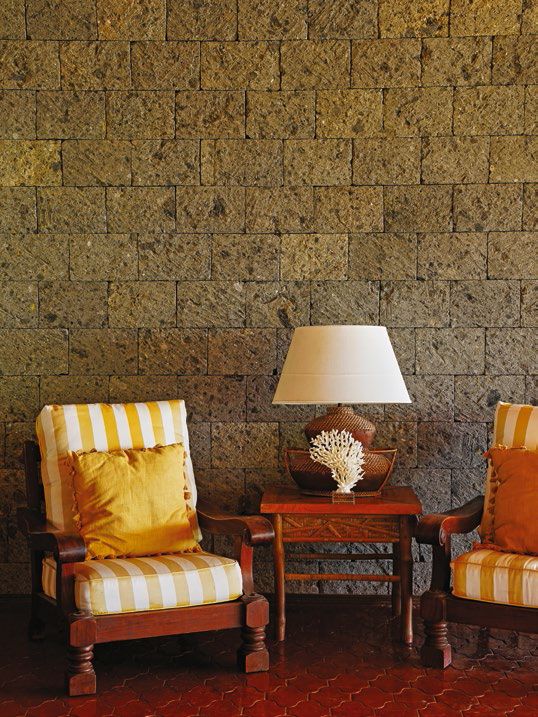
Most furniture pieces at the beach house are original from the ‘60s and have been reupholstered for a fresh look.
1 / 3
The family’s seaside abode once belonged to the man of the house’s parents, and was, notably, the very first home in the neighbourhood. “My husband has had the Batangas house in his family since the ‘60s,” says the homeowner. “So we’ve been coming here ever since, but we just recently bought it, about six years ago.” Since acquiring the property, she and her brood have actively split their time between the beach and their Makati flat, spending all long weekends and holidays, and any spare time they have, in the former. “When we have guests, we always bring them to our beach house, because it’s easier to entertain them there since it has many bedrooms. Even the cousins—when they come from the States, they stay there. It’s still their family home. We leave it open for them.”
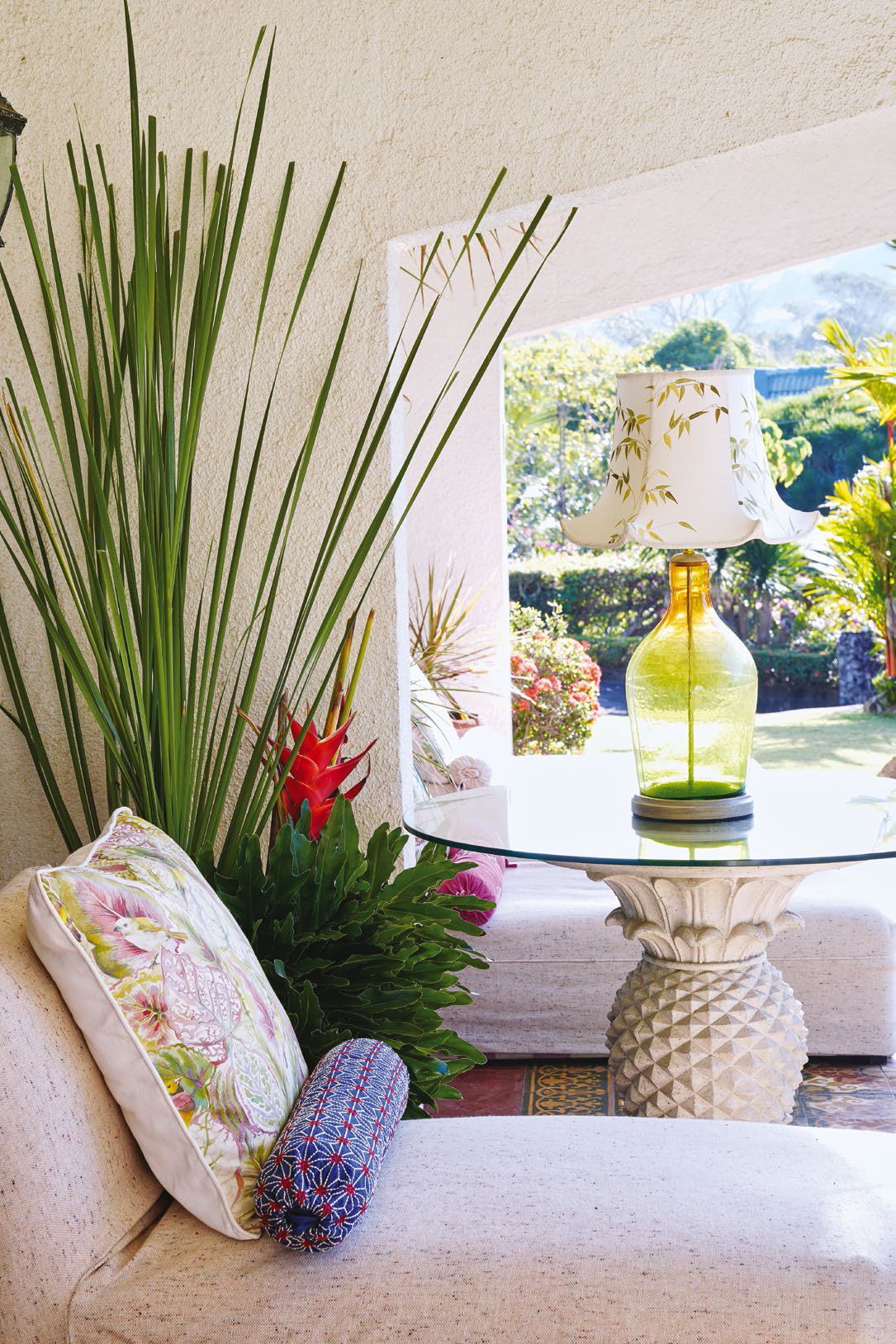
Structurally, the home has retained much of its original exterior, which takes inspiration from the original owners’ Filipino and Colombian heritage, mixing elements of stone, wood, and bamboo to create a porous and roomy hideout that makes the most of its natural surroundings. Old machuca tiles complete the homely, tropical vibe of the space. The inside, meanwhile, could not be more different from the family’s residence in the city.
Due to the difference in environment, the lady of the house’s penchant for colour had to take a backseat when it came to decorating the space. “In Makati, we really don’t go outside, but when we’re at the beach, we’re almost never inside the room. It’s the complete opposite. So, over there, I like to concentrate more on the outside while the inside, like the bedrooms and such, are just comfortable and functional,” she says. “I like having colour everywhere, but at the beach, it’s a little more difficult to go so colourful because everything gets faded, so it’s easier to use white. I just coloured it up with pillows and things.”
When it came to furniture, many of the wooden ancestral pieces were kept at the homeowner’s husband’s request. To switch things up, she had new upholstery and accessories installed here and there. “My husband’s very sentimental. Everything means something to him, that’s why it’s all original, just slightly updated once in a while,” she says. “I put yellow-striped upholstery on everything and moved some of the chairs around. I also put out the rugs, which made all the difference. They really softened everything up.”
Because the family always hosts guests in their beach home, it was likewise important for the owner to make every piece and accessory modular and accident-proof. “I only use acrylic here, because the minute you break glass in the pool, you have to drain it. So it’s a never-ending search for cute acrylic plates and such.”
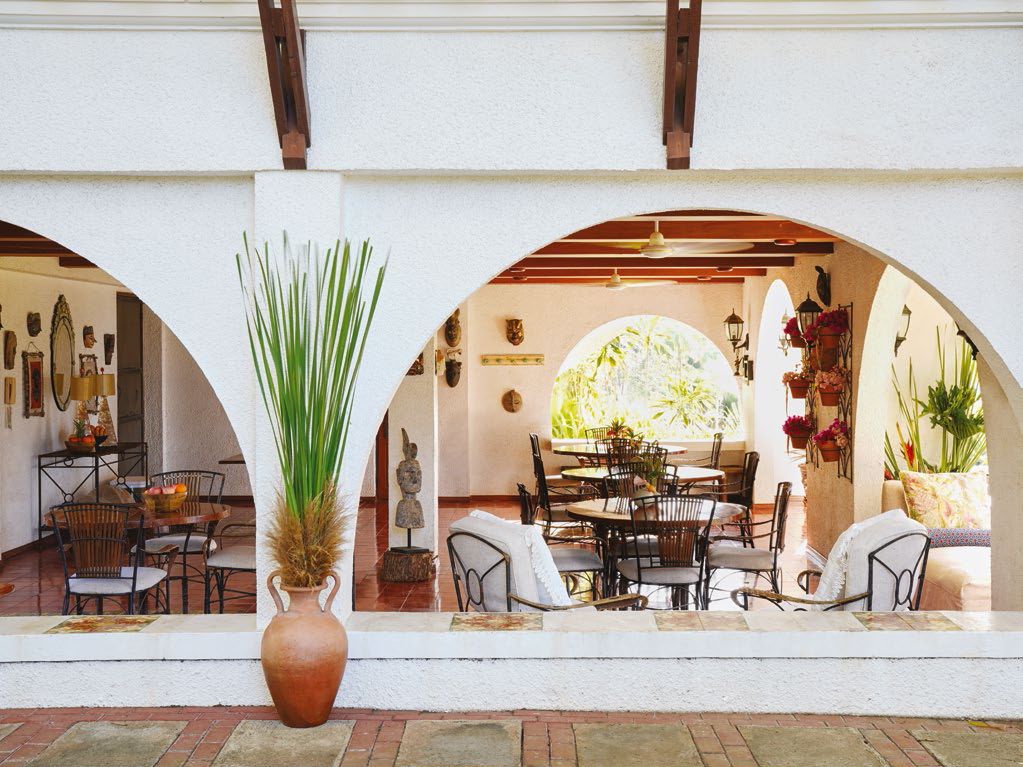

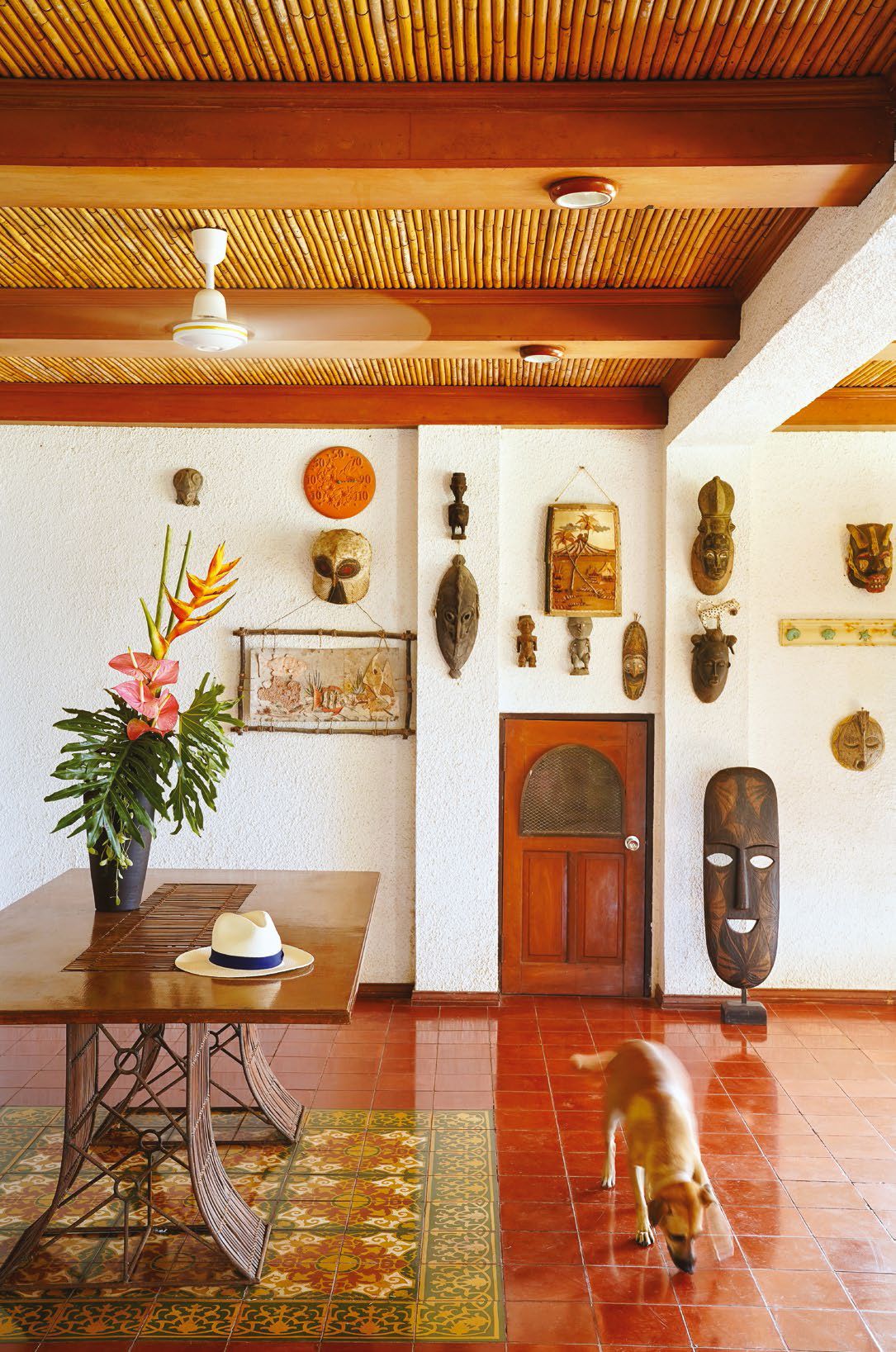
A distinctly South American aesthetic exudes from this property. A nod to the the man of the house’s Colombian heritage.
1 / 4
She continues, “My husband’s family has their routines and traditions. If it’s 5pm, it’s pica-pica in the courtyard. Breakfast is always upstairs, but lunch and dinner are always downstairs, unless it’s typhoon season. After dinner, we always spend time out there, drinking and playing games. That’s why everything’s movable. If there are a lot of people, we can move some of the chairs around to make space. And everything has a slip cover, so you can sit anywhere wet and it’s fine.”

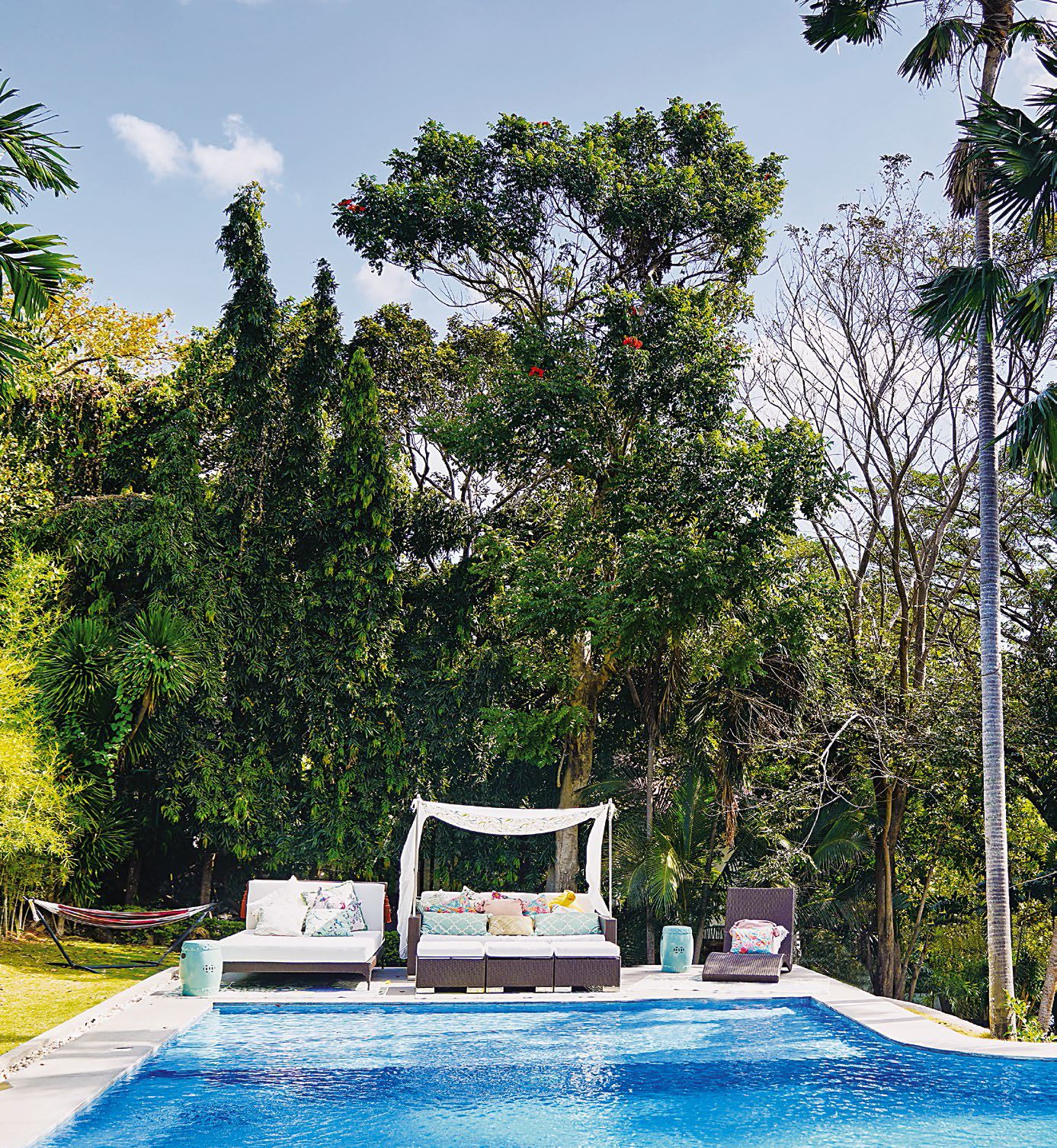
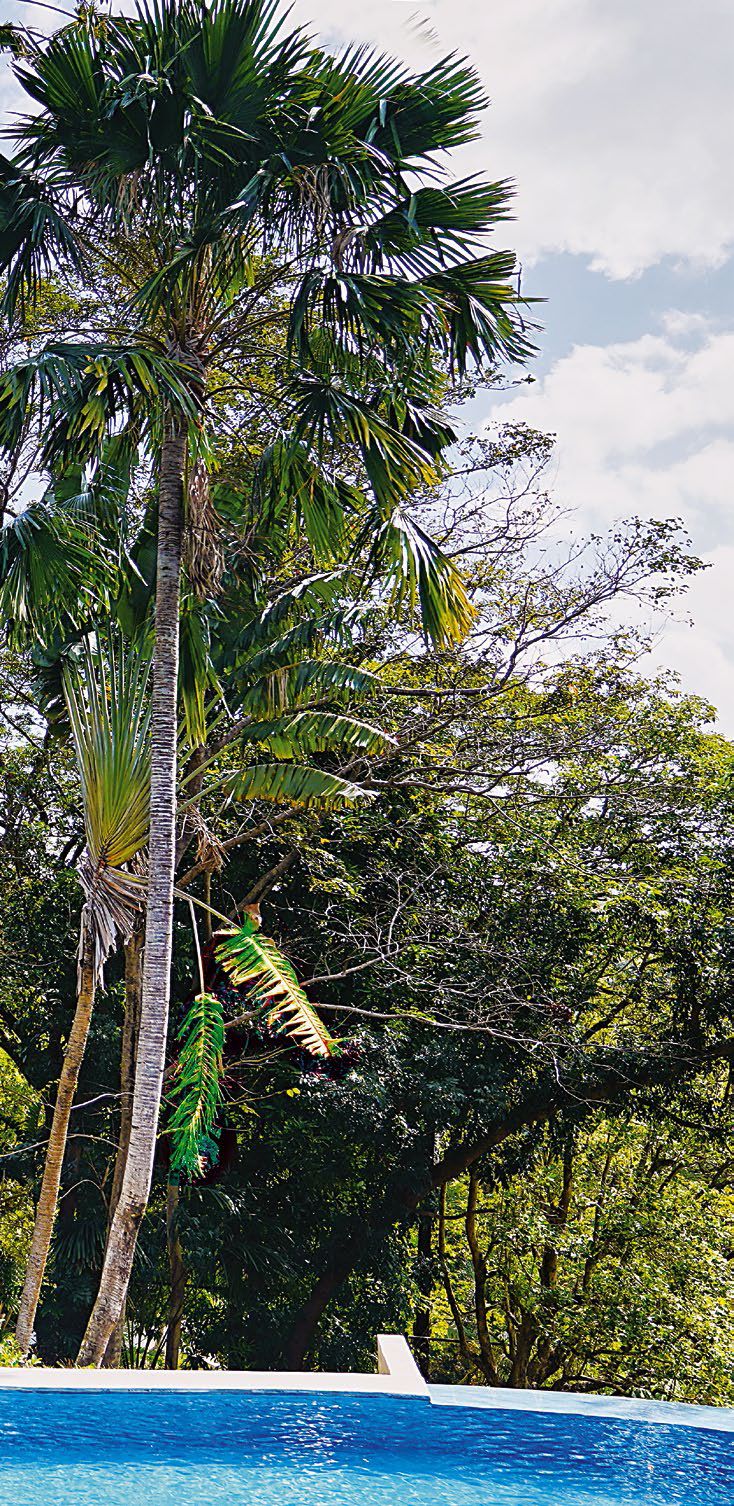
Above Added just recently, the uniquely shaped pool reflects the same pattern as their bay windows in the city. It is now a main highlight of the property. The outdoor furniture was personally designed by the lady of the house.
1 / 2
When asked about her favourite spots in the house, the lady of the house is quick to identify the day beds and the hammocks by the garden and the pool. “So many people have fallen asleep there, even when so much is going on, because it’s so comfy,” she says. But while she enjoys spending much of her time outdoors, she also values the time she’s able to spend with her family indoors, particularly in the now-air-conditioned sala. “The first thing we did when we bought the house was to install air-conditioning in that room. It makes the house much more ‘year-round’. Before, during rainy season, there really wasn’t much to do in the house because you would just stay in the bedroom,” she says. “By installing an air-conditioner in the sala, which is pretty large, we can spend the whole day there together still; watching movies, playing games, or reading.”
Overall, the owner relishes in the easy change of scenery and pace that this beach-side home affords her and her family—in the company of good friends no less. “It completely changes your headspace. You come here and it’s quiet. In Manila, I never really spend time outside, but here, I spend almost all my time outside,” she says. “Plus, we know everyone in the neighbourhood. We really do feel like a community.”
And just as she and her husband have kept the family traditions born in this home alive, she looks forward to continuing them in the years to come. “We only have one daughter, and when she was given the choice to buy a house in one village in the city or the beach house, she was 100% for the beach house. It’s her history, my husband’s history, and it also became our history. Even now that she’s moved out, it’s where we get together. And when she has her own family, this will be their home.”
Credits
Photography: Paco Guerrero
Topics





