
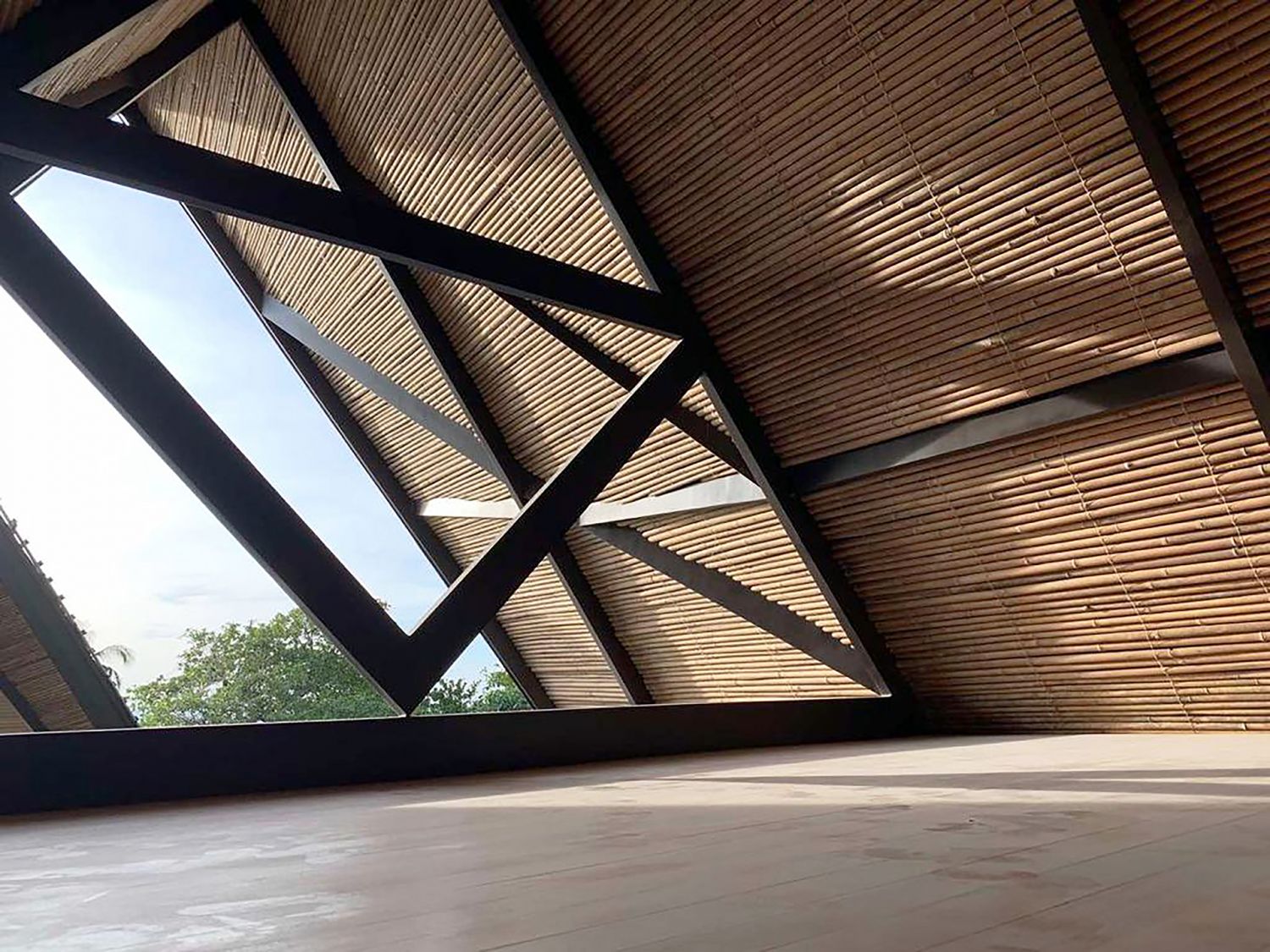
Cover Natural materials like wood, metal, and stone are preferred by Endika Ampudia of Estudio Arkipelago when constructing disaster-resilient structures
Natural materials like wood, metal, and stone are preferred by Endika Ampudia of Estudio Arkipelago when constructing disaster-resilient structures
1 / 1
Estudio Arkipelago is one of the newest architectural design consultancy and master planning firms in the country; and they're committed to bringing Filipino design to global standards
His passion for arts and culture has brought Endika Ampudia to the architecture and design industry. He studied architecture, construction, and urban planning, among others, at Universidad del País Vasco. Eventually, he earned an MBA at the University of Deusto and Fordham University and focused on learning more about sustainability, digital and networked strategy, innovation and equity management. His works, inspired by the environment he grew up in, are influenced by modern architecture and design all over the world. Now, he's brought this design philosophy to Southeast Asia.
"We started Estudio Arkipelago back in 2019, but that was only the 'tip of the iceberg' of all of our work from 2016," Ampudia says. "We were born as a design consultancy firm that aimed to bring in together knowledge and artistic disciplines from different islands or archipelagos. The international multidisciplinary firm with local soul was formed."
For Ampudia, the Philippines is a growing and exciting "playground" for architects, designers, and creatives. "We saw the opportunity of contributing to the local scene by bringing in international practices and flavours," he shares.


Above Endika Ampudia
Endika Ampudia
1 / 1
Known for their innate creativity, Filipinos imbue versatility through their architectural works because of the natural environment and living conditions in the country that force them to constantly evolve and improve. "I would say that adaptability is a clear characteristic of Filipino design," Ampudia shares. "When you look at ancestral houses, or even religious buildings back from the Spanish era, you can see how many elements imported from the continent are incorporated. The foundations and base of the building are graciously mixed with an airy upper structure, reminiscing the Filipino-Hispanic structures. These are capable of keeping the temperature down as they allow abundant airflow," he explains.
Because of the ingenuity of this heritage design, Ampudia and his team would use natural elements like stone, wood, and metal as these go well with the weather and environment in the Philippines. "We prefer not to use synthetic materials as much as we can, or as much as our clients allow us," he says. "We always try to make our clients see the beauty in the natural flaws of the materials, considering them not flaws but a feature that is an impregnated character to the building." Ampudia further shares some fun stories of clients who travel around Europe and would see structures with natural stone. They would call Ampudia in the middle of their trip to express their affirmation of the proposed idea. This, for Ampudia, is a small win for designers like him and his team.
Read also: Home Tour: Inside Camille Co-Koro and Husband Joni's Chic Scandinavian Abode
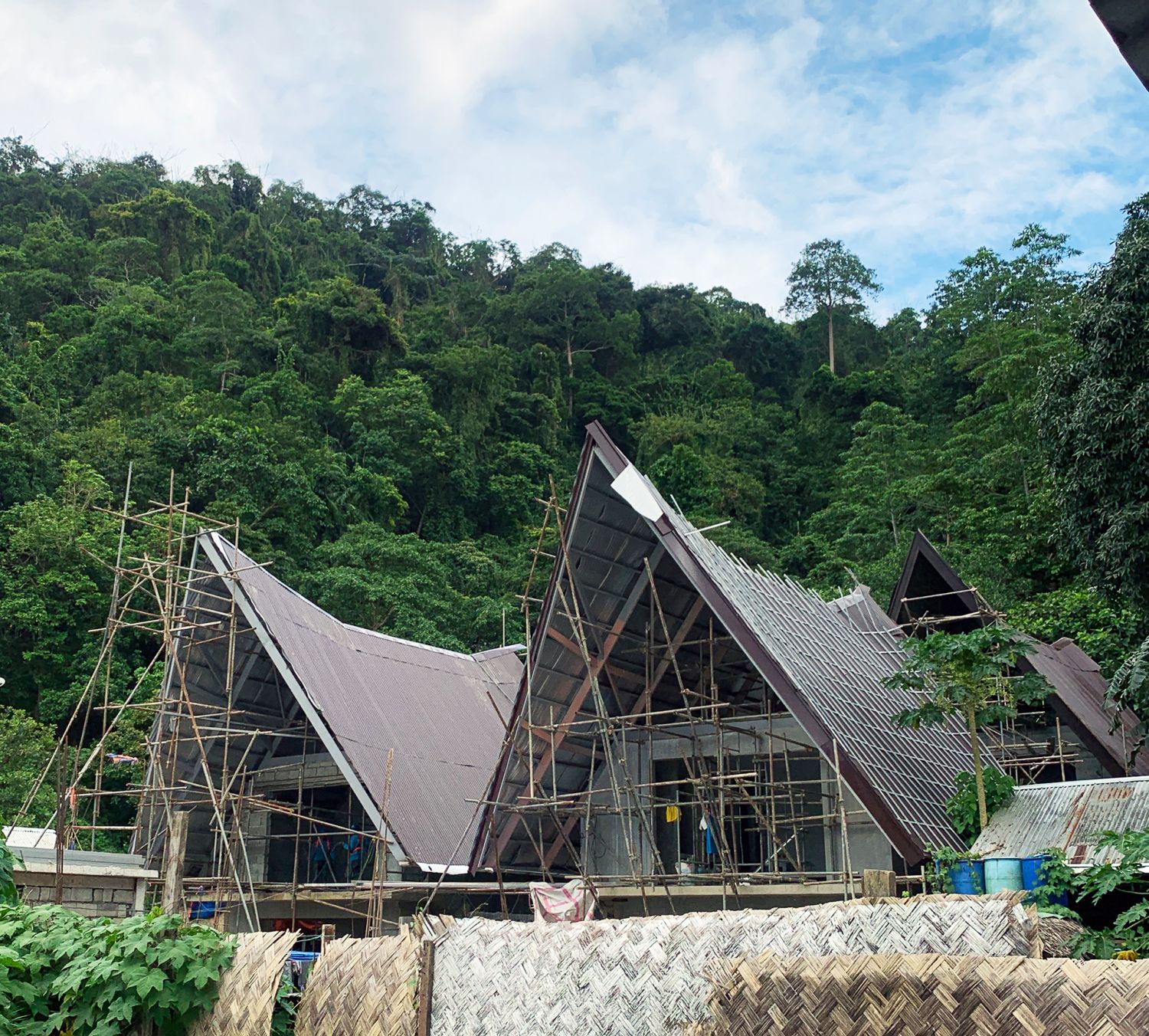
Above The Panorama Villas in El Nido during its construction phase
The Panorama Villas in El Nido during its construction phase
1 / 1
Natural disasters are hard to predict, most especially super typhoons of such magnitude as that of Typhoon Odette. But amidst the challenge, Ampudia believes there are ways to minimise its impact on the structures they build. "First we rely on professional structural engineers, who will properly advise on how to build our structures," he enumerates. "We like to be very cautious about this and we would always follow their recommendations. Then we advise the clients to hire the proper companies that can build their structures up to desired specs. It might cost more money, but in the long run, the result will be on their side and they will minimise losses." Ampudia emphasises that everyone must always follow their consultant's advice and never take shortcuts.
In Estudio Arkipelago's island projects in Palawan and Siargao, the team tends to use wood, bamboo, nipa, and local stone if available. "The character, their capacity to blend with the environment, is what makes them special," Ampudia says. "Some, like bamboo or nipa, need to be treated and replaced from time to time, but there is no waste as it is 100 per cent organic and sustainable. It grows again and again, plus we help promote the local economy," Ampudia explains.
Read also: Why is Mid-Century Modern Design Still Popular to This Day?
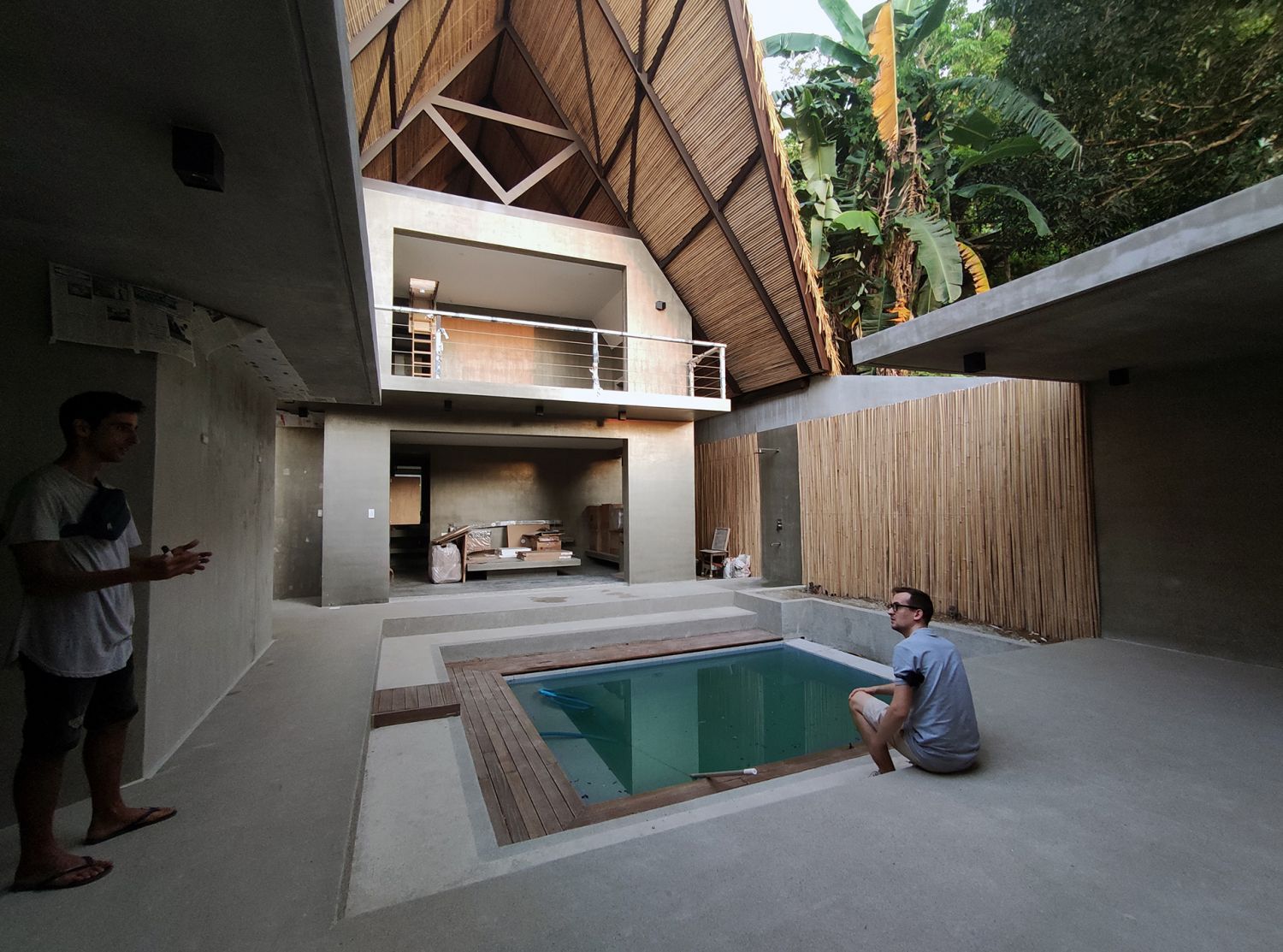
Above The Panorama Villas in El Nido during its construction phase
The Panorama Villas in El Nido during its construction phase
1 / 1
Ampudia shares a few things to consider for architects and designers in crafting weather- and disaster-proof interiors and furniture: "When a super typhoon hits, your best bet is to find refuge in a non-exposed area. If possible, away from the sea. The strategy is simple, use more built-in furniture or pieces that you can easily move to place them in a safe space or storage. This will avoid flying heavy items that can impact walls, roofs, or in the worst-case scenario, people. The best strategy is always to anticipate!"
In building these structures, 'function' is believed to come first then 'form'. However, Ampudia believes that style and sensibility can still be infused in purposeful design. "I guess that it's something that comes after a lot of training when you observe the environment that surrounds your project. When you breathe it, you feel it, the moment you acknowledge it, and learn from it. . .you develop that special sensibility for the local elements. Then you apply all your past knowledge and experience, giving them meaning and purpose.
NOW READ
Why Peak Residence is a Dream Property Find for Nature Lovers
Architect Bill Bensley Reveals his Inspirations and Design Techniques
ARCHIDEX 2022: Architect Felino "Jun" Palafox Tells Us How 'Smart Cities' Are Built
Credits
Images: Endika Ampudia

Franz writes about the local cultural scene and rediscovering the country’s storied past and rich heritage. He earned his bachelor’s degree in Journalism from the University of Santo Tomas and is currently pursuing a master's degree in Art Studies at the University of the Philippines Diliman. Besides working on this luxury lifestyle magazine, Franz is an avid book reader, local traveller, museum-goer, chorister, and community theatre playwright. But above all this, this Aether main spends more time in Teyvat than anywhere else.





