
1 / 1
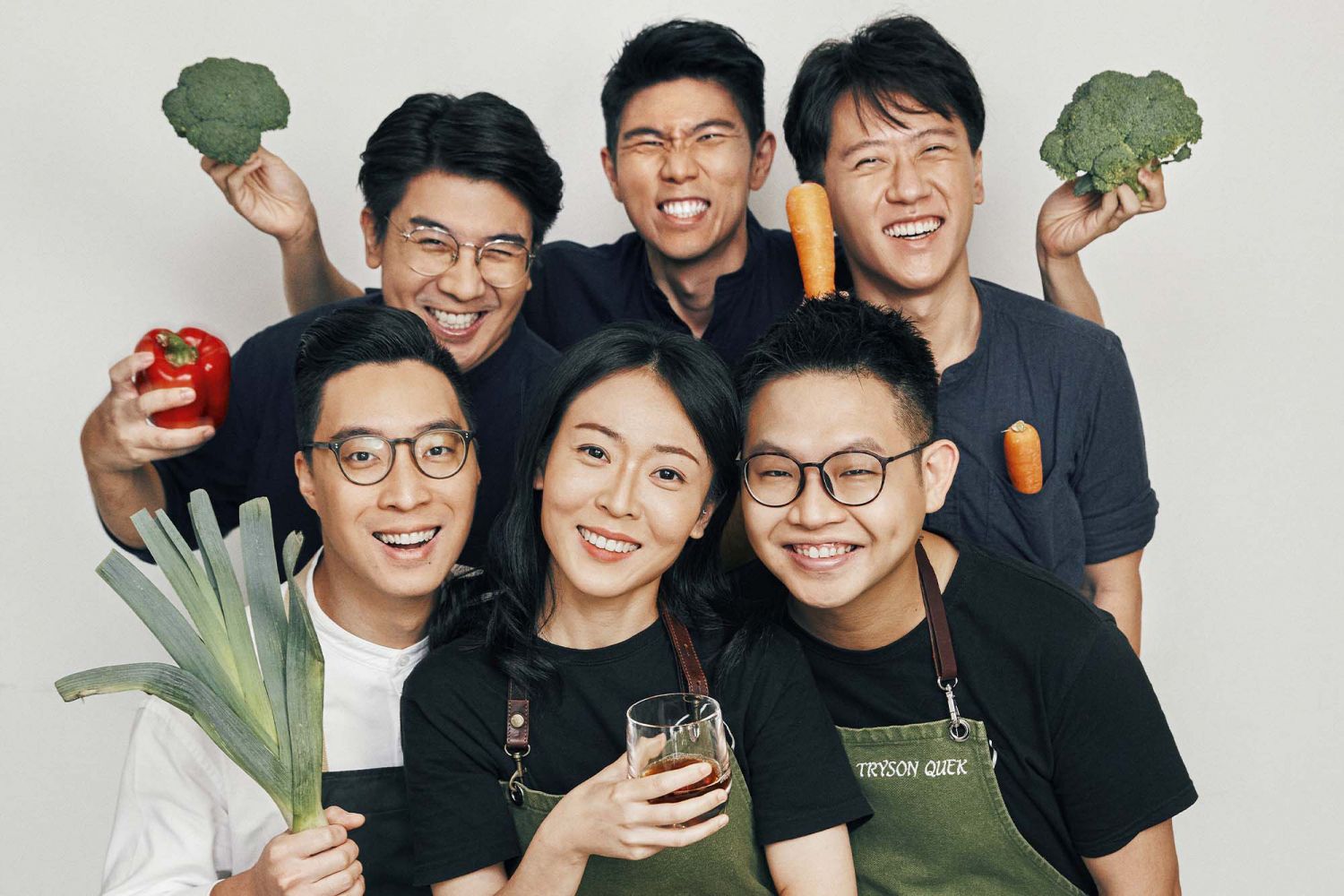
These professionally trained young chefs have traded their gleaming commercial kitchens and industrial-size appliances for a more relaxed private dining environment at home
Gourmands in Singapore are constantly looking for one‑of‑a‑kind dining experiences. Now, a new breed of professionally trained chefs have set up their own private dining ventures at home. They largely present omakase‑style menus and cater to parties of four or five each session. Their creations are unique, well executed and woven with personal touches. This is coupled with a more informal and intimate homey setting. Guests also receive the chefs’ personal attention throughout the evening. Bookings are hard to come by, but they are well worth the wait. Meet the young talents who inject plenty of flavour, personality and passion into their culinary concepts.
Side Door

1 / 1
Tryson Quek and Bannie Kang are two well‑known names in Singapore’s F&B scene. After helming Anti:dote at Fairmont Singapore, as head chef and head bartender respectively, Quek and Kang decided it was time for a different journey in their lives. The married couple left their full‑time roles for an opportunity in Taipei just before the pandemic hit.
From the outset, Quek, 35, and Kang, 32, were ambitious. They injected money, time, effort and passion into Mu, a fine dining restaurant with a speakeasy bar, which opened in March 2020. During their short time in Taiwan, they received various nominations and awards, including a Michelin Plate distinction. South Korea‑born Kang also won the Mancino Bartenders’ Bartender Award at Asia’s 50 Best Bars 2021.
After the couple garnered all the recognition and attention, their Taiwanese partners’ vision and direction began to change from what was originally planned. “There were some internal issues … so we started to ask ourselves: what do we really want and what’s most important in life,” says Quek. That’s when they decided to discontinue their business in Taiwan and move home in September last year. Two months later, they launched their own private dining concept, christened Side Door, at their Circuit Road home.
Side Door was launched as a private home dining venture so that they could “meet people who are not from the F&B industry”. Quek explains, “At the same time, Bannie and I love to host people. So we were thinking, why not set up a home dining business and do it part‑time? We only host three times a week, on Thursdays, Fridays and Saturdays. Business has been good so far; we’ve met so many great people. For us, it’s more about doing what we love and earning a living at the same time.”
Currently, Side Door takes bookings for a maximum of four people, via its Instagram page @sidedoor_sg. Each session is held from 7 pm to 11 pm. The menu offers six dishes, including two cocktails, at $138 per person. But if guests want more cocktails, each additional drink is chargeable.
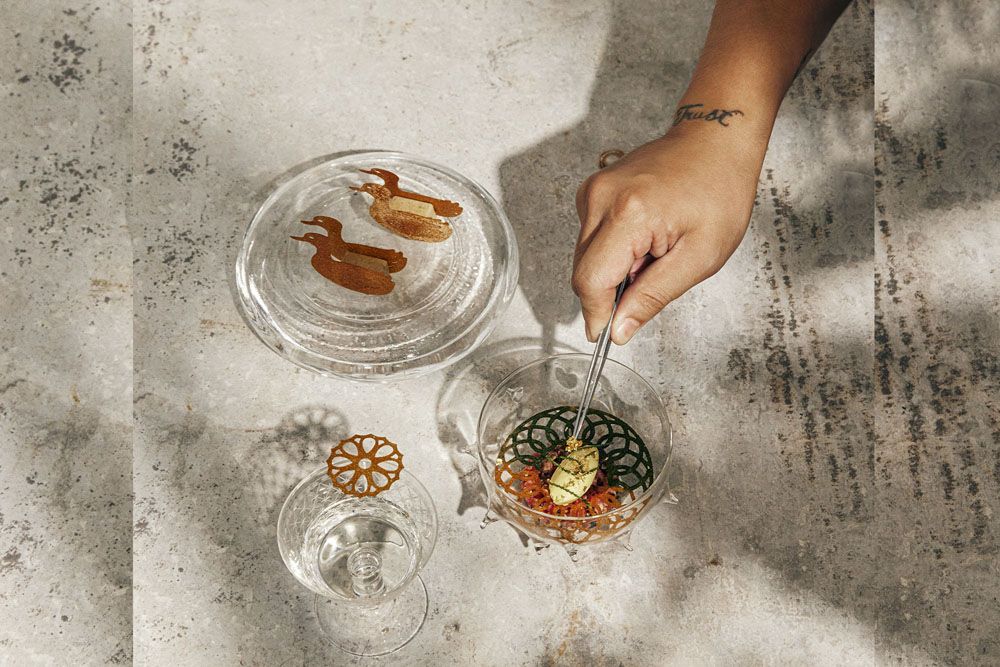
“People have asked us what we normally like to eat or drink—so we came up with the idea to serve what we enjoy eating and drinking,” shares Quek. In March, diners can expect to savour creations such as Ugly Duckling, comprising confit duck rillettes with duck liver sandwiched between quirky duck‑shaped potato crisp brushed with maple syrup. Another creation is Cow on Field, Quek’s version of beef tartare paired with kale and yuzu sorbet. These dishes were also featured in their six-hands collaboration menu with pastry chef Janice Wong at her new bar, 50Fifty.
Drinks-wise, Kang often experiments with different flavours. “I usually start with something fizzy and refreshing,” she says, adding that the second cocktail may be a gin sour, whisky sour or Campari sour. You certainly can’t beat having the 2019 Diageo World Class Bartender of the Year concoct beverages for you personally in her own home!
Quek and Kang will travel to South Korea for a culinary event in April, and they plan to bring back some unique South Korean produce for Side Door’s May menu.
Don't miss: A Taste of Home: Tryson Quek on Missing Singapore and Its Array of Local Foods
Kanves
1 / 1
After graduating from the University of Melbourne with a commerce degree in 2013, Ethan Khoo took a gap year in 2014 to explore the culinary industry. “I didn’t enrol in culinary school but instead dove straight into the professional kitchens,” says Khoo. “I was fortunate enough to be accepted by chef Petrina Loh of Morsels even though I didn’t have any culinary credentials.”
In the same year, Khoo did a three‑month stint at three‑Michelin-starred French restaurant Les Amis. In 2015, he started his first full‑time position at modern European restaurant Pollen, which has since been rebranded as Marguerite. He then had the opportunity to move to Auckland in 2017 to work for Clooney, a highly acclaimed modern fine dining restaurant with a focus on New Zealand produce. “I worked at Clooney for two and a half years, leaving as a junior sous chef before the restaurant closed for good in mid-2019. This was when I moved back to Singapore,” he shares.
After Auckland, Khoo had originally wanted to find work in California, but the Covid‑19 pandemic halted his plans. “In hindsight, it worked out for the best,” he says. “Unlike most home‑based businesses that gained traction because of the pandemic, my private dining business started because there wasn’t a particular restaurant in Singapore that I was extremely inclined to work for.” Eventually, he decided it was time to carve something of his own with Kanves. “With the lower barrier to entry for a private dining business as compared to opening a restaurant, it was the more logical approach to come into my own and get my name out there.”
The 32-year-old continues: “As Kanves is a play on the word ‘canvas’, the concept is akin to an artist’s blank canvas, where it is open to interpretation and not defined by a specific cuisine. The menu is viewed through a contemporary lens inspired by global flavours and where less is more.” His dishes also mostly highlight local produce, such as laksa leaves and torch ginger.
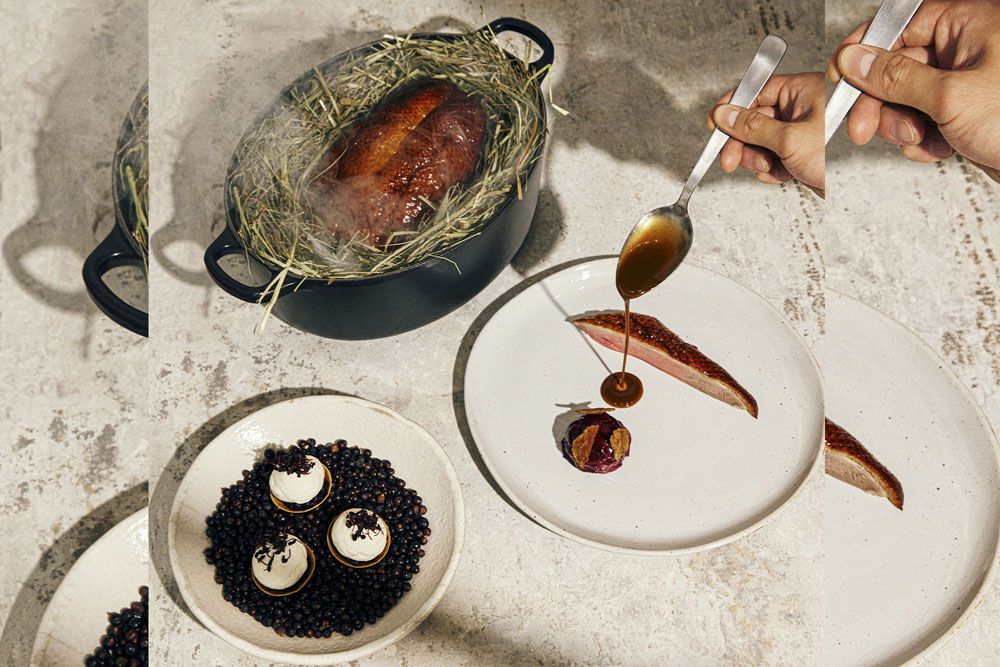
Each meal kicks off with snacks such as the signature beetroot “tartare” tartlet. Beetroot is salt baked, dehydrated, passed through a meat grinder, and then dressed with a blackcurrant and beetroot reduction as well as smoked beef fat. It is finally finished with freshly whipped horseradish cream. Another signature dish features locally sourced duck that has been dry‑aged for a week. “The duck breast is roasted and smoked in hay. We shred the confit duck leg meat and fold in pickled blackberries. We then encase the stuffing in pickled radicchio leaves brushed with a plum and blackberry glaze,” Khoo explains. The creation is garnished with crispy duck skin crackling. Guests will round off their meals with buckwheat sablé, brown butter and mascarpone parfait, teamed with a passion fruit curd and white miso foam.
These dinners are held at Khoo’s parents’ home in the Bukit Panjang area. They typically run from Friday to Sunday, commencing at 7.30 pm; bookings can be done via the Kanves website (kanves-sg.com). The menu, at $135 per person, includes three snacks, five savoury courses, a pre‑dessert and dessert. There’s no corkage charge or limit to the number of BYO bottles. “We believe in this policy as it keeps things fuss‑free. We want to keep things less commercialised and make guests feel more at home,” enthuses Khoo.
In case you missed it: Meet Singapore’s Culinary Power Couple: Les Amis Executive Chef Sebastien Lepinoy and Olivia Lee
Rhythm
1 / 1
Fuelled by immense culinary passion, two young Singaporeans launched Rhythm, a home‑based private dining business offering omakase menus based on their own interpretations of modern Japanese cuisine. Jordon Lim, 26, and Sean Tan, 32, come from a business and design background respectively. They met in 2018, during their 18‑month culinary diploma programme at At-Sunrice GlobalChef Academy.
The course mates later trained at traditional Japanese restaurant Suju Masayuki at Mandarin Gallery. It was there that they learned how to handle various ingredients, from fish to rice, and honed their skills in frying (agemono) and grilling (yakimono). Thanks to their Japanese culinary training, they are able to execute precision in their menus today. “We are also very fascinated by food science, which we read about and explore a lot after working hours. This helps us in our craft … to improve the flavour and texture of an ingredient,” says Tan.
Both of them are intrigued by Japanese cuisine, particularly its emphasis on nature, balance and simplicity. “The discipline and dedication the Japanese have for their craft is something that inspires us, which was one of the primary reasons we decided to focus on the cuisine,” says Lim. “We’ve definitely progressed well, and met various expectations and goals that we set for ourselves since our opening [in early 2021]. However, there is more that needs to be done to push Rhythm forward—and this will be our primary focus of 2022.”
Another chef, 27-year-old Henry Tan, who was the duo’s senior at culinary school, joined them this year. The team serve the dinners at Lim’s home in Sengkang West every Friday and Saturday, for one seating only, from 7 pm to 10.30 pm. Guests can book the seven‑course menu, priced at $148 per person, via Rhythm’s website (rhythmsg.wixsite.com/rizumu). The current menu, available from March to June, focuses on “a modern approach towards Japanese cuisine, utilising modern cooking techniques while keeping the flavours mellow”. A new menu will be introduced in July.
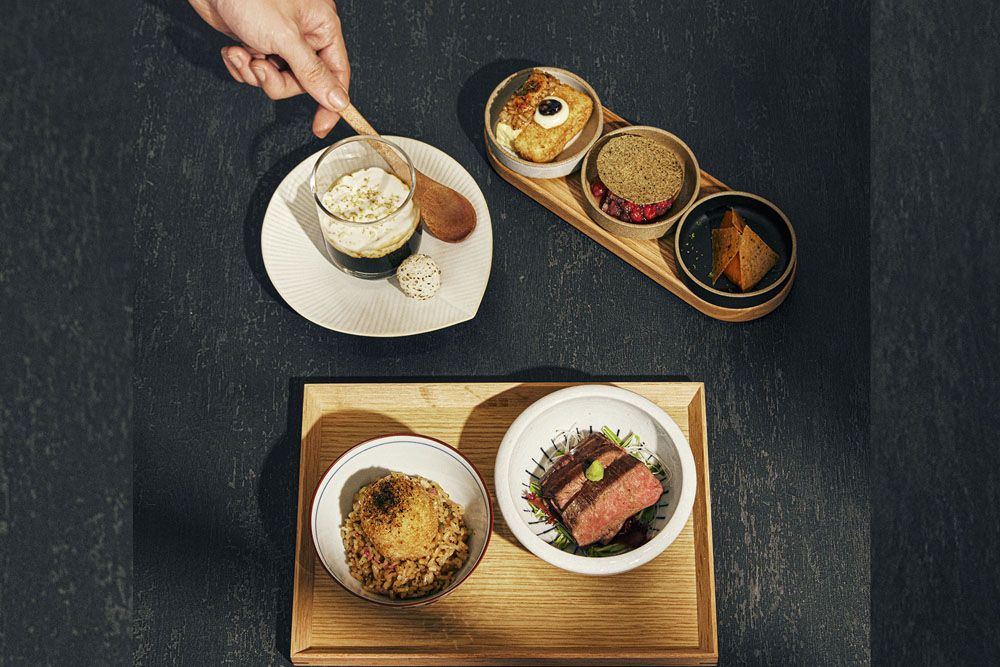
A meal starts with Rhythm’s trio of snacks: the tamagoyaki, or rolled omelette, prepared two ways—one is soft and the other, crispy—for textural contrast; amaebi tartare with kombu senbei, a sweet prawn tartare with refreshingly cold watermelon and crisp seaweed; and the quenelle of kabocha, which juxtaposes the mild sweetness of pumpkin with lime and sesame. The chefs will then serve a macchiato made from the careful extraction of shojin dashi, a vegetable broth, which consists of various types of mushrooms. The soup is served with roasted chestnut foam to give lightness and balance the overall richness.
“The main of Wagyu donabe with tamago korokke is cooked in an earthenware pot known as a donabe. The rice is mixed with mushroom duxelles and infused with dashi, before being coated with lard and black garlic sauce. The rice is then served alongside Iwate Wagyu and a tamago croquette,” Lim explains.
“With our business growing well, we’re currently looking to move to a new venue,” shares Lim, adding that they want to be able to scale it up and reach out to more diners. At the moment, the team aims to further improve and refine their food identity while “stabilising Rhythm to have a firm footing in F&B”.





