
1 / 1
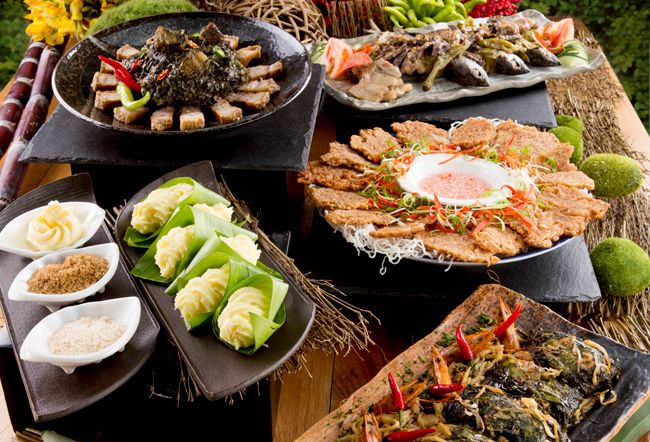
For its first food festival, Midas Hotel and Casino celebrates Filipino gourmet legacy and takes diners to a palatable journey across the archipelago.
Midas Hotel and Casino need not go too far for its first food festival for the Philippines has already a vast array of sumptuous dishes that hail from each region’s culinary heritage. The executive chef Arnold Guevarra and his culinary team weaved the distinctive flavours of each region’s specialities into a four-month-long food festival entitled Sabroso, which is a Spanish word for something tasty or savoury. Gourmands and gourmets are taken into a gastronomic voyage in August, starting off with Northern Luzon’s dishes in the segment called Naimas while the Southern Luzon specialities for Masiram begin in September. Cross the sea to cater the Visayan cuisine through Nami in October, and later the culinary heritage of Mindanao will be showcased through Manamit in November.
“Filipino gastronomy mirrors the history of the Philippine Islands. Asian and Western ingredients have been added through centuries of foreign influence, and amazingly emerged into a blend that has created its own identity,” the chef Guevarra said to Philippine Tatler Dining. “This mixture is most evident in the cosmopolitan city of Manila and in most of our localities. It is actually through our native Filipino dishes that one appreciates the regional variations in the country. For a while we have a harmonised Filipino culture, there are specific differences in cooking and food preferences that readily identify the regional origin of many dishes.”
During the launching of the food festival, guests were welcomed with a refreshing glass of a chilled ginger-based beverage popularly called Salabat. Although known to be given to people having problems with their throats, Midas Café’s version was perfect to prepare the guests for the sumptuous feast.

The executive chef Arnold Guevarra of Midas Hotel and Casino
The guests were then served with Filipino gourmet appetisers, featuring tuna and pork sinuglaw, crispy ukoy with sukang iloko, dinakdakan (an Ilocano favourite), and mesclun greens in sukang iloko vinaigrette.
Next to be served was the Visayan light vegetable soup with fresh cucmbers, tomatoes, taro, and malunggay called law-Uy. Simple as it was, the broth was surprisingly flavourful complemented by the crisp cube cuts of the vegetables. The calamansi sorbet followed, and its soft, silky texture and exciting sour flavour made the guests crave for another serving. This refreshment is also known as calamanding lemoncito and is quite popular in the Visayas region.
Midas Café’s Lokon in crab roe sauce, pork humba, sinugbang manok with soy vinegar dip, and pinakbet covered perfectly the flavours of all three main islands of the country in one plate. And because Midas Café is known for its excellent buffet spread of various international cuisines, the guests were also encouraged to make their rounds and savour the other signature Filipino dishes spread throughout the stations.
“The fragmented nature of the islands, the settlement of our ancient people coming from different parts of Malaysia and Indonesia, and the difficulties of communication and transportation have woven various threads into the tapestry that is Philippine culture. And in terms of cookery, there are numerous variations in food preparation. Food preferences are also determined by the ready availability of certain food ingredients,” the chef Guevarra said.
He added that the abundant crop in that area heavily influences each region’s cuisine like the coconuts in Southern Luzon, peppers in Bicol and Mindanao, and seafood in coastal areas. In cooking styles and seasonings, all regions are also distinct from one another. Says the chef Guevarra: “The Northern Luzon people, for instance, boil most of their foods and season them with bagoong (shrimp paste). The Southern Tagalogs tend to pickle their meat, fish, and poultry in seasoned vinegar and then fry them. Central Luzon people favour sauteing in garlic, onion, and tomatoes and the use of soy sauce and gravies. The Visayans also favour frying as well as boiling, while the Muslims prefer to boil or roast their food over a live fire, called sinugba or inasal (broiled).”
This distinctiveness in ingredients and cookery is evident in the variety of dishes served in Midas Café for the food festival. Diners can savour the pulutok, a Capampangan version of bopis, Cebu longganisa, sinaing na tulingan, which is mackerel simmered for hours in a clay pot, the iconic bagnet of Ilokanos, and the regional rice dish called bringha that is topped with shrimps and crab meat, and cooked in coconut milk.
Says Guevarra: “Filipino cuisine is internationally competitive, the blending of traditional Philippine cooking and foreign influence is generally tasty without being too spicy, simple but not bare, exciting but not strange, and extremely good to eat without being too rich or stuffing.”

“Philippine cuisine is a blend of the familiar with the exotic. The combination of sour, salty, and peppery is the most desired and sought-after facet of our dishes.”
2/F Midas Hotel and Casino, Roxas Blvd. Pasay City, +632.902.0100 loc. 1187





