
1 / 1
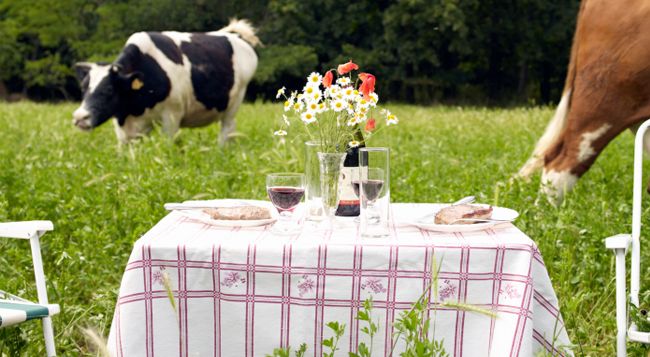
"Farm to table" doesn't necessarily mean growing your own produce, tells Chef Eugene Lee of Tanzini. He shares more about the misunderstood term.

In the era of seasonal cuisine, the overwhelming practice of some of the best restaurants in the world that grow their own produce either on the roof of their restaurants or in the backyard has become a trend.
So much so, that some chefs think that in order to be the best, you simply need to grow your own vegetables or micro herbs. As much as I always agree on the freshness of sugar snap peas harvested in its peak season, lightly blanched and sautéed in aromatic garlic oil with a dash of white wine - the whole concept of growing your own vegetables or, the term "Farm to Table", has now become so abused and misunderstood.
"Farm to table" does not necessarily mean one grows one’s own vegetables, or animals. If you are a chef who is also a keen gardener blessed with amazing green fingers – I stand corrected.
Otherwise, these are the reasons why "farm to table" can either be your biggest achievement in copycatting or your worse nightmare for your establishment:

History
Centuries ago, food was always from “farm to table” - it was never from “heaven to table”. I like how Farmer Lee Jones explained "farm to table" as a direct relationship between like-minded people. In these modern times, there have been questions raised about the production of fresh produce, often times on quantity over quality. Therefore, chefs reduced the whole "farm to table" term to mean the distance between their backyards where vegetables are planted to the table where their guests sit.
"Farm to table" does not say it is mandatory that you plant your own vegetables. Technically it refers to the stages of food: harvesting, storage, processing, packaging, sales and consumption. If you say that the greater the distance between harvest and fork, the greater the quality is lost and nutrients dissipate, then how would you explain the style of food of the likes of Ferran Adria or Grant Achatz? I think it is about the ability of chefs to source for quality ingredients and make them taste good!

We are chefs, not farmers
Some chefs have amazing knowledge about farming, while some are more suited to stick to cooking and using the freshest ingredients to create their masterpieces. If you’re not an avid gardener, leave the farming to the farmers. Growing plants require skilled know-how and you could risk ending up with pests and plants that are less than desirable. Instead, why not support your local farmers? As chefs, we should take pride in serving a cornucopia of goodies from farmers who actually cared about their cattle, chickens and vegetables.

Manpower
Some establishments have a battalion of staff; for them, planting, harvesting, foraging isn’t really an issue. It’s a very different story for those without a legion of foragers though. Dollars and cents are the reality of the restaurant business, so getting produce from reliable sources can sometimes be more economical than hiring a dedicated team for farming.

Geography
The quality of vegetables depends very much on the nutrients from the soil, water and other environmental elements. Altitude also plays a role in terms of pests. How does a restaurant that grows their own vegetables on the roof compare its freshness to those grown naturally on better terrain? Keep in mind that “farm to table” is about ensuring consistent quality at every stage. If it’s from the roof to the table, the quality may not be justifiable. The term “farm to table” should be a reminder to people that food actually does grow on a farm and not on a rooftop.

Bragging Rights
"Farm to table" does not make a chef better in the kitchen. You can have the freshest vegetables plucked from your garden and still produce lacking dishes. Great food should speak for itself without a chef needing to tell you that the carrot was just plucked this morning.
(Photos: Tanzini and ThinkStock Photos)
More from Chef Eugene: How to prevent a chef from going into Gordon Ramsay mode.
Topics





