
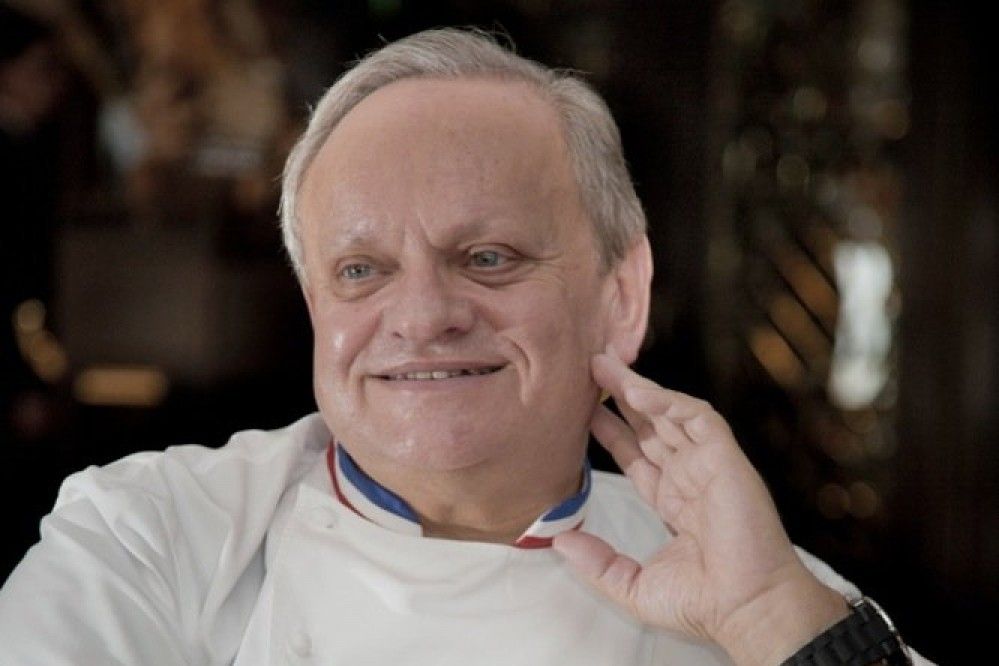
Cover Exclusive Interview with Joël Robuchon
Exclusive Interview with Joël Robuchon
1 / 1
AsiatatlerDining.com talks to the world-famous chef about his many restaurants, his plans in China and his aversion to molecular gastronomy

The most famous French chef in the world, Joël Robuchon, was in Macau last week checking on operations at the fine-dining restaurant Robuchon a Galera. He spends time with AsiatatlerDining.com where he talks passionately about how his culinary philosophy has sustained his popularity with critics and diners alike, as well as why he stands so firmly against the trendy molecular gastronomy movement.
AsiatatlerDining.com: You opened Robuchon a Galera in Macau five years before L’Atelier in Hong Kong. What made you decide to open in Macau first?
Joël Robuchon: I knew Macau only as the “sin city”, I knew more about Japan but had never been to Hong Kong and Macau. Alan Ho (Ed’s note: nephew of Stanley Ho and executive director of Lisboa Hotels and responsible for the hotels’ F&B operations) was the reason I chose Macau. He loves cooking and wine, and the cellar in Hotel Lisboa is one of the best in the world. After Macau, Hong Kong seemed to be the natural choice. It’s a great place for the atelier concept because people are open-minded to new experiences in food. Like Monaco, the Hong Kong clientele is refined and knowledgeable and ladies as young as 20 wear high fashion such as brands like Chanel, Van Cleef, Louboutin.
ATDining: Do you have plans to open in Beijing or Shanghai?
JR: I have never been to Beijing or Shanghai, I would love to discover China but I haven’t had the chance. I’ve had proposals to open in Beijing but while Chinese produce creates a cuisine that is one of the best in the world, in order to prepare French cuisine on the mainland, it might be harder to find the right ingredients. I don’t know if it will be hard to import or to find the right ingredients at the right time, so opening a restaurant in China might be quite difficult.
ATDining: Are you fond of Chinese food?
JR: I adore Chinese cuisine. I went to a lovely tiny restaurant in Hong Kong, but I don’t remember the name as the names are quite hard to remember. I had noodles and other simple dishes but they were really enjoyable – traditional sort of food. In my cooking, too, I am influenced by Chinese cuisine. Japanese cuisine influences me in the zen way the dishes are presented but Chinese cuisine influences me mainly in the way I work with textures. I also like that Chinese cooking, much like French cuisine, is very much about the technique.
ATDining: What do you think about the French cuisine in Hong Kong? How does it compare to other world cities?
JR: It has evolved a lot in the past couple of years. Before it was very traditional, you only found French restaurants in the big hotels and the food was heavy and rich. Now it’s lively, modern, fresh, contemporary; similar to what you find in the U.S. and Japan. The balance of the ingredients and presentation and overall quality has really evolved.

ATDining: How would you summarise your culinary philosophy?
JR: It can be divided into three main ideas. The first is, you don’t cheat, you have to be true to yourself. The expression, to eat the truth, doesn’t really make sense in English, but that’s what I believe. The second is the quality of the ingredients. You must take the best and choose all your ingredients carefully. When you use fish or meat, you’re destroying a life. Therefore you need to respect your ingredients and without this, you cannot be good at what you do. The last and the most important is to love people. For example, when a young chef doesn’t succeed in making a dish, I ask him, “If you were cooking for your own family, would you cook the same way?” You should always cook like you’re cooking for the people you love, even when it's a job.
ATDining: I’ve also heard that healthy cuisine is important to you, how does that fit into your philosophy?
JR: I’m firmly against molecular gastronomy, which is very fashionable, but which uses so many additives that researchers have found to cause cardiac disease, Alzheimer’s as well as other maladies. I don’t want to poison my customers by using ingredients that harm them. The thing about molecular gastronomy is that the dosage of the chemicals they use is unrestricted. Even in pre-packaged food, the additives and preservatives that go into them are incredibly controlled by law.
I like to use ingredients that are good for you, such as turmeric, white tea or thyme honey, which is excellent for digestion. Obviously, you’d have to eat a huge amount to avoid cancer or disease, but by putting them together, you can still create cuisine that is good for you.
ATDining: You have previously said that traveling is important to young chefs as a way of learning: what have you learnt from your travels?
JR: I have learned a lot in the past ten years. Before that, I worked in my restaurant and obviously couldn’t look at the world. But there is one truth that’s the same all over the world: when it’s good, people like it.
ATDining: Part of the reason you do travel so much now is because you have restaurants all over the world: how do you make sure the quality of all your restaurants are maintained?
JR: Each of my restaurants wants to be the best, there is an internal competition among them and it is important that the competition exists in order for my staff to do their best. When I visit a restaurant, I stay at least eight days. Some other chefs only stay two or three days, which is not enough. By staying a week or more, I see how the staff work and whether they respect my philosophy. The longest stay I had in Hong Kong and Macau was 15 days, and I come four times a year. New technology also helps, it’s easy to keep in touch using internet and video conferencing. We use technology to make sure everything is fine and people can share recipes and pictures, give advice; quickly, efficiently and internationally, without limits.





