
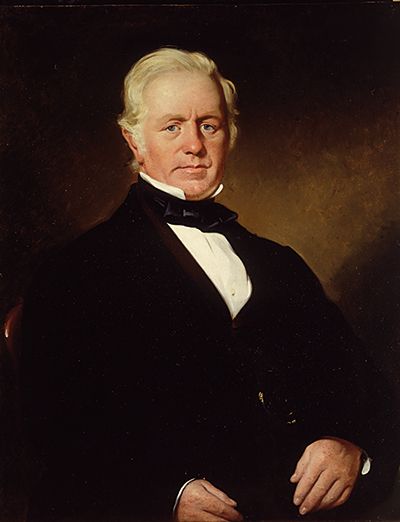
Cover Glenlivet - George Smith
Glenlivet - George Smith
1 / 1
Pursuing a dream, George Smith braved gunshots and violence to find the Glenlivet dream.

I once met a passionate whisky connoisseur at a dinner party, who spoke of The Glenlivet in hushed, awed tones to describe its significance in the Scottish whisky scene. There was a fervency in his manner of speaking that effectively communicated his passion for the brand. Who could blame him for being utterly besotted with The Glenlivet?
The history of the brand is an enchanting one; it is a rich tale of consummate passion, pride and persistence. Born from a man who wanted nothing more than to create the perfect whisky in the face of odds and challenges, the Glenlivet is revered as the single malt whisky that started it all in its region of origin. It is hailed as the spirit that has laid the foundations for the malt whisky we know and love in this present day even though 189 years have passed since its founding.
It started of with a dream
 George Smith was raised on a farm and trained as a joiner in his formative years. At heart, this tenacious and visionary man was a businessman and entrepreneur who immediately saw an opportunity in Glenlivet’s reputation in producing whisky of unrivalled quality. In 1824, he obtained a distiller’s licence so he could produce and trade Glenlivet whisky without attracting the attention of government excise men. His legalised distillery drew the ire of his illegal rivals, who were outraged that Smith could go about his business freely while they struggled to conceal their activities. Anger turned to violence, and threats on Smith’s distillery – and his life – became more and more common.
Yet, his enemies underestimated Smith’s resilient nature and he fought back without reservations. The brave Smith carried a pair of hair-trigger pistols wherever he went, a gift from the Laird of Aberlour, so he could defend his livelihood. He famously fired his pistols to protect himself in more than one occasion – all because he believed in the Glenlivet whisky’s untapped potential as a profitable commodity. By 1834, Smith was winning in his fight with the illegal distillers and 1844 saw the arrival of the Glenlivet whisky in London, where it was spoken of with reverence among appreciators due to its exquisite flavours and notes.
Defending the family legacy
In 1871, Smith’s passing resulted in his son John Gordon stepping up to the forefront. By then, The Glenlivet was enjoying a sterling reputation. Its growing fame aroused the envy of other distillers, who immediately tried to emulate the fruity and floral style distinctive to The Glenlivet. Unscrupulous parties were hard at work reaping profits from the Glenlivet name. Sailors on delivery boats were siphoning off The Glenlivet casks during transit, and competing distillers were labelling bottles of their whiskies as The Glenlivet without scruples.
In 1876, the younger Smith decided that enough was enough. He filed a request to trademark the name Glenlivet to put an end to the activities of the impostors. After years of legal wrangling, the case was settled when a legal settlement was signed by 16 other major distilleries that formally acknowledged that there can only ever be one single malt whisky distillery worthy of the Glenlivet name. With this, John Gordon Smith won the exclusive right to call his whisky ‘The Glenlivet’ – paving the way for the whisky brand to conquer the world as it has done today.

When alcohol became legal
Prohibition was lifted in the United States in 1933, and trade channels re-opened the following year. Withstanding the conflicts of the world up till that point in time with ease, The Glenlivet distillery remained open for business. This means that it was in an ideal position to capitalise on a lucrative transatlantic opportunity.
The Pullman train company started serving The Glenlivet in miniature bottles. Commuters across the Midwest couldn’t get enough of this superb single malt, and word spread quicker than the trains could travel. By 1950, The Glenlivet accounted for half of all the Scottish malt whiskies sold in the US. This warm reception in the US soon sparked a worldwide phenomenon. It was then reported that jet-setting actor Robert Taylor even wrote to the distillery to ask how to procure a case of The Glenlivet for the set of Quo Vadis, Mervyn LeRoy’s historical Hollywood epic set in Ancient Rome.
The Glenlivet was ready to take on the world.
This article originally appeared in the May 2013 issue of Malaysia Tatler.
Topics


Her 11 years at Malaysia Tatler has helped Lily level up from a shy introvert to a pseudo extrovert. She thinks the best thing about being the publication's Generation T and features editor is that she gets to meet inspiring individuals who represent #lifegoals to her. Lily's down time activities include geeking out on console games, devouring a good book (and some dark chocolates!) and singing karaoke. Indoor cycling is her new obsession at the moment. Follow her shenanigans on Instagram at @lilyongsl





