
1 / 1
We sit down with the father of fusion cuisine during his visit at Above and Beyond to talk about his east-meets-west cooking style
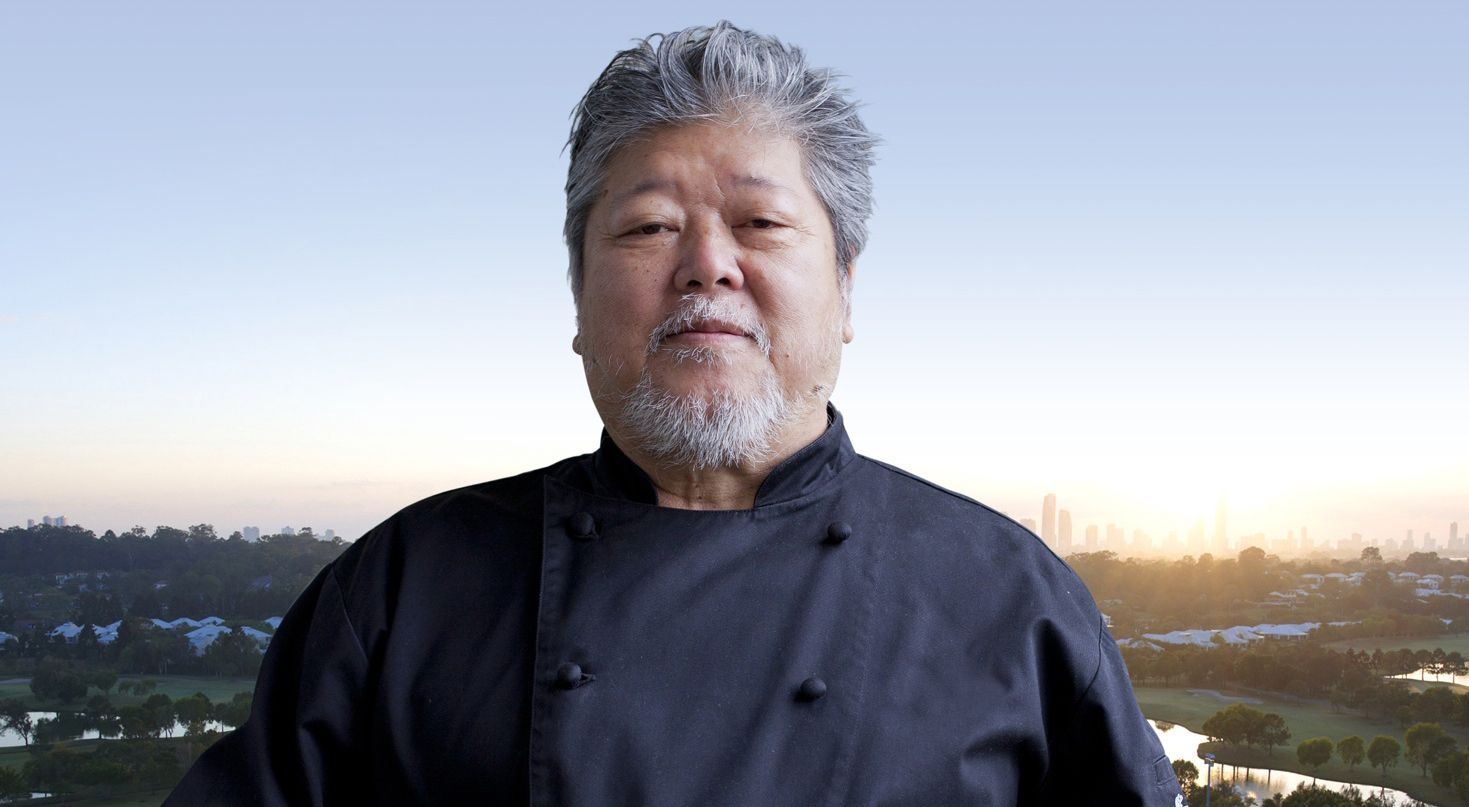
To describe a cuisine style as “East meets West” is a cliché today, but chef Cheong Liew, often dubbed as the father of fusion cuisine, was one of the very first to marry French techniques and Asian flair with South Australian ingredients. The award-winning Malaysian-Chinese chef was recently at Above and Beyond in Hotel Icon earlier this month to showcase his six-course dinner menu, which included his signature dishes such as the “Four Dances of the Sea” – a mesmerising seafood platter that comprises of kingfish ceviche, squid ink calamari with lemon zest oil, giant octopus aioli, and spiced prawn sambal. Below, chef Cheong took some time to answer a few of our questions about his cooking style, his choice of ingredients, and his biggest influencers.

Hong Kong Tatler Dining: How would you define your cooking style?
Cheong Liew: There is a mixture of different cuisines. Back in the late 70s, I started my own restaurant called Neddys and I didn’t know what sort of food I was actually cooking. Since I was not a trained chef, I tend to use whatever ingredients I am exposed to and also try to remember what I’ve eaten. The simple fact that I have self-analyzed the process and the situation actually builds my confidence in creating dishes and the outcome seems to be very acceptable to the public. Other than using very multicultural and very different cooking techniques, I think my cooking is more like a cuisine with no boundaries. Now the world is so small and you can see from chefs around the world that they use so many different techniques. The individualism of the chefs is one of the keys now – it’s about how the chef uses the ingredients on the plate and how the chef is going to entice and excite their customers with their food.
HKTD: Is there any dish on the menu that has an interesting story behind it?
CL: Four Dances of the Seas, which was put together back in 1995. Back then I wanted to establish a more upmarket style dish and I spent more time in the library than anything else. I needed one dish that would tell the public who I am and remind them of my old restaurant Neddys. Australia, being an island continent, should have different styles of seafood and so I created this dish, which has a multicultural concept running through it.
HKTD: Did you always aspire to be a chef? What did you realise that you had a penchant for cooking?
CL: I was in between school and I was cooking at a Greek restaurant. Honestly when I first walked in a Greek restaurant, I don’t even know where Greece was. But the chef there encouraged me and said that my flavouring is so natural and that I should pick up cooking.
HKTD: As a self-taught chef, who has been the biggest influence on your cooking style?
CL: It’s actually my grandma, since childhood, but overseas influencers will be classic French chefs such as Alain Ducasse and Joël Robuchon – all those are great people to look up to – and, of course, a lot of Chinese and Malaysian chefs. Over the years it’s almost been about learning from travelling and through a lot of books. Of course there’s the Regency Hotel School, which has helped me to develop more professional skills.
HKTD: What’s the most unusual ingredient you have ever come across?
CL: There are a lot of them in Australia, such as the mountain peppers in Tasmania. Funny enough, I learnt about this ingredient in Japan in early 2000. They ground and sprinkle it over the oysters and once you squeeze a lime over it, everything turns blue or bluish purple.

Four Dances of The Sea
HKTD: What do you think is the key to the success of a restaurant?
CL: I think it is, of course the food, which is basically the ingredients, and also the chef. And most importantly is the whole combination of the staff that work there. It is the combination of the front and back of house that makes the restaurant. If you combine them all together, and have good chef and good ingredients, you don’t even have to advertise.
HKTD: What piece of advice would you give to aspiring chefs?
CL: Buy yourself a round-the-world ticket and travel for two years. Don’t come back until you have tried everything around the world. If you are a solely trained chef from a kitchen, you’ll never develop a particular style of food, you’ll follow a tradition and that’s all you’ll be doing. For those of us who didn’t have basic and traditional apprenticeship training, we can develop a cuisine much easier and it takes a lot of travelling and imagination.





