
1 / 1
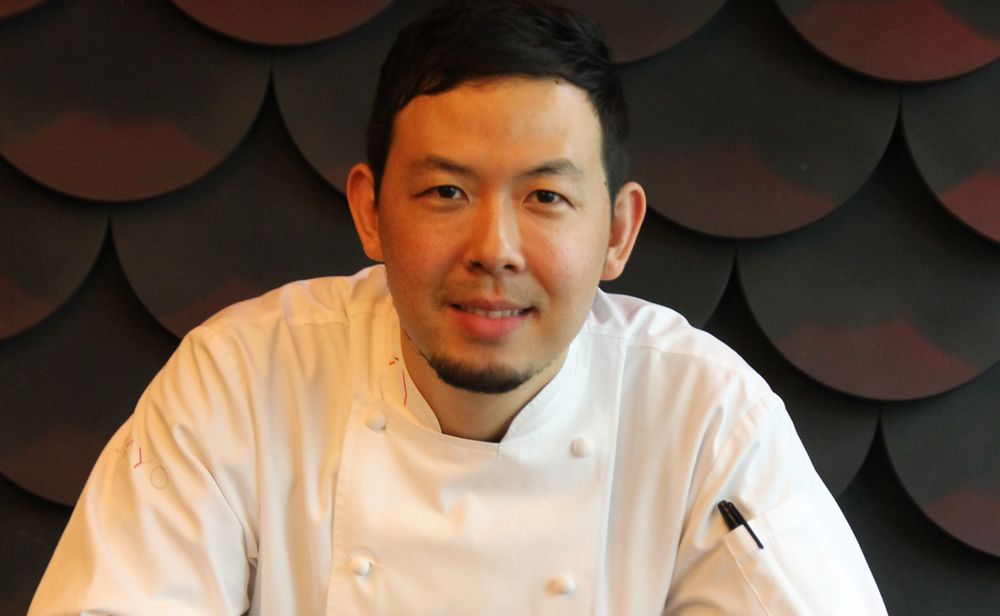
We speak to Japanese-American chef Chase Kojima, current guest chef at Sevva in Central

When we meet chef Chase Kojima at Sevva restaurant, we’re surprised by how alert he is. After all, just a few minutes prior, Bonnae Gokson, owner and host for the evening, had been telling us how the young chef had been feverishly refining his dishes in the kitchen until 4am for the past few nights, and getting up early to start all over again. It’s the first evening he would be presenting his ten-course menu to the Hong Kong public, and if there are any residual nerves, it doesn’t show. Kojima has a confident swagger and a cheeky grin to go with it; it’s to be expected really, considering the chef certainly knows his way around the world – having opened multiple restaurants for Nobu’s empire – let alone a kitchen. Below, Kojima takes some time out to answer a few of our questions.
Hong Kong Tatler Dining: Is it your first time cooking in Hong Kong? How did you become involved with Sevva?
Chase Kojima: It’s actually first time in Hong Kong! And I love it! To answer your second question, I have a restaurant in Sydney, Australia called Sokyo (Sydney meets Tokyo) in The Star casino, and Ms. Gokson was our regular guest. She basically convinced me to come to do a guest chef appearance at Sevva, so here I am.
Read more about Kojima's residency at Sevva
HKTD: You learned to cook at a young age, in your father’s restaurant. What were the greatest lessons you learned during this time?
CK: Since I was about 11-years-old, I was helping in my family restaurant Kabuto Sushi in San Francisco, California. We were close every Sunday and as a family (mostly just me and my dad) we would go to fine dining restaurants. Being young, I hated going because I wanted to go have simple food and play with friends. The following day, we would experiment with a bunch of different combinations to create new and unique dishes to service our regular customers.
As for what I learned from my dad, he was a very old school chef and very strict. He always told me that I must work at many different places to get better, learn different ways and work with many different chefs.
HKTD: Growing up in San Francisco, was it ever a problem of finding your own identity as a Japanese-American? How does this translate into your food today?
CK: I felt that I was very different. Japanese people and Americans are so different from each other, so I basically took what I believed from Japanese culture and American culture. I was very mixed and I couldn’t adapt to just one side. Basically, I love being Japanese but I hated them at the same time. My food is simple. It’s Japanese cuisine with international flavors and technique; aiming for smart simple clean combinations; and fully being respectful to traditional Japanese cuisine.
HKTD: How did you end up working for Nobu in Las Vegas at age 20?
CK: My father had many chefs working for him, and they often moved on to being head chefs for many different Nobu restaurants [and so did I]. I asked to start as a dishwasher and got in. It was hell the first couple of years.
HKTD: You helped open Nobu restaurants, or at least supported them, all over the world – which one was your favourite to work with?
CK: It’s really hard to say which one is my favorite. Opening a restaurant is like having a baby – which one is your favourite? But Dubai was the hardest.
HKTD: How has working within Australia changed the way you work with food, view cooking, and see the world of dining on an international scale?
CK: Working in many different countries like Dubai, the Bahamas, and the US, I basically always used the same thing. I would import seafood from Japan, import vegetables, import the best of the best. In Australia, we support the local produce. I started to get very close with the growers, the farmers, the fishermen, the butchers, and I never did this before. Now I respect more of the produce that I use and I believe that I am a better chef now that I came here.
HKTD: What would you describe as your signature dish? How does it represent you?
CK: I have many signature dishes and dessert. My very favorite is the tai ceviche sushi, which I first created with my father 19 years ago when I was 13. After years gone by, it’s been refined and got better.
HKTD: What are your favourite ingredients to work with?
CK: White soy, yuba, shio konbu.
HKTD: Lastly, tell us about your experience with Hong Kong. How will this experience inform your cooking back at Sokyo? Would you consider opening a restaurant here?
CK: I am not leaving Hong Kong! Just kidding, I wish. I love it here already. Ms. Gokson and the Sevva team have brought me to bunch of great Chinese restaurants and it has been mind-blowingly delicious. I will bring back these great flavours and hopefully I can add them into Sokyo’s menu. Would I consider opening a restaurant here? Yeah!


Charmaine Mok was formerly the Content Director of Dining for Tatler Hong Kong, overseeing Tatler Dining, the Off Menu festivals and the annual Tatler Dining Guide and Awards. As well as penning the latest stories about the city's newest restaurant openings, dining trends and food culture, she's constantly searching for leads on new flavours, food personalities, and thrilling new culinary destinations. Follow her on Instagram @supercharz





