

Cover Vintage engraving of a Soiree in Honour of General Grant, Philadelphia, USA. 1882
Vintage engraving of a Soiree in Honour of General Grant, Philadelphia, USA. 1882
1 / 1
Julian Fellowes of 'Downton Abbey' brings us further back to an American era of glamour, indulgence, and class rivalries
The much anticipated latest offering of Julian Fellowes, the man behind the successful UK series Downton Abbey, has finally premiered on HBO. In the pilot episode entitled "Never the New", we first see 1882 New York City. We also get a glimpse of how the new billionaires and millionaires who have increased their fortune from the Industrial Revolution struggled for acceptance by the elite, old rich families of New York City.
Throughout the series, we'll see actors Donna Murphy and Nathan Lane portray Mrs Astor and her friend Ward McAllister, two important social figures of 1880s New York. But who were they exactly and how were they instrumental to the defining of America's crème de la crème?
Read also: HBO's 'The Gilded Age' Will Be Your New Period Drama Obsession

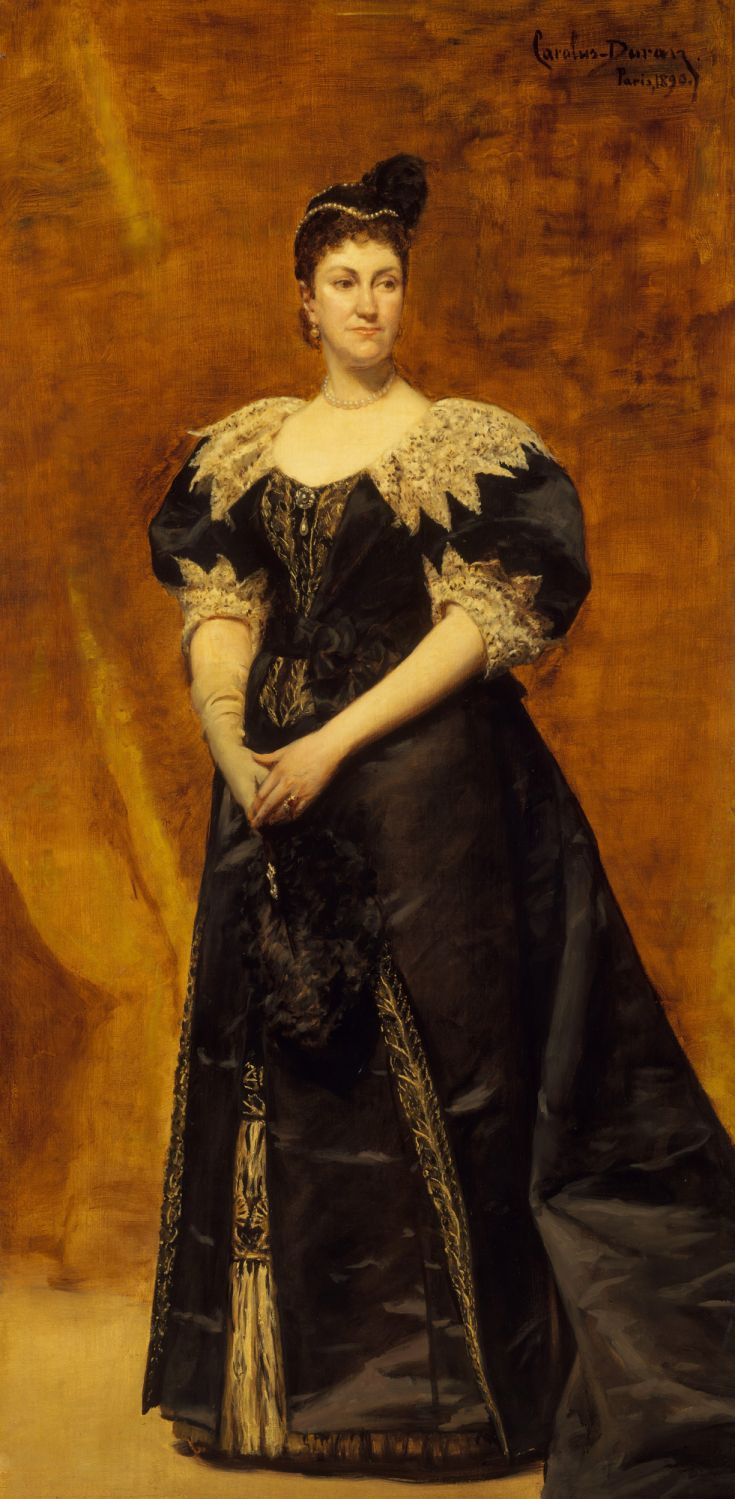
Above Mrs. William Astor (Caroline Webster Schermerhorn, 1831-1908), 1890. Artist Charles Emile Auguste Carolus-Duran. (Photo by Heritage Art/Heritage Images via Getty Images)
Mrs. William Astor (Caroline Webster Schermerhorn, 1831-1908), 1890. Artist Charles Emile Auguste Carolus-Duran. (Photo by Heritage Art/Heritage Images via Getty Images)
1 / 1
Caroline Schermerhorn Astor, affectionately called "Lina" by her closest friends and family, was respectfully addressed as Mrs Astor. She was born to a wealthy American family that had colonial Dutch aristocracy roots. Her marriage to William Backhouse Astor Jnr, from the illustrious Astor family of German descent and whose family fortune comes from their generational monopoly of the fur trade, real estate, and opium among others, solidified Mrs Astor's place in the New York society. She became the most prominent American socialite in the later part of the 19th Century, being the grand doyenne who threw the most lavish and exclusive parties limited to only 400.
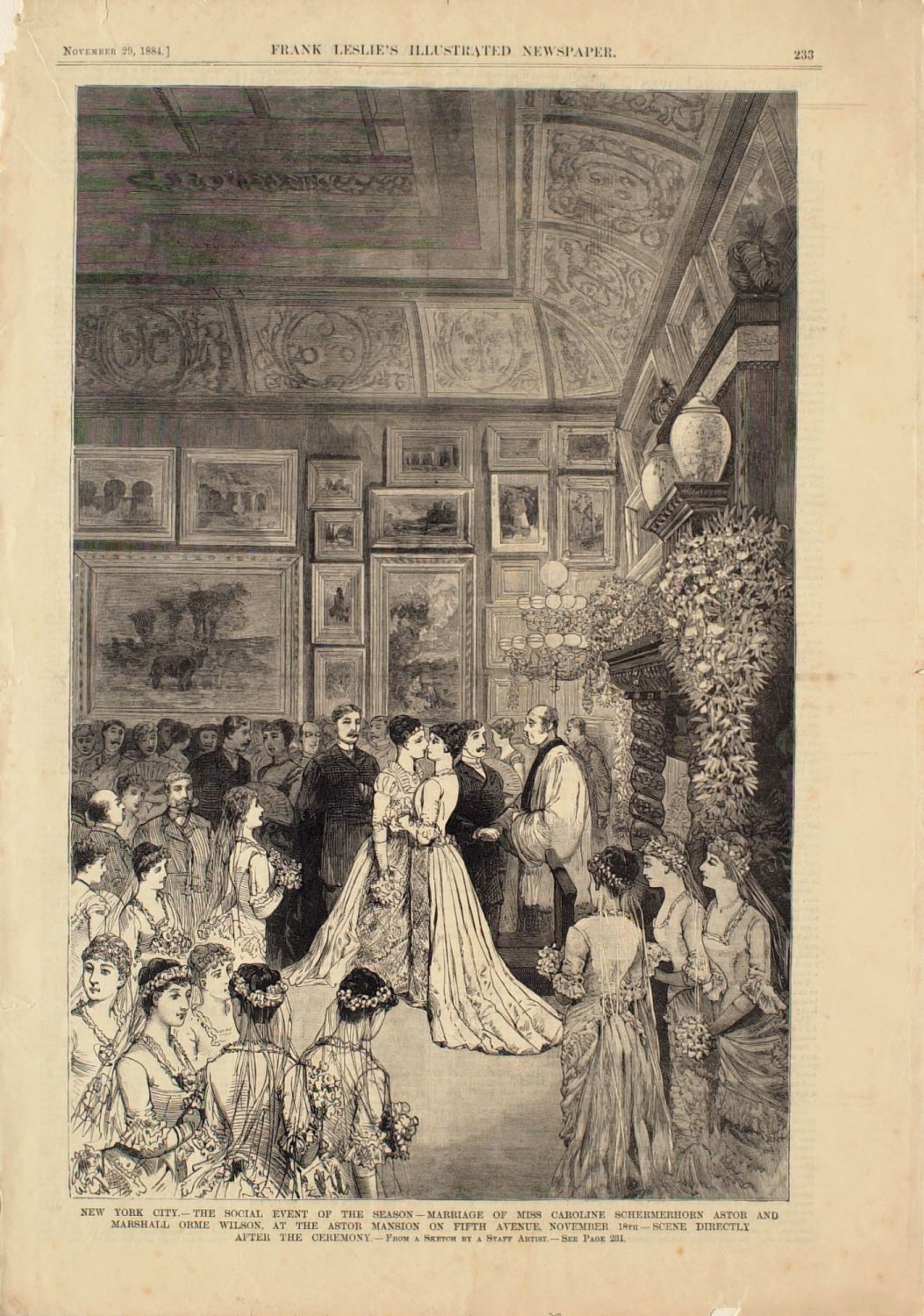
Above New York City, The Social Event of the Season, Marriage of Miss Caroline Schermerhorn Astor, From Frank Leslie's Illustrated Newspaper, 1884, Wood engraving on paper, image: 13 3/4 x 8 7/8 in. (34.9 x 22.6 cm). (Photo by: Sepia Times/Universal Images Group via Getty Images)
New York City, The Social Event of the Season, Marriage of Miss Caroline Schermerhorn Astor, From Frank Leslie's Illustrated Newspaper, 1884, Wood engraving on paper, image: 13 3/4 x 8 7/8 in. (34.9 x 22.6 cm). (Photo by: Sepia Times/Universal Images Group via Getty Images)
1 / 1
McAllister, on the other hand, was the so-called social arbiter of their time—a bon vivant figure and a connoisseur of etiquette. Together, Mrs Astor and McAllister curated New York's grandest party of only 'Four Hundred' guests with a few reasons: the Astor matriarch was in rivalry with her sister-in-law, Mrs John Jacob Astor III, in terms of being the society's 'queen bee', she wanted to limit the upper class to only those whose family had been in the city for four generations, and her house at 350 Fifth Avenue could only fit 400 people inside.
The glamourous balls Mrs Astor held annually on a January Monday later became the most important event of the season and it was collectively known as the Gilded Age balls. The upper crust of New York's society she has curated was given the term Knickerbockers, which usually connotes American elite families of Dutch origin. But the name actually originated from Washington Irving's pen name Diedrich Knickerbocker for his 1809 book, A History of New York: From the Beginning of the World to the End of the Dutch Dynasty. (And yes, that's how the New York Knicks also got its name).
Read also: Bridgerton, Pride & Prejudice, and More: 7 Period Dramas to Watch on Netflix Now
The ball season has been an old tradition in many parts of the world. Just like in Downton Abbey, we hear Mary Crawley and her sisters talk about their seasons as debutantes participating in the social events of the year. Basically, the balls are cultural events that include dinner, music, dancing, receptions, luncheons, ballet, and opera performances, which the most powerful families and stalwart figures in the land attend; it is also where their young daughters are introduced to society and swooned by the most eligible bachelors. Missing an invitation from any of these balls means that you are being frowned upon by society.
In the Gilded Age New York, the winter social season runs from October until Easter and indeed Mrs Astor's has become the most important of all. The Vanderbilt costume ball, which started in 1883, may have been the only thing to compete against Mrs Astor and McAllister's 400. Of how the society got in the middle of this clash of the new and old generation of the elites, we'll see in the next episodes of HBO's The Gilded Age.
NOW READ
Remembering Conchita Sunico: The Philippine Society's First "It Girl" and Grand Dame
The Philanthropic Works of Society Grand Doyenne Consuelo "Chito" Madrigal
High Society Hangouts of Old Manila: MET Theater, Santa Ana Cabaret, and More

Franz writes about the local cultural scene and rediscovering the country’s storied past and rich heritage. He earned his bachelor’s degree in Journalism from the University of Santo Tomas and is currently pursuing a master's degree in Art Studies at the University of the Philippines Diliman. Besides working on this luxury lifestyle magazine, Franz is an avid book reader, local traveller, museum-goer, chorister, and community theatre playwright. But above all this, this Aether main spends more time in Teyvat than anywhere else.





